Is it a bird? A plane? A compact entry-luxury crossover utility vehicle? As auto makers dice and slice the market into ever-smaller niches, analysts are increasingly challenged to categorize segment-busting crossovers.
However, the big-picture trend is clear: Utility vehicles are in the ascendant. Through the first 10 months of this year, combined sales of SUV/CUVs, vans and pickups surged more than 10 per cent over 2013 (itself a record year), while passenger-car sales were stagnant (down 0.4 per cent).
That growth has primarily been driven by small utility vehicles. The Ford Escape, Honda CR-V, Toyota RAV4 and their countless copycats are on track to usurp compact cars as Canada's most popular vehicle type.
By one analysis, in the auto trade magazine Canadian Auto World, total year-to-date sales of small CUVs (up 18 per cent through September) have already moved ahead of compact cars (up 0.5 per cent). According to another industry definition, cute-utes outsold cars for the first time in September, though cars still lead year-to-date.
Over the same period, sales of mid-size sedans plunged 14 per cent, but that's not necessarily where most of the CUV growth is coming from. According to data from MaritzCX, a customer experience research firm, the primary source of CUV buyers in model-year 2014 was repeat buyers (27.4 per cent), followed closely by drivers switching from compact cars (25.2 per cent). A much smaller portion (12.6 per cent) came out of intermediate cars, followed by intermediate SUVs (8.4 per cent) and minivans (6.4 per cent).
The MaritzCX data also show that the proportion of CUV buyers coming out of mid-size SUVs is growing, while former mid-size-car drivers are becoming less significant.
"A lot of city dwellers no longer want to drive the SUVs that were the previous flavour of the month after they moved away from minivans," says Ben Spatafora, national director of Car Cost Canada. "Now those [SUVs] are getting a little too big."
Even the archetypical compact SUVs have gotten bigger over the years, says Spatafora, creating market space for a class of even smaller ones such as the Chevrolet Trax, Buick Encore and the upcoming Honda HR-V and Mazda CX-3. Those micro-SUVs, as Spatafora calls them, "are really trying to capture the person who has been driving the SUV and is now looking for something easier to drive, but still doesn't want to go into a car." Even luxury brands are fielding smaller CUVs such as the Audi Q3 and Mercedes GLA.
What's the attraction of compact CUVs? MaritzCX says the top reason is obvious: all-wheel drive – 33.2 per cent of survey respondents rated AWD among their top three reasons to purchase. Other reasons for choosing a CUV over a car included safety features, cargo capacity and road-holding/handling. Towing capacity was more important to CUV buyers (2.8 per cent rated it in their top three) than small-car buyers (0.3 per cent), but was still lower than the overall industry average (4.8 per cent).
CUV buyers also tend to be older than compact-car buyers, are more likely to be married and have higher household income.
The number of compact-CUV buyers who ranked value for money as a top reason to purchase was similar to the industry average, but well below the rate for compact-car buyers. That's not surprising when you consider the price difference. Base CUVs – most of which are FWD – typically start at least $5,000 higher than their compact-car siblings, even though they often share the same basic structure and mechanical hardware.
The Ford Escape, for example, is built on a common architecture with the Ford Focus, but the Escape's MSRP is $24,499 for the FWD S trim versus $15,999 for the Focus S. Comparably equipped (automatic transmission is standard on the Escape but an extra-cost option on the Focus), ford.ca quotes $17,564 for the Focus and $26,149 for the Escape.
The Escape is a little bigger than the Focus and there are some minor differences in standard features, but hardly enough to account for a price premium of more than $8,500. And that's comparing front-wheel-drive models. Adding AWD to the Escape, as most buyers do, bumps the price by another $2,200.
Clearly, compact CUVs are meeting the needs of more and more Canadians. And at those kinds of margins, auto makers are more than happy to oblige.
There are many excellent choices among the two-dozen nameplates (not including luxury brands) that comprise the compact CUV category in Canada. Here are five to ponder:

Ford Escape
The segment-leading Escape is also one of Canada’s top-selling vehicles. It is fun to drive, with agile handling and strong performance from available turbo engines. Its main weakness: mediocre rear-seat space.
Toyota Rav4
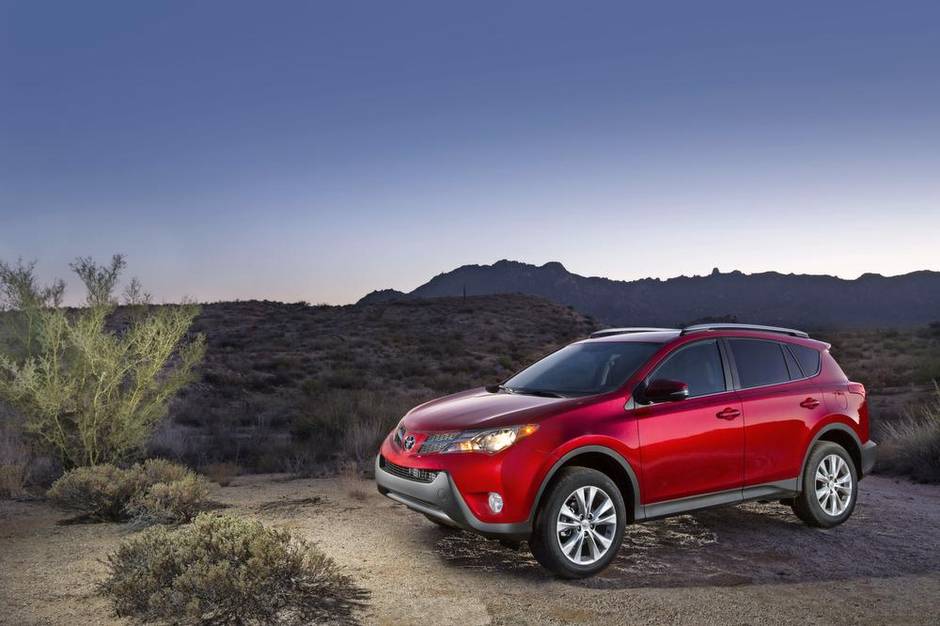
Overwhelmed by all the choices? The Ontario-built RAV4 is safe and sensible. Typical of a Toyota, nothing about it will delight (the brawny V-6 is no longer an option) or offend you, but it’s a decent all-round effort and promises a painless (read: bland) ownership experience.
Mazda CX-5
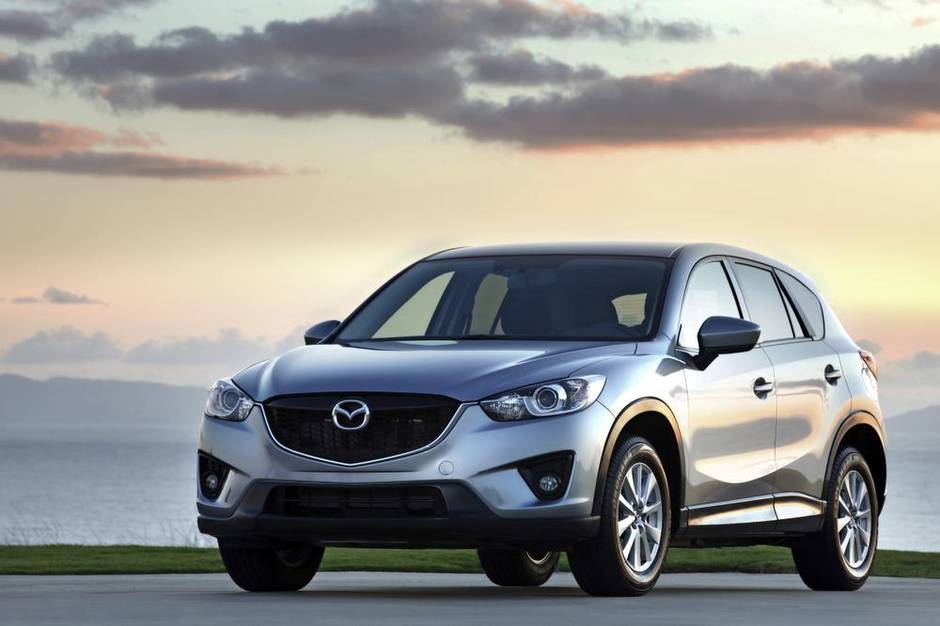
Like a lean, wiry endurance runner, the CX-5 is fit and efficient. Agile handling is a key asset, while its SkyActiv engines accelerate briskly with little effort, which helps maximize fuel economy. You can even have a manual gearbox on the base FWD trim. And it all comes in a competitively roomy, well-priced package.
Honda CR-V
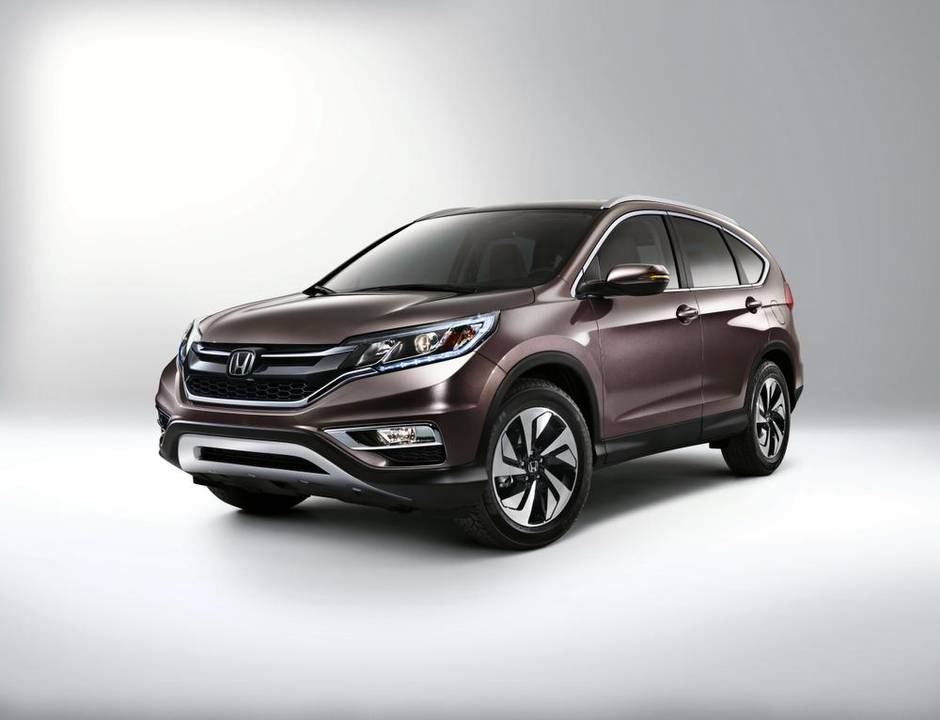
Hard on the heels of the RAV4, the original CR-V was a CUV pioneer. The recently freshened generation-four version is more grown-up and feels like the elder statesman of its class. It handles well enough, but its strengths are those that appeal to left-brain thinkers – comfort, refinement, reliability, space and practicality.
Jeep Cherokee
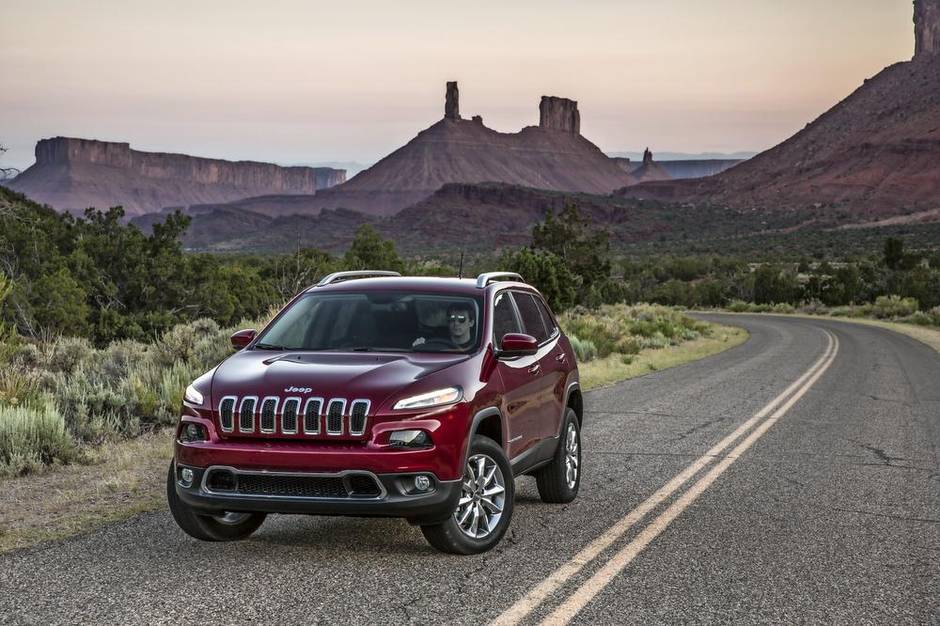
Most CUVs can handle gnarlier road conditions than conventional cars can, but they can’t do hard-core off-roading. A suitably equipped Cherokee can. Two of the three available 4x4 systems include a low range while the Trailhawk model further adds a rear diff lock, more ground clearance and skid plates. Roads? Who needs roads?
Like us on Facebook
Add us to your circles.
Sign up for our weekly newsletter.