In the late 20th century, there were essentially two types of sport utility vehicles on the market. First in line were truck-based models such as the Ford Explorer, Jeep Grand Cherokee and Land Rover Discovery. These vehicles placed an emphasis on genuine go-anywhere utility, and had the heritage to back up that claim.
Then arrived the more luxurious offerings such as the Lexus RX and Mercedes-Benz ML, a group with the nominal capability to go off-road, but built primarily with passenger comfort in mind.
The line between the two types blurred quickly, making the typical SUV more appealing to a wider range of consumers.
The differences were more about amenities. At the upper end of the segment, consumers received the extras of a luxury sedan, combined with the SUV advantages of higher ride height, more interior space, plus the perception of better all-weather capability and safety.
Still, one critical element inhibited a certain class of consumer from making the SUV plunge – the lack of driving dynamics.
In the early-2000s, the word "sport" was more marketing notion than fact in SUVs. Then the Porsche Cayenne brought everything together. Sure, there were other performance-minded SUVs on the market at the time, including the BMW X5 and Infiniti FX. But the Cayenne represented a breakthrough when sold for the 2004 model year, owing to Porsche's reputation as an exclusive producer of premium sports cars.
With Porsche kicking down the proverbial door, luxury SUVs with a high-performance sheen today include the Audi SQ5 and SQ7, BMW X5 M and X6 M, Jeep Grand Cherokee SRT8, a seemingly endless run of Mercedes-AMGs, Range Rover Sport SVR, Porsche Macan, and, of course, the Cayenne itself. The original inspiration for the sports-SUV movement comes in six different variations – the top-shelf Cayenne Turbo S boasts 570 horsepower and a $180,000 price tag.
The most recent development is bringing more exotic brands to the party. The Bentley Bentayga, Jaguar F-Pace and Maserati Levante have all arrived this year; the Lamborghini Urus and an SUV from Rolls-Royce, code-named Project Cullinan, are projected for 2018.
Alexander Pollich, chief executive of Porsche Canada, joined Porsche AG in 2001 and participated in the final stages of development for the first Cayenne. "At the time, we were aware of the risk and deployed the Cayenne carefully – the key was making sure it was a true Porsche."
While Porsche purists may remain divided on the Cayenne, there's no question it raised expectations for modern SUV performance. Since its introduction, the pace of development in the field has been mercurial. Drive systems are now vastly more efficient and proficient. Engines have been optimized to the Nth degree, platforms shared to slash production costs, innovative materials used to curb weight. The idea of a fun-to-drive SUV is more real than ever before.
"From a business perspective, [the Cayenne] has been wildly successful," said Brian Murphy, vice-president of research and editorial at Canadian Black Book. "As long as the vehicle, from a quality and performance standpoint, is congruent with the rest of the brand, there shouldn't be any danger."
The demand for SUVs and crossovers at all price points and performance levels continues to grow at a furious rate. "Believe me, these things are becoming more popular," said leading automotive consultant, Dennis DesRosiers, at the Globe Auto Summit earlier this year. "The millennials are getting to the family-forming age and they love the utility of the sport utility … the boomers are babysitting the millennials' kids and need the utility in order to take care of [them]."
Canada is a tiny market compared with others and the vehicles we get are a result of consumer demand in places such as China, Russia, the United States and the Middle East. While Canadians love SUVs, crossovers and anything all-wheel drive, we wouldn't be getting this broad a selection if not for outside forces.
"This is about manufacturers bringing product to market that they believe customers will want," Murphy said. "But in our climate, coincidentally, the perception is that people need all-wheel drive. SUVs are so terribly practical, as well."
The Levante is meant to blend those traditional qualities with distinctive Italian flair. Maserati regained its footing under Fiat ownership, introduced all-wheel drive to its vehicle line three years ago and then carved the path for an SUV.
"We focused quite a few years on developing this product, to ensure that the design, the interior luxury, the exclusivity, the weight distribution [and] the driving dynamics were correct," said Richard Trevisan, head of Maserati Canada. "We're not offering a new SUV, we're offering a new Maserati."
Jaguar F-Pace
Base MSRP: $49,900
On the surface, it may seem odd that the Jaguar Land Rover concern believes there’s a market need for the first-ever Jag SUV. But shared mechanicals aside, company insiders are quick to point out the differences between the F-Pace and the current Land Rover/Range Rover offering. “The SUV segment is poised to grow 40 per cent in the next number of years,” said Sam Pirillo, sales director for JLR Canada at this year’s Globe Auto Summit. “[And] the F-Pace is designed for a totally different customer than Land Rover. It is trying to go after the performance aspect and the driving dynamics.”
Maserati Levante
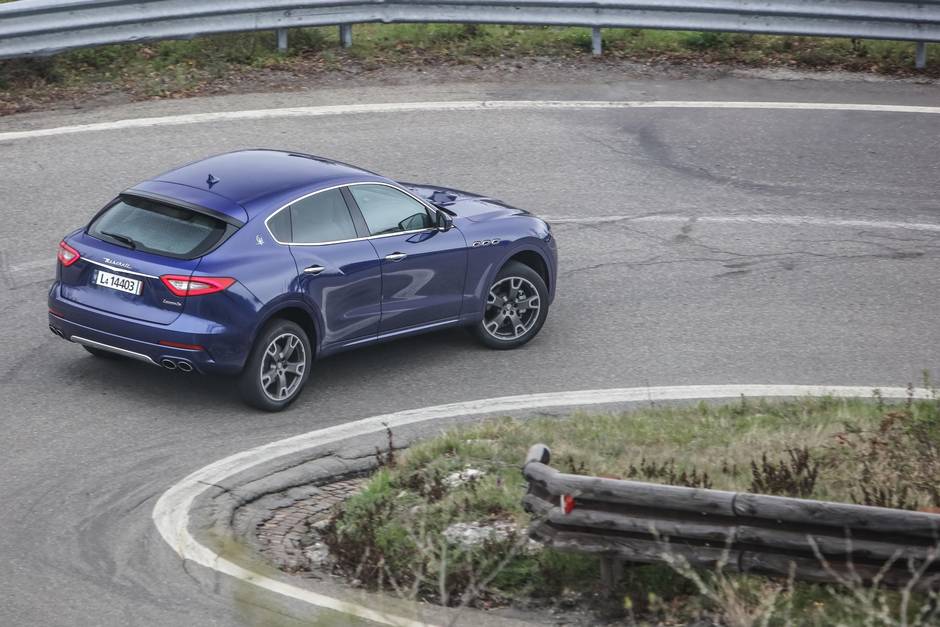
Base MSRP: TBD
The only premium brand that has vowed to stay out of the SUV space is Ferrari. So if your heart is set on a Ferrari-engined SUV, the Maserati Levante is going to be your best option. The top version, the Levante S, features a twin-turbo V-6 that churns out 424 horsepower and has a top speed of 264 km/h. The press kit also notes the torque-vectoring AWD system, ideal 50:50 weight distribution and the lowest centre of gravity in its class. On paper, at least, the Levante seems a strong bet to secure the Maserati brand DNA and raise sales in one fell swoop.
Mercedes-AMG GLE 63 S 4MATIC Coupe
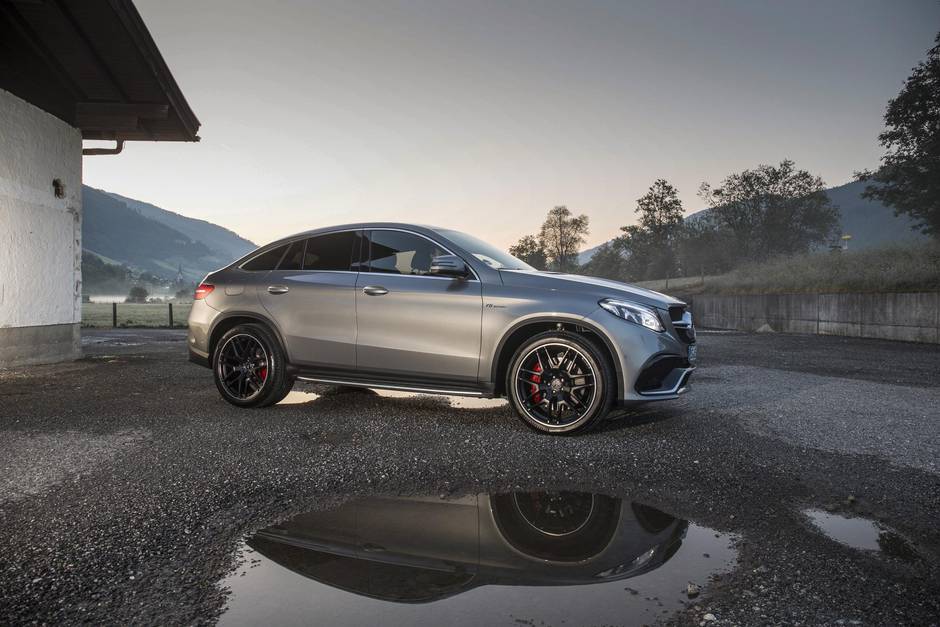
Base MSRP: $113,700
One of the more recent entries in the crossover coupe subclass, the GLE 63 S 4MATIC Coupe is proof positive that utility is not necessarily a primary consideration when it comes to SUVs. Powered by the same 577-horsepower twin-turbo V-8 as the more conventionally boxy GLE 63 S 4MATIC, the Coupe promises one wild ride after another. Mercedes mavens admit this SUV has the BMW X6 M squarely in the crosshairs. GLE Coupe has better driving dynamics (from a lower ride height, better aerodynamics etc.) than the GLE, but the coupe-like shape reduces interior space.
Jeep Grand Cherokee SRT
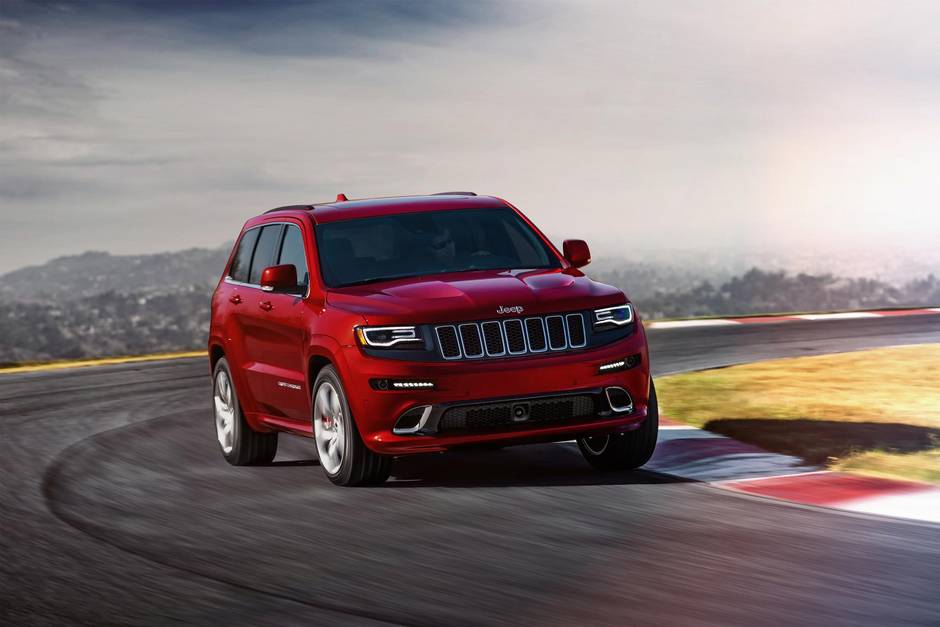
Base MSRP: $71,695
The off-road division of Fiat Chrysler is the only American manufacturer to join the high-horsepower challenge presented by the sports-SUV category. The base Grand Cherokee is a solid luxury SUV with genuine trail-breaking credentials; the SRT performance variant is the resident hooligan. Armed with a 6.4 L V-8 Hemi, the SRT pumps out 475 horsepower and is an unabashed rocket in a straight line.
We've redesigned the Drive section - take a look