What would you call a gaggle of brewery vehicles crammed together into an alley, all trying to make deliveries at the same time? A beer jam? A keg stand-off? Wait, I’ve got it: It’s a bottleneck.
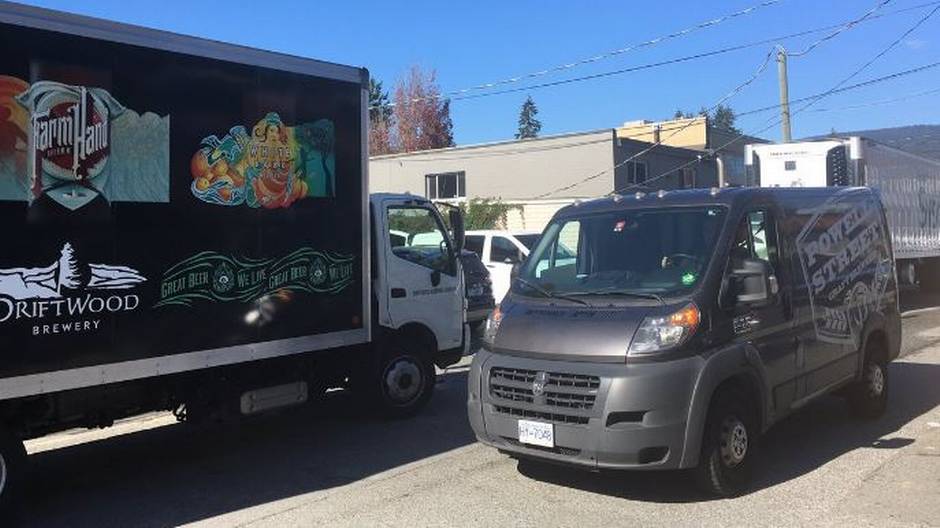
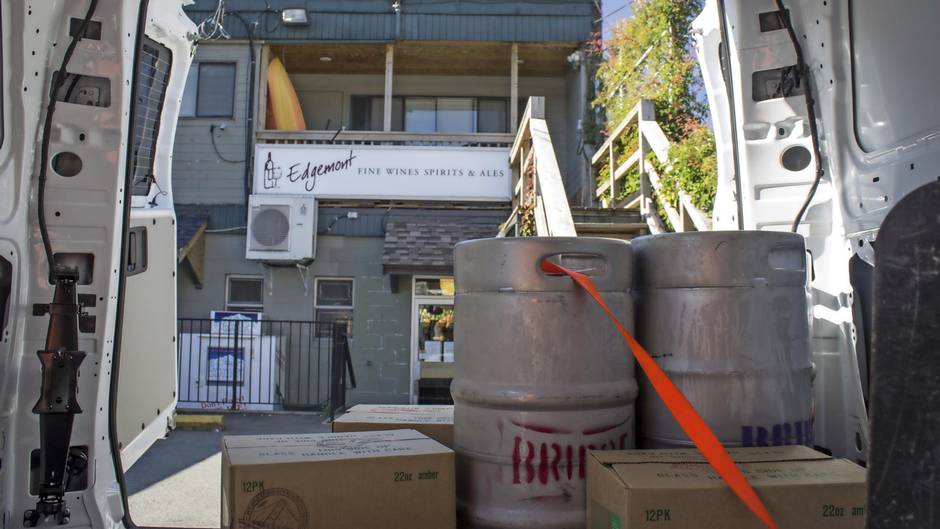
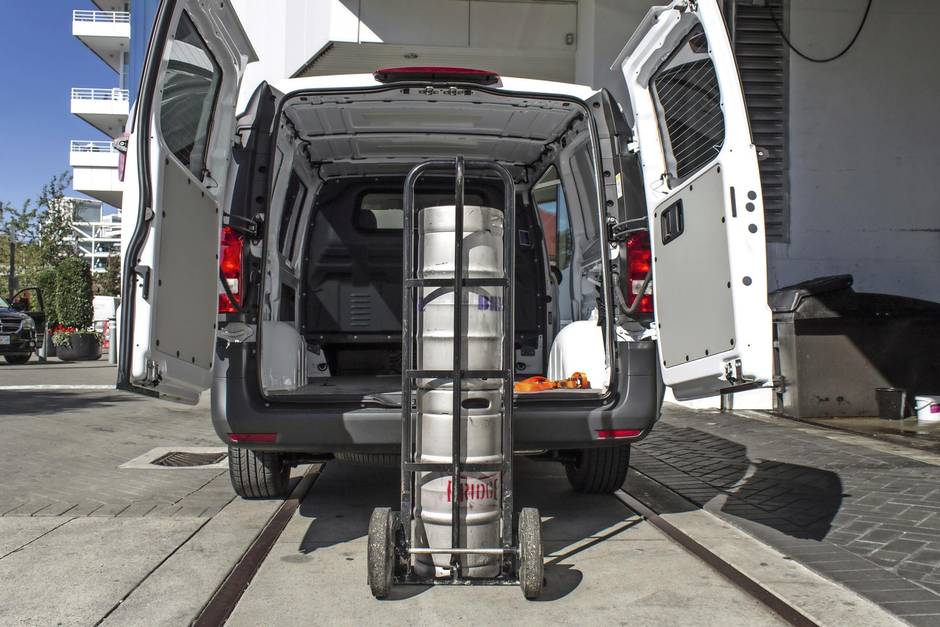
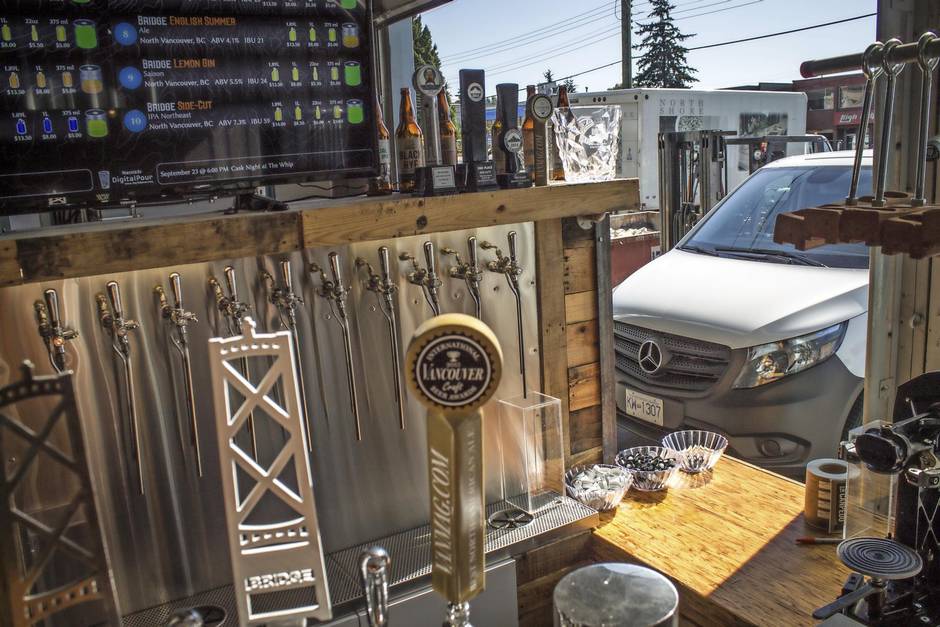
It’s a sunny Thursday and, with the prospect of a thirsty weekend on the horizon, local liquor stores and restaurants are restocking their wares in preparation for the coming hordes. Outside of Edgemont Liquor Shoppe in North Vancouver, that means a four-way logjam between the cube van of Driftwood Brewing, the Ram ProMasters of Four Winds Brewing and Powell Street Brewing, and an all-white Mercedes-Benz Metris. This last is loaded up with kegs, bombers, six-packs and cans of beer from Bridge Brewing, and is being unloaded by its new temp: me.
It’s no secret that the craft-brewing craze has swept through Canada. From Mill Street in Toronto to downtown Saskatoon, you can be sure of a pint that’s brewed with more imagination and care than you get from the mass market brands. British Columbia, in particular, has foamed over in choice – here, as Lloyd Christmas might say, the beer flows like wine.
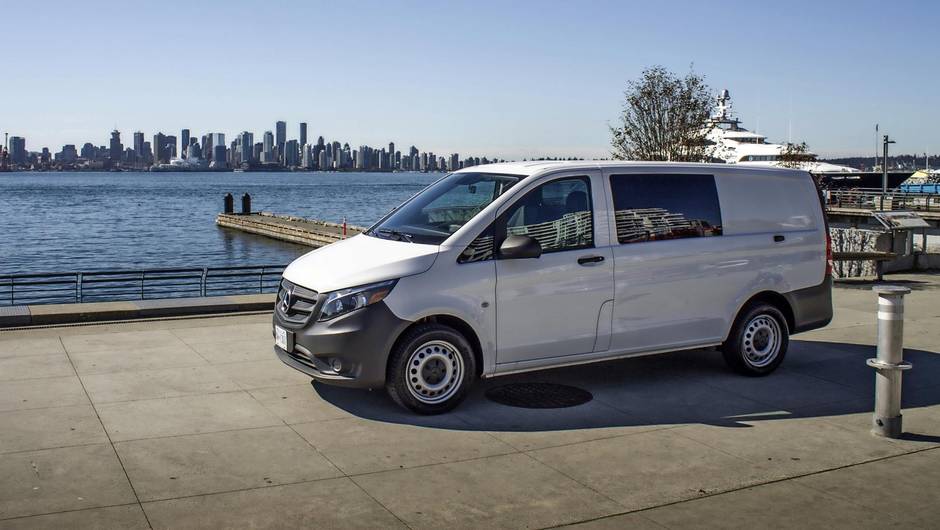
As if in sympathy to the needs of the small brewer, almost every commercial manufacturer seems to have spontaneously started selling small, European-style delivery vans. The ProMasters of Four Winds and Powell are based on the Fiat Ducato. The Ford Transit that functions as Bridge’s normal hauler is a nameplate with decades of heritage in Britain. My beer-van-for-a-day Metris is the newcomer Euro on the scene, splitting the difference between a full-sized cargo carrier and a microvan.
Running a brewery has its challenges, especially those based around consistency of product, but brewing is not necessarily a complex process. However, as demand increases, the logistics of getting the beer from where it’s made to where it’s consumed becomes an ever-greater challenge. It’s a story familiar to any small business owner: Success means newer and bigger challenges.
Happily, this wave of nimble and relatively efficient vans gives independent business owners the ability to get their products around the city. Most are no wider than your average compact car, and are more manoeuvrable than a full-size pickup truck.
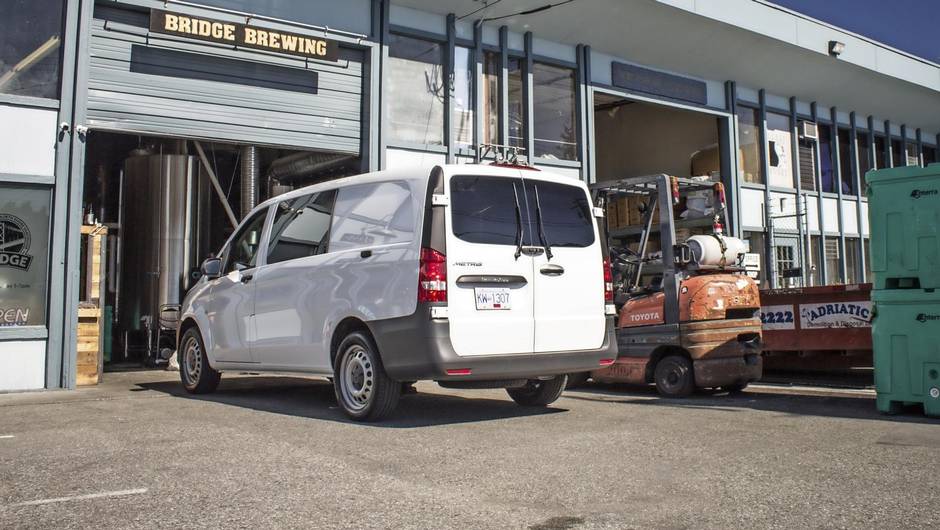
I start off at the foot of the Ironworker’s Memorial bridge, loading up kegs at the brewery door. Bridge started out as Vancouver’s first nano-brewery, brewing 800-litre batches in a 1,000-square-foot space. Growing demand forced a move, but the brewery still retains its family-run feel. Despite increased production, Bridge still produces almost no waste at all – it doesn’t even own a dumpster. Founders Jason and Leigh Stratton also often deliver a case or two of beer after dropping the kids off at school.
However, for day-to-day operations, a dedicated cargo vehicle is necessary. A larger Mercedes Sprinter would probably be overkill, but the Metris easily swallows up today’s run, replenishing stocks at a couple of local liquor stores and ferrying a quartet of kegs to a new account at a hotel.
The Metris comes in two configurations: cargo and passenger. Pricing for the cargo version starts at $33,900, overlapping with the larger versions of the Transit and ProMaster. It’s a little more than five-metres long, an underground-parkade-friendly 1.89-metres high, and its turning circle of 11.8 metres bests the extended version of the smaller Transit Connect. Cargo capacity is 5,300 litres, with a payload of 1,135 kilograms. That’s a lot of beer. Even for Canadians.
Just a single powertrain is on offer, a 2.0-litre turbocharged four-cylinder engine that makes 208 horsepower and a 258 lb-ft of torque. The only transmission is a seven-speed automatic. When completely empty, the Metris is decently quick – for a van.
But being a van, performance specs are secondary to working concerns. How fast can it accelerate? Doesn’t matter – things are going to break. How quickly can you get it to stop? Doesn’t matter – things are going to break. What’s the stopwatch time through the slalom? Doesn’t matter – things are definitely going to break.
Loaded for beer, I’ve never driven so gingerly, wincing at every clink from the back and keeping my eyes on traffic patterns far ahead like a motorcyclist or Le Mans racer. Things to appreciate include low window sills for visibility when parking and for working on your single-arm van-tan, a high-mounted cubby with a USB for charging your phone, comfortable seats and a powerful air-conditioning system.
Fuel economy of 10.8 litres/100 km highway and 12.3 city bests the larger Ford and Dodge options. Mercedes also offers mobile servicing and there are plans to include the Metris in the Car2Go car-sharing network.
Less good is the Metris’s pathfinding system, or lack thereof. For this kind of pricing, it’d be nice to see standard navigation or at least better smartphone integration for finding my next destination.
The Metris snags the best spot at Edgemont by virtue of its ability to slot in backward between a tractor-trailer and a Ford crossover. Then it’s off to a government liquor store, where the receiver gives the Metris a good looking-over. “I used to configure cargo vans at a Ford dealership,” he says. “I like the predrilled holes in the side here. A low-loading floor is good. Plenty of tie-downs, too.”
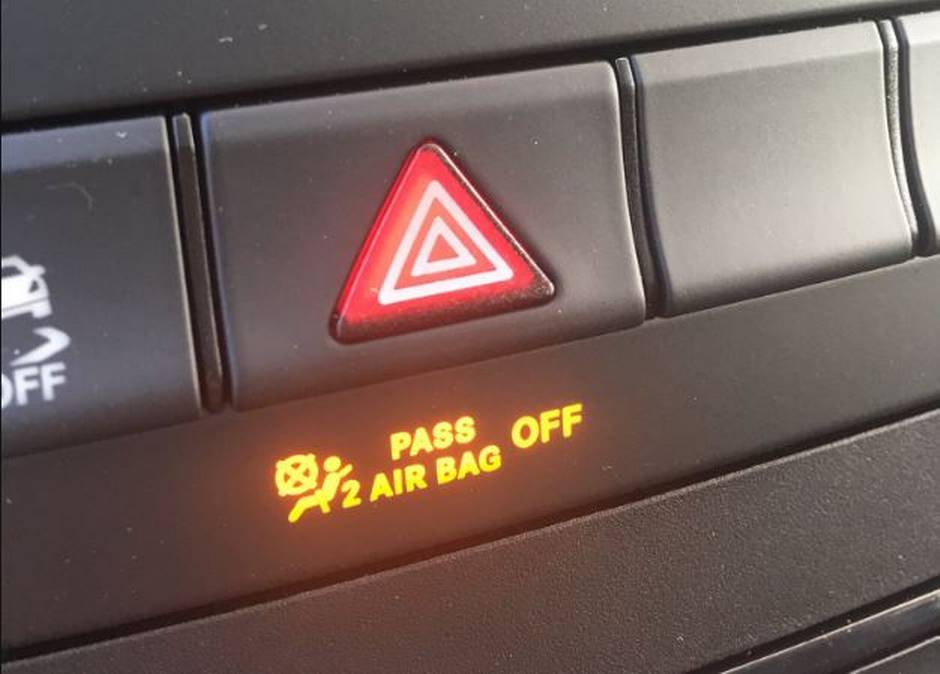
Last stop is the hotel, located on busy Lonsdale Quay. There’s never any parking to be had here, so I deploy the delivery driver’s secret weapon: the “park anywhere” button, otherwise known as four-way-flashers.
Hauling kegs up and down the loading dock of a staircase builds character. Also, thirst. Returning the Metris to home base, I pick up a growler-fill of IPA as this evening’s reward.
The Metris has proved itself worthy, and you might soon expect to see one emblazoned with the livery of your favourite local brewhaus. For the consumer, what do you call a bottleneck of breweries, all offering dozens of quaffing choices? Simple: the best kind of problem to have.