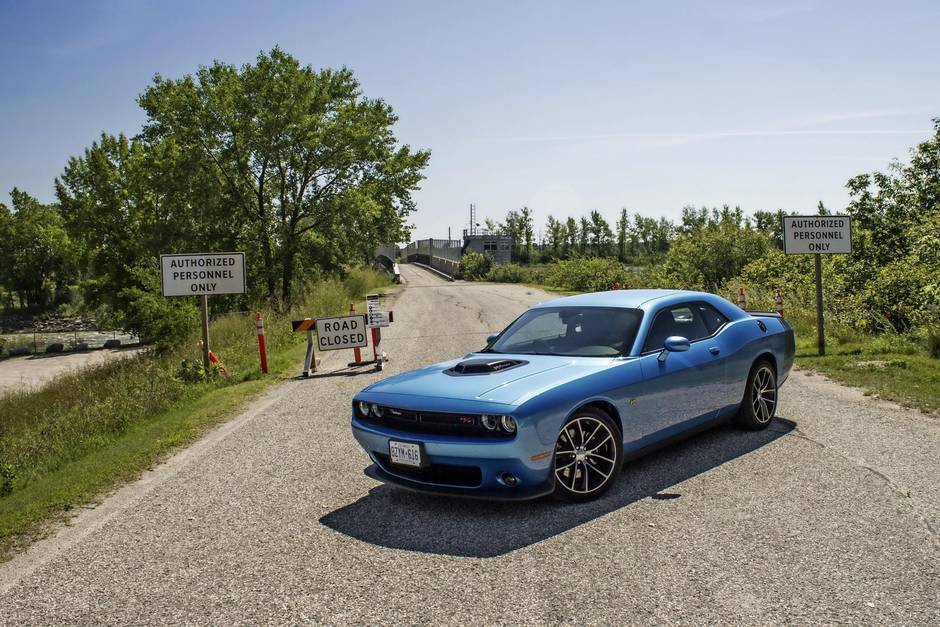
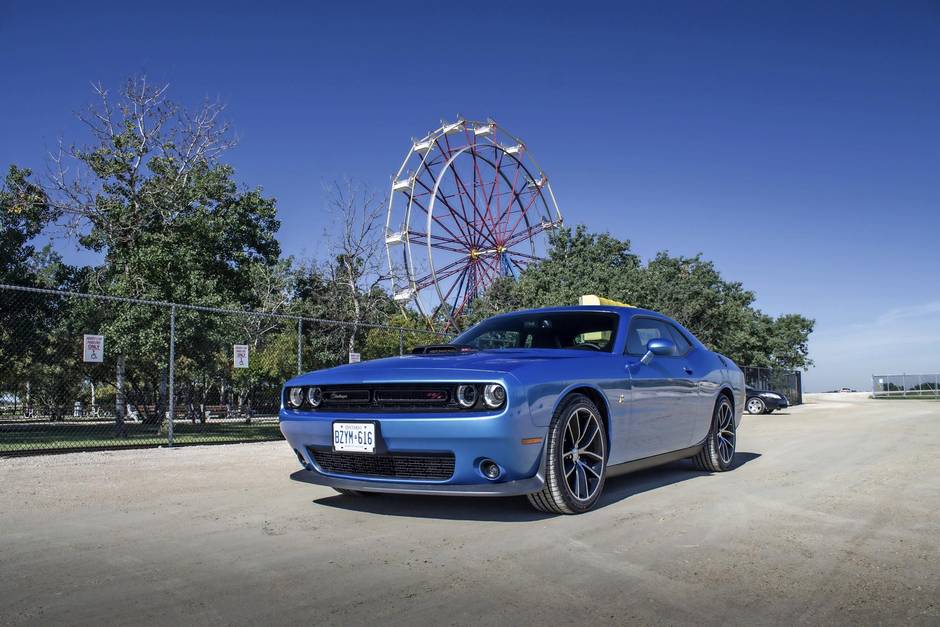
The Dodge Challenger is the most traditionally American coupe on the market. It is large, brash and powerful, with throwback styling and excellent straight-line speed. When July 4 rolled around, everybody from Castrol’s PR team to Mopar fans posted pictures of Challengers doing patriotic burnouts on Twitter.
Just don’t tell the Yanks this beast is built by a bunch of puck-chasing hosers. It’s true – the Challenger is manufactured in Brampton, Ont. Shhh. Let them do the flag-waving and let’s take this thing out for a rip, eh?
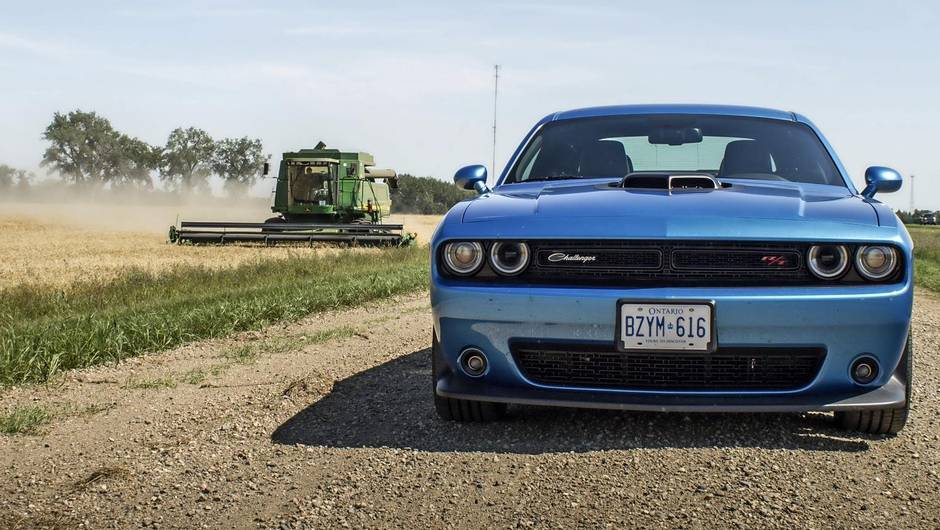
While the Chevrolet Camaro and the Ford Mustang have graduated from pony cars to full-fledged sporting machines, the Challenger remains old school in its purpose. It covers a lot of real estate, and when its big engine is provoked, it makes loud noises and surges forward in anger. It is essentially Moose from the Archie comics.
Related: the pony car's long and difficult ride back to greatness
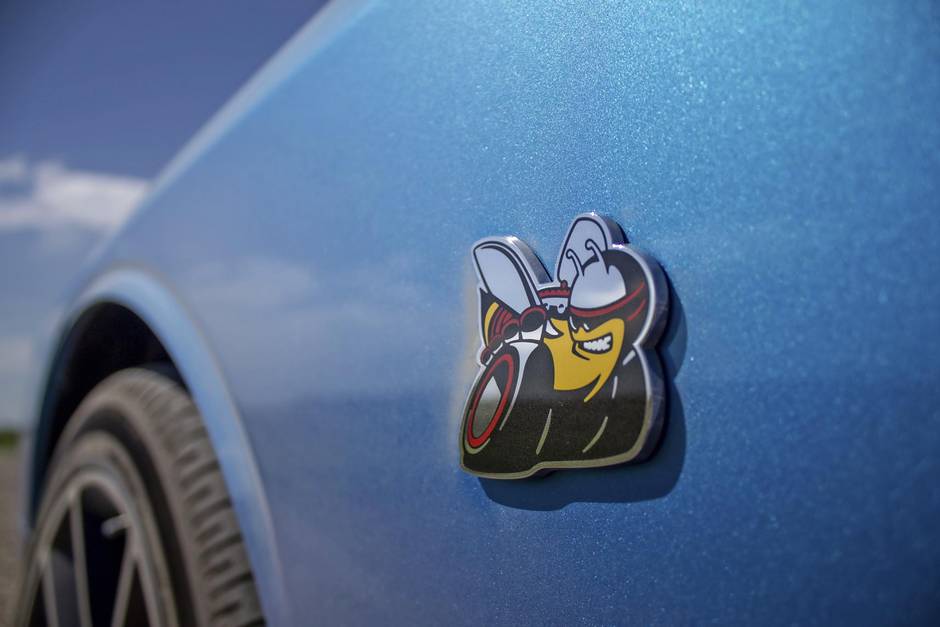
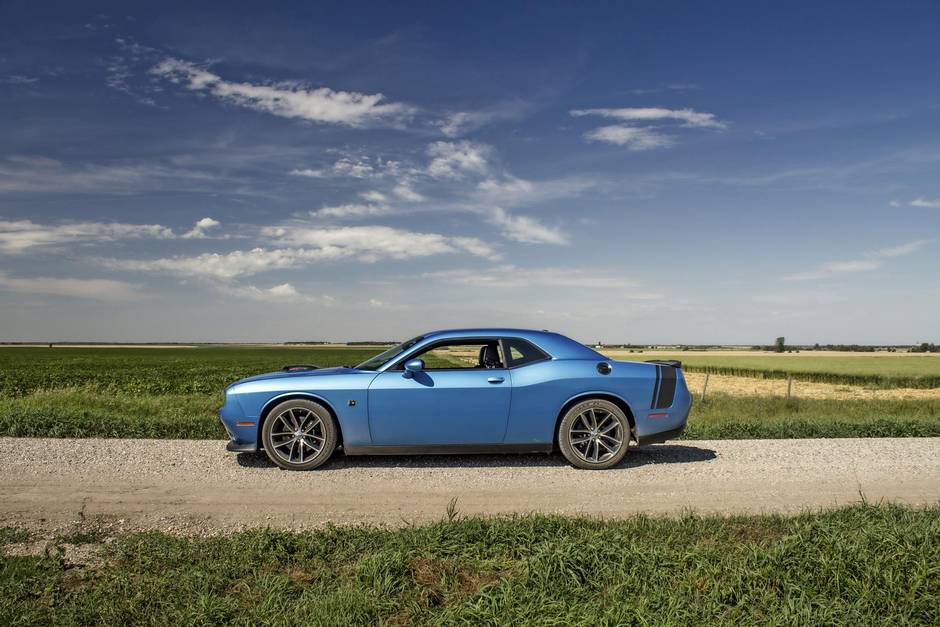
There are several levels of beefiness for this modern muscle car, ranging from the starter V-6 to the full berserker fury of the 707-horsepower supercharged Hellcat. Smack in the middle is this version, the 392 Scat Pack, which we are driving. The Scat Pack gives you the largest engine available, without the cost of the extra leather and more track-appropriate brakes of the SRT 392.
That engine is a 6.4-litre monster, which makes 485 horespower at 6,000 rpm and 475 lb-ft of torque at 4,200 rpm. In this application, it puts the power to the ground via a six-speed manual gearbox that feels like a railway switch. You can also get an eight-speed automatic, which is a little quicker and more efficient than the manual option – but let’s keep things old school.
On the inside, the Challenger isn’t much roomier than a Mustang. It’s nicer, however, with a cool curved instrument panel and an easy-to-navigate touchscreen. Features like the heated and cooled seats are all controlled through said touchscreen, but once you’ve got the hand of the menu layout, it’s nice not to have buttons cluttering up the cabin.
The Dodge’s seats are broader than the heavily bolstered offerings from Ford and Chevy, as fits the character of the car. There’s still plenty of grip, thanks to the Alcantara seat inserts, but this is a machine with the dial turned towards comfortable cruising.
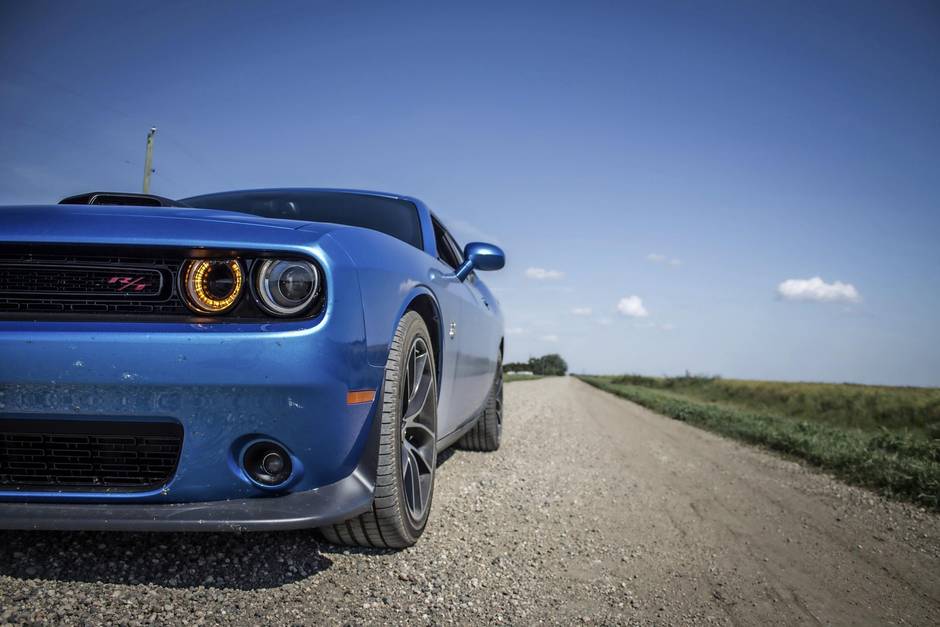
Getting the Challenger on its way with a growl, the car reinforces the initial impression with a smooth, well-damped ride, and the theatrics of that twin-nostrilled power bulge poking through the hood. Despite the 20-inch alloys, the Challenger isn’t crashy over bumps. It feels just as large from behind the wheel as it is from the curb, but it’s not exceptionally ungainly.
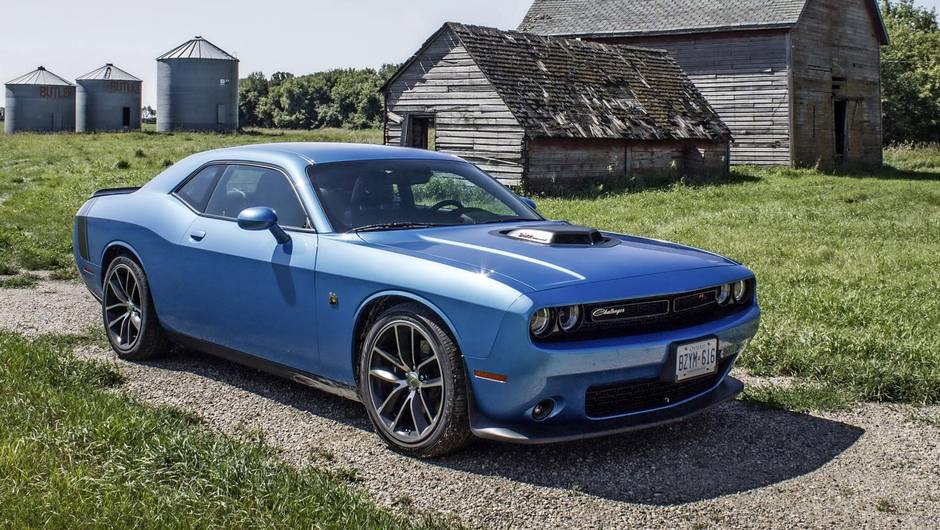
In terms of crossing distances, the Challenger is a highway star. That large-displacement V-8 is so crammed with lazy torque that you hardly ever need downshift to make a pass. The seats feel more comfy as the miles pile up, and the view out the front makes you feel like you’re reenacting your own personal scene from Vanishing Point.
The only drawbacks are poor rear visibility, and a beltline that’s a little too high to rest your arm on the windowsill. This is most emphatically an arm-out-the-window kind of car, so the latter’s a bit of a disappointment.
It’s also worth noting that the Challenger’s more expensive than its rivals. With options, this Scat Pack version came to a not-inconsequential $57,030. It could be argued that figure’s good value per pound for such a heavy car, but V-8 versions of the Mustang and Camaro are less costly.
Other than these gripes, the Challenger is excellent at its mission. There are faster cars, better-handling cars, and cars that’d be more practical for a long-distance road trip. However, this retro-styled machine comes with a dollop of charisma as big as its oversized engine. It’s a great way to get out there and see all the best bits of its home and native land: Canada.
TECH SPECS
Base Price: $48,895
Engine: 6.4-litre V-8
Transmission/Drive: Six-speed manual or eight-speed automatic/Rear-wheel drive
Fuel economy (litres/100 kms): 16.8 city/10.4 highway
Alternatives: Ford Mustang, Chevrolet Camaro
RATINGS
Looks: That Shaker hood, if you were wondering, doesn’t actually add any power. It sure looks good, vibrating around every time you rev the engine. It’s fun instead of functional, just like the rest of the car.
Interior: The biggest surprise is how much more luxurious the Challenger feels than its rivals. Clever material finishes help the Challenger look more upscale than you expect from a big Dodge.
Performance: In a straight line, this car will dip into the high 12-second quarter-mile range. It’s also easier to get off the line than the more-powerful Hellcat, which often just destroys its rear tires. As for corners, the Challenger displays respectable lateral grip, more than you’d expect. However, given a curb weight of nearly 2,000 kilograms, this isn’t a car that dances in the curves.
Technology: Despite the old-school looks, the Challenger comes with a useful amount of technology on board.
Cargo: As a two-plus-two, the rear seat of the Challenger is still big enough for kids. The trunk has some depth to it, but loading larger objects would be tricky. It’s the biggest of the three American four-seater coupes, but not terribly practical.
THE VERDICT
8
A big, old-fashioned meathead of a car that’s great at eating up the highway.