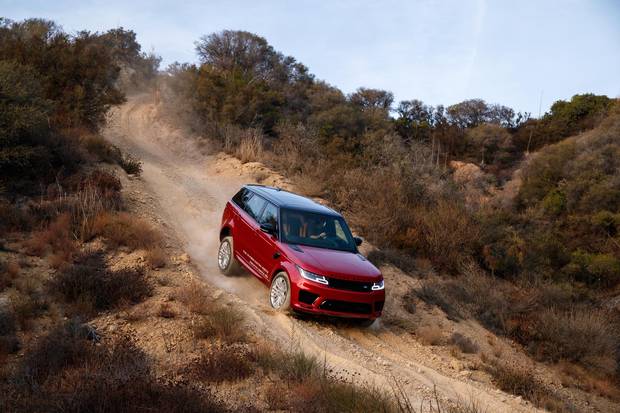
It's an unremarkable drive in the Range Rover Sport SUV around the mean streets of Los Angeles. They are mean, too: potholed and rutted and filled with strangely dressed pedestrians walking wherever they please. Most are wearing headphones or earbuds, but even if they weren't, they probably wouldn't hear me coming – I'm in all-electric mode.
This is the prototype of the PHEV version of the Range Rover Sport, which stands for plug-in hybrid electric vehicle. It's the latest step in the move to all-electric vehicles, combining a gas engine (like in the old days) with a hybrid battery and powerful electric motor to ease the load on the regular engine. That's the "hybrid" part of the description.
The "plug-in" part comes from being able to plug into a household electrical system, either 110- or 220-volt, and charge the battery enough to drive the vehicle entirely on electricity – using no gas at all. That's what we're doing now, gliding through downtown L.A.
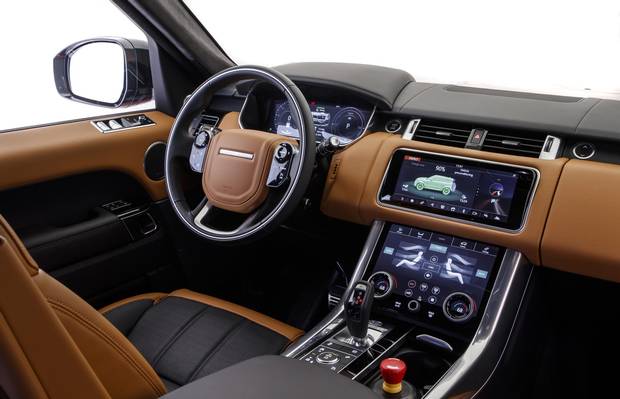
This PHEV version of the Range Rover can plug into a household electrical system, either 110- or 220-volt, and charge the battery enough to drive the vehicle entirely on electricity.
The first PHEVs appeared a few years ago, and most car companies make them now. Land Rover is a bit late to the party, especially since this new Range Rover Sport (and its sibling, the larger Range Rover) will not be available until the 2019 model year. It's part of Jaguar Land Rover's promise to offer an electrified version of every model in its fleet by 2020, and the Indian-owned, made-in-England company is determined to do the job right.
"I always think we have another hurdle," says Bob Burns, whose day job is managing Land Rover's off-road Experience Driving Schools in North America. "We've given up none of what you bought a Range Rover two years ago for, but we're just giving you another choice of engine. You can have gas, you can have diesel and now you can have electric."
Land Rover's shtick is that it's about the most capable vehicle you can buy for off-road use (not that most drivers ever leave the pavement), and Burns says an electric motor is especially well suited to this.
"It's probably not even on the radar yet, but when you look at the properties of electric, it's 100-per-cent torque from standstill. Just think of the things we can do with it once you master the technology: You can have much better control of the four-wheel drive, of each individual wheel. You can monitor which wheel has the most traction and which is wasting energy."
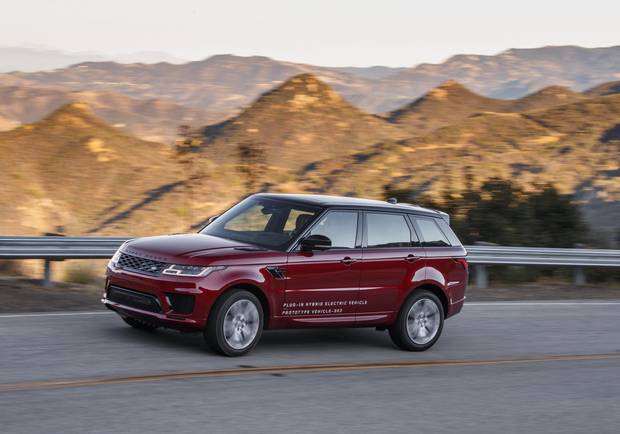
While an electric motor may be especially well suited for off-road use, a lack of access to charge points off the beaten path means an electric vehicle’s range is important.
Off-roaders are even more anxious about an electric vehicle's range because there are no charge points far from the beaten path. Land Rover will probably make a fully-electric SUV one day, Burns says, but for now the PHEV is a good compromise.
The company claims its battery is good for about 50 kilometres of totally electric driving, which most auto makers see as the right combination of battery weight and cost with needed daily range. They could increase the range but at greater expense and with much more weight. When I climbed in, though, the dials showed a 67-per-cent charge but only about 18 kilometres of range left. The previous driver was "pretty spirited," apparently, and the computer is expecting me to drive the same way.
Which I do, of course. This is downtown L.A., and I'm in an SUV worth about $110,000.
Like other PHEVs, there's a setting that locks the SUV into electric-only driving but which will kick in the 2.0-litre gas engine if I need extra power to avoid carjackers. The combined power is a hefty 398 hp, with a huge 462 lbs.-ft. of torque.
There's also a setting that disconnects the electric motor, so I can conserve my few kilometres' worth of electricity for when I really need it, such as stop-and-go driving when I don't want to belch emissions into the atmosphere.
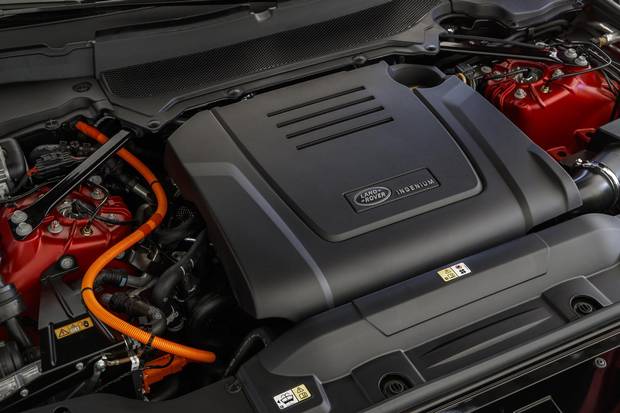
Like other PHEVs, the Range Rover Sport has a setting that locks the SUV into electric-only driving but which will kick in the 2.0-litre gas engine if needed.
There is no setting, however, for recharging the battery on the fly, as there is with Porsche and Mercedes hybrids. Such a setting is useful for driving out of one congested area with clean electricity, on to the highway with gas, then back into the downtown on electricity again. "I can't say why we don't have it," Burns says with candid honesty. "It's a very valid question that we're still working on the answer to. Our internal infrastructure of design and engineering is adapting to a new frontier."
This is what the new Range Rover Sport PHEV is doing, after all – entering a new frontier for vehicles. Its transitions from electric to gas and back again are seamless. But is it just adding needless complexity to a straightforward challenge of transportation?
Sure, Burns says, "every piece you add makes a car less reliable. I don't care whose it is – Lexus, Mercedes – complexity equals potential for failure. But when you think back to the 1960s, cars were pretty simple and they broke more often. Now, cars go 30,000 miles with nothing going wrong, and the maintenance is minor.
"Quality's not an option any more. Customers are smart, and there are too many choices. This technology helps us with that quality. We didn't know what good was until we got better."
The writer was a guest of the auto maker. Content was not subject to approval.
New luxury Range Rover debuted in L.A.
Jaguar Land Rover chose the Los Angeles Auto Show to debut its new top-of-the-line Range Rover, the $233,000 SVAutobiography.
The engine is a 557-hp, 5.0-litre supercharged V-8, and the SUV is only available as a long-wheelbase model, adding more than 1.2 metres of legroom for cosseted back-seat passengers. Those seats recline as much as 40 degrees and offer both a hot-stone massage and heated calf- and footrests.
The SV Autobiography is intended to be a halo car that is powerful, capable and luxurious. It has a unique grille design with chrome inserts and comes standard with 22-inch wheels, just to ensure it's not mistaken for anything less than it is.
Shopping for a new car? Check out the new Globe Drive Build and Price Tool to see the latest discounts, rebates and rates on new cars, trucks and SUVs. Click here to get your price.