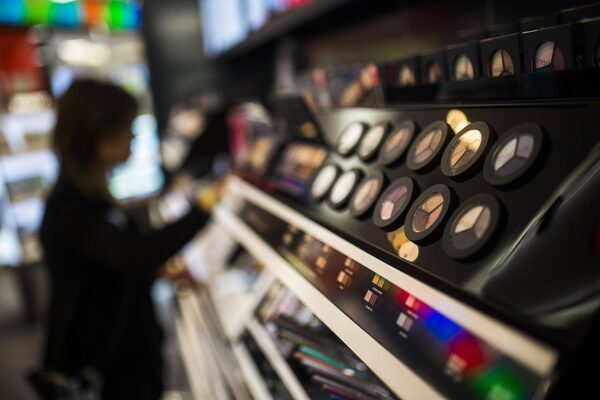
Many makeup-selling retailers have failed in recent years with the rise of Amazon and other rivals.Mark Blinch
Ulta Beauty Inc., a rare star among retailers, has lost some of its lustrous glow.
Investors are chafing at the makeup chain's prospects and pricey valuation in the age of Amazon and strengthening rivals. Its share price has dropped by about a third since early June, with the latest hit coming after last week's report of moderately slowing same-store sales. Short sales, meanwhile, are on the rise.
But as always, beauty is in the eye of the beholder. While investors have run down the shares, analysts are betting there's a lot of upside left. Their average 12-month target price is $273 (U.S.) – 24 per cent above today's level – on a stock that still has the highest price-earnings ratio among its peers at 29. In a dismal year for many bricks-and-mortar stores, analysts say it's wrong to shroud Ulta Beauty with the pall of the mall.
"Ulta went from being an incredibly loved company to being a feared company – not because people are concerned about the fundamentals, but because people are worried about owning an expensive retailer," said Simeon Siegel, an analyst at Instinet LLC who considers the stock a buy. The concern about retail is understandable but given that Ulta is still gaining market share, "it looks very compelling."
Ulta's shares dropped by the most in more than three years on Aug. 25 after the Bolingbrook, Ill.-based company reported an 11.7-per-cent same-store sales increase for the second quarter. While most retailers would celebrate that type of growth, it was less than in the comparable period and the first time since at least 2008 that the measure trailed Wall Street's predictions, according to Stifel Financial Corp.
Following the report, one of 25 analysts covering the company downgraded the stock, leaving buy and hold ratings essentially split, according to data compiled by Bloomberg.
Ulta has long been seen as a bright spot among retailers, especially in a year where at least 15 chains have slipped into bankruptcy. Selling products such as $34 MAC foundation, its stores serve as a one-stop shop where consumers can pick up products at a variety of price levels, instead of visiting different stores.
The chain, typically found in strip centres but soon to enter Manhattan, also offer salons that draw some of its top spenders. The world's two-largest beauty companies, L'Oréal SA and Estée Lauder Cos., are expanding their products at Ulta outlets while department stores are suffering from lower traffic.
Nonetheless, investors' enthusiasm began to wane this summer on signs that rivals are strengthening, and the shares have plummeted 30 per cent since June 5. J.C. Penney Co. is expanding its partnership with the upscale Sephora line, a major competitor of Ulta, while Macy's Inc. is opening more Bluemercury shops. Pessimists have become more emboldened with the number of shares being shorted – a bet that the stock will fall – rising to 2.7 million shares as of late July, the most in more than a year.
Double-digit sales growth isn't enough
There's also the ever-present threat that Amazon.com Inc. could eventually win over more upscale brands as growth stalls at department stores, said Brian Yarbrough, an analyst at Edward Jones & Co. A recent report on Women's Wear Daily about Amazon's possible partnership with high-end beauty retailer Violet Grey in July sent the shares of Ulta down by as much as 5.1 per cent.
"If Amazon all of a sudden starts selling Estée Lauder, that'd be the biggest fear for me," said Mr. Yarbrough, who has a hold recommendation on Ulta. "The sentiment around the stock will just get toxic like it has for other retailers."
For now, most analysts remain optimistic. Their average 12-month target price has come down only 16 per cent since June, to $273. That means analysts still see a possibility the stock will rise about 24 per cent in the next 12 months – the second most-optimistic outlook for any retailer in the Standard & Poor's 500, data compiled by Bloomberg show.
On a call with analysts after last week's second-quarter results, CEO Mary Dillon said the small slowdown in comparable-store sales growth was due in part to a decision to cut back on promotions, which helped to expand margins. Third-quarter growth may top out at 11 per cent, versus almost 17 per cent a year earlier, chief financial officer Scott Settersten said on the call. He's previously said 7 per cent to 9 per cent may be the norm in coming years.
Those growth prospects remain solid enough to please key suppliers: make-up manufacturers L'Oréal and Estée Lauder. "We have been partnering with them very closely, so their development is in fact very good for us too," L'Oréal CEO Jean-Paul Agon said in July.
Estée Lauder CEO Fabrizio Freda said last week that millennial consumers increasingly prefer to shop at specialty retailers, which are one of the company's fastest-growing distribution channels. It's making more of its products available at Ulta stores, including opening 200 new MAC makeup stations inside the shops in the coming year. Estée Lauder also has no plan to sell on Amazon at least in fiscal 2018, Mr. Freda said.
Ulta's Ms. Dillon said she's confident her company can sustain growth by expanding product lines with partners such as Estée Lauder. It must also maintain a strong social media and online presence while ensuring its stores remain enticing to consumers even as they stop visiting the competition.
"We all know that shopping behaviours and expectations consumers have for retail are evolving rapidly," Ms. Dillon said. "We don't have blinders on."