Looking for investing ideas? Here’s your weekly digest of the Globe’s latest insights and analysis from the pros, stock tips, portfolio strategies plus what investors need to know for the week ahead.
Gordon Pape: What life will look like after the pandemic (and the stocks that will benefit)
Months of sheltering in place will fundamentally change our lifestyles and will continue to influence the way we live and do business, long after the coronavirus is history, Gordon Pape writes. One of changes he expects is prevalence of working from home. In the space of a few weeks, we’ve discovered that jobs no one thought could be done remotely can be handled very effectively with a laptop computer and video conferencing.
If the trend continues, the losers will be office real estate investment trusts and the energy sector. With fewer people commuting to work, the demand for gasoline will drop – as we’re seeing now. The winners will be technology companies, who will continue to make the whole work-at-home process easier. Microsoft is a great example. Here are other changes he expects, and who will be the winners and losers.
Read more: A 60-cent loonie and painful days for banks and home owners: Predictions for what comes next
RBC adds two more Canadian stocks to its top 30 list of best global investment ideas
In a bear market, top stock picks are highly perishable, Tim Shufelt writes. Going into 2020, RBC Dominion Securities published a list of its 30 best investment ideas for the year ahead, using forecasts and economic assumptions the COVID-19 pandemic has since rendered obsolete. Because of the volatility in the market, it’s moving to a quarterly list. The revised list features 15 new names from around the world, including pharmaceutical companies at the forefront of the search for COVID-19 treatments and vaccines, retailers poised to capitalize on the eventual recovery in consumer spending, as well as two Canadian additions: Brookfield Asset Management and Thomson Reuters. Four other Canadian companies remain on RBC’s top global investment ideas. Here’s why.
Read more: Keep calm and go long: Advice from those who lived through the 2008 market meltdown
John Heinzl’s investor clinic: Explaining BMO’s new DRIP discount and more
A reader asks John Heinzl what the reasoning is behind the Bank of Montreal’s recently announced 2-per-cent discount on shares purchased through its dividend reinvestment plan. His response: By offering a discount, BMO is presumably hoping to attract more shareholders to its DRIP, which is a tool for the bank to raise capital. Every time an investor uses his or her dividend to purchase stock from BMO’s treasury, it’s like a share offering – except on a much smaller scale. Given the economic disruption caused by the coronavirus and the fact that BMO has the highest weighting of any bank to business lending, “it is reasonable to question whether the bank has opted to bolster capital before the operating backdrop makes it a necessity,” Scotiabank analyst Sumit Malhotra said in a note. Heinzl also explains Brookfield Infrastructure Partners split here.
More from John Heinzl: RBI, Carnival and more investing stars and dogs for the week
This indicator with a strong track record suggests REITs right now are highly mispriced
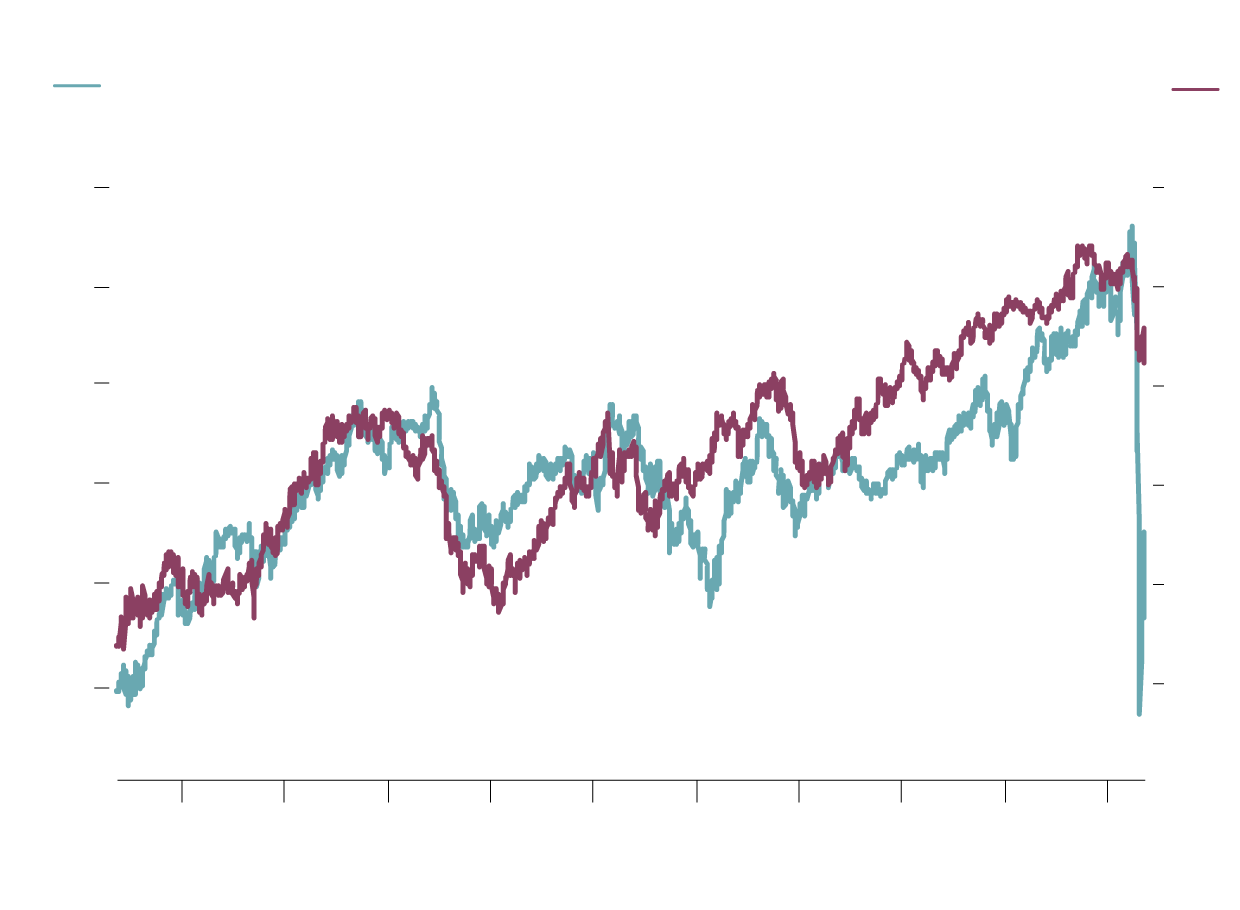
Dean Wilkinson, an analyst at CIBC World Markets, developed a model that refines the relationship between real estate investment trust unit prices and bond yields to uncover a better indicator of sector returns. Currently, the model implies that real estate investment trusts are dramatically oversold, Scott Barlow writes. Wilkinson found that while nominal value of the 10-year bond yield is relevant to REIT returns, it is actually the shape of the government bond yield curve that matters most. Real estate investors that follow the steepness of the Canadian yield curve – the difference between the 10-year bond yield and the two-year yield – will have a better indicator of future returns than investors that merely follow bond yields on their own. Here’s how it works.

REIT returns signalled by yield curve
iShares S&P/TSX
Capped REIT Index ETF
Yield steepness: Gov’t of Canada
10Y yield minus 2Y yield (bps, inverted)
$22
-50
20
0
18
50
16
100
14
150
12
200
10
250
2010
2012
2014
2016
2018
‘20
JOHN SOPINSKI/THE GLOBE AND MAIL
SOURCE: scott barlow; bloomberg

REIT returns signalled by yield curve
iShares S&P/TSX
Capped REIT Index ETF
Yield steepness: Gov’t of Canada
10Y yield minus 2Y yield (bps, inverted)
$22
-50
20
0
18
50
16
100
14
150
12
200
10
250
2010
2012
2014
2016
2018
‘20
JOHN SOPINSKI/THE GLOBE AND MAIL
SOURCE: scott barlow; bloomberg
REIT returns signalled by yield curve
iShares S&P/TSX
Capped REIT Index ETF
Yield steepness: Gov’t of Canada
10Y yield minus 2Y yield (bps, inverted)
$22
-50
20
0
18
50
16
100
14
150
12
200
10
250
2010
2011
2012
2013
2014
2015
2016
2017
2018
2019
‘20
JOHN SOPINSKI/THE GLOBE AND MAIL, SOURCE: scott barlow; bloomberg
More from Scott Barlow: There’s only one TSX stock now trading at a technically attractive level
Get the latest investing insights delivered right to your inbox three times a week, with the Globe Investor newsletter. Sign up here.
History says it’s time to get more patient. Here’s what one firm thinks investors should do
The experience of stock market crashes going back to 1987 suggests investors are going to need to stay patient while they wait for their portfolios to recover from the latest plunge, Rob Carrick writes. The U.K.-based firm Asset Risk Consultants (ARC) has taken a look at how a Canadian-dollar “steady growth” investor with 60 to 70 per cent of their assets in stocks would have fared in six market declines – 1987, 2000, 2007, 2015, 2018 and the recent decline caused by the COVID-19 outbreak.
ARC says the 2020 decline so far resembles 1987 in that it hit hard and happened quickly. But recovery from the 1987 crash was relatively fast. Within two years, losses had been reversed. Recovery from the 2020 market crash looks like it will take longer than that. ARC says the worst course of action is to sell and lock in losses unless absolutely necessary. It also said that rebalancing – selling better-performing bonds to buy beaten-down stocks – should allow for a faster recovery than a portfolio left untended.
More from Rob Carrick: In tough times, banks can take your HELOC safety net away
What investors need to know for the week ahead
In the week ahead, the Bank of Canada is set to release its latest interest-rate decision on Wednesday, following two unscheduled rate cuts this past month. Economic data on tap include: Canada’s existing home sales and MLS Home Price Index for March, Canadian new motor vehicle sales for February and U.S. retail sales for March (Wednesday); Canadian manufacturing sales for February and U.S. housing starts and building permits for March (Thursday). Companies releasing their latest financial results include Johnson & Johnson, JP Morgan Chase, Wells Fargo, Bank of America, Citigroup, Morgan Stanley, Aphria, Philip Morris, Metro, Kinder Morgan Advanced Micro Devices and Rogers Communications
Looking for more money ideas and opinions?
- Seniors who don’t need all of their RRIF money this year should consider this
- These 10 TSX dividend stocks offer very attractive yields amid the bear market
- Pandemic personal finance update No. 3: Why you should clean out your big-bank savings account
- Two stocks seeing million dollar trades by board members
- Economic uncertainty due to virus makes for unusual mortgage rate landscape
- Do the little things right to save tax amid COVID-19