Retail sales up 1.7% in March from February driven by a spike in gas prices due to the Iran war
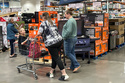
NEW YORK (AP) — Shoppers accelerated their spending in March from February, but they spent most of their money at the gas pump.
A spike in gas prices due to the Iran war, now in its eighth week, resulted in a hefty 1.7% gain in retail sales in March after a revised 0.7% increase in February, according to the Commerce Department’s report on Tuesday. The report marks the first read on spending to capture the effects of the Iran war.
Excluding gas prices, the number was a slim 0.6%, helped in part by government tax refunds and warm weather.
Business at gas stations rose 15.5% percent.
Elsewhere, sales at department stores rose 4.2%, while sales at furniture and home furnishings stores were up 2.2%. Online retailers saw a 1% gain. Consumer electronics and appliance stores posted a 0.9% increase.
The snapshot offers only a partial look at consumer spending and doesn’t include things like travel and hotel stays. But the lone services category – restaurants – registered a more modest gain of 0.1%.
“It’s a blowout retail sales figure for March,“ Heather Long, chief economist at Navy Federal Credit Union, wrote in a report. "Stripping out the big surge in spending on gas due to the Middle East conflict, it’s a solid but more modest 0.6% increase."
She noted that the impact of tariffs is visible in the high spending on electronics and appliances due to higher prices. A small increase at restaurants may indicate some early signs of pullback as consumers have to spend more at the pump, she said.
“Overall, the American consumer is still healthy,” she added. "Extra income from tax refunds is helping many households weather this oil shock, but that extra money won’t last forever.”
The Iran war began Feb. 28 and has shut down the Strait of Hormuz, cutting off one-fifth of the world’s oil supply.
Late last month, U.S. gas prices jumped past an average of $4 a gallon for the first time since 2022. According to AAA, the national average for a gallon of regular gasoline was $4.02 on Tuesday— over a dollar more expensive than it was before the war began on Feb. 28.
Economists had believed that an unusually large jump in tax refunds would kick start spending at the start of the year. But spiking gas prices are taking a bite out of that money.
Shoppers aren’t just feeling it at the gas pump, but are also starting to see unforeseen costs everywhere, including when they travel such as higher baggage fees. They will also likely see higher prices on different products ripple through the supply chain as companies start to pass on higher transportation costs to shoppers.
In fact, the largest monthly jump in gas prices in six decades caused a sharp spike in inflation last month, creating major challenges for the inflation-fighters at the Federal Reserve and increasing already significant political hurdles for the White House.
Consumer prices rose 3.3% in March from a year earlier, the Labor Department said earlier in April, up sharply from just 2.4% in February and the biggest yearly increase since May 2024. On a monthly basis, prices rose 0.9% in March from February, the largest such increase in nearly four years.
Excluding volatile food and energy, core prices rose 2.6% in March from a year earlier, up from 2.5% in February.
Major retailers including Target and Walmart are expected to release their fiscal first-quarter earnings results next month, which will offer some clues on how the Iran war is affecting spending.
Heading into the war, shoppers were already cautious. But Bryan Eshelman, Americas leader of retail and a partner and managing director at consultancy AlixPartners, noted his retail clients see their customers pulling back even more now.
“Particularly in the low-end economy, people are shifting from wants to needs,” he said. He noted that a recent analysis of shoe shopping habits in March by AlixPartners with trade group Footwear Distributors and Retailers of America showed that shoppers are focusing less on specialized footwear and more on shoes that covers various occasions.
“They know the prices are high, and they’re going to buy fewer pairs ” he said.
R.J. Hottovy, head of analytical research at Placer.ai, noted that for seven straight weeks, traffic at non-discretionary retailers like grocers outpaced that of discretionary merchants. But that trend was reversed with the week of April 6, helped by the distribution of tax refunds and spending tied to spring break and Easter.
But after the data goes past Easter trends, future visits will largely depend on consumer sentiment regarding broader macroeconomic conditions and gas prices, Hottovy said. The firm tracks people’s movements based on cellphone usage.
