

A specialist trader works at a booth on the floor at the New York Stock Exchange on April 4.Brendan McDermid/Reuters
The chattering classes – that is to say, Wall Street analysts, political pundits and, yes, even normally astute market columnists – have spent the past few months reassuring the world that Donald Trump’s blather is, at least in part, an artful negotiating ploy.
It is now time to revise that view.
No, Mad King Donald is not just putting on an act. He is not just trying to win a few concessions from his trading partners.
Instead, the aged monarch is as bizarre as he appears and is getting more bizarre by the minute.
Investors should take heed. Many of us thought the prospect of a falling stock market would deter the U.S. President from doing anything truly silly. After this week’s incineration of a few trillion dollars in stock market value, nobody thinks that any more.
Mr. Trump’s Rose Garden performance Wednesday underlined the President’s growing distance from reality. He mangled statistics. He told lies. He threw around accusations. And he kept repeating his favourite fable – the one in which the United States, the richest, most powerful economy in the world, is somehow a poor victim of the global trading system.
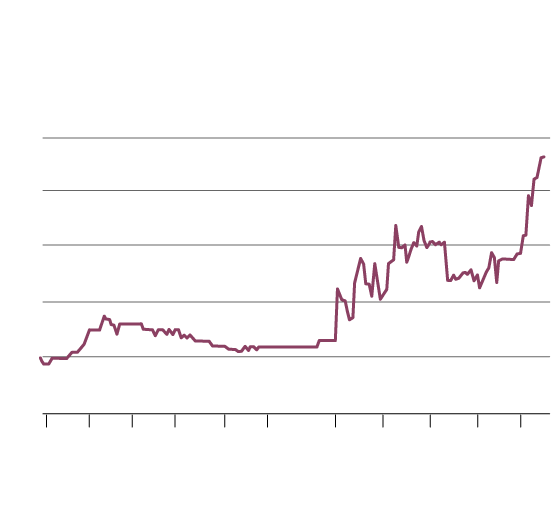
A Trumpcession looms
Betters now peg the chance of a U.S. downturn this year at more
than 50 per cent. (Probability of a U.S. recession in 2025, as gauged
by bets on Polymarket)
60%
50
40
30
20
0
8
16
24
31
8
16
28
8
16
31
24
JAN.
FEB.
MARCH
the globe and mail, Source: POLYMARKET.COM
A Trumpcession looms
Betters now peg the chance of a U.S. downturn this year at more
than 50 per cent. (Probability of a U.S. recession in 2025, as gauged
by bets on Polymarket)
60%
50
40
30
20
0
8
16
24
31
8
16
28
8
16
31
24
JAN.
FEB.
MARCH
the globe and mail, Source: POLYMARKET.COM
A Trumpcession looms
Betters now peg the chance of a U.S. downturn this year at more than 50 per cent. (Probability of
a U.S. recession in 2025, as gauged by bets on Polymarket)
60%
50
40
30
20
0
8
16
24
31
8
16
28
8
16
31
24
JAN.
FEB.
MARCH
the globe and mail, Source: POLYMARKET.COM
He is now firmly committed to an economic fantasy in which he can somehow solve his country’s problems – most notably, its huge budget deficit – by hitting the rest of the world with stinging tariffs.
Mr. Trump’s “Liberation Day” presentation was a declaration of economic war. It was designed to provoke. The levies he announced were so much larger than expected and his remarks so insulting to other countries that foreign governments are now left with little choice but to fire back with tariffs of their own.
The great mystery in all of this is why Mr. Trump wants to rip apart the world trading system. The vast majority of economists see nothing clever or beneficial in his actions.
Tariffs are essentially an import tax, and all the evidence indicates that their burden falls mostly on consumers. In the case of the U.S., the new levies may succeed in raising several hundreds of billions of dollars in revenue a year, but that is not nearly enough to fill the federal budget deficit of US$1.9-trillion. In fact, if Mr. Trump insists on following through on his pledge to cut other taxes, whatever new money he raises from tariffs is likely to disappear into an even larger budget hole.
U.S. Federal Reserve’s Jerome Powell sees higher inflation in wake of tariffs
Despite his claims, tariffs aren’t likely to revive U.S. manufacturing, either. The new levies will raise the prices of imported raw materials and foreign-made intermediate goods that go into U.S. products. They will also invite retaliation from other countries.
On top of all that, they will drive prices higher for U.S. consumers. According to the Yale Budget Lab, the average U.S. household will lose about US$3,800 in buying power as a result of Mr. Trump’s tariffs.
The market is scrambling to assess just how bad this all is, and the consensus is somewhere between “ugly” and “disastrous.” Consider, for instance, the about-face at Capital Economics, a widely followed forecaster. It had been staunchly bullish on the U.S. economy and the U.S. stock market before Mr. Trump’s Rose Garden ramblings. After the tariff announcement, it slashed its outlook. It no longer sees the benchmark S&P 500 Index finishing the year around 7,000; instead, it hopes for a mere 5,500. It also sees U.S. inflation surging from its current 2.8 per cent to around 4.5 per cent.
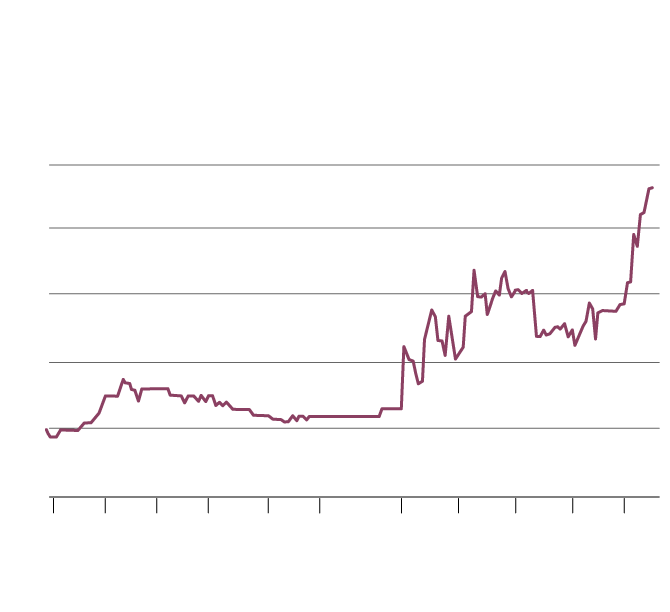
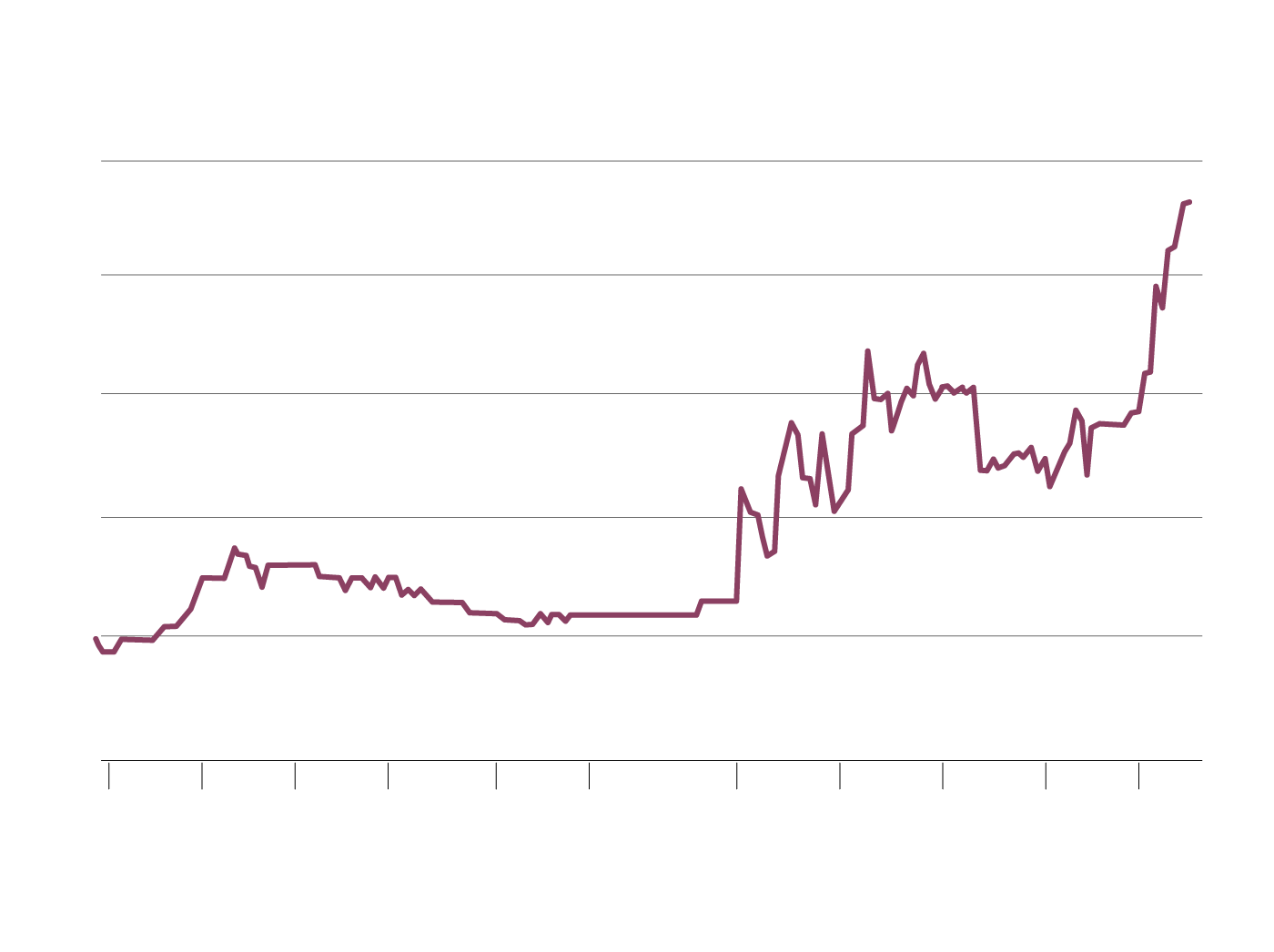
Prediction markets now peg the odds of a U.S. recession this year at more than 50 per cent. Investors are busily dumping U.S. stocks. Even more telling, they are selling the U.S. dollar, normally a haven in times of economic stress. Matt Klein, publisher of The Overshoot economic newsletter, says traders are putting a “moron risk premium” on U.S. assets, just as they did on British assets in 2022 after the hapless budget of then-Prime Minister Liz Truss.
This brings us back to the fundamental mystery: Why is Mr. Trump so eager to inflict pain on his own voters?
One possibility is that the President is playing a bigger political game. Scott Sumner, a U.S. economist, argues that Mr. Trump has launched his global trade war to stoke nationalism. The President appears to crave a world without multilateral organizations, one in which bigger countries can prey on smaller ones and might makes right. “Overall, the goal seems to be to recreate the conditions of the 1930s,” Mr. Sumner wrote.
That is a frightening thought. Just as disturbing is how Mr. Trump appears to be making policy with scant regard for how it will play with voters in the midterm elections scheduled for next year. Maybe that speaks to his conviction that the economy will adjust and things will turn out just fine. Or maybe it says something about the likelihood of those midterm elections actually proceeding as planned. At this point, anything seems possible.