
The loonie picked the exact wrong time to re-establish its link with crude oil prices, as it continues to be dragged lower by a global war for oil market share between Russia and Saudi Arabia that has resulted in a price collapse.
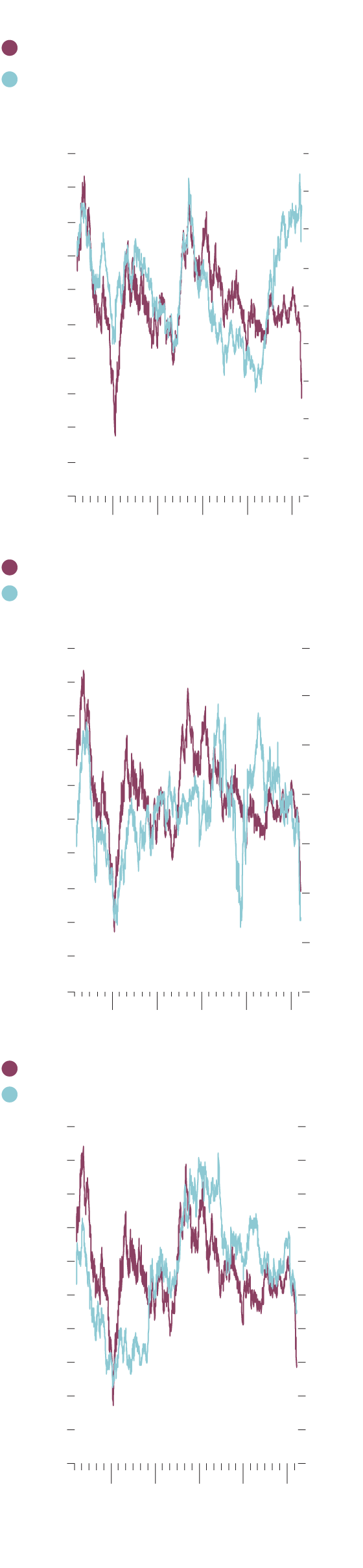
For the majority of the post-financial-crisis period, the Canadian dollar was easy to track, as the first accompanying chart highlights. The Bank of Canada and the Federal Reserve both intervened in credit markets, and the loonie was driven by bond yield spreads – as shown by the difference between the yields on two-year government bonds in Canada and the United States.
What drives the value of the loonie?
CADUSD
Interest-rate spread: yield on Government
of Canada two-year bond minus yield on
two-year U.S. Treasury (right scale)
US$0.85
0.4%
0.83
0.2
0.81
0
0.79
-0.2
0.77
-0.4
0.75
-0.6
0.73
-0.8
0.71
-1.0
0.69
-1.2
0.67
0.65
-1.4
2017
2016
2018
2020
2019
CADUSD
Western Canadian Select crude
(US$/barrel, right scale)
US$0.85
US$70
0.83
60
0.81
50
0.79
0.77
40
0.75
30
0.73
0.71
20
0.69
10
0.67
0.65
0
2016
2018
2019
2017
2020
CADUSD
Copper (US$/lb, right scale)
US$0.85
US$3.50
0.83
3.30
0.81
3.10
0.79
2.90
0.77
2.70
0.75
2.50
0.73
2.30
0.71
2.10
0.69
1.90
0.67
1.70
0.65
1.50
2017
2020
2016
2018
2019
THE GLOBE AND MAIL, SOURCE:
BLOOMBERG; SCOTT BARLOW

What drives the value of the loonie?
CADUSD
Interest-rate spread: yield on Government of Canada
two-year bond minus yield on two-year U.S. Treasury
(right scale)
US$0.85
0.4%
0.83
0.2
0.81
0
0.79
-0.2
0.77
-0.4
0.75
-0.6
0.73
-0.8
0.71
-1.0
0.69
-1.2
0.67
0.65
-1.4
2017
2016
2018
2020
2019
CADUSD
Western Canadian Select crude (US$/barrel, right scale)
US$0.85
US$70
0.83
60
0.81
50
0.79
0.77
40
0.75
30
0.73
0.71
20
0.69
10
0.67
0.65
0
2016
2018
2019
2017
2020
CADUSD
Copper (US$/lb, right scale)
US$0.85
US$3.50
0.83
3.30
0.81
3.10
0.79
2.90
0.77
2.70
0.75
2.50
0.73
2.30
0.71
2.10
0.69
1.90
0.67
1.70
0.65
1.50
2017
2020
2016
2018
2019
THE GLOBE AND MAIL, SOURCE: BLOOMBERG; SCOTT BARLOW

What drives the value of the loonie?
CADUSD
Interest-rate spread: yield on Government of Canada two-year
bond minus yield on two-year U.S. Treasury (right scale)
US$0.85
0.4%
0.83
0.2
0.81
0
0.79
-0.2
0.77
-0.4
0.75
-0.6
0.73
-0.8
0.71
-1.0
0.69
-1.2
0.67
0.65
-1.4
2017
2016
2018
2020
2019
CADUSD
Western Canadian Select crude (US$/barrel, right scale)
US$0.85
US$70
0.83
60
0.81
50
0.79
0.77
40
0.75
30
0.73
0.71
20
0.69
10
0.67
0.65
0
2016
2018
2019
2017
2020
CADUSD
Copper (US$/lb, right scale)
US$0.85
US$3.50
0.83
3.30
0.81
3.10
0.79
2.90
0.77
2.70
0.75
2.50
0.73
2.30
0.71
2.10
0.69
1.90
0.67
1.70
0.65
1.50
2017
2020
2016
2018
2019
THE GLOBE AND MAIL, SOURCE: BLOOMBERG; SCOTT BARLOW
That trend ended abruptly in early 2019. From that point, the yield spread (the blue line on the first chart) climbed rapidly but the value of the Canadian dollar remained generally flat, trading in a range between 75 US cents and 77 US cents. The focus of currency markets had shifted from central bank interest rate policy to economic fundamentals.
The second chart compares the value of the Canadian dollar with the Western Canadian Select crude oil price. The relationship between the two lines was indifferent for much of the past five years. There were even frequent periods when transportation bottlenecks caused the two values to move in opposite directions.
In October, 2019, the petro-loonie re-emerged – the currency and the crude price became closely linked. The fall in oil prices in January, 2020, effectively predicted the downdraft in the dollar shortly after. Perhaps most important, the scale of the decline in crude prices matches that of the drop in the loonie.
Strategists such as Stephen Gallo, European head of FX strategy for BMO Financial Group, and George Pearkes, macro strategist for Bespoke Investment Group, use the copper price as part of their predictive model for the loonie‘s fair value. The copper market is a proxy for global manufacturing and trade, and like Canada’s trade-oriented and resource-heavy economy, the price is highly sensitive to global growth.
The third chart shows that the dollar has fallen far more than the copper price, and this may provide hope for Canada’s economy and the dollar. Most of the developed world is adjusting to new pandemic-related economic realities, but China – the country responsible for half of the world’s copper demand – is getting back to work after successfully containing the spread of COVID-19.
In the short term, however, the loonie remains pinned to falling crude prices and that will continue to be a problem.
In a report on Tuesday, Deutsche Bank analyst Michael Hsueh predicted the Canadian dollar will fall much further – to 67 US cents from 71 US cents. “We believe the Canadian dollar does not yet fully price in a protracted oil shock," he wrote. "We expect an oil shock which is both deep and persistent.”
Deutsche Bank sees risks of oil falling below US$30 a barrel, and for longer than previous cycle lows in 2015-16.
The immediate outlook for oil prices is certainly dire. Lack of demand resulting from the pandemic is only one factor. OPEC’s failure to negotiate production cuts led to Saudi Arabia and Russia flooding a weak oil market with excess supply to try to increase market share.
Morgan Stanley analyst Martijn Rats predicts that global oil oversupply will reach a peak of 3.5-million barrels a day this year, resulting in a one-billion-barrel increase in oil inventories.
The loonie is likely to remain weak for as long as it remains sensitive to oil prices. If, however, a reaccelerating Chinese economy stabilizes commodity prices, this could cushion the blow and eventually spur a recovery in the Canadian dollar.
Scott Barlow, Globe Investor’s in-house market strategist, writes exclusively for our subscribers at Inside the Market.