
If you want a practical demonstration of how Donald Trump’s economy is faring, head for a fast food drive-through anywhere in the United States. Chances are you will see much smaller line-ups than you would have a few months ago.
American consumers are cutting back on even modest extravagances. In recent days, a trio of fast food giants – McDonald’s Corp. MCD-N, Chipotle Mexican Grill Inc. CMG-N and Starbucks Corp. SBUX-Q – reported that their same-store sales in the U.S. slid during the first few months of 2025.
Their challenges in selling burgers, burritos and coffee beans seem to reflect the same forces that are evident in a downbeat report this week from the U.S. Department of Commerce. It showed the U.S. economy contracted in the first three months of this year, its worst showing since 2022.
So why aren‘t financial markets more worried? As of Friday morning, the S&P 500 index had erased the losses it suffered after Mr. Trump unveiled his sweeping Liberation Day tariffs a month ago. Meanwhile, Wall Street continues to insist that corporate earnings will grow an impressive 10 per cent this year.
Something doesn‘t add up. According to surveys by the University of Michigan, U.S. consumers feel dread about what lies ahead. Yet according to the stock market, things are going to turn out just fine.
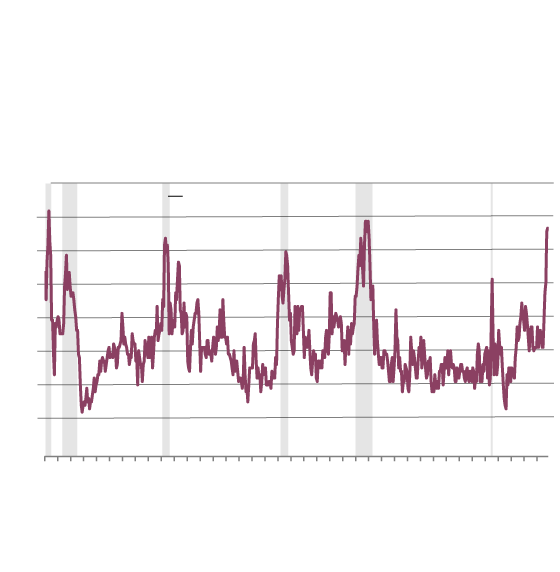
Age of anxiety
More and more Americans are concerned about losing their jobs. (Percentage of people expecting more unemployment over the next 12 months)
80%
U.S. recessions
70
60
50
40
30
20
10
0
1980
1990
2000
2010
2020
the globe and mail, Source: University of
Michigan; Apollo Chief Economist
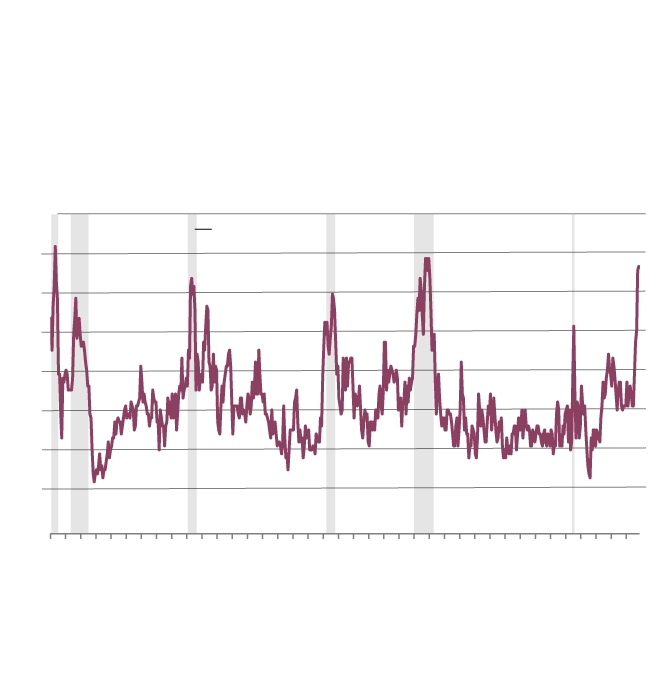
Age of anxiety
More and more Americans are concerned about losing their jobs. (Percentage of people expecting more unemployment over the next 12 months)
80%
U.S. recessions
70
60
50
40
30
20
10
0
1980
1990
2000
2010
2020
the globe and mail, Source: University of
Michigan; Apollo Chief Economist
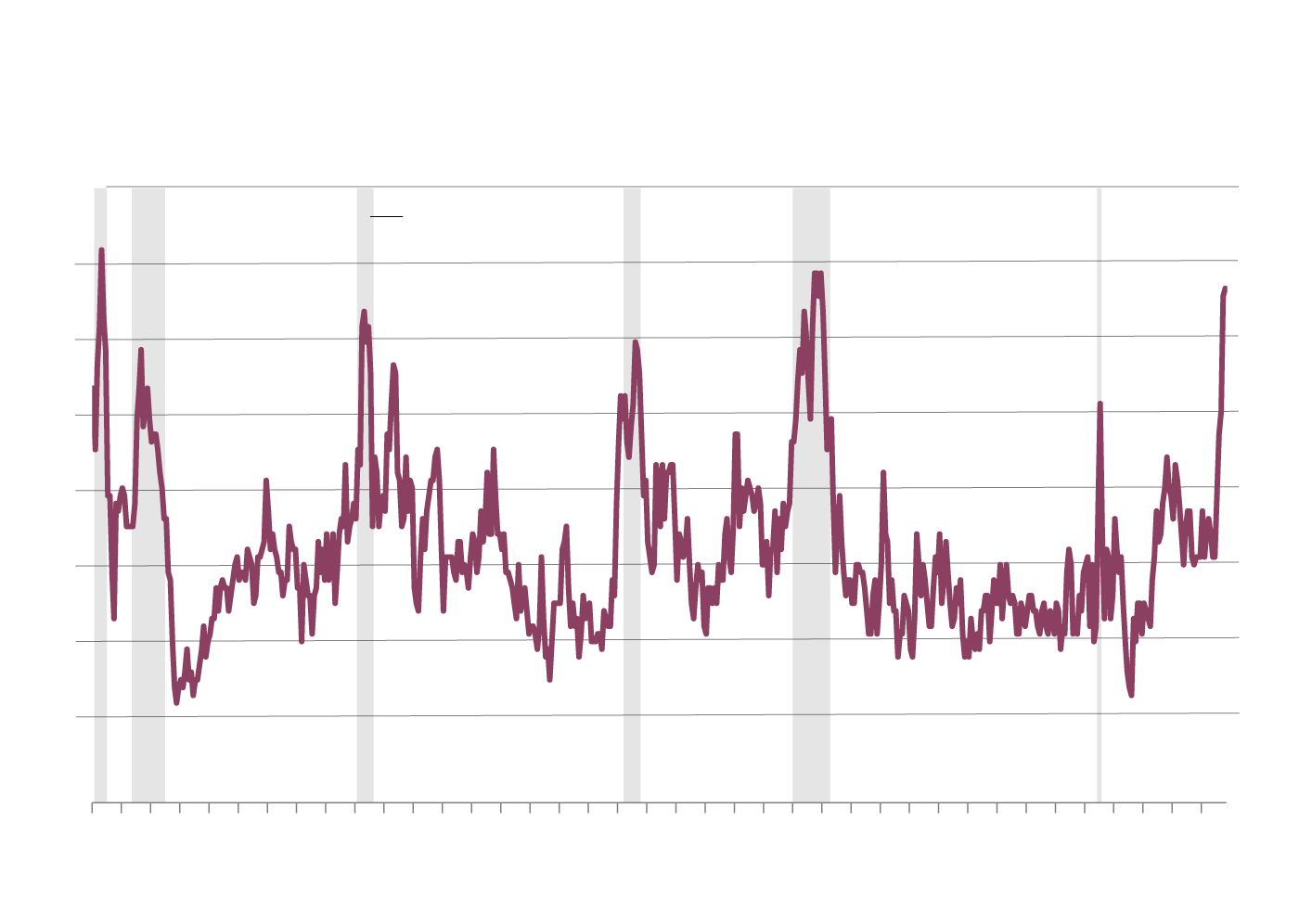
Age of anxiety
More and more Americans are concerned about losing their jobs. (Percentage of people expecting more unemployment over the next 12 months)
80%
U.S. recessions
70
60
50
40
30
20
10
0
1980
1990
2000
2010
2020
the globe and mail, Source: University of Michigan; Apollo Chief Economist
If it turns out that the market optimists are correct, this is a good buying opportunity. On the other hand, if consumers are right about the ugliness to come, this is a fine time to reduce your exposure to U.S. stocks – and perhaps other stocks as well, given the tendency of stock prices around the world to move in lockstep with the huge U.S. market.
To my mind, the evidence tends toward the latter, more pessimistic point of view. I’m happy to acknowledge, though, that these are exceptionally confusing times. There are good points to be made on both sides of the debate.
Consider, for instance, three reasonable arguments for why you should stay in stocks.
The first argument for bullishness is that the hard data still look just fine. Credit-card spending is strong, retail sales are still robust. According to numbers published Friday, the U.S. economy continued to churn out jobs in April.
The second argument for optimism is hinged on the belief that Mr. Trump is not going to deliberately steer the U.S. economy over a cliff. He has already shown a willingness to postpone tariffs and pull back some of his more extreme levies when confronted by a bad market reaction. If you assume he is a rational politician, you have to think he will demonstrate even more flexibility if the U.S. economy weakens.
Finally, optimists can point to the surprisingly strong performance of big tech stocks in the first quarter. Over the past several days, Alphabet Inc. GOOGL-Q, Amazon.com Inc. AMZN-Q, Apple Inc. AAPL-Q, Meta Platforms Inc. META-Q and Microsoft Corp. MSFT-Q all reported better-than-expected earnings.
So why don‘t these upbeat points convert bears like me into rampaging bulls? Because they all assume these are normal times.
They aren‘t. It’s not normal, for instance, for economic growth to fall off a cliff as it has in recent months. In the fourth quarter of 2024, the U.S. economy was growing at an annualized pace of 2.4 per cent. In the first quarter of this year, it shrank at a 0.3-per-cent rate.
It’s also not normal for companies to be as confused as they are now about what lies ahead. A number of major companies – General Motors Co. GM-N, JetBlue Airways Corp. JBLU-Q, Snap Inc. SNAP-N and Volvo Group, among them – have warned in recent days that the unpredictable course of Mr. Trump’s trade war makes it futile for them to try and provide financial guidance for the coming year.
If you trust softer data – like consumer sentiment readings or the decline in fast-food sales – the damage from Mr. Trump’s capricious decision making is just beginning to seep its way through the economy. Assuming current trends continue, the hard data are likely to show a major decline in the second quarter.
If so, will Mr. Trump alter course and ease back on his tariffs? Maybe, but it’s difficult to say where his whims will lead.
His recent Time magazine interview shows a vindictive, erratic man with a loose grip on the facts. His weird comment this week that the higher prices caused by tariffs could mean that “children will have two dolls instead of 30 dolls” suggests a leader who is quite willing to impose pain on consumers.
The one undoubted bright spot in all this is how well the tech sector has held up in the first quarter. The problem there is that some of those same companies are now warning of gathering clouds. Apple chief executive officer Tim Cook, for instance, told analysts this week that tariffs would add nearly a billion dollars to his company’s costs in the second quarter, while making it difficult for him to offer any financial prediction beyond June.
No wonder so many economic forecasters are sitting on the fence. Goldman Sachs, for instance, pegs the chance of a U.S. recession this year at 45 per cent – pretty much a coin flip. Personally, I’m keeping an eye on fast-food drive-throughs. Until more Americans feel confident enough to splurge on a takeout meal, I’m not inclined to increase my bets on U.S. stocks.