

Mike Pistillo Jr. works on the floor at the New York Stock Exchange in New York on, April 8.Seth Wenig/The Canadian Press
The great advantage the Americans have in waging a global trade war is that they are not very dependent on trade.
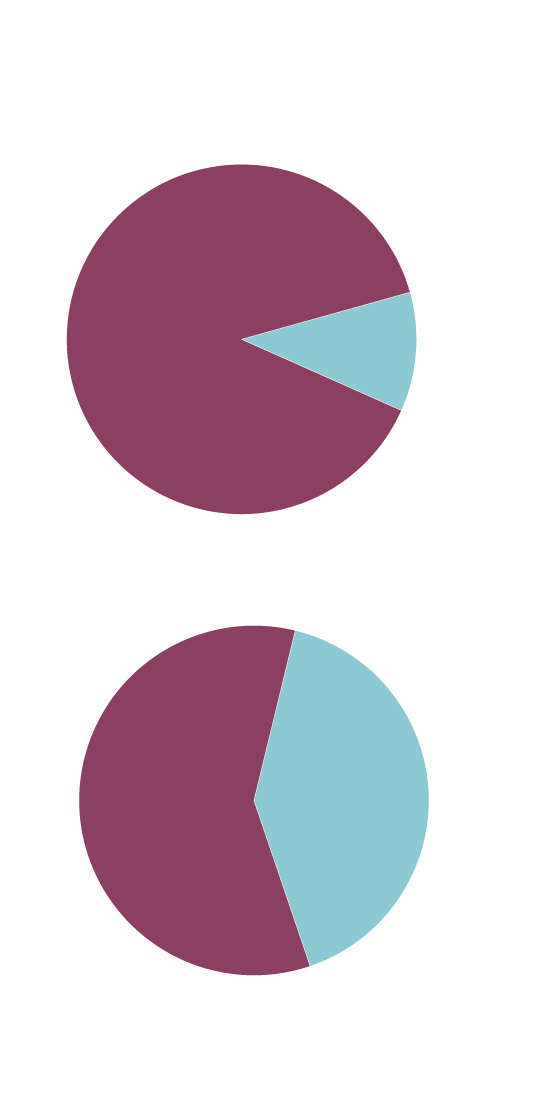
In fact, the United States is one of the least trade-oriented economies in the world, with exports accounting for just 11 per cent of GDP. Canada exports more than three times that, as a share of its economy.
Herein lies the leverage at the core of the Trump administration’s war footing. Washington believes it can inflict much more pain than it might bring upon itself.
The flaw in that plan is the stock market, which ultimately forced the President to pause his jumbo reciprocal tariffs hours after they went into effect on Wednesday.
After Wall Street freaked out over last week’s Rose Garden tariff spectacle, White House officials were quick to dismiss the fear that the U.S. economy was being put at risk.
“There’s nothing crazy about this policy,” Kevin Hassett, director of the National Economic Council, told Fox News. “Even if you think there will be some negative effect from the trade side, it’s still a small share of GDP.”
In other words, the U.S. is in fine shape to endure a trade war of its own making. It can rain punitive tariffs down on the rest of the world while its mighty domestic economy gives it cover against retaliation.
Perhaps that’s true, so long as the U.S. stock market doesn’t go haywire. Because unlike the real economy, it is highly globalized.
The U.S. stock market is much more
vulnerable to a trade war
than the U.S. economy
Exports as a share of U.S. GDP
Rest of GDP
89%
Exports
11%
S&P 500 foreign sales
as % of total sales
Domestic
sales
Foreign
sales
59%
41%
the globe and mail,
Source: National Bank of Canada

The U.S. stock market is much more
vulnerable to a trade war
than the U.S. economy
Exports as a share of U.S. GDP
Rest of GDP
89%
Exports
11%
S&P 500 foreign sales
as % of total sales
Domestic
sales
Foreign
sales
59%
41%
the globe and mail,
Source: National Bank of Canada

The U.S. stock market is much more vulnerable to a trade war than the U.S. economy
Exports as a share of U.S. GDP
S&P 500 foreign sales
as % of total sales
Rest of GDP
89%
Domestic
sales
Foreign
sales
Exports
59%
41%
11%
the globe and mail, Source: National Bank of Canada
The companies in the S&P 500 index derive more than 40 per cent of their revenues from foreign markets, making the world’s foremost stock market acutely vulnerable to a trade war.
Companies such as Boeing Co. BA-N, American Express Co. AXP-N and Nike Inc. NKE-N, which have lots of international exposure, have seen their share prices drop by 16 to 18 per cent since last week’s “Liberation Day.”
The tech sector’s share of international revenues, meanwhile, is closer to 60 per cent, which is one big reason Big Tech has been clobbered. Apple Inc. AAPLQ and Nvidia Corp. NVDA are both down by roughly 30 per cent year-to-date.
Bad things start to happen when the stock market falters. Household wealth declines. Retirement plans are put at risk. Consumers seeing their savings melt away start to change their spending habits. Companies run afoul of debt covenants. Projects are shelved. Eventually, the knock-on effects start to show up in the hard data – consumer spending, corporate earnings, and the labour market.
We’re now seeing the leading edge of that economic downturn.
U.S. earnings estimates are being furiously revised, at a level that “should mimic a recession,” JP Morgan Chase analysts wrote in a note to clients on Monday.
“Now, businesses have to contend with the fallout from a sudden drop in equity prices and the inability to borrow money through seized-up credit markets,” wrote Callie Cox, chief market strategist at Ritholtz Wealth Management.
Investors have a lot to contend with as well. Since the COVID-19 pandemic, millions of Americans have taken up stock investing. The booming bull market of the time and its frantic run-ups in meme stocks and cryptoassets drew new masses into financial markets.
As a result, stocks now account for nearly 45 per cent of total household financial assets. Never before have American households been more exposed to the stock market.
Naturally, many of them won’t be thrilled to log in to their investment accounts and see 15 per cent of their investment wealth erased in a couple of weeks. And who knows how much further the market can fall.
Many of them are already growing cautious with how they spend. This is called the “wealth effect.” It’s an economic positive when the market is cooking. Oxford Economics estimates that wealth effects contributed one-fifth of the total increase in U.S. consumer spending since the end of 2019.
But on the way down, the wealth effect turns negative, transmitting stock market turmoil to a US$30-trillion economy rooted in consumer spending. And the economic firewall the Trump administration thought it was behind crumbles.
What questions do you have about how tariffs and market volatility will impact you?
U.S. President Donald Trump's tariff plans have spurred concerns about higher prices and sown confusion about next steps. People are rethinking spending decisions, from buying homes to where to they should go on a family vacation.
What questions do you have about the ongoing tariff war and how it will affect your personal finances and investments? On Tuesday, April 15 at at 1 p.m. ET, personal finance columnist Rob Carrick, retirement reporter Meera Raman and investment reporter Tim Shufelt will answer reader questions.
Should I buy a car now or hold off on making a big purchase? Should I renew my mortgage? Should I sell my Apple stock and other U.S. equities? Should I increase my cash positions? Should I stock up on certain groceries? Submit your questions in the form below.