AST SpaceMobile Drops 15% After Blue Origin Satellite Mishap
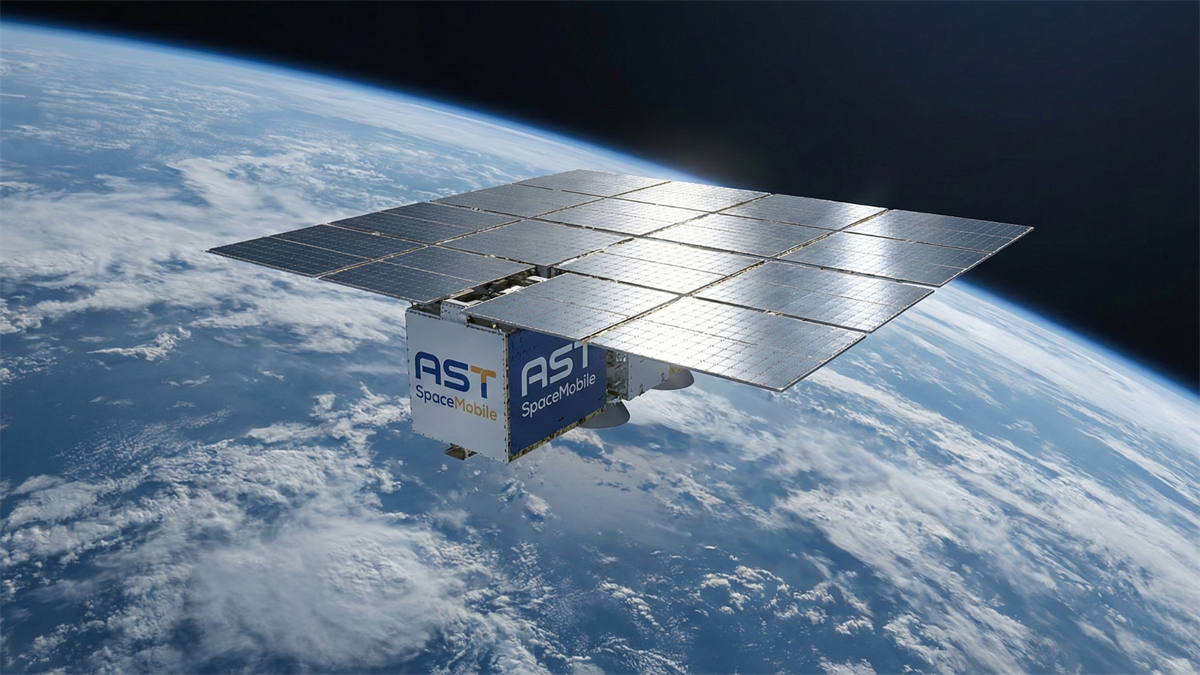
For burgeoning growth stocks, it only takes a momentary, short-term misstep to jeopardize lofty, long-term expectations that can result in severe market reactions.
Such was the case for aerospace and telecommunication services upstart AST SpaceMobile (NASDAQ: ASTS), which saw its shares plummet in premarket trading on April 20.
The cause: Blue Origin’s New Glenn rocket deposited the BlueBird 7 satellite into lower-than-planned orbit on Sunday, April 19. The result: Shares of ASTS careened 15% at the open on Monday.
The launch, which took place at Cape Canaveral, Florida, deployed the low-Earth orbit (LEO) satellite—which would have been AST SpaceMobile’s eighth in its fleet—at an altitude too low for it to sustain operations. Bluebird 7 will now be de-orbited, the cost of which is expected to be absorbed by the company’s insurance policy.
Nonetheless, the stock took an enormous hit.
Shares of the SpaceX rival plummeted and now find themselves down around 34% from their year-to-date high on Jan. 29. Here’s what prospective investors and current shareholders need to know going forward.
Blue Origin Mishap Could Pose Risk to AST SpaceMobile’s 2026 Launch Target
The mission failure marks the first time AST SpaceMobile used Blue Origin—the company founded and owned by Jeff Bezos—as its launch provider.
The setback comes as the company is currently in production of LEO satellites through BlueBird 32, with BlueBird 8, 9, and 10 are expected to be ready for shipment from their Texas assembly facility in a month’s time.
The company is still aiming to deploy 45 total satellites by the end of 2026, with an intended orbital launch schedule every one to two months.
While that goal will likely be harder to achieve now, it does not mark a complete failure. That’s according to William Blair analyst Louie DiPalma, who wrote in a research note on Monday that “The silver lining is that there was only one satellite on board, whereas future New Glenn launches may have as many as eight of AST’s BlueBirds.”
AST SpaceMobile Is Already Behind Schedule
DiPalma’s comments come after global communications industry publication Light Reading reported in late January that at its current pace, AST SpaceMobile is at risk of missing its then-launch target of 45 to 60 satellites in orbit by year’s end.
Even prior to the Blue Origin setback, Michelle Donegan, senior editor at Light Reading, noted that AST SpaceMobile achieving its launch targets may prove to be a tall order for the Midland, Texas-based company.
“AST has fallen behind schedule from its original plans outlined last year and adjusted expectations in the last few quarters,” Donegan says. “[This is] sparking questions about whether it can still achieve its ambitious target in a compressed timeframe and provide sufficient coverage for a continuous service by year-end for its mobile operator partners.”
Long-Term, AST SpaceMobile’s Trajectory Remains Intact
While shares of ASTS are trading just around 5% lower than their consensus one-year price target, the bullish investment thesis remains in place.
The company’s earnings have been improving. On March 2, AST SpaceMobile released its Q4 2025 financial results, reporting quarterly revenue of $54.31 million, beating analyst expectations of $39.53 million by a wide margin. That was good for a year-over-year (YOY) revenue growth rate of nearly 2,758%, following YOY revenue growth of 1,240% in Q3.
Earnings per share of negative 26 cents fell short of analyst expectations of negative 8 cents. However, the company's cash, cash equivalents, restricted cash, and liquidity position grew to $3.9 billion, leaving it well-equipped to continue scaling its infrastructure for direct-to-cellphone satellite services.
AST SpaceMobile also announced that it secured over $1.2 billion in aggregate contracted revenue commitments from its partners in 2025. The space-based cellular broadband company has existing strategic partnerships with companies including Verizon Communications (NYSE: VZ), AT&T (NYSE: T), Vodafone Group (NASDAQ: VOD), Japanese tech conglomerate Rakuten (OTCMKTS: RKUNY), real estate investment trust American Tower (NYSE: AMT), and BCE (NYSE: BCE), one of Canada’s largest telecommunications and media companies.
Additionally, the firm is increasingly positioning itself as a federal government contractor. In February, AST SpaceMobile announced that it had secured a $30 million prime contract from the U.S. Space Development Agency (SDA) for the HALO Europa Program, marking the first-ever prime contract for its defense subsidiary and solidifying its role as a key government contractor.
That federal agreement marked the first-ever prime contract for AST SpaceMobile USA, the company’s wholly owned defense subsidiary, and the company’s second federal government contract announcement since the start of the year.
According to Chris Ivory, CEO of AST SpaceMobile USA, the “selection for SDA’s Europa Track 2 program validates AST SpaceMobile’s ability to rapidly operationalize commercial space capabilities for national security.”
Ultimately, the next stretch for AST SpaceMobile is likely to be judged less by headlines and more by execution: production throughput, launch cadence, successful deployment, and early service performance as the constellation grows.
Where Should You Invest $1,000 Right Now?
Before you make your next trade, you'll want to hear this.
MarketBeat keeps track of Wall Street's top-rated and best performing research analysts and the stocks they recommend to their clients on a daily basis.
Our team has identified the five stocks that top analysts are quietly whispering to their clients to buy now before the broader market catches on... and none of the big name stocks were on the list.
They believe these five stocks are the five best companies for investors to buy now...
The article "AST SpaceMobile Drops 15% After Blue Origin Satellite Mishap" first appeared on MarketBeat.
