Key Points
Elon Musk's space exploration and satellite business, SpaceX, is gearing up for what could be the largest IPO in history.
While retail investors wait for SpaceX stock to hit the public exchanges, several vehicles provide passive exposure to the business today.
Over the last few years, growth investors have increasingly sought exposure to the final frontier: space exploration. Elon Musk's SpaceX stands as one of the premier investment opportunities in the commercial space sector -- specializing in reusable launch vehicles and delivering global broadband through its Starlink satellite constellation.
According to filings with the Securities and Exchange Commission (SEC), SpaceX is moving toward an initial public offering (IPO) in June with a target valuation of $1.75 trillion.
Will AI create the world's first trillionaire? Our team just released a report on the one little-known company, called an "Indispensable Monopoly" providing the critical technology Nvidia and Intel both need. Continue »
While SpaceX could become the largest IPO of all time, smart investors need not wait until its shares hit the public exchanges to start benefiting. Vehicles including Alphabet (NASDAQ: GOOGL)(NASDAQ: GOOG), the Ark Venture Fund (NASDAQMUTFUND: ARKVX), and the Baron Partners Fund(NASDAQMUTFUND: BPTRX) already offer meaningful exposure to SpaceX.
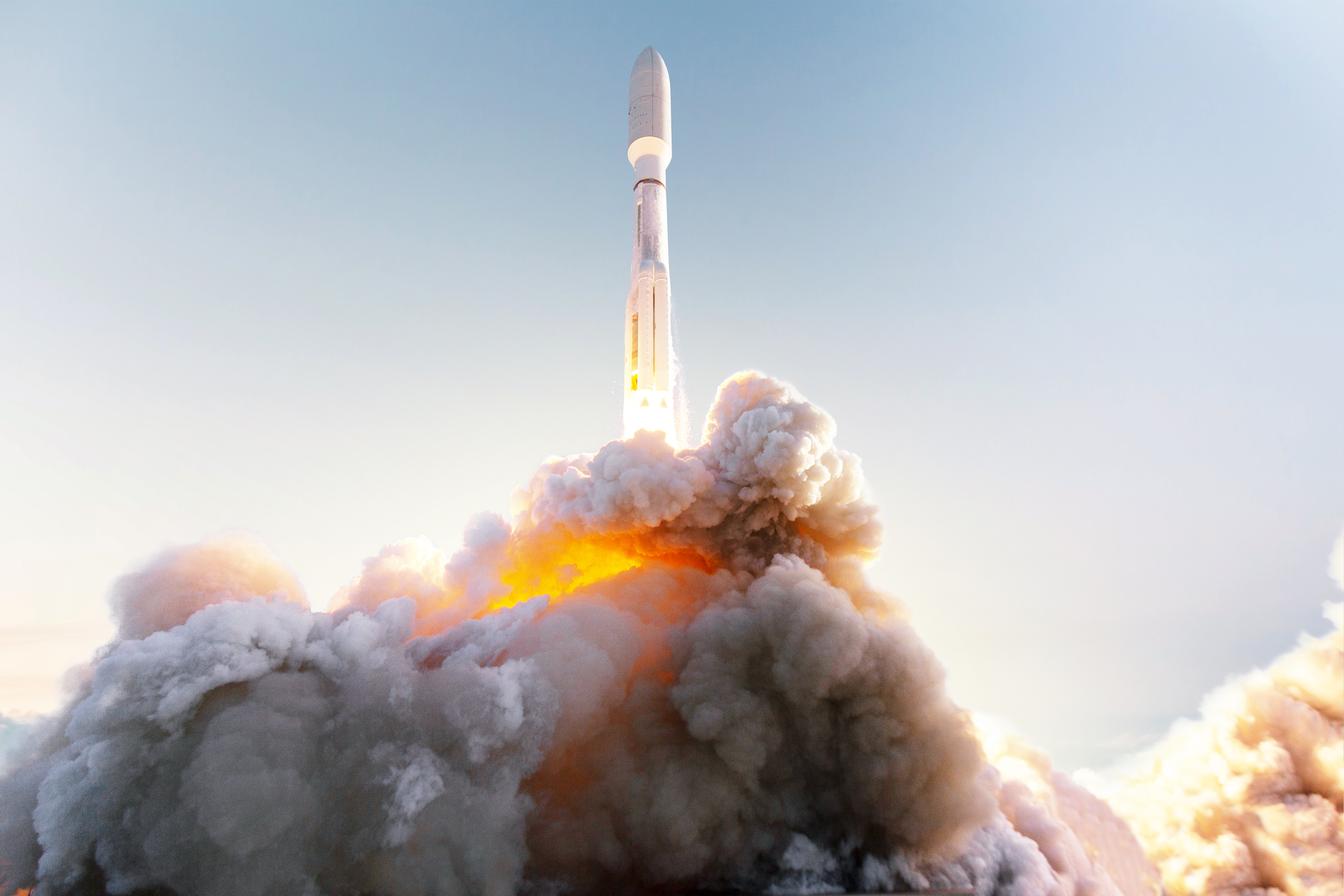
Image source: Getty Images.
1. Ark Venture Fund: Cathie Wood's concentrated venture capital portfolio
Cathie Wood's Ark Venture Fund offers a direct and aggressive bet on SpaceX. The fund actively acquires and holds shares of private companies, and SpaceX is its largest position.
Since its inception in September 2022, the Ark Venture Fund has generated cumulative returns of 151%, or roughly 30% annually -- far outpacing the S&P 500(SNPINDEX: ^GSPC) during this period. Notably, a large share of those gains were recognized last year, when the valuations of SpaceX, OpenAI, and Anthropic -- all top-five holdings in the fund -- soared.
While investing in pre-IPO companies may look alluring from the outside, it comes with high costs. As an interval fund, lack of liquidity is a key issue. Unlike stocks or most exchange-traded funds (ETFs), which holders can sell at any point, the Ark Venture Fund only offers redemptions during certain windows each quarter. Moreover, Ark charges a net expense ratio of 2.9% for the ETF -- a much higher fee than generic passive investment vehicles.
Nevertheless, the Ark Venture Fund remains one of the purest proxies to gain exposure to the most disruptive artificial intelligence (AI) and scientific research companies before they hit public exchanges.
2. Baron Partners Fund: Major Musk exposure
Ron Baron is a billionaire money manager who has long supported Musk's business ambitions. The Baron Partners Fund holds a small collection of both private and public company investments. The most important thing investors should be aware of is that over half the portfolio is concentrated in just two holdings: SpaceX (33%) and Tesla (20%).
Since its inception in 1992, the Baron Partners Fund has generated annualized returns of 15.6% -- well above the long-term average returns of the S&P 500 and about 50% better than the Russell Midcap Growth Index.
While its fees are higher than those of typical ETFs, liquidity options are more reasonable with the Baron Partners Fund compared to the Ark Venture Fund; investors can sell shares daily at their net asset value.
Image source: Getty Images.
3. Alphabet: Holds 6.1% of SpaceX
Back in 2015, Google's parent company acquired a stake in SpaceX during a $1 billion funding round. The stake provides Alphabet shareholders with indirect exposure to the space exploration unicorn without the private-market headaches.
According to recent regulatory filings, Alphabet still owns 6.1% of SpaceX. At a $1.75 trillion valuation, that represents a position worth more than $100 billion. Investors should not overlook this relationship, as Alphabet could theoretically benefit from SpaceX's IPO by liquidating some of its position to free up funds it could use to supercharge its AI ambitions across Google Search, YouTube, cloud computing, Waymo, and custom silicon.
Given that Alphabet trades just like any other technology stock, there are no special fees beyond standard brokerage costs and no minimum investment requirements. For those seeking SpaceX upside right now, Alphabet may be the easiest and cleanest mechanism by which to get it. Growth investors can essentially buy access to the hottest IPO of 2026 so far, tucked inside a proven cash flow compounder.
Should you buy stock in ARK Venture Fund right now?
Before you buy stock in ARK Venture Fund, consider this:
The Motley Fool Stock Advisor analyst team just identified what they believe are the 10 best stocks for investors to buy now… and ARK Venture Fund wasn’t one of them. The 10 stocks that made the cut could produce monster returns in the coming years.
Consider when Netflix made this list on December 17, 2004... if you invested $1,000 at the time of our recommendation, you’d have $498,522!* Or when Nvidia made this list on April 15, 2005... if you invested $1,000 at the time of our recommendation, you’d have $1,276,807!*
Now, it’s worth noting Stock Advisor’s total average return is 983% — a market-crushing outperformance compared to 200% for the S&P 500. Don't miss the latest top 10 list, available with Stock Advisor, and join an investing community built by individual investors for individual investors.
*Stock Advisor returns as of April 27, 2026.
Adam Spatacco has positions in Alphabet and Tesla. The Motley Fool has positions in and recommends Alphabet and Tesla. The Motley Fool has a disclosure policy.
