NTRA's Signatera Secures PMDA Approval for MRD Testing in CRC in Japan

Natera NTRA recently announced that Signatera has received PMDA approval in Japan for use in colorectal cancer (CRC) patients in the adjuvant setting. The approval makes Signatera the first PMDA-approved molecular residual disease (MRD) test in Japan and represents an important milestone in the company’s international expansion efforts.
Per management, the approval of Signatera in Japan reflects the contributions of investigators and patients who helped build the clinical evidence supporting this milestone. The company is now focused on preparing for the commercial launch of Signatera for CRC and remains committed to expanding global access to Signatera across additional cancer types, with muscle-invasive bladder cancer representing its next planned submission in Japan.
Likely Trend of NTRA Stock Following the News
Following the announcement, NTRA shares gained 10.7% at yesterday’s closing. Year to date, the stock has gained 13.5% against the industry’s 4.6% decline. The S&P 500 has risen 7.4% in the same timeframe.
The PMDA approval of Signatera may strengthen Natera’s position in the growing MRD diagnostics market and expand its commercial opportunities. Successful commercialization in Japan could drive broader adoption of Signatera among oncologists and healthcare providers seeking more personalized treatment approaches. Continued international expansion and additional regulatory approvals may further enhance Natera’s long-term growth prospects.
NTRA currently has a market capitalization of $33.62 billion.
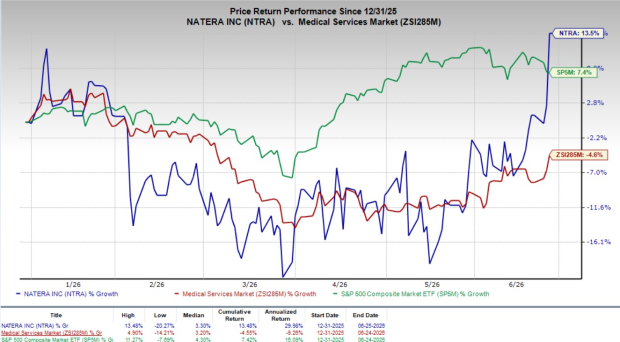
Image Source: Zacks Investment Research
More on the News
Natera plans to launch Signatera commercially in Japan by the end of 2026, pending final reimbursement and pricing decisions. The approval addresses a significant clinical need, as more than 150,000 people are diagnosed with CRC in Japan each year, making it one of the country’s most prevalent cancers. The incidence is comparable to that of the United States, underscoring the demand for more personalized tools in post-surgical cancer care.
The approval was backed by findings from the GALAXY clinical trial, part of the broader CIRCULATE-Japan initiative. Results showed that patients who were MRD-positive after surgery experienced significant benefit from adjuvant chemotherapy, while MRD-negative patients did not. The study analyzed 2,240 samples and is among the largest prospective investigations of MRD testing in resectable colorectal cancer, involving thousands of patients across more than 150 Japanese institutions.
The commercialization of Signatera will be supported by existing recommendations from the Japan Society of Clinical Oncology and the Japanese Society of Medical Oncology, both of which recognize the value of MRD testing in colorectal cancer management.
Industry Prospects Favoring the Market
Going by the data provided by Precedence Research, the MRD testing market was valued at $1.70 billion in 2025 and is expected to witness a CAGR of 12% through 2034.
Factors like the demand for highly sensitive technologies like next-generation sequencing (NGS) and digital PCR (dPCR), which accurately detect minimal residual cancer cells to guide treatment decisions and predict patient outcomes, are boosting the market’s growth.
Other News
Natera recently announced a collaboration with CytoDyn to evaluate circulating tumor DNA (ctDNA) dynamics and generate real-world molecular insights to support CytoDyn’s metastatic colorectal cancer (mCRC) development program. Signatera, Natera’s personalized assay for the detection of MRD, will be used to evaluate ctDNA dynamics and molecular response patterns associated with leronlimab treatment.
In May, Natera announced a collaboration with Diakonos Oncology to incorporate its Signatera molecular residual disease test into Diakonos’ DOC-RM Phase I/II investigational immunotherapy trial for patients with refractory melanoma.
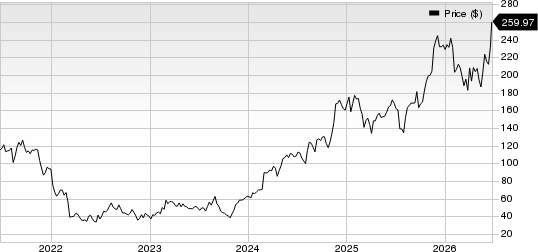
NTRA’s Zacks Rank & Key Picks
Natera currently carries a Zacks Rank #3 (Hold).
Some better-ranked stocks from the broader medical space are BrightSpring HealthBTSG, Globus Medical GMED and Intuitive Surgical ISRG.
BrightSpring Health, currently sporting a Zacks Rank #1 (Strong Buy), reported first-quarter 2026 adjusted earnings per share (EPS) of 39 cents, which beat the Zacks Consensus Estimate by 34.5%. Revenues of $3.61 billion surpassed the Zacks Consensus Estimate by 8.35%. You can see the complete list of today’s Zacks #1 Rank stocks here.
BrightSpring Health has an estimated long-term earnings growth rate of 46.5%. BTSG’s earnings surpassed estimates in three of the trailing four quarters and missed once, the average surprise being 14.6%.
Globus Medical, currently carrying a Zacks Rank #2 (Buy), reported a first-quarter 2026 adjusted EPS of $1.12, which surpassed the Zacks Consensus Estimate by 22.1%. Revenues of $759.9 million beat the Zacks Consensus Estimate by 4.0%.
GMED has an estimated long-term earnings growth rate of 10.2%. The company’s earnings beat estimates in each of the trailing four quarters, the average surprise being 26.3%.
Intuitive Surgical, carrying a Zacks Rank #2 at present, reported first-quarter 2026 adjusted EPS of $2.50, which beat the Zacks Consensus Estimate by 20.2%. Revenues of $2.77 billion surpassed the Zacks Consensus Estimate by 6.2%.
Intuitive Surgical has a long-term estimated growth rate of 14.3%. ISRG’s earnings surpassed estimates in each of the trailing four quarters, the average surprise being 16.8%.
Beyond Nvidia: AI's Second Wave Is Here
The AI revolution has already minted millionaires. But the stocks everyone knows about aren't likely to keep delivering the biggest profits. AI’s second wave is moving from infrastructure to implementation and these companies are at the forefront of this transition, positioned to become what Amazon and Google were to the internet era.
See Stocks Now >>This article originally published on Zacks Investment Research (zacks.com).
