Renewable energy stocks are up sharply Thursday as investors speculate that interest rate increases will at least pause for a while after yesterday's Federal Reserve meeting. Short-term rates were kept flat for a second straight meeting at 5.25% to 5.5%. There's speculation that December's meeting will keep rates the same as well as the economy absorbs higher rates.
The big reaction for renewable energy companies comes because many have dropped dramatically as rates have risen. The most notable moves today were Sunnova Energy(NYSE: NOVA) jumping as much as 14.1%, Maxeon Solar(NASDAQ: MAXN) popping 12.3%, ChargePoint(NYSE: CHPT) gaining 14.3%, FuelCell Energy(NASDAQ: FCEL) gaining 11.5%, and Plug Power(NASDAQ: PLUG) up 9.9% at its peak.

Image source: Getty Images.
Why interest rates impact renewable energy stocks
Higher rates have hit renewable energy stocks especially hard because most projects are financed with debt over 10-20 years. Higher rates make the long-term cash flows less valuable and therefore the initial project less valuable, the same way bonds have fallen in value over the past year.
For installation companies like Sunnova, higher rates have directly increased financing costs and therefore they need to either reduce installation costs or raise prices to make money. This impacts suppliers like Maxeon, ChargePoint, FuelCell Energy, and Plug Power who are trying to sell their products to asset owners.
The entire industry is tied together and higher rates have made business more difficult.
What's going on with rates?
Today, the market is speculating that a pause in rate increases will at least make business easier and rate cuts may even be on the horizon. We see that in U.S. government 10-year bonds, which now yield 4.67%, a 6 basis point reduction from yesterday.
But look at the chart below and you can see that rates have been rising for two years and have started to flatten out in 2023. So, the long-term picture is still that rates are up and likely to stay higher for longer than a lot of investors expected a year or two ago.
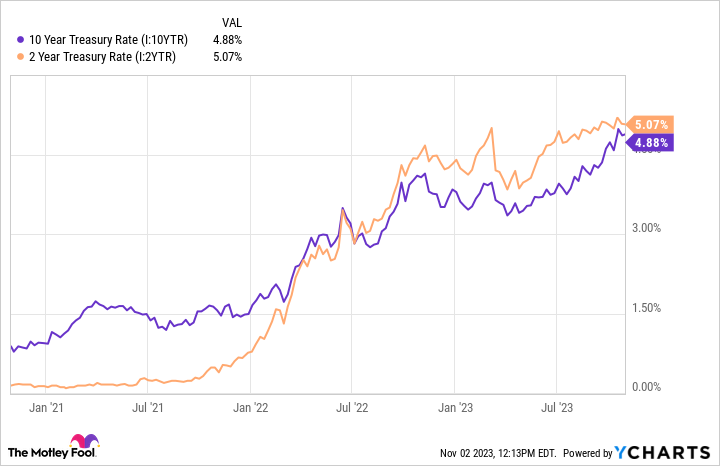
10 Year Treasury Rate data by YCharts.
I think the pressures that we've seen on the renewable energy industry are going to remain as higher labor costs and interest rates combine to hurt demand. Rates would have to not only stop climbing but actually drop for this to be a bullish trend for renewable energy projects.
The one positive is that electricity prices are expected to rise broadly as utilities face the same challenges I described above. They'll have to increase rates to make money and that will make renewable energy projects more competitive.
I think the long-term picture is positive for renewable energy, but investors will want to focus on companies that can generate positive cash flow when the market recovers. Plug Power, FuelCell Energy, and ChargePoint weren't profitable even when rates were lower, so I see no upside for them today.
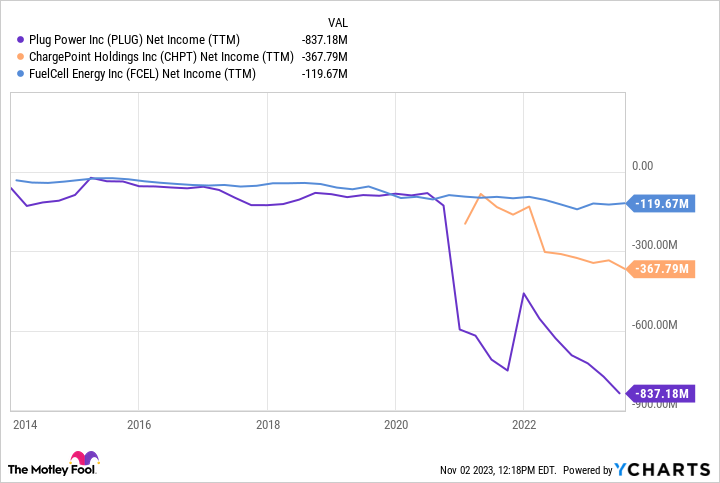
PLUG Net Income (TTM) data by YCharts
Sunnova and Maxeon have a brighter future, but it may take a year or two for the industry to really adjust to higher rates.
10 stocks we like better than ChargePoint
When our analyst team has a stock tip, it can pay to listen. After all, the newsletter they have run for over a decade, Motley Fool Stock Advisor, has tripled the market.*
They just revealed what they believe are the ten best stocks for investors to buy right now... and ChargePoint wasn't one of them! That's right -- they think these 10 stocks are even better buys.
*Stock Advisor returns as of October 30, 2023
Travis Hoium has no position in any of the stocks mentioned. The Motley Fool has no position in any of the stocks mentioned. The Motley Fool has a disclosure policy.
