Key Points
Peter Thiel is a billionaire technology investor.
His hedge fund, Thiel Macro, liquidated all of its remaining stock positions in Q4.
His decision to close these stakes came at a time of unusually high uncertainty in the stock market and economy.
Peter Thiel is a legendary businessman and Silicon Valley investor. In his early days, he boasted more of an entrepreneurial spirit -- co-founding e-commerce staple PayPal alongside Elon Musk.
Will AI create the world's first trillionaire? Our team just released a report on the one little-known company, called an "Indispensable Monopoly" providing the critical technology Nvidia and Intel both need. Continue »
After minting a fortune from his PayPal exit, Thiel married his experience in start-ups with investing. The billionaire was the first outside investor in Facebook (now Meta Platforms) and also helped found data analytics darling Palantir Technologies.
With a resume that stacked, I think it's fair to say that Thiel understands how to make money in the technology space. So investors may find it noteworthy that recent filings with the Securities and Exchange Commission (SEC) revealed the accomplished venture capitalist's hedge fund, Thiel Macro, dumped its entire stock portfolio -- which featured a handful of artificial intelligence (AI) stocks in particular.
Let's dive into what may have prompted these moves and assess if smart investors should follow Thiel's lead.
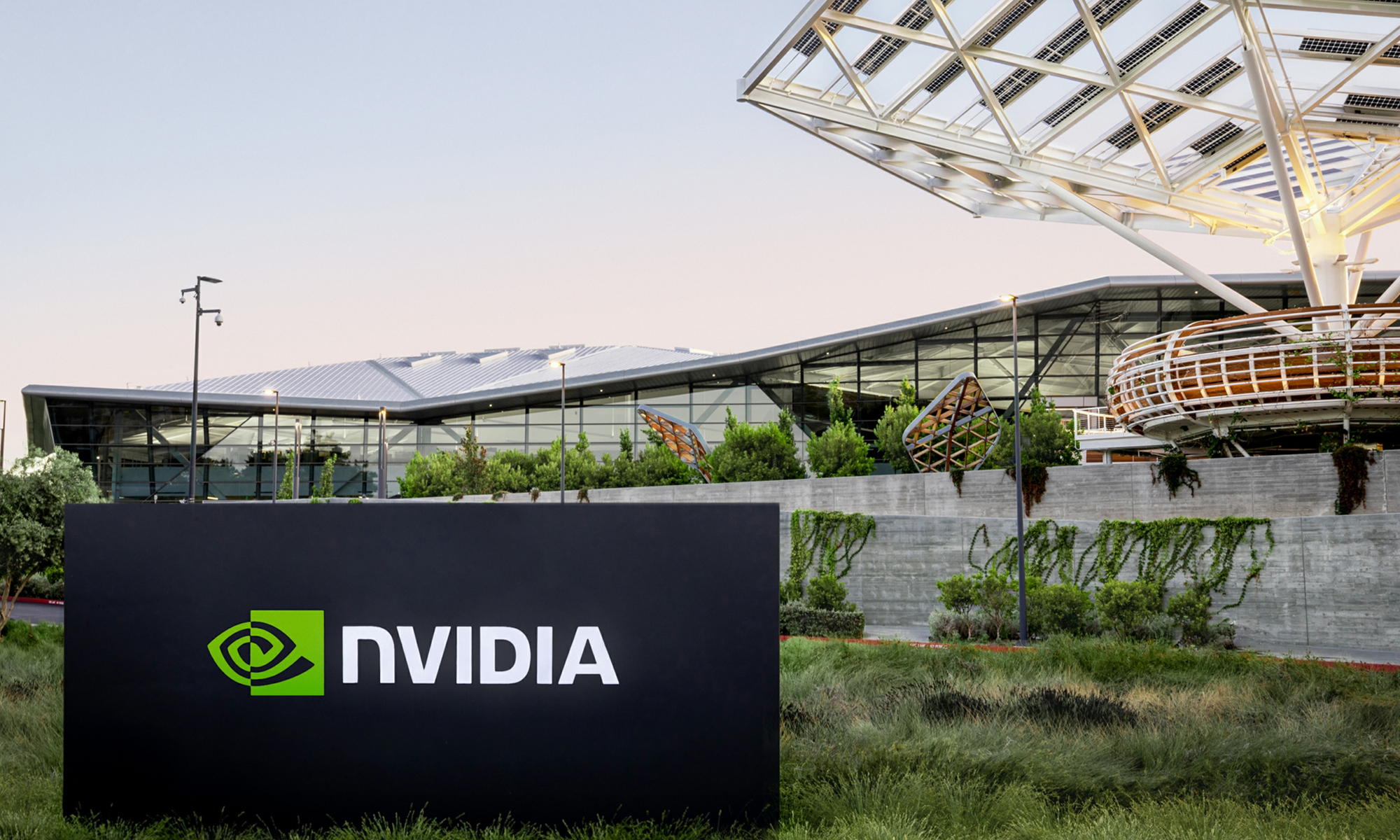
Image source: Nvidia.
Thiel has been selling stock like there's no tomorrow
During the third quarter, Thiel Macro exited its positions in Nvidia (NASDAQ: NVDA) and Vistra while also trimming exposure to Tesla(NASDAQ: TSLA). The firm also initiated positions in Microsoft(NASDAQ: MSFT) and Apple (NASDAQ: AAPL).
During the fourth quarter, however, Thiel's fund sold everything -- liquidating all three of its remaining stock positions and moving to cash. There are a number of factors that could have played into his calculus. While broader macro uncertainties likely influenced him, I'm going to focus on specific themes in the AI sphere here.
In recent quarters, Alphabet, Microsoft, Amazon, and Meta Platforms have signaled their desires to move toward vertical integration -- designing their own custom AI chips in-house with the help of Broadcom.
In addition, some developers have showcased that they are complementing their existing Nvidia GPU clusters with alternative accelerators -- particularly those offered by Advanced Micro Devices. Despite its current market leadership, smart investors are weighing the impact that rising competition could have on Nvidia's data center dominance.
I can think of a couple of reasons to sell Microsoft stock. The company's progress in AI is largely tied to its relationship with OpenAI. While OpenAI's user growth remains explosive, the competitive landscape among generative AI model developers is intensifying.
This isn't to say that Microsoft doesn't also work with competing model platforms. However, I think the perception of Microsoft right now is that it's a one-trick pony, selling additional cloud capacity deals as OpenAI, Anthropic, and other large language model (LLM) builders try to one-up each other.
The nuance here is that these LLM companies are leveraging multicloud strategies. Microsoft does not have exclusivity with anyone; hence, Azure's leverage over Amazon Web Services or Google Cloud Platform is limited at best. That brings uncertainty over the company's growth profile relative to the competition.
As far as AI is concerned, Apple and Tesla have something in common: Neither company has achieved a commercial breakthrough in scaling an AI-powered service at the enterprise level. Both Apple Intelligence and Tesla's autonomous vehicles and humanoid robots are still works in progress.
Furthermore, Apple and Tesla each sell premium goods. While the macroeconomic picture appears to be improving, interest rates still remain somewhat elevated, and the Federal Reserve's next monetary policy decision is anyone's guess. It's quite possible this uncertainty is deterring people from upgrading their iPhones or making the plunge on purchasing a new electric vehicle.
The AI boom has trickled down to other industries beyond technology. One of the largest beneficiaries of accelerating AI infrastructure is the energy sector, particularly nuclear energy companies.
Thiel Macro first initiated a position in power generation stock Vistra during the first quarter of 2025 and exited during the third quarter. While I do not know the specific dates of his purchases, shares of Vistra gained 42% during this period.
The run-up was primarily due to the narrative that Vistra -- which generates electricity from natural gas, coal, solar, and nuclear resources -- may benefit from rising interest among hyperscalers in nuclear energy solutions. While this could come to fruition at some point, Vistra is not a nuclear pure play, and the AI-driven buying in the stock was overpronounced.
Should you sell your stocks now?
The main theme from the analysis above is that it would appear Thiel has rotated his hedge fund's capital out of the stock market amid a period of unusually high uncertainty.
Between geopolitical tensions across the globe, a cloudy macroeconomic picture complemented by unknowns around any changes at the Federal Reserve or its policies, and the upcoming midterm election cycle, making money in the stock market in the near term will likely involve more luck than skill.
I think Thiel sees this dichotomy clearly and has chosen to dump stocks and hoard cash for the time being. That's not a bad choice, to be honest. That said, it doesn't necessarily mean retail investors should follow suit.
The S&P 500 has proven to be a resilient investment vehicle over the long term -- weathering numerous storms across recessions, depressions, wars, presidential cycles, and Fed turnover. Most institutional investors, like Thiel, combine a long-term mindset with short-term trading.
With this in mind, individual long-term investors need not worry too much about what hedge funds are doing now, as their goals may greatly differ from yours.
Should you buy stock in Nvidia right now?
Before you buy stock in Nvidia, consider this:
The Motley Fool Stock Advisor analyst team just identified what they believe are the 10 best stocks for investors to buy now… and Nvidia wasn’t one of them. The 10 stocks that made the cut could produce monster returns in the coming years.
Consider when Netflix made this list on December 17, 2004... if you invested $1,000 at the time of our recommendation, you’d have $420,864!* Or when Nvidia made this list on April 15, 2005... if you invested $1,000 at the time of our recommendation, you’d have $1,182,210!*
Now, it’s worth noting Stock Advisor’s total average return is 903% — a market-crushing outperformance compared to 192% for the S&P 500. Don't miss the latest top 10 list, available with Stock Advisor, and join an investing community built by individual investors for individual investors.
*Stock Advisor returns as of February 25, 2026.
Adam Spatacco has positions in Alphabet, Amazon, Apple, Meta Platforms, Microsoft, Nvidia, Palantir Technologies, and Tesla. The Motley Fool has positions in and recommends Advanced Micro Devices, Alphabet, Amazon, Apple, Meta Platforms, Microsoft, Nvidia, Palantir Technologies, PayPal, and Tesla. The Motley Fool recommends Broadcom and recommends the following options: long January 2027 $42.50 calls on PayPal and short March 2026 $65 calls on PayPal. The Motley Fool has a disclosure policy.
