Tractor Supply’s 10% Culling: A Bruise, Not a Break
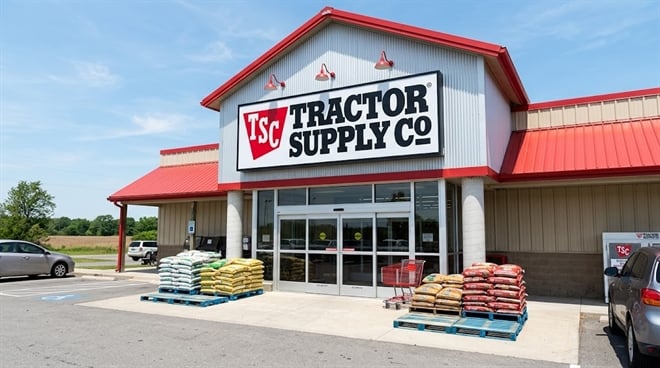
A double-digit stock plunge on massive trading volume is the kind of market event that demands attention. Following its first-quarter earnings report on April 21, shares of Tractor Supply Company (NASDAQ: TSCO) did just that, falling over 11% to a new 52-week low.
The sell-off was fueled by a volume of 25.9 million shares, more than double the daily average. At first glance, such a dramatic reaction suggests a company in distress. However, a deeper look at the data reveals a more nuanced story.
While the rural retailer missed analyst targets, it also grew revenue, reaffirmed its full-year guidance, and advanced key strategic plans. This raises a critical question for investors navigating the aftermath: Was the market's sharp rebuke a true reflection of Tractor Supply's health, or was it a potential overreaction to short-term pressures?
The Numbers Behind the Mayhem
Tractor Supply's first-quarter report presented a complex picture that helps explain the market's cautious stance. The company reported earnings per share (EPS) of 31 cents, missing the consensus estimate of 34 cents. Revenue for the quarter landed at $3.59 billion. While this marked a respectable 3.6% increase from the prior year, it fell just shy of the $3.64 billion analysts had forecast.
The report offered a clear window into the behavior of the American rural consumer. Comparable store sales, a metric that filters out the impact of new and closed stores, were up 0.5%. This slight increase was the product of a tug-of-war between two key trends: the average spend per customer rose 1.6%, while the total number of transactions declined 1%. This dynamic, known as trip consolidation, often occurs when consumers face economic pressure from factors like inflation and high fuel prices. They visit stores less often to save time and money, but they tend to buy more in each visit.
On the profit side, Tractor Supply maintained its gross margin at 36.2%, a positive sign of its cost management. However, operating income decreased by 6.3%. This contraction was not due to a collapse in pricing but was a direct result of sales volumes coming in lower than planned, combined with the significant investment required to open a record 40 new stores during the quarter. When viewed through a broader lens, these marginal misses appear almost trivial. They are set against the backdrop of significant, ongoing investments and progress in the company’s internal strategic transformation, known as Project Fusion, and the broader, lingering uncertainty of the current economic climate.
Prioritizing Profits Over Progress
In today's economic climate, the market often prioritizes profitability and efficiency over top-line growth, and its reaction to Tractor Supply's report was a textbook example. The sell-off was triggered primarily by declines in operating income and customer traffic.
These metrics were interpreted as potential cracks in Tractor Supply's otherwise resilient needs-based business model. The positive revenue growth and the crucial reaffirmation of full-year guidance were largely overshadowed by near-term margin concerns.
The stock's dramatic fall to the $39.57 level pushed it to a new 52-week low, a move that starkly contrasts with analysts' prevailing view. Even after the report, the Wall Street consensus rating for Tractor Supply remains a Moderate Buy. The average price target of $57.78 suggests analysts see significant long-term value, with the current price viewed as undervalued. This wide gap between the market's immediate, punitive reaction and the more optimistic long-term professional outlook is often where potential opportunities can be found.
How Tractor Supply Is Cultivating a Comeback
Acknowledging the challenges is the first step toward overcoming them, and Tractor Supply's management has outlined a clear and proactive strategy. The primary headwind identified in the report was the Companion Animal category, which dragged comparable sales by 100 basis points. In response, Tractor Supply is executing a multi-pronged plan to revitalize this crucial segment.
Pivoting to Premium Pet Food: Tractor Supply is aggressively scaling its assortment of fresh and frozen pet food, a high-growth area where it was under-indexed. The plan is to expand this offering from just 80 stores to over 700 by the end of 2026.
Courting the Cat Customer: To capitalize on shifting pet ownership trends, Tractor Supply is significantly expanding and upgrading its assortment of cat food and supplies.
Innovating with Exclusive Brands: Tractor Supply is relaunching its exclusive Retriever pet food line with enhanced formulas and expanding its popular 4health brand into new formats.
While the pet category is being retooled, other areas of the business continue to fire on all cylinders. Digital sales posted another quarter of strong double-digit growth, powered by a triple-digit increase in its subscription business for consumable goods.
The Final Mile delivery network is also expanding, enhancing Tractor Supply's ability to efficiently handle large-scale orders of items like feed and fencing. This digital and logistical strength, combined with the continued opening of new physical stores, demonstrates a business simultaneously addressing weaknesses and scaling its strengths.
Harvesting Opportunity: A Resilient Retailer at a Discounted Price?
For investors, the central question is whether Tractor Supply's stock price now represents a value trap or a genuine bargain. With the share price at a 52-week low and a trailing price-to-earnings ratio of 19X, the stock is trading at a discount to its historical valuation. This suggests that the market may have overly punished the stock for short-term issues.
For those focused on income, the stock's profile has become more attractive. The price drop pushed the dividend yield to 2.4%. This income stream is supported by a track record of shareholder returns. Tractor Supply has increased its dividend for 16 consecutive years, proving its resilience through various economic cycles. Furthermore, with a dividend payout ratio of just 46.38%, the dividend is not only safe but has ample room for future growth.
The first quarter undoubtedly revealed that even a needs-based retailer like Tractor Supply is not immune to a cautious consumer. However, the market's severe reaction appears to downplay Tractor Supply's stable foundation.
With reaffirmed guidance, a clear strategy to address its challenges, and a steadfast commitment to its dividend, Tractor Supply's fundamentals remain solid. Investors focused on long-term value and reliable income may find that now is an opportune time to watch this rural retail leader for accumulation.
Where Should You Invest $1,000 Right Now?
Before you make your next trade, you'll want to hear this.
MarketBeat keeps track of Wall Street's top-rated and best performing research analysts and the stocks they recommend to their clients on a daily basis.
Our team has identified the five stocks that top analysts are quietly whispering to their clients to buy now before the broader market catches on... and none of the big name stocks were on the list.
They believe these five stocks are the five best companies for investors to buy now...
The article "Tractor Supply’s 10% Culling: A Bruise, Not a Break" first appeared on MarketBeat.
