Burger King’s Turnaround Is Putting Restaurant Brands Back in Focus
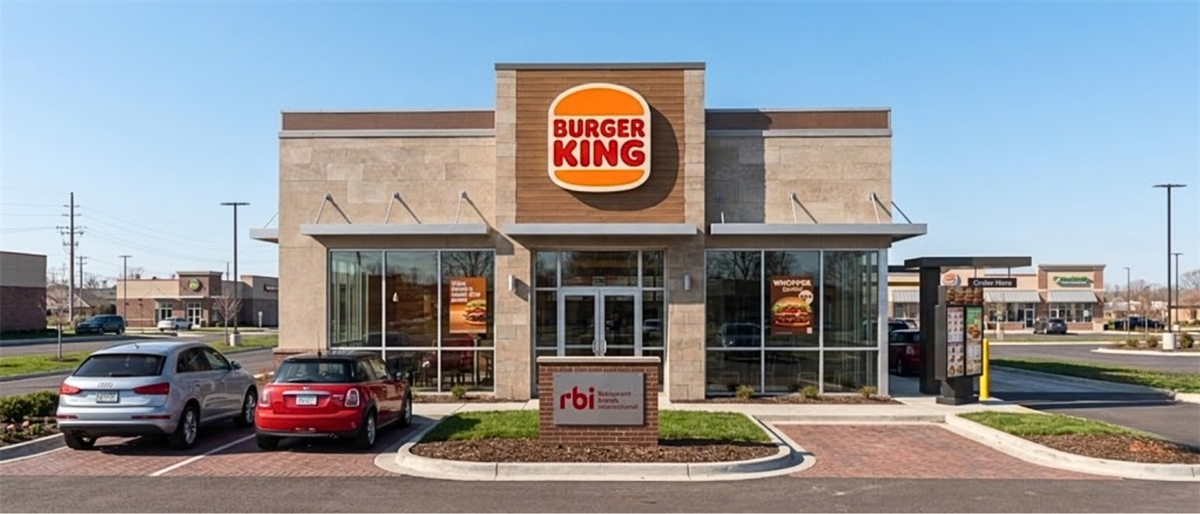
Investors could be forgiven if they thought Restaurant Brands International (NYSE: QSR) was just another holding company for aging fast-food brands.
That has changed. The numbers from the first quarter of 2026 paint a picture that the market appears to have only partially absorbed. Revenue and income are up. Systemwide sales are on the rise. Investment firms are buying into the company. And the company’s push for modernization and expansion is accelerating.
Whether investors see similar results when the second quarter figures are released remains to be seen. But investors should be paying attention as the company’s plans are being aggressively rolled out.
Restaurant Brands Is Seeing New Momentum
Restaurant Brands, with 33,000 restaurants in more than 125 markets, was assembled over the past dozen years through a series of mergers. Today, it includes Burger King, Tim Hortons, Popeyes, and Firehouse Subs.
The business runs almost entirely on franchising, which means the company collects royalties and licensing fees rather than cooking hamburgers itself. The benefit is that earnings are structurally protected from the daily volatility of food costs and labor markets. Instead, the model produces steadier, high-margin cash flows that have long supported a generous dividend.
Burger King Turnaround Is Gaining Traction
A significant turning point came in 2022, when management launched a program called Reclaim the Flame, a multi-year effort to rescue Burger King in the United States. The brand had been languishing in its fight with McDonald's (NYSE: MCD) and Wendy's (NASDAQ: WEN). Franchisees were struggling, and the marketing had gone stale.
With plans to invest up to $700 million through 2028, the Reclaim the Flame program was aimed at increasing sales and helping franchisee profitability with improved advertising and digital investments. Part of that initiative, targeting remodels, technology, and kitchen equipment, has already seen $189 million of the $550 million funded. Marketing campaigns, such as the recent early tie-in with the Star Wars film "The Mandalorian and Grogu," have also taken hold.
Sales Growth Signals Real Progress
The results are encouraging. In the first quarter of 2026, Burger King U.S. delivered comparable sales growth of 5.8%, a swing of nearly seven percentage points from a 1.1% decline in the same quarter a year earlier.
Systemwide sales at the 7,000 restaurants grew 5.5%, and segment adjusted operating income reached $115 million, up from $103 million a year prior. While notable for any restaurant brand. For Burger King, they represent a fundamental shift in the business.
The company’s international segment also enjoyed a significant increase. Its 16,400 restaurants reported a 5.7% increase in comparable sales during the quarter compared with a year earlier, more than twice the pace of growth in the year-ago period.
Strong Financial Results Support Expansion
The broader portfolio reflects a similar momentum. While the restaurant chains collected $11.5 billion from sales in the first quarter, up $1 billion from a year ago, not all of that flows to the parent company.
Total corporate revenue for the first quarter rose above analysts’ expectations to $2.26 billion from $2.11 billion a year earlier. Adjusted diluted earnings per share increased to 86 cents from 75 cents, also beating what analysts expected. Adjusted operating income climbed to $610 million from $539 million. GAAP net income from continuing operations doubled to $445 million.
Consolidated systemwide sales growth reached 6.2%, supported by 5.7% comparable sales growth in the international segment, which spans markets from Europe to Latin America to Southeast Asia. Under current plans, it also represents the company's most significant long-term expansion opportunity.
With plans to be 99% franchised by 2028, the company has said it plans to add 1,800 new units per year through that date, with a particular focus on the expansion of Burger King China.
Analysts See More Upside Ahead
The recent results have analysts mostly encouraged. Of the 25 analysts following the stock, they have a consensus rating of Moderate Buy, with 15 placing the company as a Buy, nine rating it a Hold, and one recommending Sell. The average 12-month target price is $83.54 per share, suggesting an approximately 15% upside.
Beyond the targeted appreciation, the company also has an attractive dividend yield, currently about 3.6% based on its quarterly payout of 65 cents per share.
Management also announced that it bought back $34 million of company stock in the first quarter, with an additional $26 million purchased in April, leaving $940 million remaining under the board's broader authorization.
Risks Still Deserve Investor Attention
Despite the positive numbers and trajectory, the risks for Restaurant Brands remain. While the highest analyst target price is $92 per share, the lowest is $60, signaling clearly that some doubts remain.
Tim Hortons, the Canadian coffee-and-breakfast chain that accounts for approximately 38% of the company's operating profits, saw comparable sales grow only 1.5% in the first quarter. Popeyes, which has over 3,500 outlets, had a difficult first quarter with comparable sales in the United States falling 6.5%, and adjusted operating income slipping to $57 million from $60 million.
The broader consumer discretionary sector is also prone to sudden changes. Rising costs, consumer preferences, tariffs, and franchisee financial health are all active concerns.
A Promising Story Still Needs Confirmation
For investors, the momentum is attractive, but the strategy rollout is not yet complete. Investors wanting a cleaner story might find more comfort in waiting and letting the next quarter or two confirm the trajectory.
Either way, this is not a situation that will likely announce itself loudly. The company is not a startup with a revolutionary new product. It is a franchise operator with four well-known brands, a disciplined management team, and a key brand turnaround that is quietly producing.
Where Should You Invest $1,000 Right Now?
Before you make your next trade, you'll want to hear this.
MarketBeat keeps track of Wall Street's top-rated and best performing research analysts and the stocks they recommend to their clients on a daily basis.
Our team has identified the five stocks that top analysts are quietly whispering to their clients to buy now before the broader market catches on... and none of the big name stocks were on the list.
They believe these five stocks are the five best companies for investors to buy now...
The article "Burger King’s Turnaround Is Putting Restaurant Brands Back in Focus" first appeared on MarketBeat.
