Water Infrastructure: Why This Boring Sector Could Get Exciting
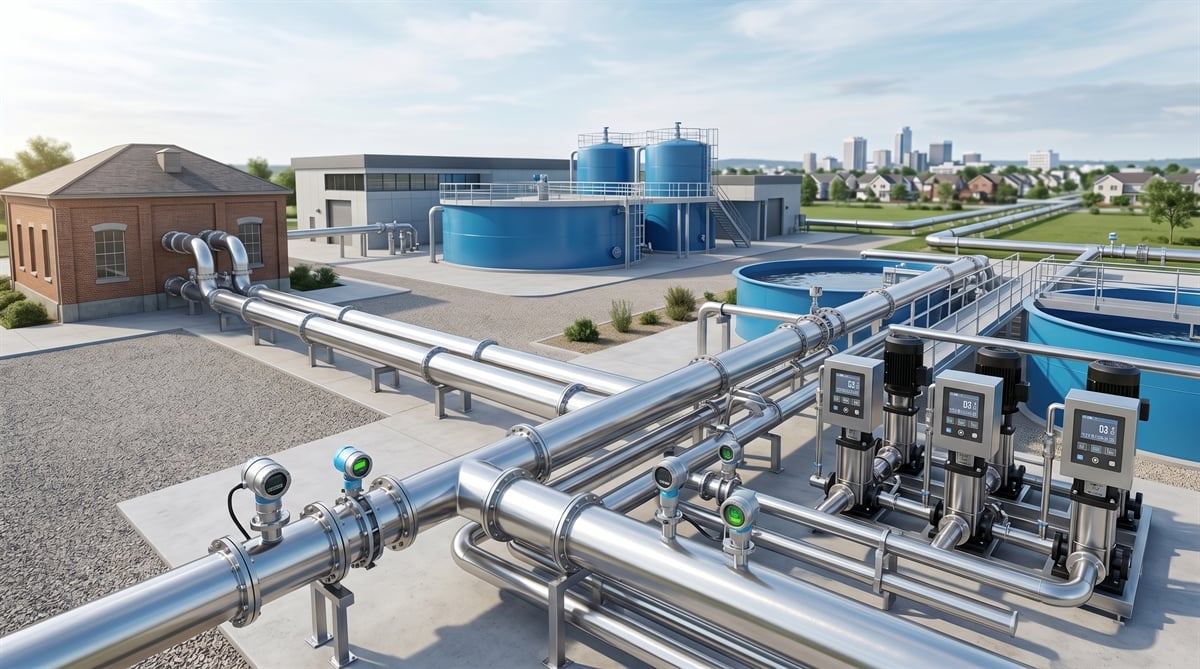
Utilities like water companies are highly regulated industries. This usually keeps growth-oriented investors looking for other options. But in the last few years, several catalysts have made water infrastructure stocks attractive growth targets.
The long-term case started earlier this decade. In its 2025 infrastructure report card, the American Society of Civil Engineers gave the United States water infrastructure grades ranging from a C- to a D. The upgrades began with the passage of the Infrastructure Investment and Jobs Act (IIJA) in 2021, which allocated $50 billion over five years for drinking water and wastewater-related infrastructure.
That spending is winding down. However, on March 17, 2026, the U.S. Department of the Interior announced an additional $889 million for critical water infrastructure projects across six Western states, saying the funding was made possible by the One Big Beautiful Bill Act.
Industry consolidation is reshaping the water utility sector. Many smaller utilities lack the capital necessary for upgrades, driving private investment into water utilities and wastewater systems. With over 50,000 community water systems and 16,000 wastewater treatment facilities, this trend has room to continue.
A more conventional catalyst comes from a regulated rate structure that allows water utilities to run their business without competition. The companies are also getting a tailwind from an interest rate policy that has been more accommodative since the fall of 2024.
American Water Works: Rate-Base Growth to a Consolidation Theme
American Water Works (NYSE: AWK) is one of the largest publicly traded water utility companies in the United States.
The company is a good example of a company that’s benefiting from multiple catalysts in water infrastructure.
For starters, American Water Works’ regulated business has a rate base that is growing at a compound annual growth rate (CAGR), between 6% and 8%. That means state-approved capital investments drive revenue increases, which flow almost directly to earnings. The company is guiding to full-year 2026 earnings per share (EPS) of $6.02 to $6.12, a 5% year-over-year (YOY) gain at the low end.
American Water Works is an example of industry consolidation, with its planned $19.1 billion acquisition of Essential Utilities expected to close in 2027.
That growth isn’t showing up yet in AWK, which is down over 12% in the last 12 months. But analysts are forecasting 9.8% earnings growth.
While investors wait on that growth, they’ll collect a dividend that has increased for 18 consecutive years and has been increasing at an average annual rate of over 8% in the last five years.
Essential Utilities: A Merger Play With a 33-Year Dividend Streak
As previously mentioned, Essential Utilities (NYSE: WTRG) is being acquired by American Water Works next year, creating a company that will serve over 20 million people across 17 states with a combined rate base approaching $34 billion. The merger received Kentucky regulatory approval in April 2026, and shareholder votes from both companies passed overwhelmingly in February.
However, while investors wait for that deal to close, Essential Utilities is still operating on its own and doing it well. Q1 2026 revenue rose 10% YOY, and the company affirmed its full-year outlook.
The other reason to pay attention is the dividend. Essential Utilities has raised its payout for 32 consecutive years. That’s a streak that's survived recessions, rate cycles, and now a pending corporate merger. With a current yield of around 3.5% and a post-merger EPS growth target of 7% to 9% annually, Essential Utilities offers investors a rare combination of a company with a defined catalyst ahead and income while you wait.
Xylem: The Tech Angle on Water Modernization
Xylem (NYSE: XYL) isn't a water utility in the traditional sense. Rather, the company builds tools that keep water utilities running.
Xylem makes pumps, treatment systems, smart meters, and data analytics platforms that utilities use to move, monitor, and clean water. That positions it differently from regulated monopolies. It grows when water infrastructure spending grows, without the rate-case lag.
The numbers back that up. The company posted record full-year 2025 revenue of $9 billion, with adjusted EPS up 19% YOY. In Q1 2026, EPS rose another 14% on a reported basis, and management is guiding for 2026 adjusted EPS of $5.35 to $5.60, with EBITDA margins expanding by up to 110 basis points.
XYL has pulled back roughly 20% from its highs, largely on a cautious revenue growth outlook and some Asia-Pacific headwinds. But for investors who want exposure to the structural water infrastructure buildout without owning a utility, XYL's pullback looks like it’s offering an attractive entry point.
Where Should You Invest $1,000 Right Now?
Before you make your next trade, you'll want to hear this.
MarketBeat keeps track of Wall Street's top-rated and best performing research analysts and the stocks they recommend to their clients on a daily basis.
Our team has identified the five stocks that top analysts are quietly whispering to their clients to buy now before the broader market catches on... and none of the big name stocks were on the list.
They believe these five stocks are the five best companies for investors to buy now...
The article "Water Infrastructure: Why This Boring Sector Could Get Exciting" first appeared on MarketBeat.
