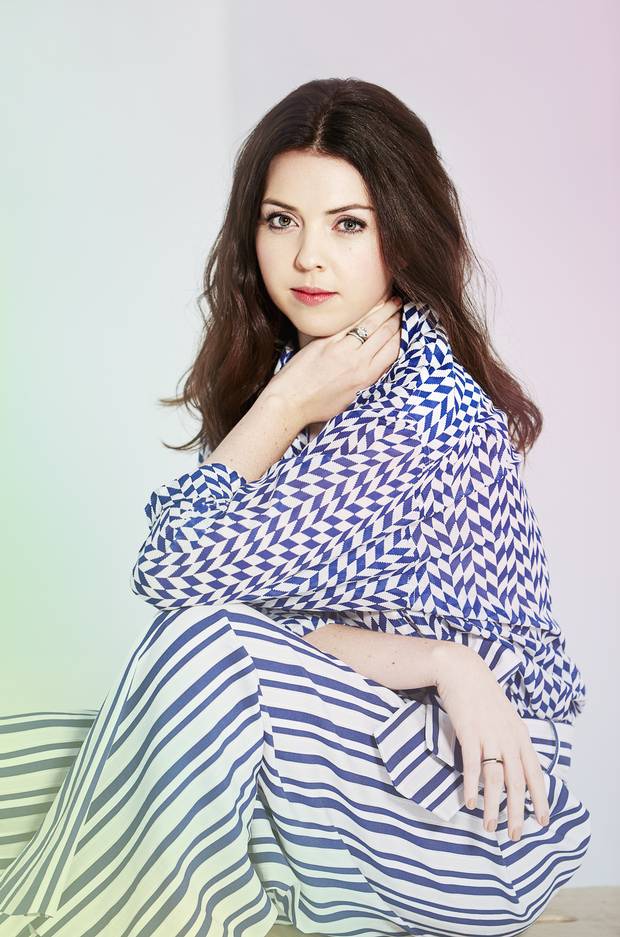
If you believe the glut of recent reports, times are tough in the fashion industry. Big name designers are systematically abandoning their duties at well-known luxury brands, and smaller businesses are wondering where a massive shift in runway scheduling and production systems will leave them. During a time fraught with such uncertainty, a fashion story that's uplifting seems like an anomaly – and necessary.
That's why the tale of women's-wear designer Tanya Taylor is so compelling. A Toronto native currently based in New York City, she oversees a five-year-old brand that is unabashedly bright. Glowing, even. When I first interviewed her two years ago, Taylor had just been nominated for the prestigious Vogue Fashion Fund award, which is granted in conjunction with the Council of Fashion Designers of America, the organization that presides over New York Fashion Week. Speaking with her in her studio about the achievement and what it could mean for her business the day before one of her earliest runway shows, Taylor was serene, focused and extremely optimistic. And she still is.
"One thing we have as an advantage is that we're still small enough that we can take risks," she told me when we met again this past February. It was a few days after her fall 2016 presentation, one that saw editors, retailers and fans fawningly wind their way through an installation of models dressed in vivid florals and abstract patterns (such motifs – bold, fun, done up in utterly feminine shapes – are rooted in the Tanya Taylor brand's DNA).
We sipped tea in her penthouse loft, in a converted Greenwich Village church, and talked about her online strategy, which has flourished since that first conversation. Unlike other designers who shy away from the front-facing smartphone camera and employ their digital channels as esoteric inspiration diaries or blatant advertising hubs, Taylor is prominently featured in her Instagram posts. Her curiosity about the power of online communication even led her to create an avatar for Bitmoji, a Toronto-based app, and it was shared more than three million times. "I want to start seizing more outside-the-box experiences like that," she says.
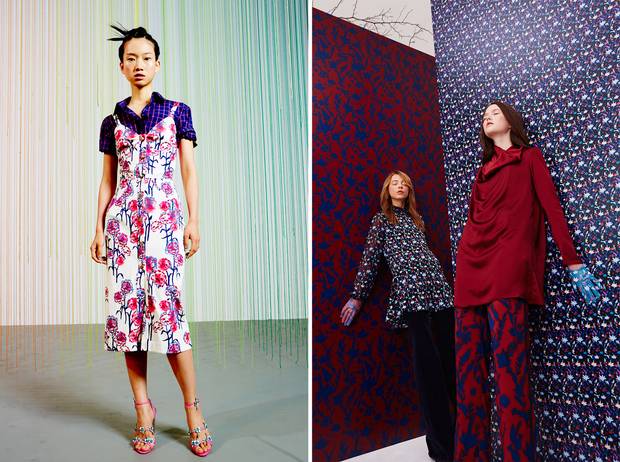
Taylor is known for her hand-painted prints, which she employed in both her spring 2016 (left) and fall 2016 (right) collections.
Imaxtree; Courtesy of Tanya Taylor
Elsewhere, that type of experimentation is being crushed under the weight of fashion's exhausting pace. "'Burnout' is definitely real," Taylor says when I ask if the industry's latest buzzword is more than just a trend. "It's not that the role of a designer has changed so much, it's that we don't know what's working. You're trying so many different things to see what sticks, and sometimes you over exert yourself."
If Taylor herself is feeling stressed, it certainly doesn't show. The growth of her brand from fledgling to full-blown in a very short time (wholesale business increased from 22 to 69 stores in 2015) as she also expanded her team from four to 14 staff is likely the result of the dues she paid before launching her label: She studied finance at McGill, fashion at Central Saint Martins and Parsons, and had an internship at Elizabeth & James – the label headed by Ashley and Mary-Kate Olsen – that turned into a two-year stint as a designer for the brand.
Some casual observers might try to trace her success back to family connections (Taylor's mother, Virginia Shaw, is the former chairwoman of energy giant ShawCor). But while Taylor acknowledges that familial backing could have helped, her growth is more a result of hustle than nepotism. "My family doesn't know anybody in New York, and no one in my family has ever worked in fashion," she says. "Shaw doesn't mean anything to anyone here." Instead, Taylor began her brand with only one other person helping her, chipping away as other startups do.
Paul Andrew, the dashing shoe designer who creates footwear for Taylor's collections in addition to pieces for his eponymous label, says that their collaborations are born out of a thriving passion for design. "We both enjoy working with colour and prints, but we also have an appreciation for clothing and accessories that don't feel precious," says Andrew. "We're both deeply invested in making our customer feel confident and pretty, yet simultaneously joyful."
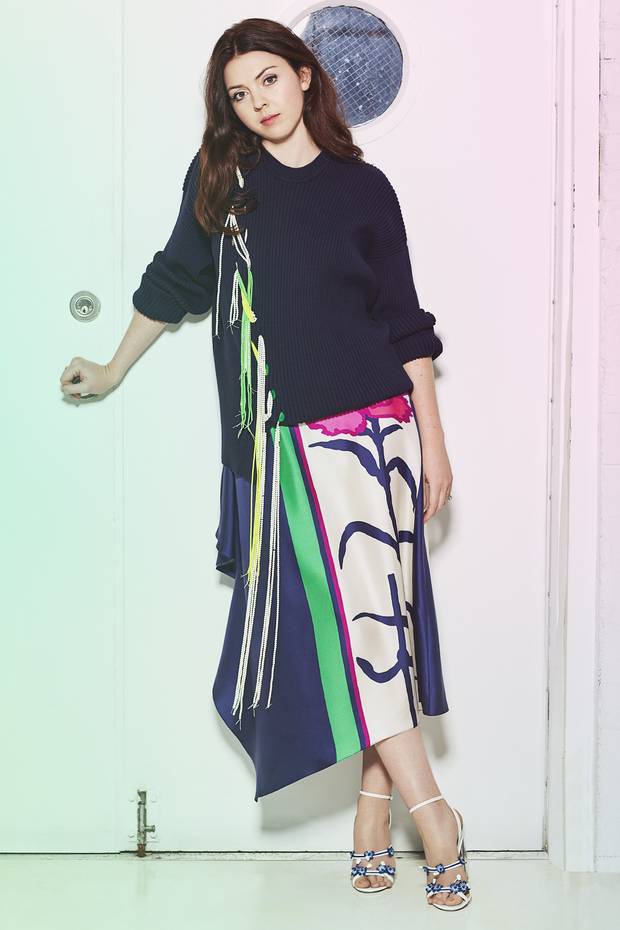
Taylor's clients range from 20-year-olds to grandmothers to U.S. first lady, Michelle Obama (Taylor tells me her own uncle also ordered one of her coats). She says that one of the most powerful milestones for her business was having both Obama and actress Lena Dunham wear the same dress. "It was the coolest moment," she recalls. "They couldn't be more different." Taylor says it's a "pursuit of individuality" that motivates her customers to covet her colourful, deliciously embellished pieces. "That expressiveness in fashion can be ageless, raceless, sizeless," she notes.
Aside from her flair for engaging a variety of customers by looking beyond demographics, Holt Renfrew chief merchant Steven Cook sees Taylor's appeal as the result of her strong brand identity. "We see a lot of things that are fantastic one season and then the next season, they fall off a cliff," he says. "There's a confidence, a consistency and a point of view to what she's doing that makes sense."
Mark Holgate, the fashion news director at American Vogue, agrees. Holgate was one of the mentors who Taylor worked with while competing for the Vogue/CFDA award, and notes that throughout the competition, Taylor's conviction for her brand, as well as her relentless optimism, set her apart from other emerging talents. "The Vogue Fashion Fund is really a six-month mirror where you're forced to look at yourself and your business," he says. "She's taken a different path into fashion…and it made her realize she had something valid to say."
With opportunities expanding (Taylor hinted at a brand extension that would translate her artful prints to other lifestyle products) she shows no signs of losing that voice. When she thinks of her customers, Taylor says they "wear clothes to spread happiness and project emotion." In today's fashion funk, that's the kind of inspired statement that makes you stand out.
To flip through Tanya Taylor's spring lookbook, download the free Globe Advisor app.