Facts & Arguments is a daily personal piece submitted by readers. Have a story to tell? See our guidelines at tgam.ca/essayguide.
In school, we were told there are only a few standard story plots. I remember "a man goes on a journey" and, the other side of the coin, "a stranger comes to town."
A stranger has entered my life and I am on a journey.
On Feb. 19, my wife and I drove from our GP's office to the ER, from the small waiting room to the big "hurry up and wait" waiting room. There were tests. There were results. Not ours – for other patients. The doctors called out patient names, walked over and told them everything was okay and they could go home. Then they called out my wife's name and took us to a private area. I went numb. I knew.
The doctor spoke softly. Valerie told me it took a few moments for it to register, and then her knees almost buckled. They arranged transport to a sister hospital and the next day, a Saturday, there were further tests, an MRI and neurosurgery that evening. Valerie was home in four days. Hurry ended. Wait resumed.
After forever, the cancer clinic called with an appointment to discuss the pathology.
The doctor is so young. She's younger than my wife's children. The doctor has done this before, so she speaks clearly and slowly: Valerie has a grade 4 glioblastoma multiforme.
The doctor carried on speaking, I know, because I have notes and my wife has notes. Something about MGMT methylation. Radiation. No chemo because my wife is old enough that there would be no discernible life extension but a significantly reduced quality of life.
The doctor talked about strategies and taking control. And average "survival." She told us the numbers are averages – some live longer, some don't. No one can tell which group we are in.
"Survival" doesn't matter. I am going to lose my lover, my best friend, my future with "us." We have done, she has done, all the right things: She eats well, she has a glass of wine, red wine, with dinner so her alcohol is in moderation. She flosses! She exercises regularly. She goes on walks – not walks, hikes – scrambling over the Bruce Trail, which she has already done end-to-end with friends. She is doing it again with me. She doesn't walk; she strides.
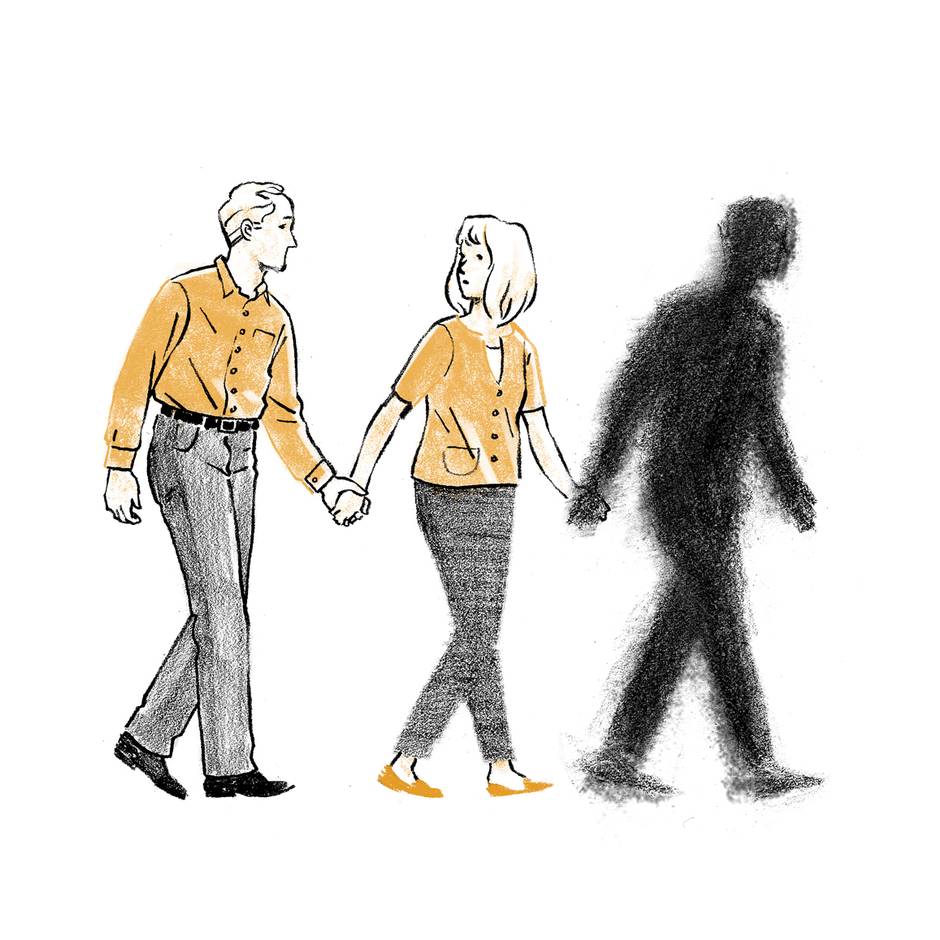
We are on a journey. The doctor says we can take charge of that journey or let it overwhelm us. With Valerie, there is only one option. We visit Wellspring, the cancer support group. We send out e-mails to distant friends and relatives. Valerie phones close friends, her brother. We meet with friends to say goodbye. Some suggest that she will somehow recover. She is firm: There is no recovery, but that’s okay because she has had a good life. I think, “but a life too short.” She talks about final days and doctor-assisted. She doesn’t say suicide. I try to think of the right word. Doctor-assisted compassion.
She doesn’t cry. She makes appointments. She researches funeral options. She reminds me the garbage has to go out and we need veggies for tomorrow’s dinner. I remind her daily that I love her. I don’t tell her I love her desperately.
There are good days. There are better days. The bad days are still ahead. Some mornings she describes herself as “wobbly,” but by the afternoon, she hits her stride. That won’t last.
We have an appointment to set up her radiation schedule. Five days a week for three weeks. I ask the obvious question. The oncologist says probably halfway through week 3. But by then we won’t mind what her hair looks like because her body will be exhausted and there will be more important things to worry about.
Cancer will kill her.
There, I’ve said it. Just typing those words makes my eyes tear up. I’m writing a diary about how I feel; she’s upstairs deleting files on her PC and clearing out her filing cabinet. This is about her. Too often, I get too introspective and make it about me.
We visit a hospice. She’s looking so healthy that the initial conversation is about a loved one. She corrects that. Valerie is strong, I am weak. The staff are beyond compare. They hide nothing. Yes, the radiation will leave her exhausted. Yes, this is a good time to begin the process. They open a file with her name and I want to scream “No! Too soon.” If she can’t die at home, then this is where I want her to die, where she can see her birds and her squirrels and sit in her sunshine. We went for a walk in a park afterward; this is what we were supposed to be doing for years to come.
Fifteen days of radiation. Fifteen days of being locked into place so a machine can try to do what her body cannot. It adds up. By the third week, the cumulative effect on her body leaves her fatigued. Afternoon naps aren’t a luxury; they are a necessity. She loses her hair. But it’s a victory because it’s slower and she loses less than expected.
We are 10 weeks into our journey with this stranger. Valerie could be bitter. She could envy those already older than her who will live on after she dies. But she doesn’t. She embraces the moments she has, she doesn’t ache for the ones she knows she will never have.
So many times I’ve seen “courageous fight against cancer” in obituaries. Not here. Here, I see grace. Quiet strength. God, I love this woman. She could do this without me. I could not do it without her.
John Beamish lives in Mississauga.