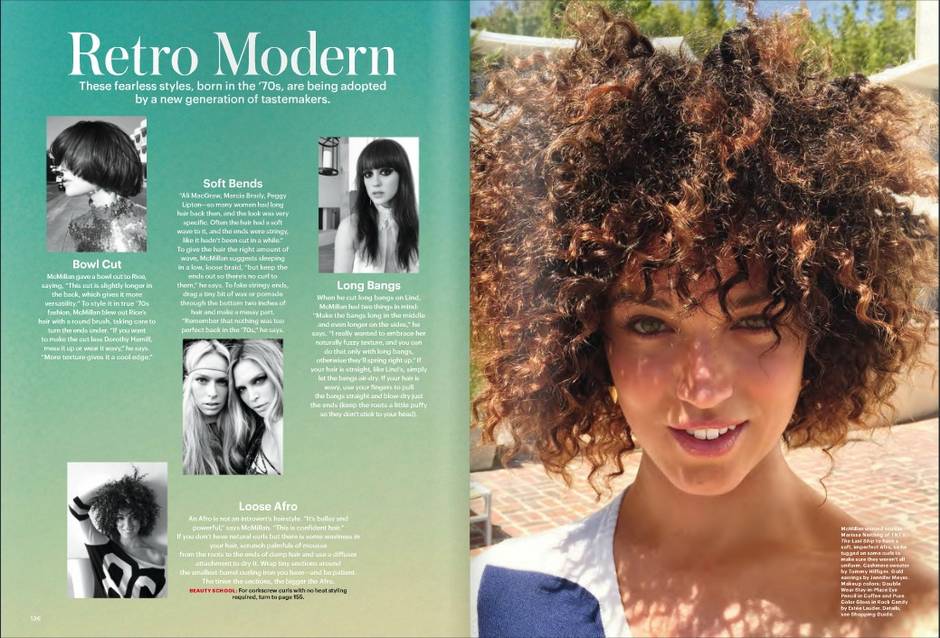
A tutorial in this month’s issue of Allure magazine instructs readers on how to achieve the “loose Afro,” modelled by a straight-haired white woman (actress Marissa Neitling), with no reference to the rich history of the style to defuse claims of racial insensitivity and appropriation.
Clueless, or clickbait? The Afro, like dreadlocks, comes loaded, but especially so in this case, since the overall effect of the coif’s quivering, frizzy curls is, uncannily, à la Rachel Dolezal. The timing couldn’t be weirder, following a summer of heated discussions about racial identity prompted by the now-disgraced former African-studies professor and NAACP chapter president who was accused of opportunistically passing for black. According to a recent interview in Vanity Fair, Dolezal is now making a living styling black hair – which, according to research from the Black Owned Beauty Supply Association, is a $9-billion industry.
The complicated history of black women’s tresses certainly isn’t a new subject. In 2009, Chris Rock directed Good Hair, a documentary about it. More recently, How to Get Away With Murder summed it up in a single scene: Viola Davis’s law professor character Annalise Keaton removes her public façade – a reverse kabuki of elaborate makeup, eyelashes and glossy wig to reveal her own short hair beneath.
Though we don’t hear about it nearly as much, black men don’t have it any easier. Just ask Bert Ashe, author of Twisted: My Dreadlock Chronicles, an engaging new memoir that explores black hair from the male point of view.
Ashe, a professor of literature at the University of Richmond, admits he spent 20 years longing for dreads – a failure to launch until, finally, he began the process in his late 30s, in 1998, which turned into a journey as philosophical as it was tonsorial. Twisted is also an effective caution to onlookers (like me) against narrowly political interpretations, or romantic ones, that “see dreadlocks as symbolizing the latest incarnation of the black male outlaw figure.” At the same time, he openly acknowledges that he’s writing as a privileged, tenured professor and parts of the book are about his very personal rumination on wanting to “get outside” – as in, be an outsider who would convey his inner outcast sensibility, despite what he calls an obliging, “little brown suburban robot” upbringing in Los Angeles.
What Ashe discovers (and loves) in the anti-establishment value of dreadlocks is that they can be “read” in three related ways – the aesthetic, the political and the interpersonal. When examining the import of black men’s hair, Ashe writes, “sometimes critical viewers forget about play, about fashion trends. The easy example is the way the Afro was worn by sixties militants (Huey Newton, et al.) to accompany their revolutionary demands…[but also] to annoy the hell out of parents and the rest of society. White countercultural boomers did the same thing with the length of their hair.”
Sending up scholarly journal lingo as tongue-in-cheek chapter titles (“Intentionality,” “Inscrutability”), Twisted is playful, containing a handful of fanciful episodes (in one, he pens them an open letter: “Dear Dreadlocks”). These are balanced by a thorough overview of the way black men’s hair has been portrayed in popular culture and literature (conjuring scenes from the work of Spike Lee, Alice Walker, Toni Morrison and others) and scholarship on the subject – for instance, Kobena Mercer’s 1987 essay “Black Hair/Style Politics,” which unpacks the cultural moment after Michael Jackson’s hair caught fire, and considers famous dreads (Bob Marley’s, Jean-Michel Basquiat’s) at the vanguard of shifting cultural norms and assumptions.
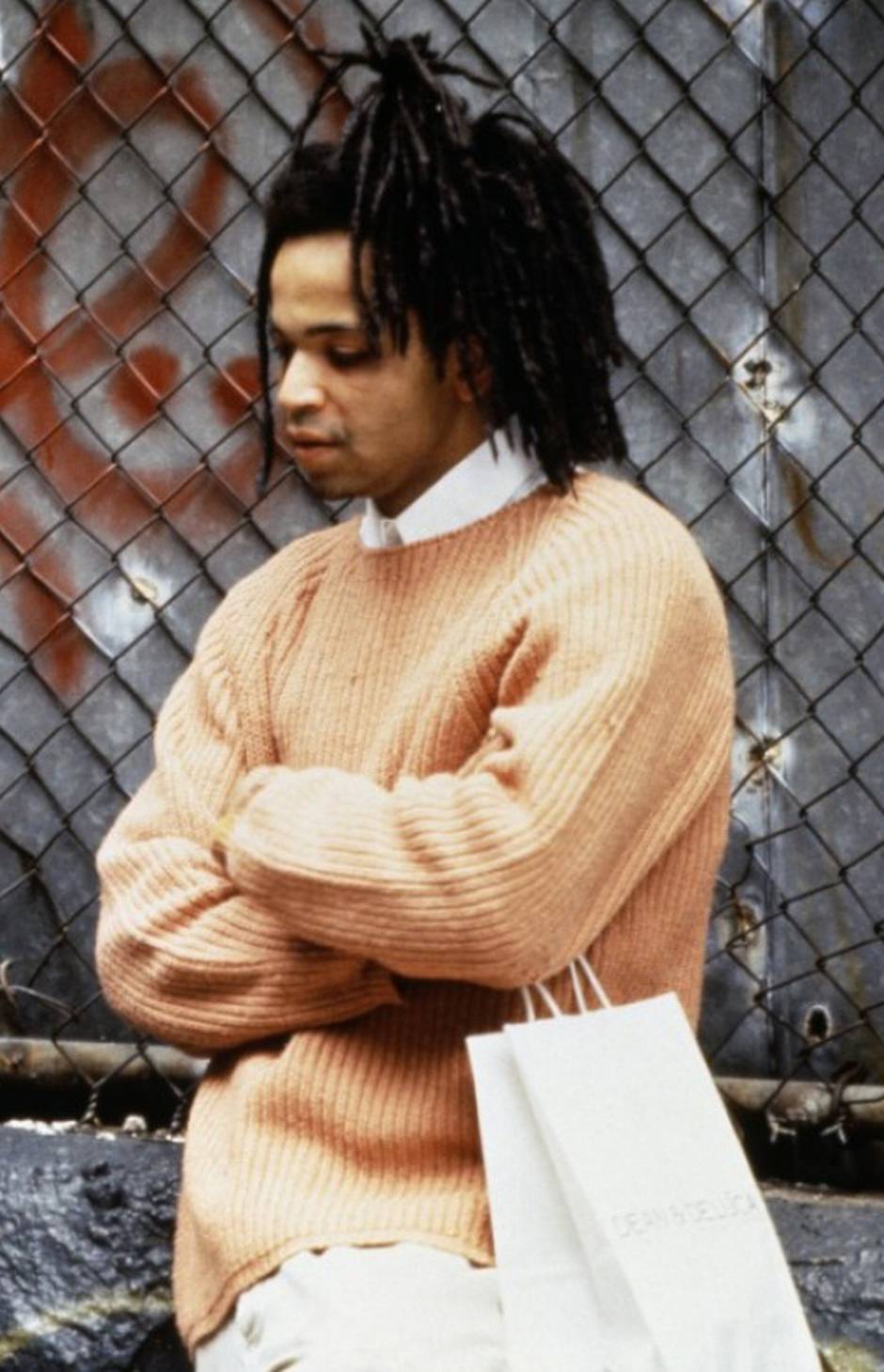
Ashe also suggests that dreadlocks are a call-response hairstyle that seem to elicit (inviting, almost demanding) response, the way people take liberties with pregnant women as though their bodies were public domain. Earlier this year, E! News anchor Giuliana Rancic proved the point when she commented on Zendaya Coleman’s dreadlocks, joking to viewers that they must smell either of weed or patchouli.
Dreadlocks are not a hairstyle of neglect, as Ashe points out. Adopting them requires more than simply not combing one’s hair. He learns this during the months it took his own hair to grow and the initial twists to ‘lock,’ and as he later acclimates to the itch, the strict shampooing schedule and the regular hair appointments.
Going the dreadlocked route is something more akin to nature versus nurtured nature. Neither the dreadlock nor the Afro is particularly African, and while these styles are often referred to as “natual black hair,” what’s meant by natural is that it signifies a desire to return to roots (something Dolezal, however misguided, conveyed). Dreadlocks are cultivated to contest white domination and the cultural power of whiteness, he argues, with retwists often helped along at the salon by beeswax, lemon juice, eggs or chemicals that goad hair into locking up. Shaping hair becomes a way to shape identity.
“Dreadlocks are a living, breathing example of black postmodernism,” as Ashe puts it, “ill-defined, appearing uncut and vaguely styled, yet fundamentally a constructed style, one that appears completely natural and yet is anything but.”