If anyone can call themselves global fashion citizens, it's Jamil and Alia Juma. The brother and sister reside in China, skip around to clients in Paris, Singapore and Kuala Lumpur, and return regularly to Toronto, where they founded their brand in 2003.
Their line of scarves, ponchos and pillows are sold in 100 doors worldwide, including Ron Herman Los Angeles, Harvey Nichols Hong Kong and Another Edition in Tokyo. They have collaborated with M.A.C Cosmetics and Roots, outfitted the Four Seasons Hotel in Beijing, and dressed rapper Nicki Minaj, model Coco Rocha and singer Solange Knowles. Beyond their cool, boho aesthetic, the Jumas' biggest asset could be their world view, born out of a peripatetic childhood spent living in Toronto, Vancouver, Kazakhstan and the Congo.
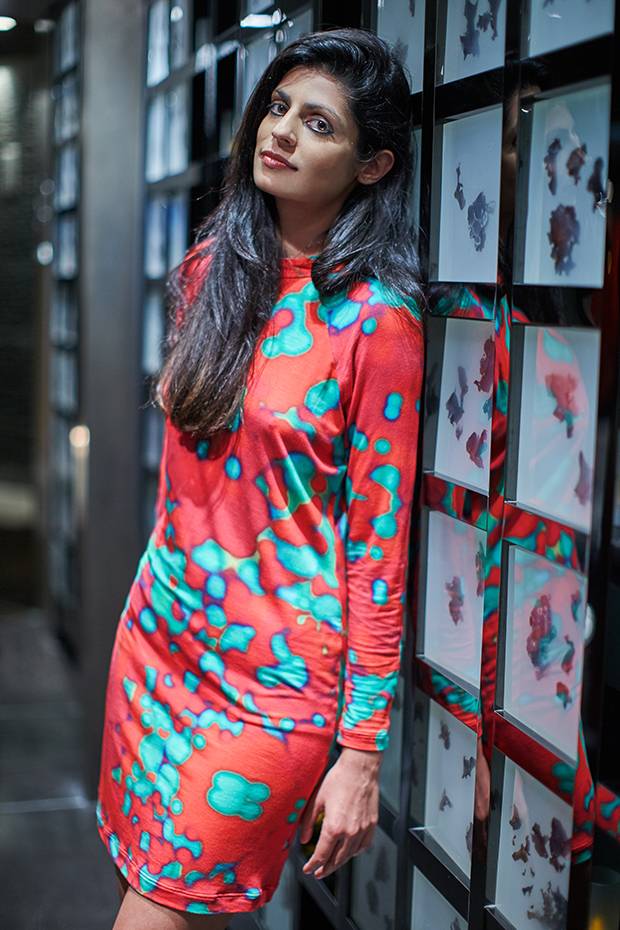
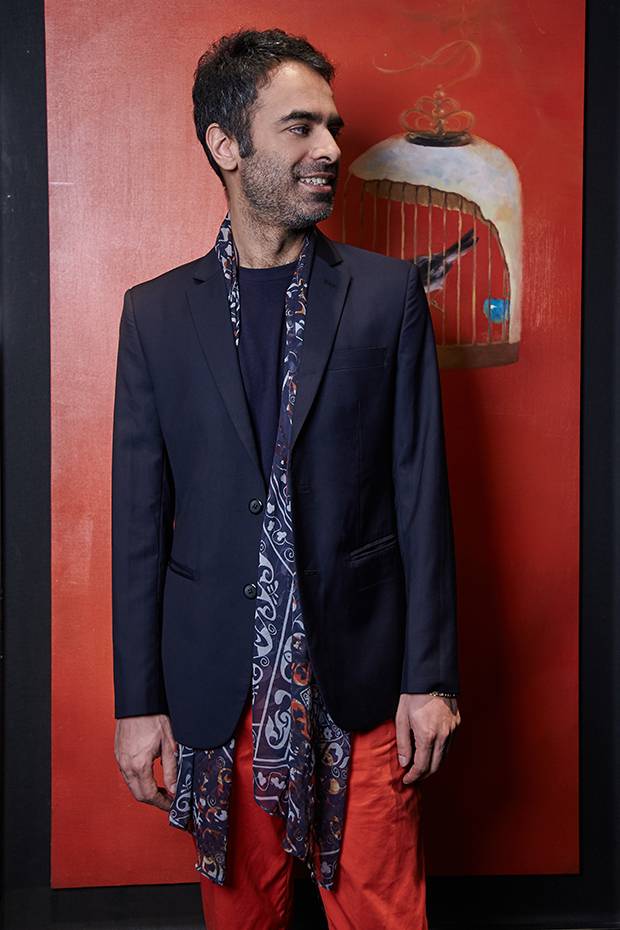
"I feel comfortable travelling and living everywhere," remarks Jamil during a Skype call from Singapore. "There is no culture shock for me. I can engage with anyone." The Jumas' parents, who were born in Kenya but met in Toronto, were in the import/export business. Photos on the Juma brand's website show the young family exploring the markets of Karachi, Pakistan, shopping for carpets in Almaty, Kazakhstan, and stopping at a roadside coconut stand in Mombasa, Kenya. All the while, Jamil and his sister were absorbing local cultures through a Western fashion lens, taking note of the Masai's stunning layered necklaces, and the Kazakh mountain folks' velvet hats and embroidered caftans.
Years later, when Alia graduated from George Brown College in fashion and launched Juma, focusing on prints with a worldly vibe was a natural outcome of her Vogue-meets-National Geographic upbringing. Jamil, who has a degree in biosystems engineering from McGill, left his job as an investment strategist to run the business side of the Juma brand. They had studio space at the Toronto Fashion Incubator, and showed at fashion weeks in Toronto and New York, where they moved in 2008.
At the same time, the pair were travelling to China to source fabrics. "Then about four-and-a-half years ago, we said there's something really happening here in Asia," Jamil recalls.
They participated in Shanghai Fashion Week, and were invited by government officials to show in Dalian, a northern port city. "It's a lot like Vancouver, a coastal city with mountains and ocean, but with Soviet- and Chinese-influenced architecture," Jamil describes. "They're much more traditional and less Westernized than Shanghai. And there are big Japanese, Korean and Russian communities because each of those countries came to Dalian through the last few centuries. There's a Japanese area where you only see Japanese people and you feel like you're in Japan – on a Monday night, they're eating and drinking till 3 a.m. And in the Russian area, same thing. It's a very interesting city."
They also found the clothing manufacturing in Dalian to be superior to that in the south, and set up a production studio there. A year later they moved, with Alia settling in Dalian, and Jamil in Shanghai.
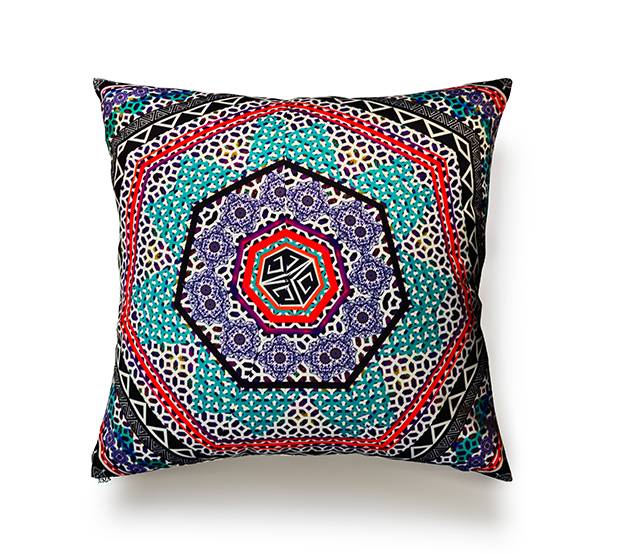
Juma translates original print designs to everything from socks to throw pillows.
Juma
There were adjustments, of course. But Alia has a knack for languages, and only took two years to become fluent. And Jamil has learned to love the spicy hot pots that turn his lips numb.
Setting up their business was complicated, Jamil admits. "In Canada, you can go online and register a name. In China, there's tons of paperwork and scrutiny. You have to show financial statements of your other businesses, show you have investment money. And operations are complicated; you have to have full-time accounting in place and submit taxes every month." But from an economic perspective, "it's not that different. They call it a communist country but it doesn't feel like it. They are very business-driven and business-friendly. You can do what you want. You can innovate."
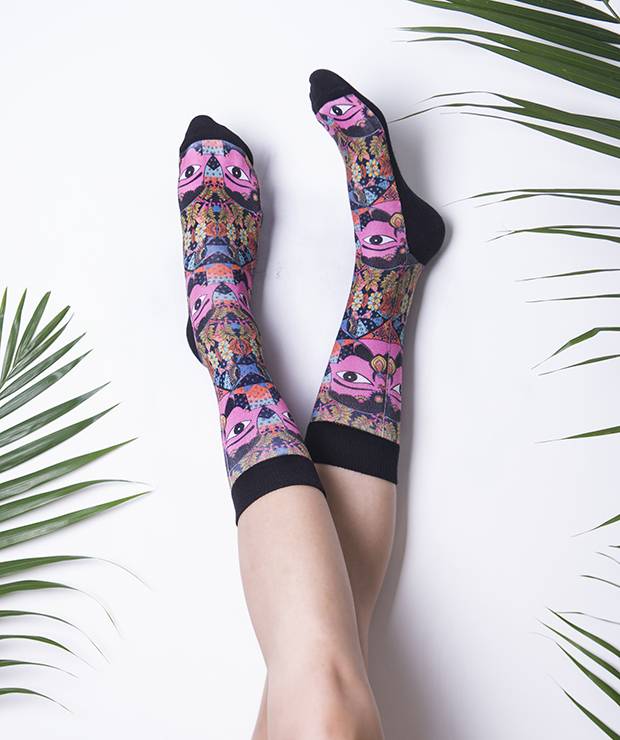
Juma is expanding its home décor category with coasters and blankets, and they've found a great niche in socks. Their own Jumastudio shops are in Four Seasons Hotels in Shanghai and Tianjin, with a third shop-in-shop in Beijing. Jamil feels it's their combination of contemporary styling, mid-price point and unique prints that have struck a chord. "Is it for everyone? No. It's a niche customer," Jamil says. But given that Shanghai alone is almost as populated as Canada, and there are 100 cities in China with more than 3 million people, a niche market is enough.
The Jumas create all their own prints, incorporating photos they shoot themselves, sometimes adding drawings, graphics or digital effects. A tile print based on photos their mother took in Turkey is the team's bestseller. Could the brand be accused of cultural appropriation, a hot topic in fashion today? "When it's tied to religion, that's where you cross the line," Jamil believes. And with the pair's Indian/Kenyan heritage, and exposure to so many cultures from such a young age, it might be odd if all this personal experience didn't seep into their creative output.
Jamil says he and his sister will remain in China for the foreseeable future, given there is so much growth potential for their own line, as well as the products they develop for retail and hospitality clients. But would they advise other Canadian designers to follow their path? Not unless they have something to offer that is truly unique, Jamil says. "You have to create a product that speaks to your heart, that is truly authentic. Without that you don't have a business."
Visit tgam.ca/newsletters to sign up for the Globe Style e-newsletter, your weekly digital guide to the players and trends influencing fashion, design and entertaining, plus shopping tips and inspiration for living well. And follow Globe Style on Instagram @globestyle.