'What's wrong with your pants," asked my grandfather, a Macedonian-born immigrant, a few years back as he eyed my shredded J.Crew jeans with disdain. I didn't dare tell him how much they cost, only that "this is how everyone dresses now, papou. It's cool."
Today, a quick survey of the lower halves of
Beyoncé, Rihanna and either Jenner daughter confirms that we've reached peak distressed denim. Another glance, this time not at a gossip blog but this season's runway shots, shows a similarly shambolic aesthetic emerging in high fashion. It's a well-worn look steeped in manufactured history and individualization that flies in the face of fast fashion's lust for the next big thing, as well as the tradition of over-sanitized high-end goods.
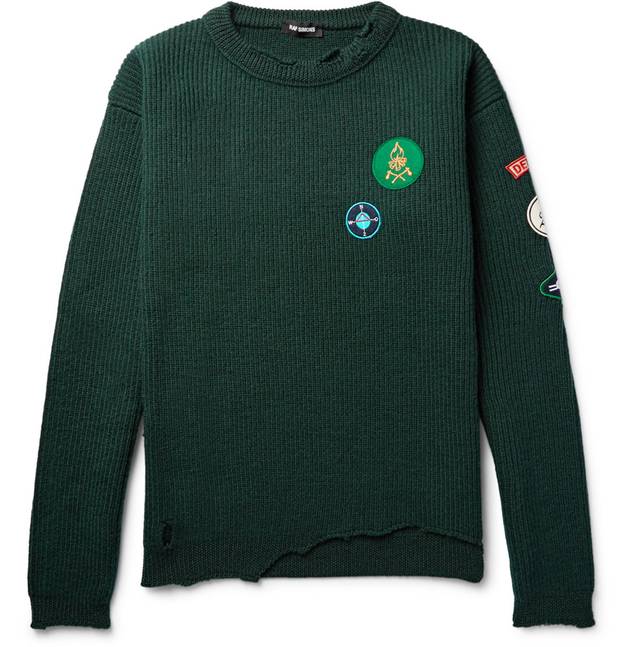
A seemingly flea-bitten jumper by Raf Simons ($680 (U.S.) through www.mrporter.com).
Items that have been run ragged have a particular lustre lately. They convey not only a sense of uniqueness thanks to the notion that those rips and tears are the result of time and use of a beloved garment, but the idea that luxe, untouched garments and accessories are antiquated notions. These days, the more beat-up your designer clothing, the better. And the rationale behind this trend goes beyond a pair of $600-plus pre-sullied Golden Goose sneakers simply looking cool.
"I think there are two levels to this," says Luke Leitch, style editor of 1843, The Economist's culture imprint. "There's the so-called high-fashion level, with people like Marc Jacobs, Raf Simons and Vivienne Westwood – they do it partly because it's cool to look like you don't care, and partly because, for someone like Raf, it's a way of demanding dedication from your [clientele] as well." After all, would anyone want to pay for a ratty sweater if there wasn't an element of pedigree to it?
"You'd think you'd want to make a piece more beautiful," says Alison Matthews David, graduate program director at Ryerson University's School of Fashion, after perusing a selection of this season's scraggy wares. She notes that because of the inherent degradation of the garments, their construction is put in the spotlight, lending an extra level of luxury. Take, for example, a Helmut Lang distressed sweater, priced at $360 (U.S.) on the e-commerce site Net-A-Porter; its 100-per-cent cashmere is pocked with holes along the neckline and hem, appearing to be the result of moths, but in reality, the product of thoughtful craftsmanship. Similarly, Italian house Etro – known for its sumptuous maximal prints and use of silk – offers what can best be described as "flea bitten" jumpers that cost over $1,000 (U.S.), a striped wool-blend version boasting a neckline in tatters.
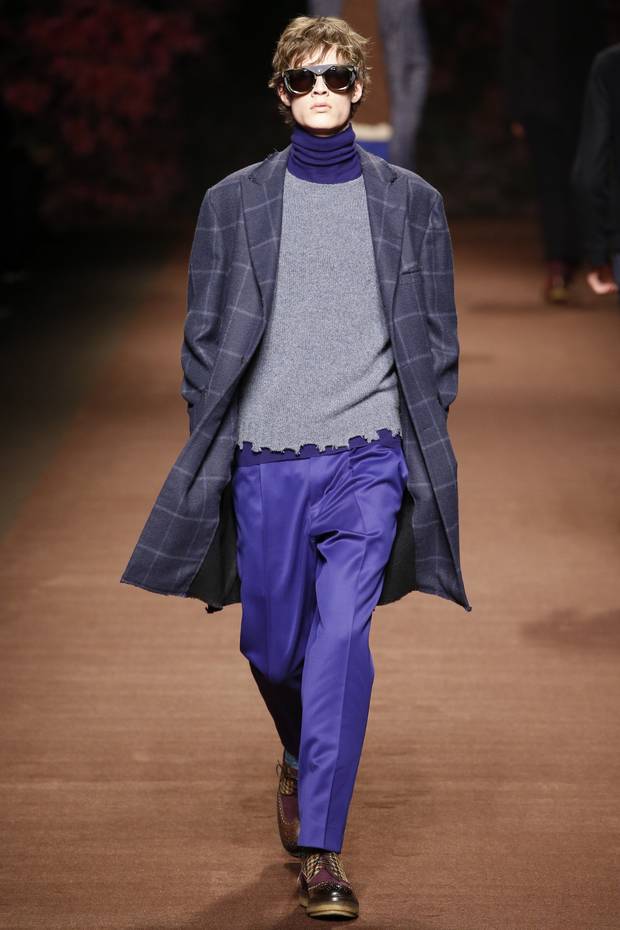
Etro’s frayed-hem sweater makes a dapper ensemble fashionably tatty.
ETRO/GETTY IMAGES
Thanks to brand recognition and plush weaves, these items will sell despite their unkempt appearances. "There's this desire in the age of fast fashion to still see the hand of the maker," Matthews David says. Some designers will scour the globe looking for unique, even custom, textiles to give their collections an air of opulence. Others will take those fabrics and rough them up for the same reason.
"There was a point when we were doing our first collection together and we were thinking about the luxury market," says Marta Marques, one half of the London-based label Marques'Almeida. "We felt completely alienated from it." She and her partner, Paolo Almeida, won the prestigious LVMH Young Designer award in 2015, and have gained access to fashion's upper echelons by building a fan base devoted to their off-kilter designs. Most famously known for their raw edged jeans and jackets, the brand also creates jacquard pieces that are frayed at the edges with trails of bright thread, creating a feeling of decayed grandeur. "We started our line understanding that there could be a shift," Marques says about the move away from a precious idea of posh. "We felt this [idea] wasn't for us, and our generation."
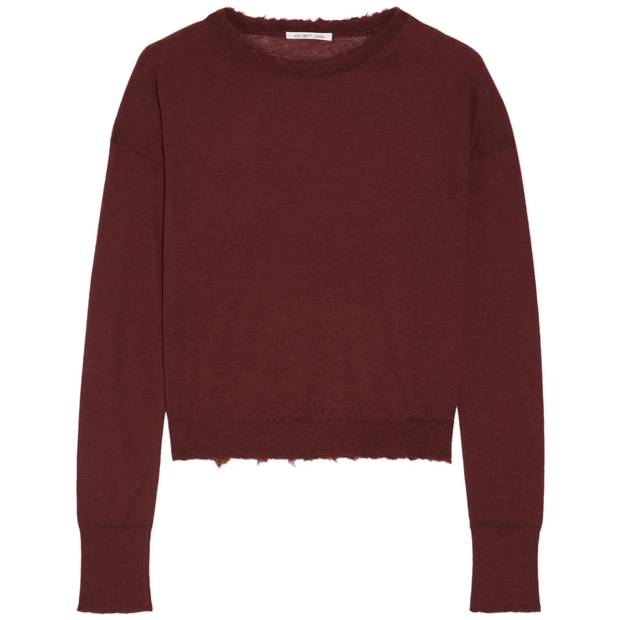
A cashmere sweater from Helmut Lang is elegantly torn ($360 (U.S.) through www.net-a-porter.com).
Unlike other designers who have increasingly relied on extravagant embellishments to imbue their lines with a sense of richness, Marques and Almeida strive to give their clothing a sense of specialness "because it's gone through experimentation. We ground everything in that approach." The duo will source materials only to lovingly trash them "to see how they fray and what the threads look like as they fall apart," Marques says. Their brocades may come from a French mill, but the coveted destruction it undergoes is done in their London studio.
Simone Rocha, another London-based designer who debuted at London Fashion Week in 2010, has built her brand on the lovelorn coattails of Gothic heroines and brooding Victorian intrigue. The audience at her fall 2016 collection saw finely crafted metallic tweed gouged out around the thigh and knee area, displaying a sense of dishevelled decadence. It's a juxtaposition that Matthews David finds intriguing but complicated. While Rocha may be evoking romanticized – or villainized – characters by way of an unraveled design ethos, Matthews David notes that this increased interest in distressing is in many ways "really nodding to authenticity."
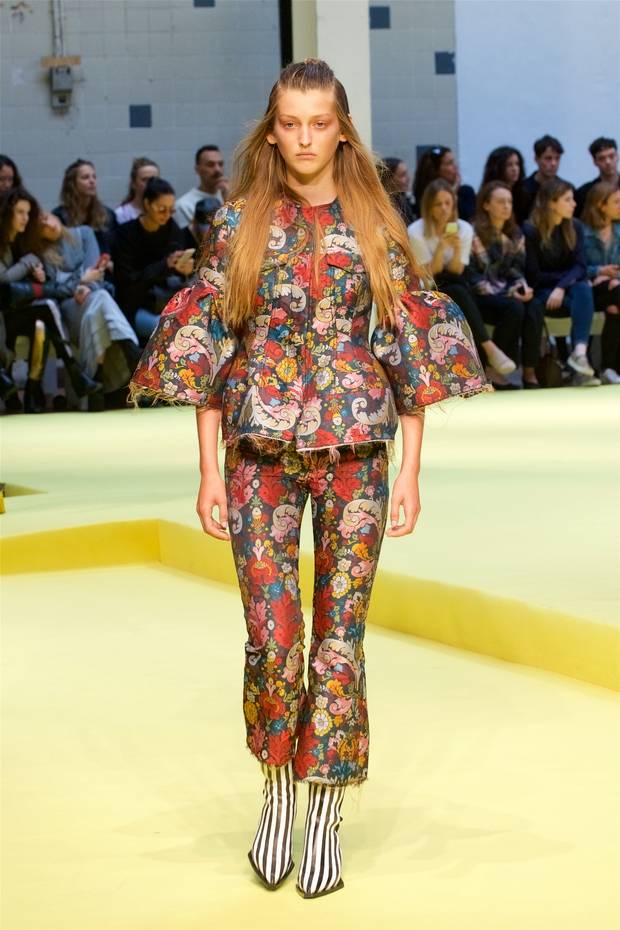
Luxe brocade unravels on the catwalk at the spring 2017 Marques’Almeida show.
There's an old adage in the fashion world: "I'm putting effort into looking effortless," as Matthews David puts it. Yet it's not only a laissez-faire attitude that these details convey. There's a class connotation – and again, she points out that this isn't a brand new idea either. She recalls the Renaissance, when tailors were tasked with shredding swaths of luxurious fabrics that would be worn with pride; the labour involved in the cutting – and the cost of the textiles themselves – emphasized the wealth of the wearer. And just as Rei Kawakubo and Martin Margiela made careers of creating conceptual garments that tested clothing's ability to convey political, economic and artistic narratives, today's designers are also searching for compelling ways to tell stories through their work.
When Kanye West dabbled with distressing in his debut Yeezy show last year, it underlined the collection's general vibe of unease and, as Tim Blanks noted in a Vogue.com review, pessimism. But even if holey clothing evokes despair, it's not putting consumers into such a funk that they avoid buying it. On the contrary, Rocha's brand shows no signs of slowing down – she'll open her first store in Manhattan next spring. Leitch notes that this dichotomy is what's key to sustaining the shabby look. "On one hand, you could say it's sophisticated, on the other hand you could say it's obtuse," before adding that, "what designers are trying to say demands that they become more complicated in their delivery."
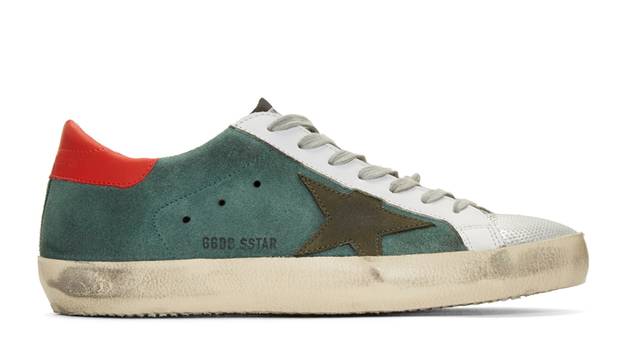
Italian brand Golden Goose specializes in accessories that look well-worn ($680 through www.ssense.com).
We may have come a long way from wearing slashed-kneed jeans to convey notions of status, individuality and mood, yet the tension between where fashion, function, personality and economy intersects remains. "Luxury means at least two things," Leitch notes. "Obviously it means lush and extravagant, but it also means unnecessary." And in this way, the contradiction of a new richly fabricated garment arriving in a state of disrepair couldn't be more on the mark.