Have you heard the news about bone broth? It’s over. Finito. Like, so 2015. It was, just minutes ago, the new coffee – the new single-origin, medium roast, burr-ground cold-steeped coffee. But the bone broth pop-ups have popped, there’s a cookbook out and only the over-40 set, which includes me, is talking about it.
All of which is a shame, because there’s a lot to love about bone broth. It’s rich in life-sustaining collagen and minerals and utterly free of gluten and carbs. It harks back, furthermore, to a wiser time, when men with magnificent mustaches worked long hours at old-timey butcher shops hacking joints of meat so that their children could become lawyers or engineers, so that their children could give up a career in law or engineering to grow magnificent mustaches and work long hours at old-timey butcher shops hacking joints of meat.
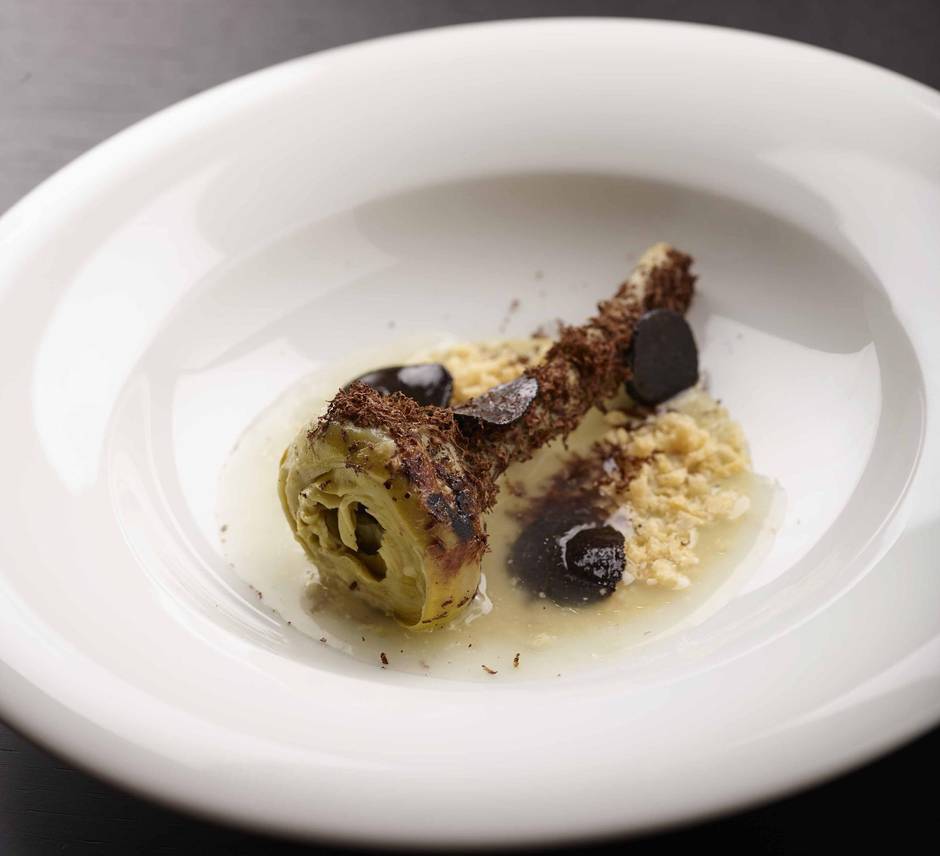
It also tastes good. Very good. All of which makes any idea of its trendiness, any comparison of various broths to single-origin, medium roast, burr-ground cold-steeped coffee, well, stupid. And there’s a bigger problem with the bone broth trend: What does it say about us? How could something so good have fallen out of favour in the first place?
Bone broth is just one member of a glorious family that includes vegetable broth, mushroom broth and meat broth, even fruit broth. These infusions are foundational to modern Western European cuisine. Whether enjoyed on its own in a bowl or mug, as the base for a more complex soup, or used to make a classic French pan sauce, there are huge swaths of Northern European cuisines that simply cannot exist without broth.
If broth has a saviour, his name is Andrea Berton, who has raised broth from “a simple ingredient to the main protagonist,” as he puts it, at his Ristorante Berton, in Milan.
And “simple protagonist” is putting it mildly.
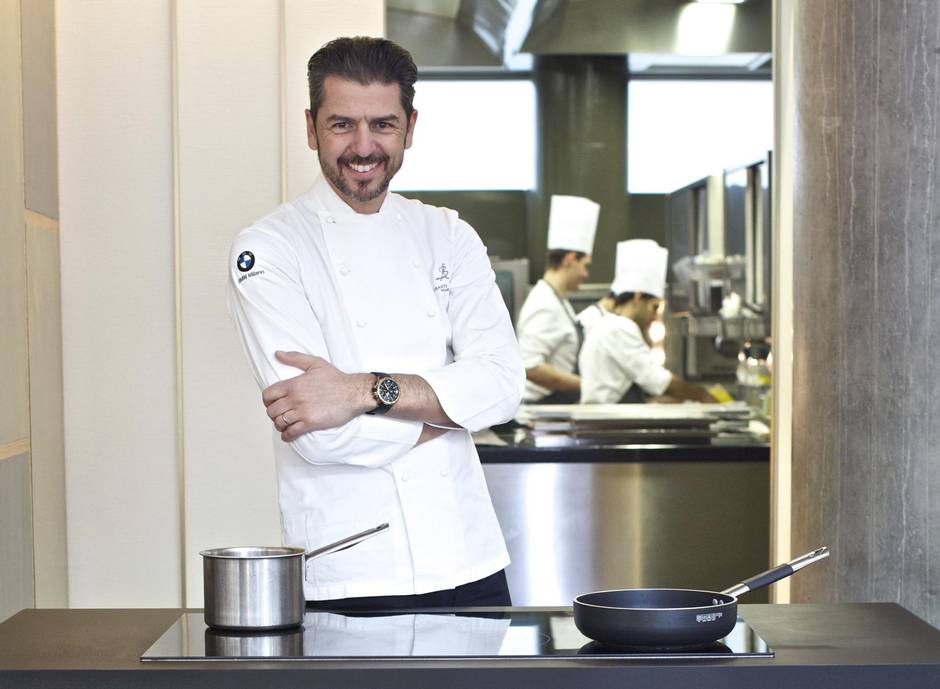
Berton serves an entire broth tasting menu, a nine-course liquid playlist that includes a lobster broth (with ravioli and olive oil, garlic and chili pepper), a roast pigeon broth (with corn cream and caramel popcorn with lime) and closes out with chocolate broth (milk, black sesame and kumquat) and then apple and black tea broth (carrot, passion fruit, almond and crispy seeds).
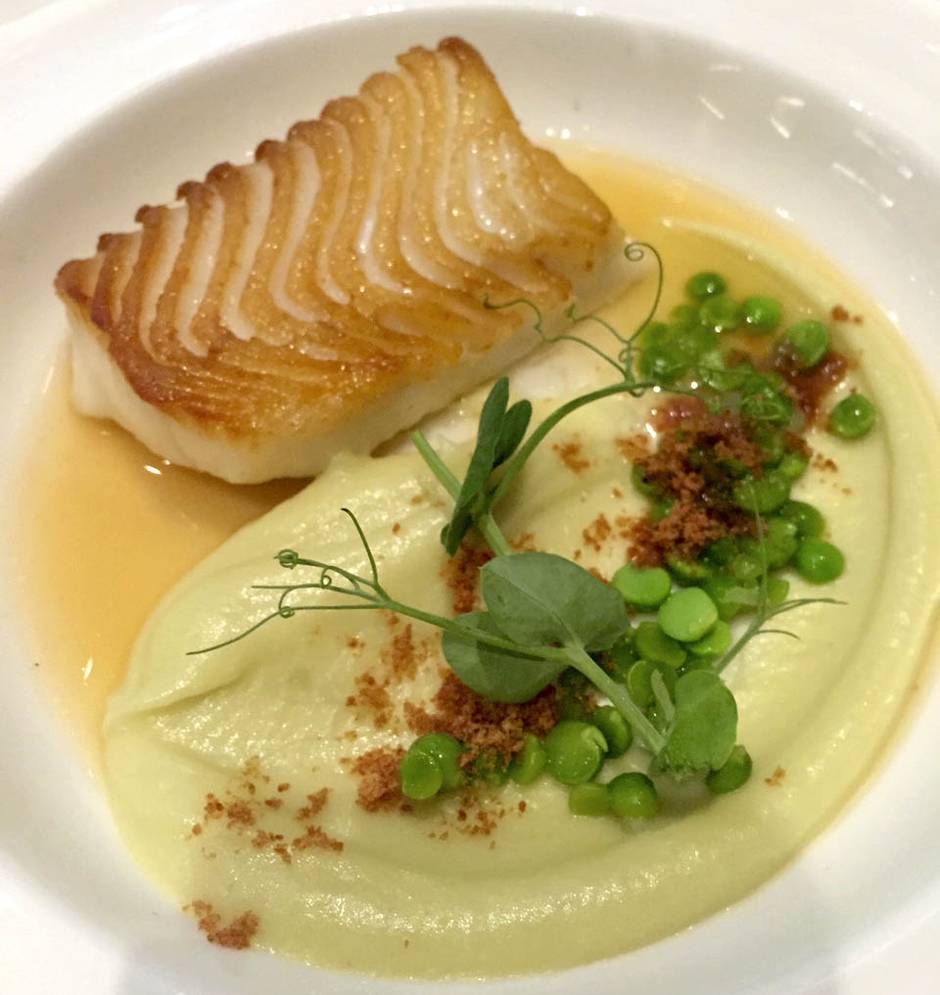
Berton was in Toronto last summer as a guest chef at Buca Yorkville, where he cooked black cod with russet potatoes and sweet peas bathing in a prosciutto broth, which is better described as a heavenly meat nectar that counterbalanced the lightness of the fish and the green freshness of the peas.
The key to serving broth, Berton says, is to use seasonal ingredients – “products that give a sense of freshness and don’t make you feel heavy.” Never use bouillon cubes, and always start a broth with cold water. The biggest mistake home chefs make is overboiling. “It has to simmer slowly to extract all the flavour.”
I attempted to imitate, if not recreate Berton’s masterpiece. Instead of using prosciutto crudo, as Berton does, I used plain old ham, because it’s plain old cheaper. Apart from that, I followed Berton’s prosciutto broth recipe, which couldn’t be simpler. Dice a 300-gram slice of ham, sauté it in butter, drain it in a sieve to remove excess fat, then brown a medium diced onion in the same pan. Add back the ham, cover with cold water and a few ice cubes, then slowly bring it up to just a whisper of a simmer. After an hour, strain it, then spoon a drop onto your tongue and admire this mesmerizing meaty essence.
The next day, I sautéed some fillets of conger eel – it was the only white-fleshed fish my fishmonger had in fillet form – and plated it with boiled new potatoes. At this point, it was the kind of decent Friday night fish dish that always makes me conscious of the gulf between my cooking ability and a restaurant chef’s. Then I spooned over the ham broth, letting it soak into the fish and watching the puddle reach its way across the plate to the potatoes.
“Very often,” Berton says, “a plated dish can be much more tasty if accompanied by a broth that completes it.” And the dish was just that – more tasty.
The broth completed it.
Mark Schatzker is the author of, most recently, The Dorito Effect: The Surprising New Truth About Food and Flavor.