La Petite Idée Fixe on Montreal’s Parc Avenue is the archetypal “local” – a bar that checks off so many boxes, it might have been built in a Paramount lot.
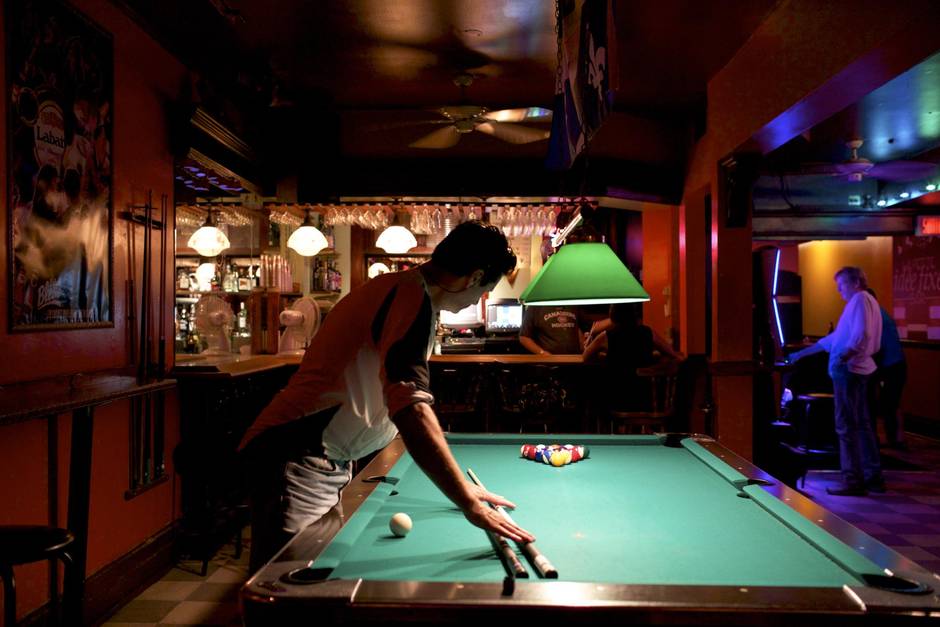
There’s the gruff bartender with a heart of gold, stealing puffs of his Belmont behind the counter. There’s the jukebox with a strong prejudice for 1970s guitar music. And there’s the temperamental pool table, disgorging its eight ball with weary reluctance.
Even the barflies are classic types. Take Dermott, a regular among regulars. (His name is probably spelled the Gaelic way, but ours was a verbal friendship.) With his button nose, small teeth and cock-eyed smile, he looks like a figure from a Dutch master canvas. Dermott used to work in a restaurant and bring leftovers to the bar, like a baguette and fish cakes. It was risky to get him talking because he hated to stop.
If the whole thing sounds like a cliché, it probably once was. Locals were among the great cultural tropes of the mid-20th century; ask Ted Danson and Kelsey Grammer. But if the idea of the local bar jumped the shark around the time that Cheers was on TV, it is suddenly starting to feel vital again. In a social world plagued by fragmentation, self-sorting and screen-induced passivity, there’s something refreshing about a place like Idée Fixe. It is open, socially scattershot and grittily physical. It is everything that Tinder is not.
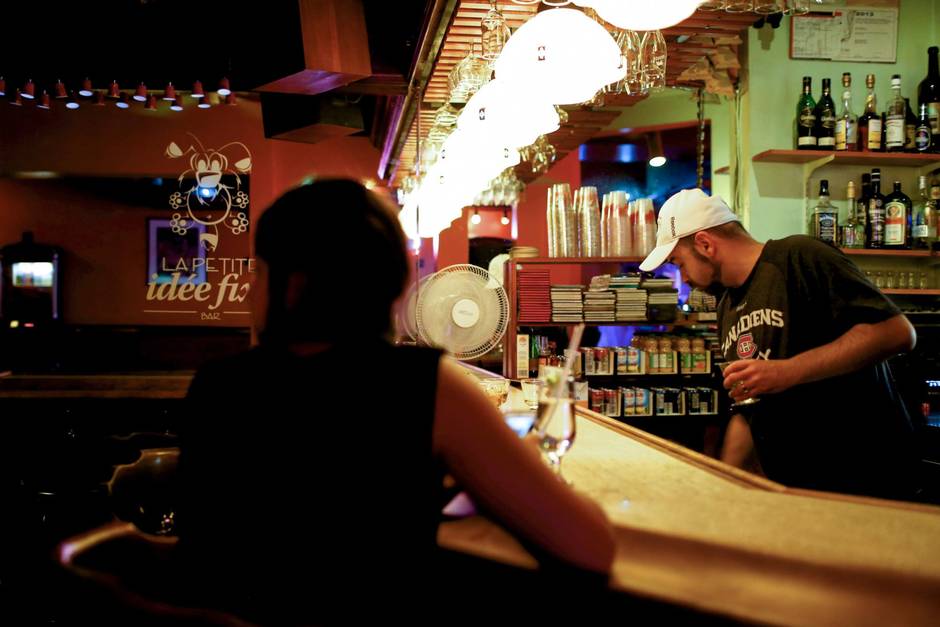
When I lived in Montreal, there were bars closer to my apartment than Idée, but none that would serve as a local – they were too expensive, or too noisy, or they specialized in wine. Idée was a default choice, and I came to see that as a feature, not a bug.
Everything about it was outside my comfort zone: its bank of electronic slot machines, the Quebecois flag hanging from the ceiling, the sketchy dudes that hung out beyond the washrooms. All of that was off-putting at first, then exotically charming. Eventually, it just felt normal – even a little like home.
That’s one of the gifts of local bars, hidden right there in the name. They don’t have to be your favourite bar; geographic proximity is the only requirement. In an age when it’s impossible to get anyone to go anywhere without first checking Yelp and its ilk to make sure the place is just so, the arbitrariness of local bars has appeal.
Idée Fixe expanded my comfort zone. It didn’t grow on me so much as it forced me to grow.
I met people there I normally wouldn’t meet; middle-aged former weed couriers hardly abound in my social network. Nor do taciturn Quebecois bartenders such as J.F., the man who pulls the pints at Idée. Over the years, he and I became friendly in a way that would have been unthinkable outside the bar’s creaky door.
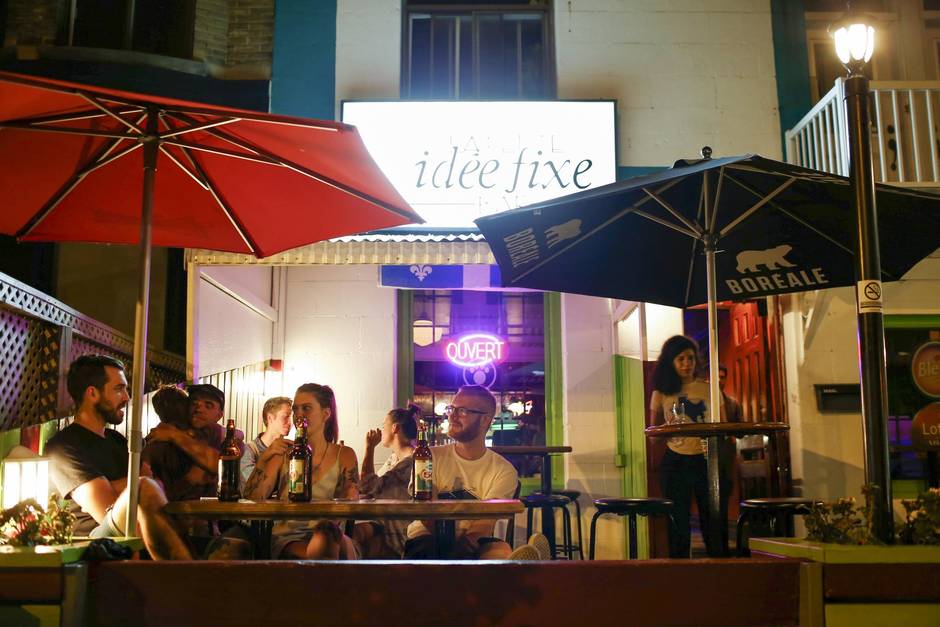
I used to place my order – “Grosse bouteille de Cinquante, s’il te plaît” – with a perfunctory mumble, but even that became unnecessary. It finally got to the point where J.F. would already be unscrewing the cap from a big bottle of Labatt 50 by the time I had hung up my coat. (When I ordered something different – whisky with water, say, when my throat was sore – he would throw his hands up in a pantomime of exasperation.)
Bars have thrown together dissimilar people for hundreds of years. When the industrial revolution ripped up village life and scattered men across the face of northern England, public houses served as social salves for homesick workers. “They came from Kendal, North Yorkshire, Leicester, Devonshire and even from the Emerald Isle,” wrote the historian E.P. Thompson, describing a Yorkshire pub’s clientele circa 1820, “so that to spend an hour in a public-house (the comber’s calling was a thirsty one) one might have heard a perfect Babel of different dialects.”
These communal hubs, away from work and home, are what sociologists like to call a “third place.” They are barber shops, the YMCA sauna, the sideline of a kids’ soccer practice: spots where people meet on even ground and neutral terms, creating social bonds that are looser than friendship but no less essential.
But third places are disappearing. American political scientist Robert Putnam famously chronicled this trend in Bowling Alone, a work of analysis that doubled as a lament. Membership in the Elks, attendance at Tupperware parties and, yes, participation in bowling leagues was in freefall, he noted, taking the benefits of community with it. The book was published in 2000, and its observations have only become more trenchant since.
The purported reasons for this pulling-apart range from suburbanization to racial strife, but technology is at the heart of the story. The domesticating lure of radio and TV has been hollowing out public gathering places for decades. In 1941, George Orwell complained that a national addiction to the “passive, drug-like pleasures” of movie theatres and the BBC was ruining English pub culture, “with its elaborate social ritual [and] its animated conversations.”
The Internet has extended the problem, by allowing us, more than ever, to stay put on our couches while we socialize in echo chambers, interacting mainly with other people just like us.
Putnam critics argue that Rotary halls and local bars have been replaced by other kinds of social hubs, such as Internet chat rooms and Pokemon Go gyms. But whatever their virtues, these virtual clubs don’t seem to have filled the emotional gap left by the decline of their more tangible precursors. Social fragmentation isn’t just a blow for beery nostalgists; its toll appears to be real and widespread. A recent survey by a researcher at the University of Chicago found that some 40 per cent of American adults reported feeling lonely, double the rate of the 1980s.
Another common knock against third-place romantics is that these fondly remembered social spaces were often exclusive preserves of the male and white. Think of a Shriners convention, and try not to imagine a doughy man beneath the fez, they say.
Local bars have a definite tendency to skew masculine. Idée Fixe sometimes feels like a high school locker room; I have female friends who find the place forbiddingly Y-chromosomal and never go. Locals haven’t always repelled women, though. British pubs swarmed with female patrons in the 19th century before Victorian prudes got involved and shamed publicans into barring women after certain hours, or altogether.
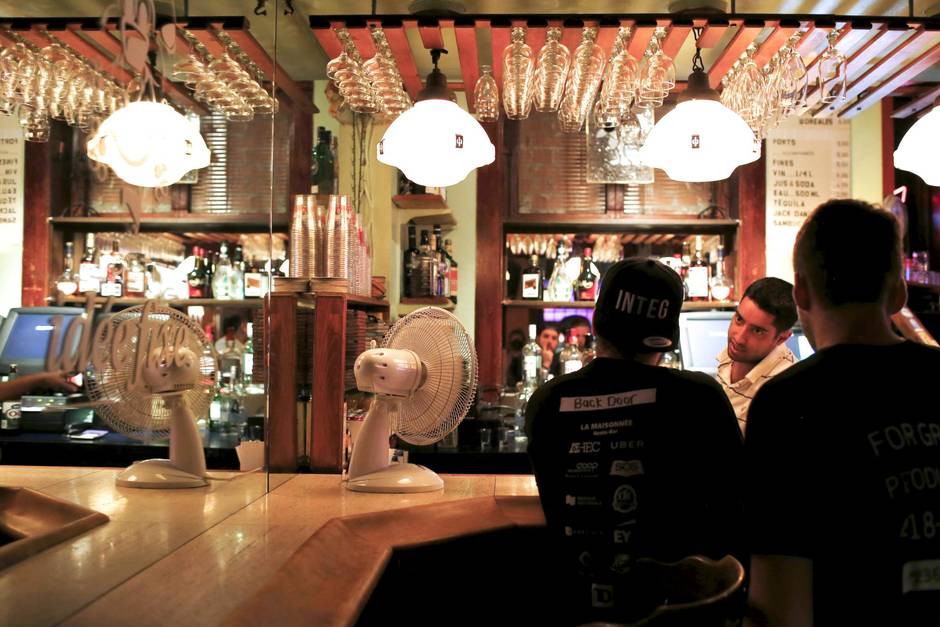
Idée, for its part, has a better gender mix than you might expect, despite the prevailing dudeliness. One of the groups I came to know there was a coterie of CEGEP girls fronted by a ringleader named Cassandre, who wore tattered band T-shirts and fought me for control of the pool table.
Idée’s relative sexual parity has an only-in-Quebec feel – a product of the province’s proud feminism.
One of the wonderful things about a local is they’re always stamped with something indelibly, well, local. In Idée’s case, the Montreal fingerprints are everywhere, from the fleur-de-lis flag to the “fruit machine” slots to the 750-millilitre beer bottles.
It could be that I was spoiled, the way you’re spoiled by first love, but I haven’t been able to find a local in Toronto since I moved back here two years ago. The bars all have something going on, whether it’s 15 TVs showing sports or world-class tapas or ping pong. That isn’t a bad thing necessarily, but it saps the blank-slate quality that makes a good local work. All that hectic entertainment crowds out the quiet rhythm of bar-stool conversation, the kind that made Idée feel like something approaching a community.
Maybe I was wrong: Maybe you couldn’t build Idée Fixe in a studio. Maybe it’s too much a product of its place. And, more than that, a product of the people who put grooves in its bar stools, singe the patio with Du Maurier butts and ease each other’s burdens with halfhearted games of dollar pool.
If that can’t be replicated, in Hollywood or Toronto or cyberspace, it’s at least something worth celebrating. Or toasting.