Writing in the Globe in July, 1980, Virginia-born, Toronto-based architect Barton Myers introduced readers to a term he’d coined to describe a strategy to curb suburban sprawl: “The Vacant Lottery.” This “urban consolidation,” he wrote, combined reclamation of vacant land, infill development, mid-rise construction rather than the high-rise/single-family model, and, lastly, “[r]euse of the past through recycling of older buildings.”
While Mr. Myers closed his Toronto office in 1987 and decamped to sunny Los Angeles full time – he’d already been teaching at UCLA and had a satellite office there – it took another couple of decades to see his ideas bear fruit. And although Toronto is erecting high-rise condos at a dizzying pace, we have embraced the mid-rise model also. Further, young firms routinely design infill projects as a way of making their mark, and, most importantly, adaptive-reuse is no longer a dirty word.
Ironically, much of Mr. Myers’s Toronto work is now reaching a critical age, and decisions must be made as to whether to bulldoze or rehabilitate. Thankfully, 21st-century Torontonians are more design-savvy than ever, so Barton Myers Redux will now be a thing.
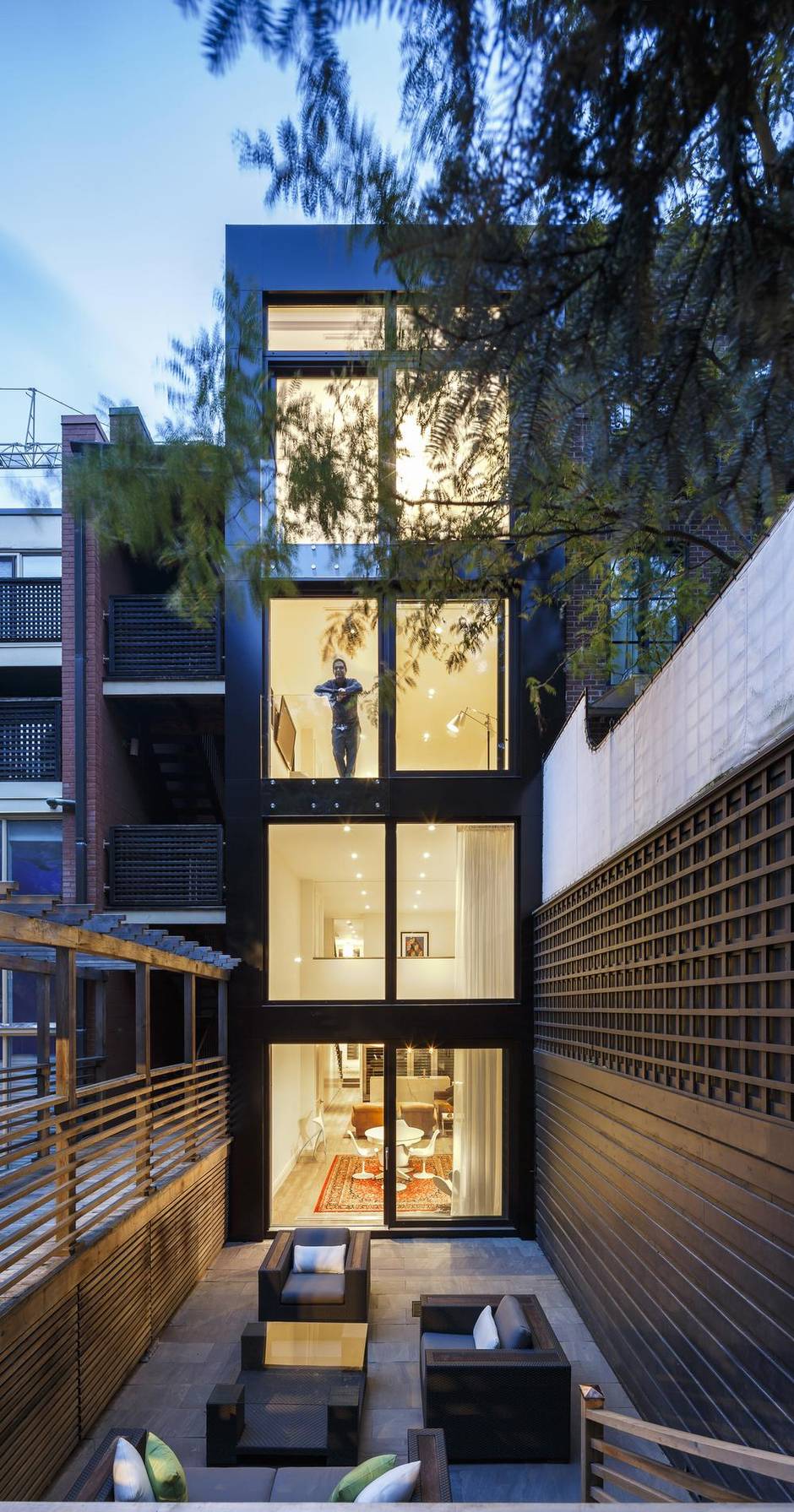
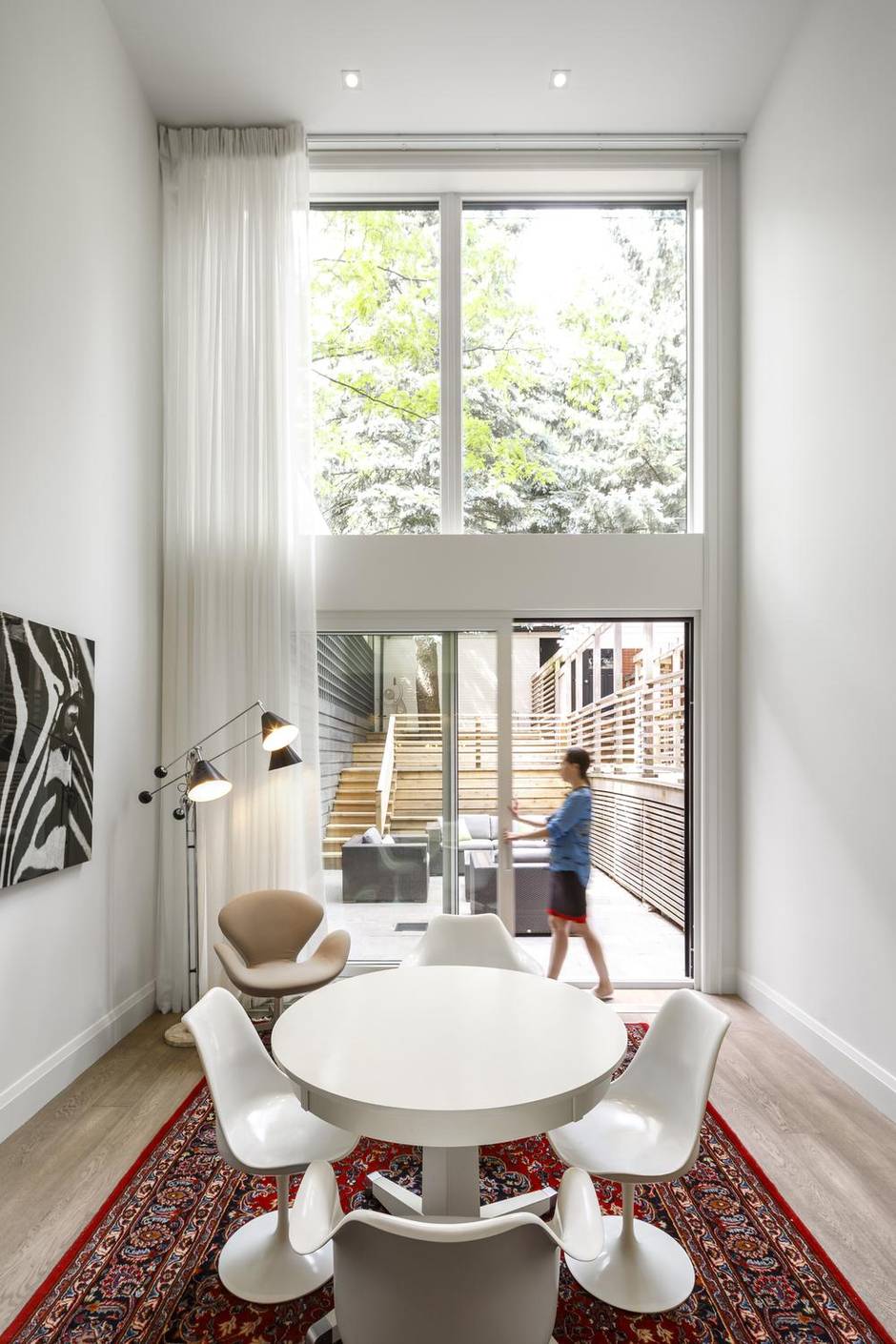
For Wendy Davis and Peter Vesely, owners of executive concierge service Zebrano, rehabilitation of their 1984 Myers-designed Yorkville townhouse was a no-brainer. Former owners of a 1954 Cedarvale Park home by Modernist architect Edward Richmond (profiled here in February, 2007), the couple were well versed in the complicated dance required to gently nudge old architecture into new uses. And because the four-storey Hazelton Avenue townhouse had originally been designed as two separate units with their own double-height spaces (Mr. Myers loved tall “indoor courtyards”) and cozy areas alike, uniting the two into one large space while respecting the original vision wouldn’t be easy.
It’s a good thing UCLA produces a lot of graduates.
After studying under Mr. Myers for their master of architecture degrees, Jodi and Andrew Batay-Csorba worked at Gehry Partners and Morphosis Architects, respectively; four years ago, the couple returned to Ontario (Ms. Batay-Csorba is from Leamington; Mr. Batay-Csorba from Thunder Bay) to set up their own firm in Toronto.
A perfect fit, then, for Mr. Vesely and Ms. Davis’s townhouse. “They were really good about keeping the stuff that’s good, and modernizing [the space],” says Mr. Vesely of the husband-and-wife team.
Funnily enough, not only is Mr. Myers’ former home at 19 Berryman St. a stone’s throw away, Mr. Batay-Csorba explains that the top floor of the Vesely/Davis townhouse is almost identical to it, while the bottom floors are “based on one of [Le] Corbusier’s villas.” In other words, this was a plan on which to tread very, very lightly.
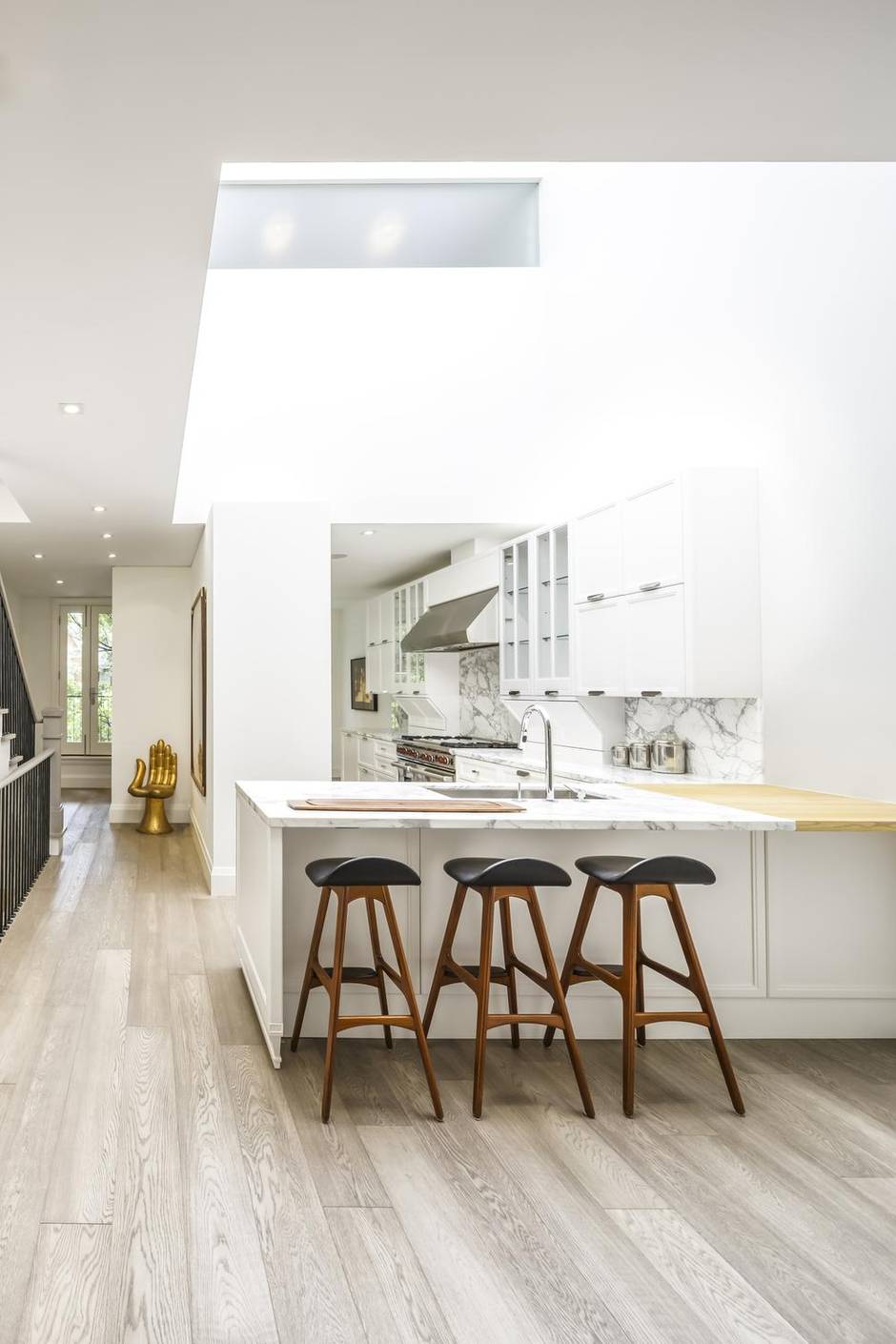
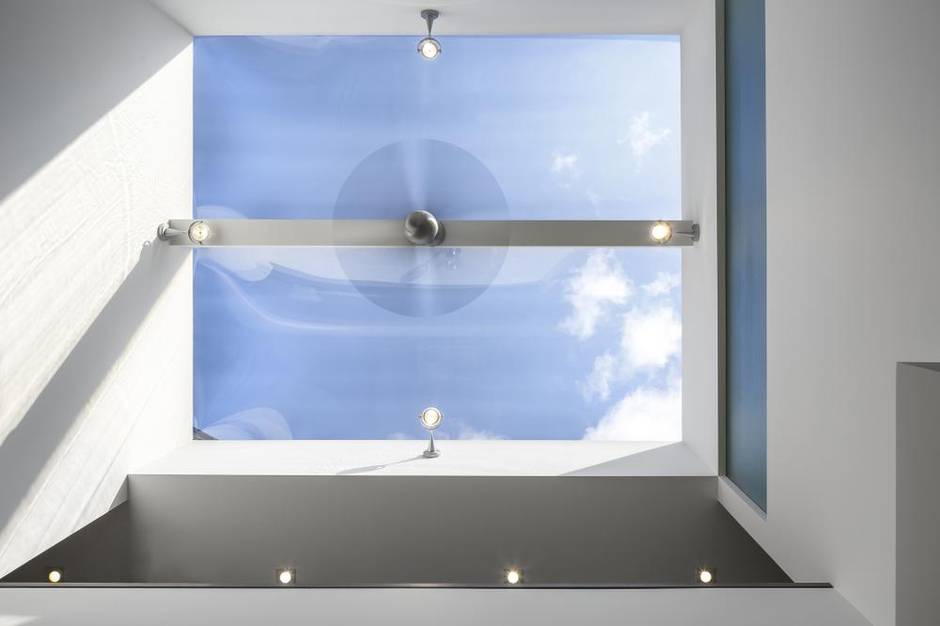
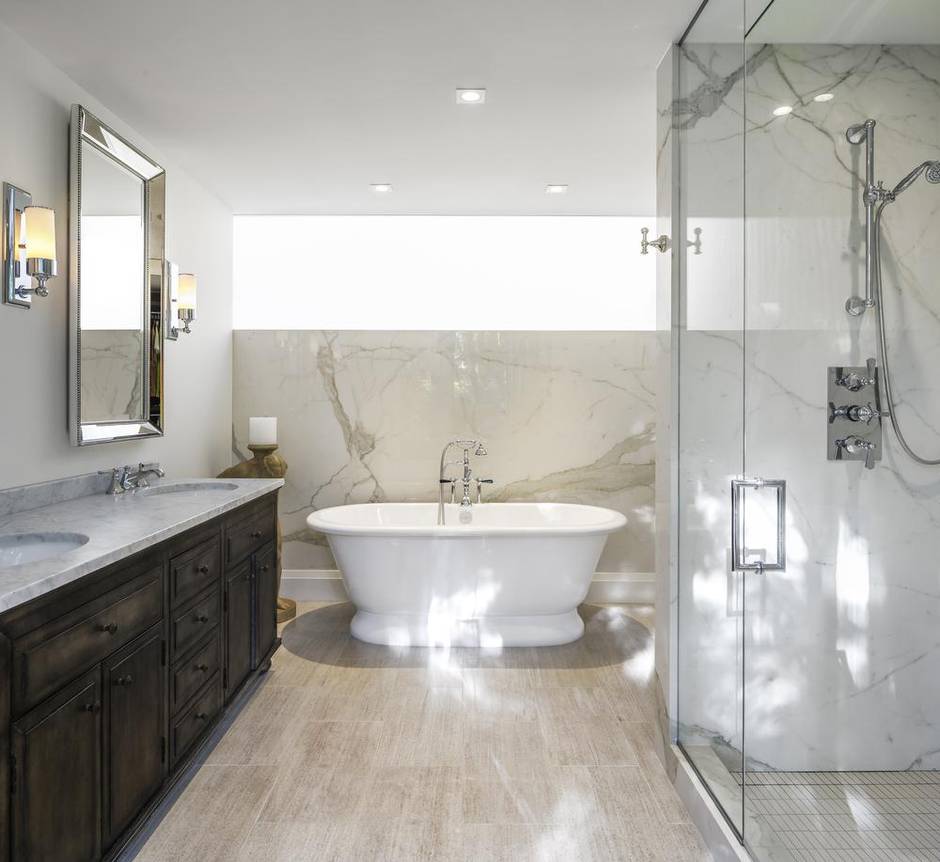
And while much has taken place, the newly minted renovation seems light indeed, while masterfully preserving the iconic, skylit Myers void-spaces, interior balconies, and open plan. The biggest intervention occurs at the back of the home: on each of the four levels, space has been reclaimed via removal of outdoor, terraced balconies in favour of a flush wall sporting Juliette balconies. Now, entire glass walls slide open with a flick of the wrist, and new, lighter finishes such as porcelain slab walls, Statuario marble counters and grainy, light-grey oak floors keep things visually light as well.
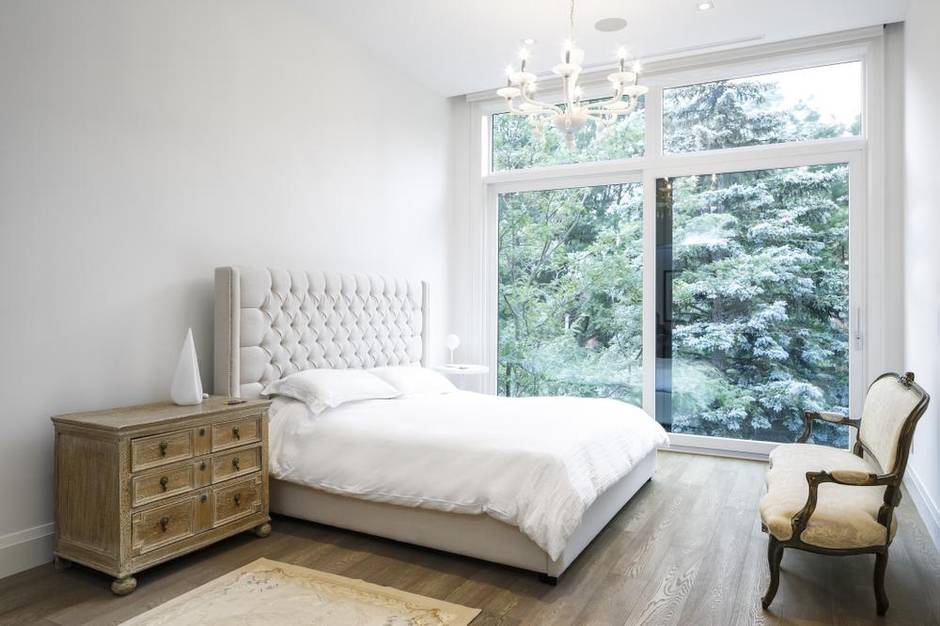
One striking and serendipitous result of the reclaimed floor space occurs in the master bedroom. Before, occupants were thrice removed from the dense tree-screen (Myers’s idea) by window, exterior balcony, and balcony railing; now, leafy fingers look as if they are caressing the new window even though they’re a whole backyard away. “Pretty good for downtown Toronto, eh?” asks Mr. Vesely with a wink.
Of course, Yorkville luxuries were also added. The four-bedroom home now has an elevator, full automation system, recessed halogens, a built-in sound system, and a wet bar for entertaining.
With the home now on the market for a cool $5.9-million, Mr. Batay-Csorba wonders aloud if well-heeled buyers will appreciate the time and trouble spent preserving the ‘unusable’ two-storey voids. “It’s tough to sell people on ‘space’ because they want square footage … [but] that’s kind of what we’ve been basing our office on, that architecture actually can get you more money in the marketplace than features, like a new car.”
Then again, the kind of Modernism practised by Mr. Myers and others is currently enjoying a renaissance. It’s cool knowing one’s space was considered and then drawn by an architect rather than slapped together by a builder from stock plans. And the cool factor increases when sensitive owners hire a young, hungry firm to reinterpret a project their professor designed while they were still in elementary school.
“His ideas and his early days are totally in line with where we are right now,” confirms Ms. Batay-Csorba. Indeed, Mr. Batay-Csorba says he’s incorporated Vacant Lottery ideas into a class he’s currently teaching at the University of Waterloo.
While it might be difficult convincing purchasers that a 1984 townhouse is a heritage building, standing in the kitchen, bathed in light, and with all the oxygen above one’s head will surely make a strong case, finishes Mr. Vesely: “You’re washing your dishes and you look up and say ‘I live here, how cool is that?’”