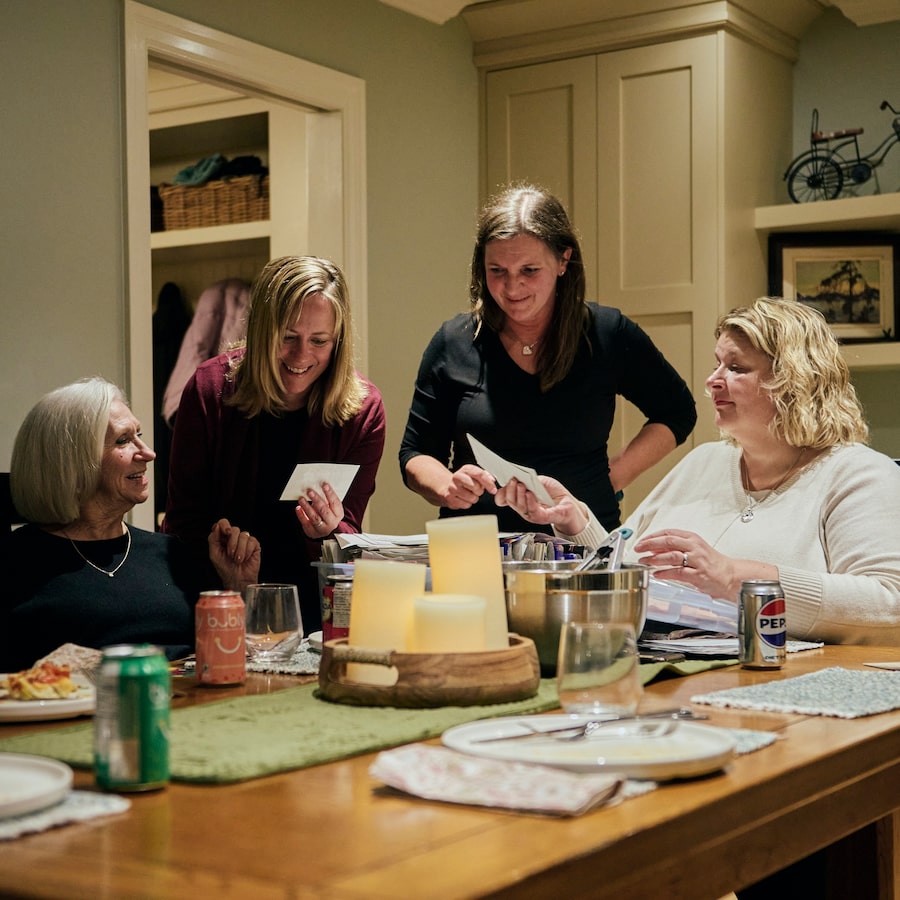
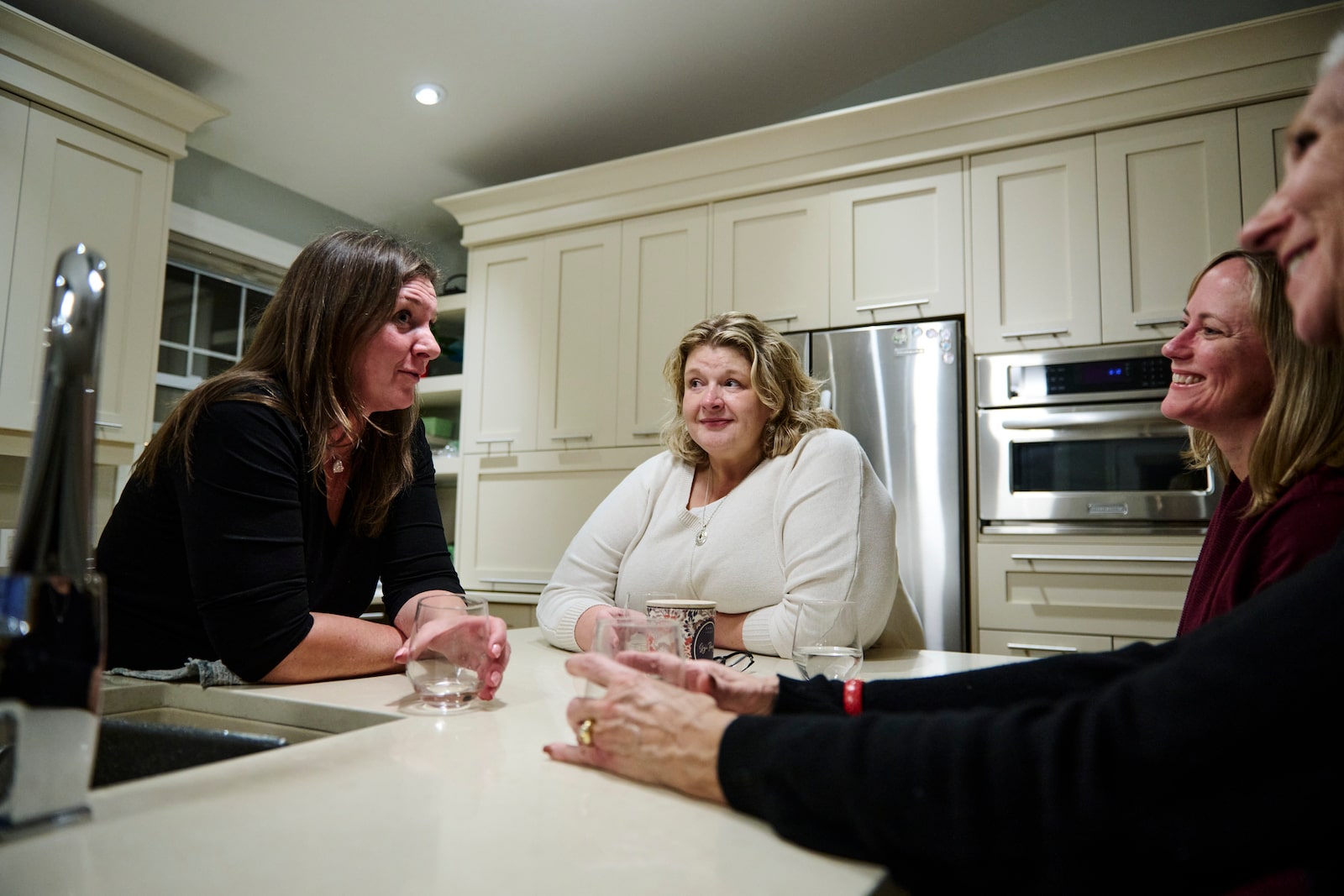
Nothing’s off limits with The Beamsville Beauties Supper Club, five women who met in high school almost four decades ago. Every month, they faithfully reunite for dinner, a tradition now spanning nearly 20 years.
The women, all teachers in their 50s, have reached that stage of friendship where they can say anything. Things they might not say in front of a spouse. No judgment, lots of laughter. Food for the soul, the women call it.
“With these girls, they know who I was when I was 14, and they know who I am at 51,” said Lesia Castellano. “We’ve seen each other through births, deaths, marriages, divorce, moves and job changes.”
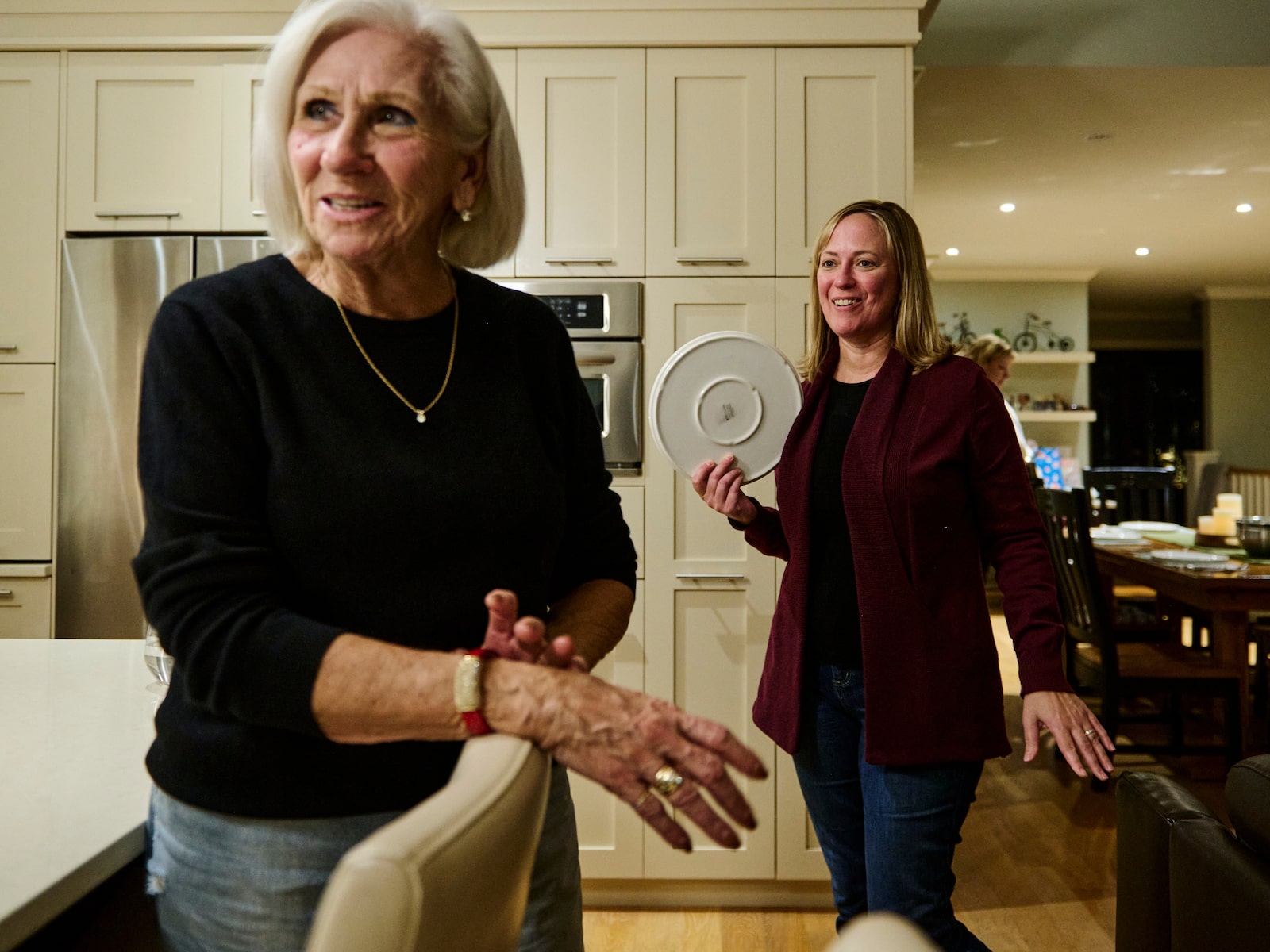
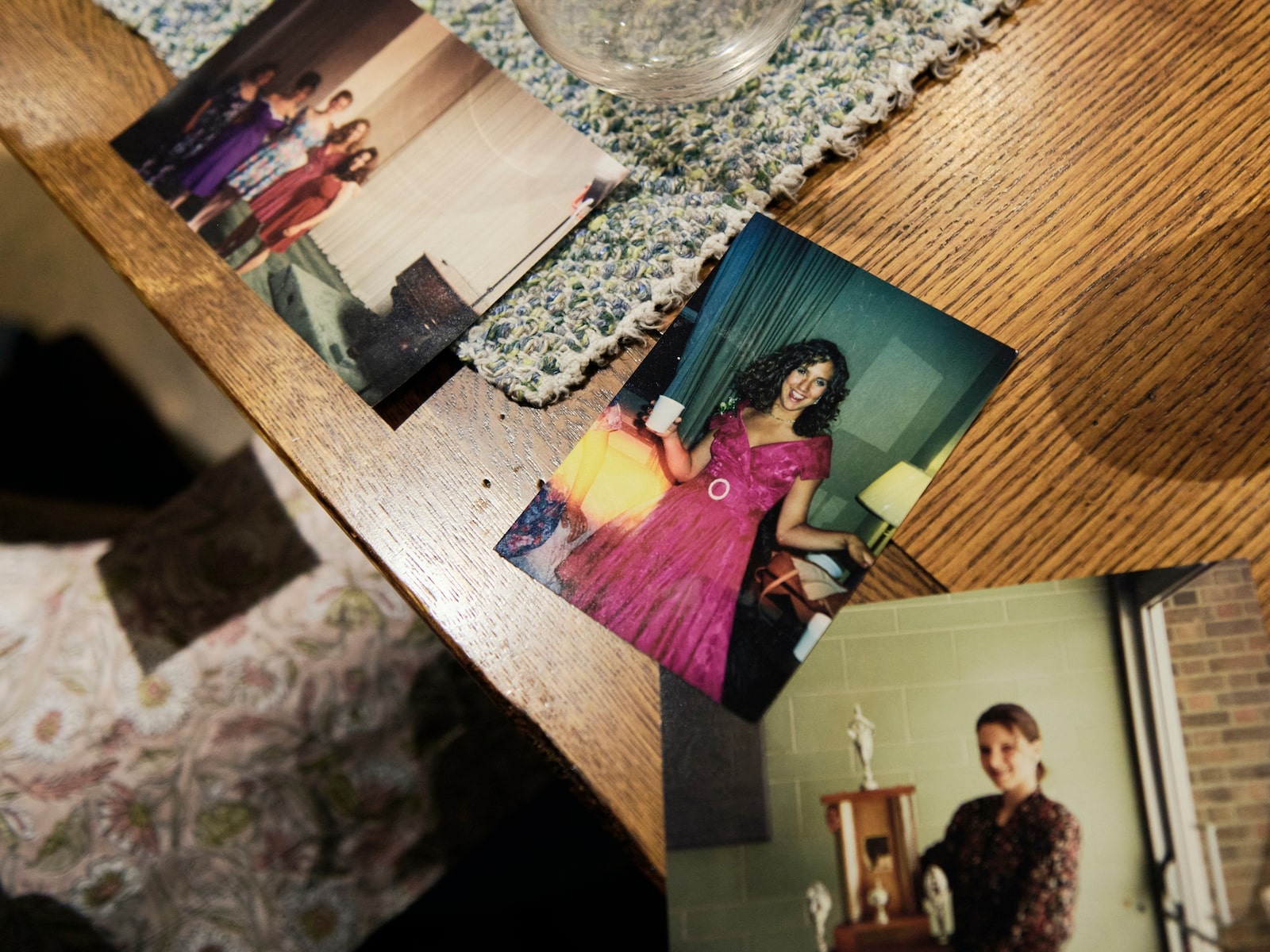
The supper club should have been six: their friend Kim died when she was 20, a loss that shook the women. In 2007, they met to honour Kim’s birthday and invited her mother Joyce Gillespie, who had been the secretary at their high school.
“Joyce has been like our mother hen. She looks after us,” said Ms. Castellano. “We always felt this kinship, especially after she lost Kim. We wanted to take her under our wing as well.”
That night in 2007, the women cemented a plan to meet every month. The promise held, and they’ve come together regularly for potluck dinners, barbecues, pool parties and shopping trips.
When a meetup gets put on the calendar, Ms. Castellano makes the time, driving an hour and a half from her home in Turkey Point near Lake Erie, to Beamsville in the Niagara Region.
“It’s irreplaceable,” she says. “I feel like I’m at home with these girls.”
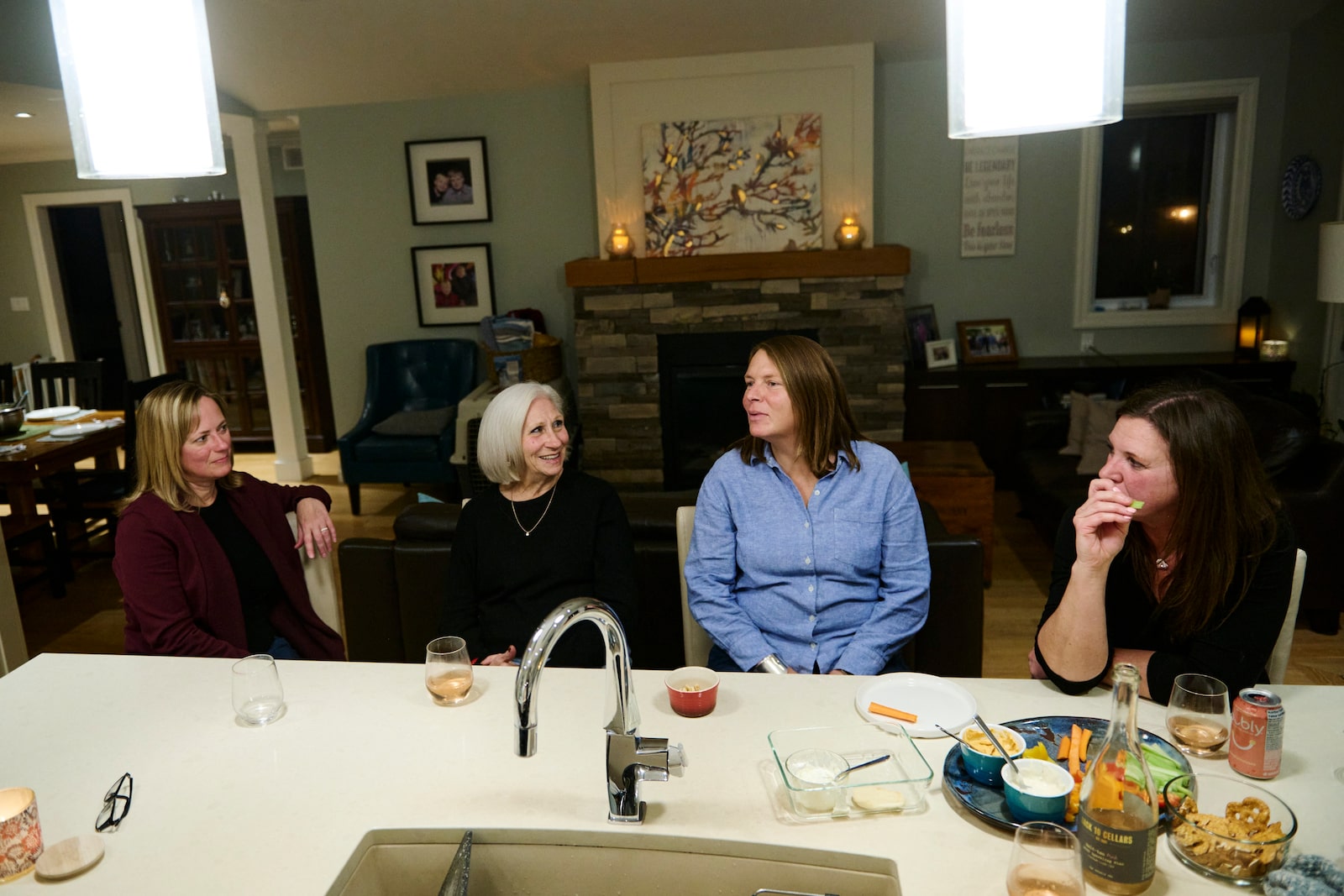
The women have carefully nurtured this bond for years – bucking a disheartening shift among adults, who are losing friends and time with friends, as work, family, spouses and children take centre stage. Friendships become expendable in ways that the rest of life is not – an add-on, not an essential.
With each passing decade since the mid-1980s, Canadians have been spending less and less time with their friends. Just 19 per cent said they hung out with friends on an average day in 2022, down from 48 per cent in 1986, according to Statistics Canada.
Working-age Canadians between 25 and 64 reported the sharpest declines, their likelihood of seeing a friend dropping by two-thirds. This is also the stage in people’s lives when they seem most dissatisfied with the quality of their friendships, 2024 figures from Statistics Canada show.
Nearly half of those surveyed feel they don’t spend enough time with friends and family, the agency found. But when people do manage to meet, they’re parting ways sooner, after 3.8 hours, compared to five hours in the eighties.
“There is a real sense of scarcity in the amount of time people feel they have available to spend doing things like leisure and seeing friends,” said Rhaina Cohen, author of the 2024 book The Other Significant Others: Reimagining Life with Friendship at the Center.
“The time shortage is exacerbated by the way people’s lives are set up to be isolated. If you have caregiving responsibilities and you’re a half-hour away from your closest friends – these short pockets of time aren’t going to be easily filled with friends. It’s not just the time shortage, it’s how accessible friends are in the windows we have.”
Ms. Cohen and others who write about friendship argue that when we de-prioritize friends on the calendar, we dilute these relationships, a loss that costs us more than we may realize.
“People will say they have the kind of friendship where they won’t see each other for a year or two but it’s like no time has passed. But you wouldn’t say that about your spouse or your relatives,” Ms. Cohen said. “It would be seen as a sad thing if you became resigned to this idea that you weren’t going to see each other for a very long time.”
Unlike our teens and 20s, with their long nights and endless hangs, making time for platonic relationships in later adulthood requires more active tending. Intimacy in friendship involves doing things together, moving through life in real time together – not merely catching up on milestones after the fact.
Some are trying to be more deliberate about maintaining their friendships, coming up with thoughtful and inventive ways to connect with dear friends in the churn of life.
They might schedule a monthly dinner, or a phone call every Friday. Or, they might meet to learn something new together. Some who are long distance will bake, work out, or watch films in tandem, from afar. Those joint adventures are helped by regular, meaningful points of connection – friends letting friends know they’re thinking of them. Others find smaller ways to stay in touch, texting each other memes or photos of what’s outside their window, sharing long voice notes or video updates. Some go analogue, sending postcards or gifts in the mail.
These expressions of friendship stand in stark contrast to what Ms. Cohen calls “maintenance mode,” where people meet for dinner and run through a list of everything they missed in the year since their last dinner. These other friendship efforts take thought, care and an investment of time.
Antonio Vescio is the energetic social convener for his large circle of friends and acquaintances in Lasalle, Que.
After retiring from law, the 69-year-old set up a group e-mail where he organizes golf and pickleball games several times a week. The group has grown to 26 people, many of them old friends from elementary and high school, now mostly retired. Swinging paddles and clubs, they exchange stories about their travels, children and grandchildren.
“Having these exterior connections, it gives you a broader sense of purpose, a web in your life,” Mr. Vescio said.
Another friendship practice: The retiree regularly returns to the café he frequented every morning during his working years.
“It’s been a tradition I kept up,” he says. “In that type of milieu, you make contacts with different kinds of people, different nationalities, different ages. There’s a network that developed that’s continued until today.”
Once a week, Mr. Vescio and his wife also schedule a lunch or dinner out with friends. And each week, he makes a point of spontaneously calling a distant friend or relative.
“I don’t see it as an obligation,” Mr. Vescio said. “It’s emotionally satisfying.”

Anna Goldfarb.GAB BONGHI/Supplied
Maintaining friendships this deliberately isn’t an innate skill – it needs to be learned throughout life, says Anna Goldfarb, who wrote the 2024 book Modern Friendship: How to Nurture our Most Valued Connections.
“When we were younger and in school, we didn’t have to say, ‘When can I see you next?’ We’d see them tomorrow at school. We didn’t have to arrange any of this,” Ms. Goldfarb said.
“This skews our perception of the effort that friendship is going to take in adulthood. It’s a whole new skill foisted on us that we have no practice in. It makes perfect sense that people are taken aback by all the particulars: Why are we meeting? Does this align with my interests and goals? Do I want to do it?”
Instead of texting a friend a non-committal, “I miss you,” Ms. Goldfarb wants people to reach out with more meaningful ideas and a purpose to their meet-ups. Mutual affection, she says, isn’t enough to keep a friendship alive: “Our job as friends is to care about what our friends care about.”
Most important, though, is the fun.
“If your friendship isn’t fun, if it’s not delightful, you’re going to peel away,” the author said. “Diligence will go down the tubes and it’s not going to move forward.”
For men especially, strong ties can be difficult to maintain in adulthood. Nearly half of Canadian men feel socially isolated, a May, 2025, report from the Canadian Men’s Health Foundation found.
Some men are coming up with unique ways to stay connected. Australian millennial Zachary Perez went viral after he detailed his “Waffle Wednesday” tradition on Instagram. Every week he and three friends send each other one-to-two-minute video updates on their lives, be it baby announcements, engagements or job changes. The simplicity of the routine resonated with other men online.
For others, gaming is an inroad to closer ties. Every Wednesday and Saturday, Abdul Islamovic, 37, of Mississauga, Ont., and a group of friends get on Discord to talk and play Battlefield, Call of Duty and Age of Empires with their cameras and voice features on.
Their friendships have grown richer and migrated offline. The men try to meet every month or two, at restaurants, barbecues, shisha lounges, one of their kids’ birthday parties. Where they would text before, they now call.
“I wear my emotions on my sleeve,” Mr. Islamovic said. “Having that group that lends you an ear and says, ‘I hear you, I see you,’ without judgment – it’s a confidence boost.”
Sometimes adults avoid putting in the hours with friends because they mistakenly assume there’s a limit on how devoted these relationships can be, Ms. Cohen said.
“If the circumstances align, it’s actually possible to be extraordinarily close to friends.”
Ms. Goldfarb, who considers herself “an evangelist for friendship,” says there’s nothing wrong with renegotiating these relationships over time. That can mean asking friends what’s important to them at this stage in life and how you can be involved. Or it can be simpler, like saying you prefer to call instead of tapping out text messages from afar.
Ultimately, the author hopes friends can get more comfortable asking each other for favours. This shows us that people are reliable and loyal, which deepens our bonds.
“A lot of friendships, there are no stakes,” Ms. Goldfarb said. “That’s why you’re not as invested.”

Friends and family gather for dinner at Mavis Dixon’s, second from right, home in Vancouver, where she hosts regularly on Sundays. Ms. Dixon said she feels 'a sense of mission' around bringing people in her life together.Mavis Dixon/Supplied
Mavis Dixon feels “a sense of mission” in socializing with people.
“I make it a priority to party and hang out,” the 59-year-old project manager laughed.
Every six weeks, Ms. Dixon hosts a book club at her home in Vancouver. She and her girlfriends started meeting this way some 25 years ago when their kids were infants, as an “escape from baby brain.”
Today, the core group is 10 women, with another 10 cycling in and out. Sometimes, the books get light mention as their conversations meander.
After two decades, the friends have seen each other through trying stages of life: surly teenagers in high school; perimenopause; illness; parents dying; a house burning down.
“Maybe we need each other more than we have in the past,” Ms. Dixon said. “We don’t take it for granted.”
Twice a month on Sundays, she hosts and feeds her three adult kids, their partners, and sometimes their partners’ parents. To round out the circle, she invites other friends and acquaintances passing through their lives. “There are people who I know need a little bit of family,” Ms. Dixon said.

Ms. Dixon and a group of friends and family in her backyard in Vancouver picking red currants in Aug 2025.Mavis Dixon/Supplied
She throws parties at New Year’s and for people’s birthdays, setting folding chairs, tables and a couch out back in the summer to squeeze more friends in. Her hosting style is uncomplicated and focused on the connections.
Ms. Dixon thinks her comfort as a party starter comes from growing up in a big family from Fortune, Nfld., where people would drop by often.
“In places like my father’s village in Newfoundland, the social habits came from a place where people were literally starving to death. This was subsistence living – and they still partied! That was the reason for living. Something has gotten really lost.”
She feels that, too often, people don’t try at friendship because it can’t be built up quickly.
“It takes many years, not of heavy lifting, but light lifting – light kinds of interactions. Then suddenly, you have something incredibly strong. But you can’t put the strong thing together without a lot of threads.”