“SUPER planner” – all caps – is how Margaret Tsuji sees herself in her family.
At the Toronto home she shares with her husband and two sons, life moves at a pace so frenetic, their schedule has to run like a Swiss watch.
Aside from the spouses’ demanding careers, their sons Kyle, 13, and Ryan, 10, are heavily involved in sports. September, Ms. Tsuji recalls, was “baseball hell,” with Kyle in house league, her husband coaching the team and many practices and games colliding with the return to school.

Ms. Tsuji’s sons input their commitments into the shared Google Calendar.Gabriel Hutchinson/The Globe and Mail
In October, volleyball for both sons got added to the mix. Swimming ramped up, with Kyle’s bronze cross certification swallowing three hours a week. Ryan made the touch football team, meaning more weekly practices. Piano, youth band – more hours a week. Ms. Tsuji feels the pace of children’s activities has only accelerated since the pandemic; “the revenge of extracurriculars” she calls it.
To keep everyone in sync, the family relies on multiple planning systems, starting with a shared Google Calendar. The sons access it through their Chromebooks for school, carefully inputting all their commitments. Alexa, the virtual assistant device, blasts out additional reminders.
Hanging over the kitchen island, a paper calendar lists what’s for dinner every night and how it fits in with everyone’s activities. The family huddles most Thursdays to create this master plan. They gather again on Sunday mornings for the week’s big meal prep – “kitchen jail,” Ms. Tsuji joked.
“Scheduling and planning everything is absolutely key to staying sane,” she said. “I live by the calendar.”
With the feverish pace of modern life, families are relying on a growing array of tools to help them navigate days scheduled to the hilt. There are specialized smartphone calendars; apps designed to manage numerous sports teams; centralized digital planners like Skylight and Hearth Display, as well as the analog version – a well-worn paper calendar stuck to the fridge. To stay afloat in a sea of commitments, families often use several planning systems at once.
For women especially, the newer calendar tools work to outsource a particular kind of mental load: remembering everything for everyone, a thankless task that often goes unseen. Centralized digital calendars can help distribute the load, showing spouses and children what it takes to deal with all the obligations flung at a family.
Some parents say the planning tools tamp down stress, keeping everything straight in one place. But a calendar of full squares can also ratchet up anxiety. The commitments often feel non-negotiable, the schedule dictating a breakneck pace of life. For others, overloaded calendars signal it’s time to pull back.
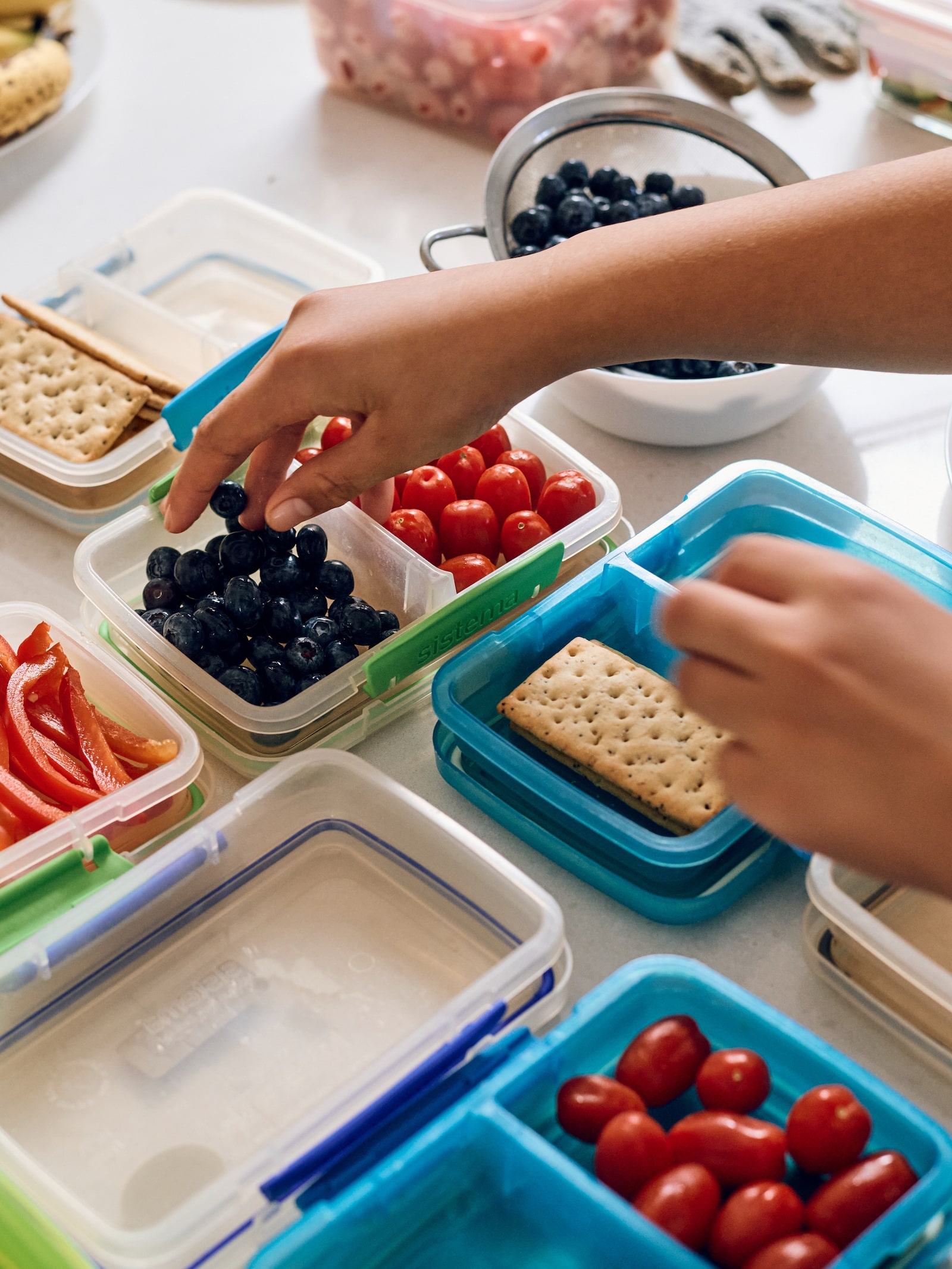

Today, some parents use centralized planners for another purpose: to try to instill more ownership in kids for their day-to-day duties. At Ms. Tsuji’s home, her 10-year-old son does all the data entry for the family’s paper calendar, the master plan taped to their kitchen wall. And when her older son joined a youth band, he added all his weekly practices, concerts and trips into the shared Google Calendar.
“I want my kids to understand that they have a responsibility in this family for the planning,” Ms. Tsuji said. “Hopefully I’m helping them build some muscle in this area.”
In Calgary, the paper calendar Rebecca Haines-Saah tacks on the fridge reminds her of her childhood kitchen, where her mother wrote on a Dairy Farmers of Ontario Milk Calendar.
Today, Ms. Haines-Saah, a university professor, likes the ritual of charting out the coming month: “I love having something tactile and getting out my marker and writing everything down.”
A high level of planning lowers friction, she says. If it’s in the calendar, it’s settled.

Rebecca Haines-Saah, her husband and their two kids keep a shared Google Calendar as well as a paper calendar on the fridge.Rebecca Haines-Saah/Supplied
Filling the squares last September: school photo day, meet the teacher night, birthdays, vacations, her part-time work hours at a local community association, reminders about gas bills and mortgage payments.
Her 16- and 13-year-old sons’ basketball commitments are so numerous, they run over into another planner, the family’s shared Google Calendar online. Here, Ms. Haines-Saah’s husband, a postal worker, inputs everything related to the club basketball he coaches, plus his appointments and outings. He also handles the TeamSnap app and WhatsApp groups set up to manage the boys’ sports activities.
“The calendars are full and that’s enough,” Ms. Haines-Saah says. “I’m not trying to use them to pack even more stuff in.”
For day-to-day reminders, the mother leaves sticky notes on the front door and messages scrawled in whiteboard marker on the bathroom mirror.
She thinks her “list-obsessed” personality drives all this planning. As a former child actress, she loved the elaborate stripboards production managers carted around on film sets – big folders with all the shots for the day meticulously arranged and colour-coded.
“I kind of have the mentality of running my family like a mini film set,” she laughed, “almost like I’m the production manager.”

Sports activities for Ms. Tsuji’s kids fill up a lot of the family's free time on evenings and weekends.Gabriel Hutchinson/The Globe and Mail
Watching parents’ zeal for their scheduling systems, Chris Guillebeau sees well-meaning people trying to organize their way back to sanity.
“That is a desire, to somehow find peace through uber-scheduling,” said Mr. Guillebeau, whose book Time Anxiety: The Illusion of Urgency and a Better Way to Live, was published in April.
But he worries the planning tools might be provoking this sense that we need to be on top of everything, all the time. He sees false promise in apps and software promising mastery over the to-do list. That misses the real problem: people trying to manage too much.
“The relief comes from accepting that we’re probably not going to keep up with everything,” Mr. Guillebeau said. “It comes from choosing a few things to keep up with and minimizing everything else, to some degree.”
He sees people feeling antsy or even guilty when they encounter a blank square on their calendar. There’s an adrenalin hit to all this busyness, he believes.
“There is something weirdly comforting in filling your schedule, knowing, ‘This is what I need and have to do,’” the author said.
“It can be uncomfortable to take a step back and think, if your time was yours, how would you spend it?”

Ms. Tsuji’s kids are always busy with sports activities, so the family keeps the car packed and ready to go.Gabriel Hutchinson/The Globe and Mail
When Ralph Frustaglio scanned the month of September in his family’s calendar, he saw just two evenings free.
While it’s still mostly mothers managing this sphere of domestic life, Mr. Frustaglio takes the lead on scheduling at home in Etobicoke, in west Toronto. His sons, 9 and 14, play rep hockey and baseball, sports with high time commitments. This fall, practices and games are gobbling up five nights a week.
“Planning our kids’ sports is very chaotic,” said Mr. Frustaglio, a freelance consultant and writer in corporate communications who also coaches his sons’ teams.
He pointed to overlapping activities and long commutes to and from sports venues “making parents nuts.”
“You try to plan as much as you can but there’s always wrinkles thrown in.”
To manage it all, the family uses an oversized paper calendar tacked to a large blackboard magnet wall in the kitchen. The boys’ commitments are colour-coded: green for the younger son, orange for the older. Mr. Frustaglio and his wife also synchronize digital calendars on their iPhones. They pair these with TeamSnap and GameChanger, calendar apps that track their kids’ games and practices.
Like other family-planners-in-chief, Mr. Frustaglio said everything hinges on communication; he and his wife text often with reminders.
What do the spouses slot in the calendar for themselves? “Two words: No life,” Mr. Frustaglio jokes.
When a blank square pops up on the calendar – a rarity – there are unscheduled visits to cousins or impromptu pickleball in the driveway.
But Mr. Frustaglio sees many other parents adamant not to leave any squares free on their calendars, slotting karate after school, hockey after that, with chess club and swimming thrown in for good measure.
“People are constantly, constantly tired,” the father observed. “They know it’s too much but they don’t try to change it.”

Hearth is a centralized touchscreen that colour codes commitments and to-dos, promising to make organizing a household ‘an easier, shared responsibility.’Hearth Display/Supplied
The women who founded Hearth – a large digital calendar meant to be displayed in a central place in the home – accept the busyness of modern life.
What they challenge is how the planning of a family’s minutes, hours, days, weeks and months still falls primarily to women.
Co-founders Mei Lin Ng, Nathalie Stratton and Susie Harrison all watched as their mothers – working women with MBAs – helmed ambitious careers while managing the administration of their home lives.
“I grew up as one of four kids and we all had music lessons and sports teams and clubs. My mom was running all of this inside of her head,” said Ms. Ng, Hearth’s chief executive.
The co-founders want family scheduling to be treated as a shared responsibility instead. With soft hues colour-coding everyone’s to-do lists, this is “technology for home and family harmony,” according to the website. The tool’s design nudges children to “take charge of their day, take ownership over their own responsibilities”; one feature cheers kids on when they complete tasks.
Priced at $975, the sleek “family operating system” now glows in some 35,000 homes across Canada and the United States.
Part of its promise is to offload mothers’ labour to inanimate technology. Schedulers-in-chief often gripe about the drudgery of manually entering everyone’s commitments into one place – apps, e-mails, text reminders, notes from school stuffed down a child’s backpack. “All of that data entry is 100 per cent labour,” Ms. Ng said.
Hearth uses AI to upload existing calendars onto its centralized screen. It also scans e-mails, paper itineraries and screenshots of texts, consolidating the many ways obligations flow into a home.
But the main idea was to get families’ schedules beamed onto a conspicuous piece of hardware – something big and bright, beyond mom’s phone.

Ryan Jafrabad, 10, and Kyle Jafrabad, 13, participate in the family meal prep by choosing meals, looking up recipes and prepping the food with their parents.Gabriel Hutchinson/The Globe and Mail
“The idea of the display living in a central place inside a home was that we didn’t want this to be an app only one person uses in a family,” Ms. Ng said.
Tired of “being the source of all information,” Millie Adam came up with two ways out: a shared Google Calendar and a joint e-mail account for her family in Calgary.
“I made the calendar first, and then realized that it helped, but that I was the only one managing it. Everyone was still coming to me to ask me stuff,” said Ms. Adam, whose son is 12 and daughter is 14.
And so she set up the family e-mail account. Appointments, work trips, bills, notes from school, sports registration forms, her daughter’s dance classes, dress rehearsals and competitions all flow here now instead of dancing around in Ms. Adam’s brain.
“It’s nice to be able to say, ‘It’s in the calendar. Have a look,’” said Ms. Adam, an international development charity advisor. “It’s made a big difference for me where I don’t feel like it’s all my responsibility.”
Ms. Adam feels these tools lay bare the work that goes into managing a family’s clock.
“It makes the load more visible, that invisible load,” she said. “I like how it’s training my kids to see that load, to know things don’t just magically happen but that there’s all this work that goes behind it. I want them to be aware of that going into their future and their relationships.”

Illustration by Mariah Llanes/The Globe and Mail
Lisa Dymond compares her life to a suitcase too full to zip up. She loves the variety in her family’s life – they’ve willingly signed up for everything – but it’s a heavy load.
This fall, her daughter, 16, and two sons, 14 and 12, are all playing competitive hockey – 12 commitments a week between them. That’s on top of off-season baseball, school volleyball and flag football. Tutoring. Birthday parties. Orthodontics.
Most nights, Ms. Dymond comes home from her job at a Toronto investment firm at 7 p.m.; her husband works full-time in the pharmaceutical industry.
Ahead of the school year, the spouses invested in a Skylight smart touchscreen calendar. It sits on the kitchen counter, integrating their many calendars into one view. There are chore charts, customizable lists and dinner planning features; a 15-inch model runs $449 and a larger wall-mounted version goes for $859.
Before the Skylight, Ms. Dymond would spend Sunday mornings transcribing every Outlook invite onto a giant whiteboard calendar, her dry-erase pen smudging because she’s left-handed. The process gave her a visual sense of the week ahead, and a moment to mentally prepare. Today, the Skylight gives her that “false sense of control,” she joked.
Ms. Dymond says this fixation on planning tools points to a deeper problem: dual-earner parents utterly overwhelmed by the busyness at work and home.
“Our generation is trying to do everything. It doesn’t work. It feels like it’s held together with strings,” she said. “It often feels like the world hasn’t adjusted to make it actually workable.”

Ms. Tsuji and Ryan review the family’s weekly meal schedule.Gabriel Hutchinson/The Globe and Mail
Their new, glowing calendar gives their kids insight into the “complex operation” mom and dad are running. It also serves as a communication tool between the spouses, who aren’t afforded many long, uninterrupted conversations.
Still, the angst over time remains. Earlier this fall, Ms. Dymond’s son asked her to play soccer; he was keen to try out the new goalie gloves he’d bought himself. It was 8 p.m., the hour she normally sits back down to work. She hesitated, then caught herself. They played for 20 minutes in the dark.
“It’s so easy to get caught up in the frantic pace that we live at,” Ms. Dymond said. “I’m guiltier than anybody – this obsession with productivity and how can I make the most of every minute. The calendaring obsession is linked to it.”
Sometimes, when she and her husband pass like ships in the night, helming hockey carpool or racing for takeout, they pause.
“It’s this sense of a total lack of control, like somebody else is running your life. I don’t think it’s the calendar that does that. It’s the moments where you go, ‘Why are we doing this again?’”