Welcome to The Globe’s Recipe Lab, where food culture reporter Dakshana Bascaramurty explores what makes recipes work well.
The objective:
A restaurant-quality weeknight chicken dinner that even my picky kid will enjoy.
There are evenings when all my toddler will eat is a mound of plain rice, which he shovels into his mouth so quickly it sometimes triggers his gag reflex. Getting him to consume protein is so hard. He might eat the cumin-spiced black beans in a burrito bowl on a Tuesday, but refuse the leftovers on Wednesday. He likes eggs except for when he doesn’t. Sometimes he’ll screech like an angry chimpanzee if you so much as put a morsel of chicken on his plate.
Recipe Lab: Perfecting karpatka, a show-stopping dessert

Alex Lau/Supplied
The rest of the family loves chicken, though, and I’m always trying to find new ways to prepare it on weeknights.
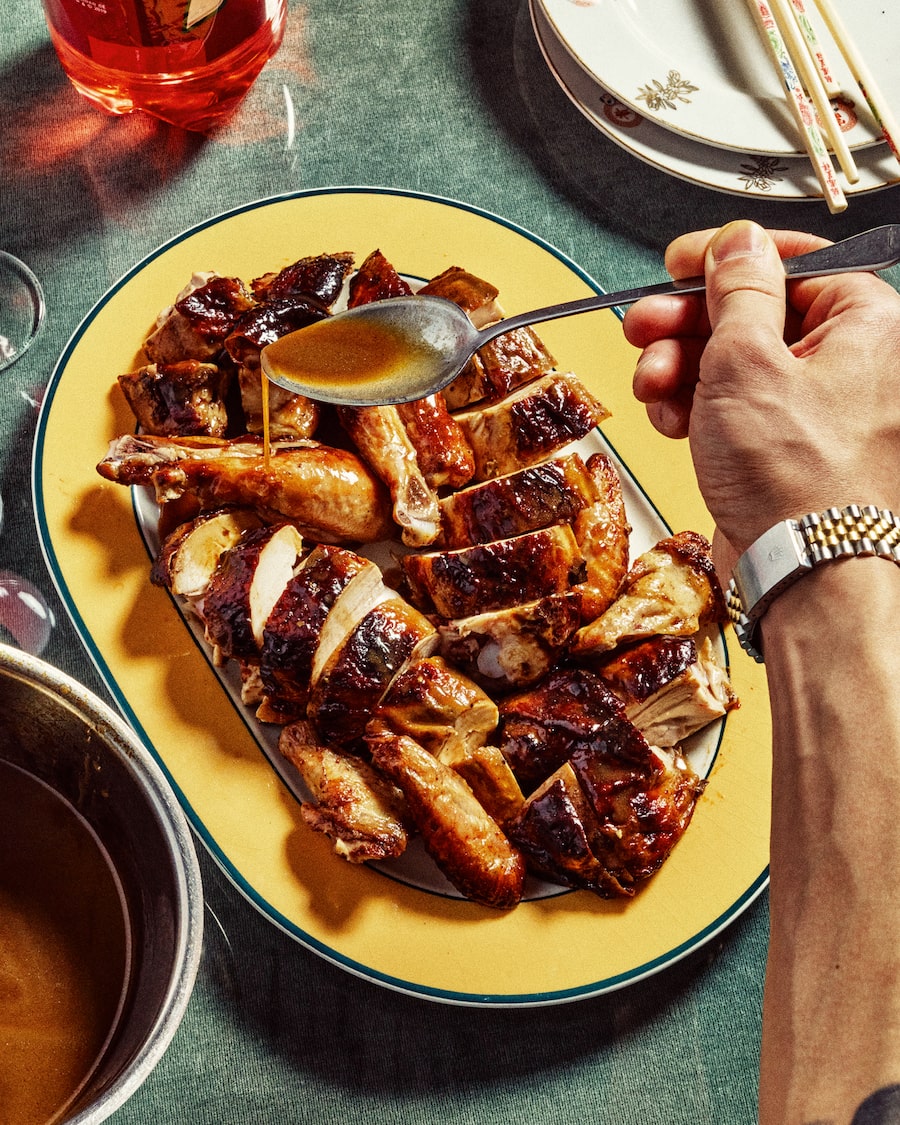
When flipping through the Brooklyn chef Calvin Eng’s Cantonese-American cookbook Salt Sugar MSG, the whole chicken recipe cheekily called “Roast duck (without a duck)” called out to me.
In my 20s, I lived near Toronto’s East Chinatown and one of my favourite cheap meals was the $5 “lunch box” from the Cantonese barbecue shop where hunks of lacquered meat hung from the window. I’d usually choose roast duck or barbecued pork served on a bed of jasmine rice with steamed broccoli on the side. After moving away, it’s become a rare indulgence I only get twice a year.
I was skeptical of Eng’s claim that a chicken cooked at home could deliver the same decadence and complex flavour of roast duck from the barbecue counter, but I was curious enough to try.
The process: Prepping the chicken
For starters, you must know that this is an achievable weeknight meal but you have to do some prep the night before.
Eng’s recipe begins with spatchcocking the chicken – removing the backbone and flattening it before cooking it – a technique that cuts down cooking time and results in evenly-browned skin. I asked my butcher to do it (and made sure he didn’t toss the back bone, which is needed later in the recipe), but you can also do it at home with a pair of sharp kitchen shears.
At barbecue shops, making roast duck is a laborious process: it’s stuffed with spices and aromatics, quickly boiled, then brushed with a mix of maltose and vinegar and left to dry out overnight. Then it’s hung in a large cylindrical roasting drum to cook.
Eng skips all that and instead asks you to mix up some spices and sauces to make a marinade that you spread under the skin instead of slathering it on top.
Before the chicken goes into the fridge overnight, Eng calls for sprinkling kosher salt on its exterior. If you’re using a finer-grained salt, make sure you reduce the volume or your result will be way too salty.
Making the jus
At my old barbecue counter, I always asked for an extra helping of the gravy, enough to make every grain of rice caramel-tinted. The gravy is traditionally made using the duck fat that is slowly rendered out during cooking but Eng came up with a clever workaround.
Inspired by his mother’s waste-free style of cooking, Eng uses the removed backbone to make a jus. “The back has plenty of meat, plenty of fat, plenty of flavour,” he says. “It’s the perfect ratio.”
You sear the meat and then simmer it with vegetables, Shaoxing wine and water. To the strained, cooked-down liquid, Eng asks you to whisk in many of the same ingredients you used in the marinade, as well as some butter for richness. It’s a French-style jus, but “you get that umami, that sweetness, that savouriness and that body and colour you would get from the traditional roast duck,” he explains.
Eng says you can make this while the chicken is roasting, but I suggest doing it the night before since it takes about 45 minutes (only a little of which is active). Having it ready will free you up the following day to cook your accompaniments and clean up while the chicken is in the oven. Just reheat and whisk the jus before serving.
Roasting the chicken
After 24 hours in the fridge, the salt had desiccated the chicken’s exterior but, knowing the way dry brines work, this carried the promise of juicy bird with crispy skin (slathering the skin with olive oil before putting it in the oven helped, too).
After 45 minutes, the chicken emerged from the oven with deeply burnished skin. When I inserted a thermometer to check its temperature, a clear rivulet of juices ran down the ridge between its breasts in a way that seemed vaguely pornographic (sorry!). The temperature was a good 20 degrees higher than it needed to be. Next time, I’ll take the chicken out of the oven a bit earlier to prevent against the white meat drying out, even if that means missing out on some browning.
The result
The first bite made me feel like I was eating takeout from my favourite barbecue counter. The Chinese five-spice and hoisin in both the marinade and the jus brought back all the familiar flavours and aromas of roast duck I’d enjoyed before – and the meat was pleasantly leaner, to boot. My husband and I drizzled generous spoonfuls of the jus on our chicken, rice and stir-fried bok choy throughout the meal. Having a vessel of it on the table was a treat.
The dish also went over well with my family’s toughest critics. Before she put any rice or bok choy on her plate, my daughter inhaled a wing and a piece of breast and licked her fingers. She said she loved the sweet and salty flavour, ranking it above Hainanese chicken rice, her long-standing favourite chicken dish. “You should make turkey like this for Thanksgiving,” she suggested.
The first sign of success with my picky toddler was his insistence on using tongs (which were as long as his arm) to serve himself several pieces of breast off the platter. While artfully arranging the meat atop a mound of rice, he spotted a piece of the crisp auburn skin and gobbled it up so fast I worried he might choke. He ate almost all the meat he served for himself and was thrilled to be reacquainted with the leftovers the following day. This is one I’ll be adding to the regular rotation.