In the Japanese ambassador’s residence in Ottawa, chef Phil Cameron gets to work at the stainless-steel kitchen island. He pours maple syrup into miso mayonnaise, tasting for the right balance of Canadian sweetness and Japanese saltiness.
Satisfied, he turns his attention back to the Arctic char curing in a mixture of salt and lemon rind in the fridge.
On the other side of the island, chef Yasuhiro Shima finishes his chopping and slips around to sample the culture-merging mayo for himself.
He nods his approval. “It’s good.”
A couple of weeks earlier, Japanese Ambassador Kanji Yamanouchi had presented the two chefs with a challenge: Create a dish that united the flavours of Canada and Japan. Their collaboration would be served to 600 guests at a reception to celebrate Emperor Naruhito’s 66th birthday.

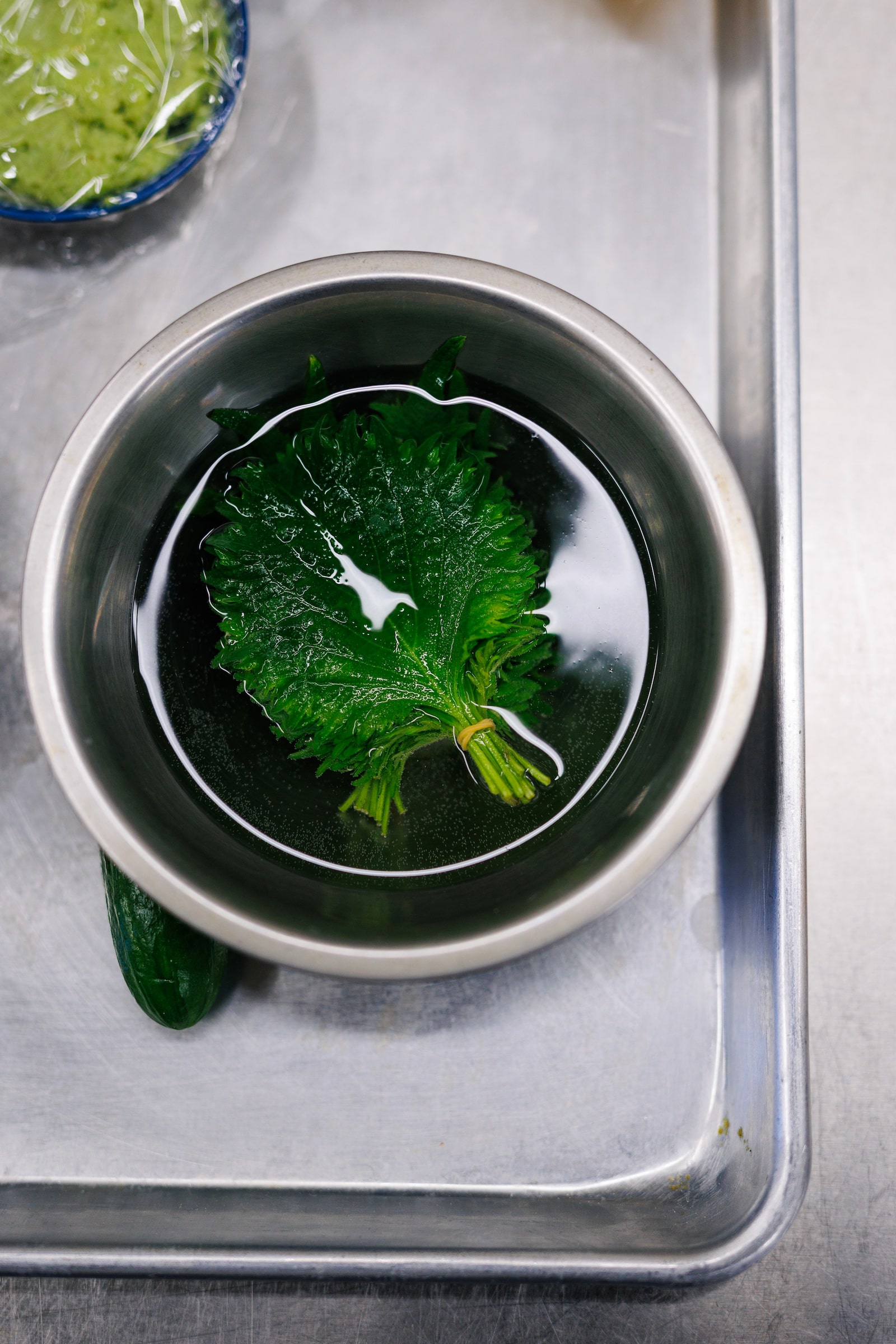
Mr. Shima, who was Mr. Yamanouchi’s chef in New York and now works for him in Ottawa, brainstormed for half an hour with Mr. Cameron. The Ottawa native, former chef at the German embassy, now has his own catering business.
On a Monday morning in early February, they are cooking together to test their recipe: tempura smoked Arctic char with maple-miso mayo and a tangy daikon salad.
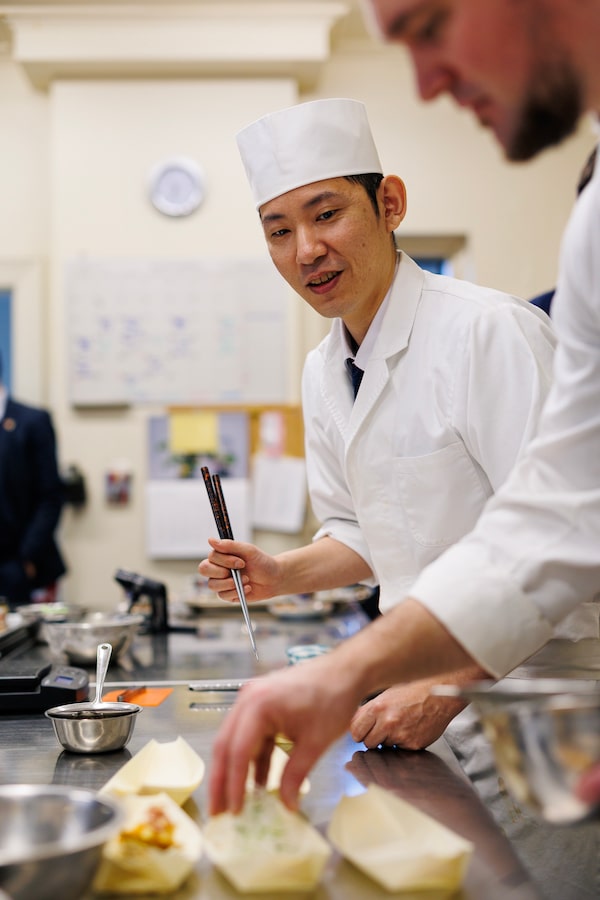
In preparation, the two men chop and mix on opposite sides of the island, as if they have separately learned the choreography to the same dance. They can’t easily communicate with words. But cooking is a shared language, Mr. Cameron explains – even though, as they work, their distinct styles emerge.

Both chefs work on opposite sides of the island with cooking as a shared language.
“It’s so quiet,” says Mr. Cameron, who sometimes listens to hip hop when he cooks. Mr. Shima, for his part, prefers a quiet kitchen.
At the island, Mr. Shima, 42, peels a daikon radish into one unbroken, precisely even, paper-thin curl with the ease of someone chopping a carrot. The highly technical knife skill is called katsuramuki. At his first restaurant job, in Nagoya 22 years ago, he practised on a daikon each night after closing, sacrificing sleep for two years until he had it mastered. Those long days were worth it. “Now I am here,” he says, gesturing to the embassy kitchen.
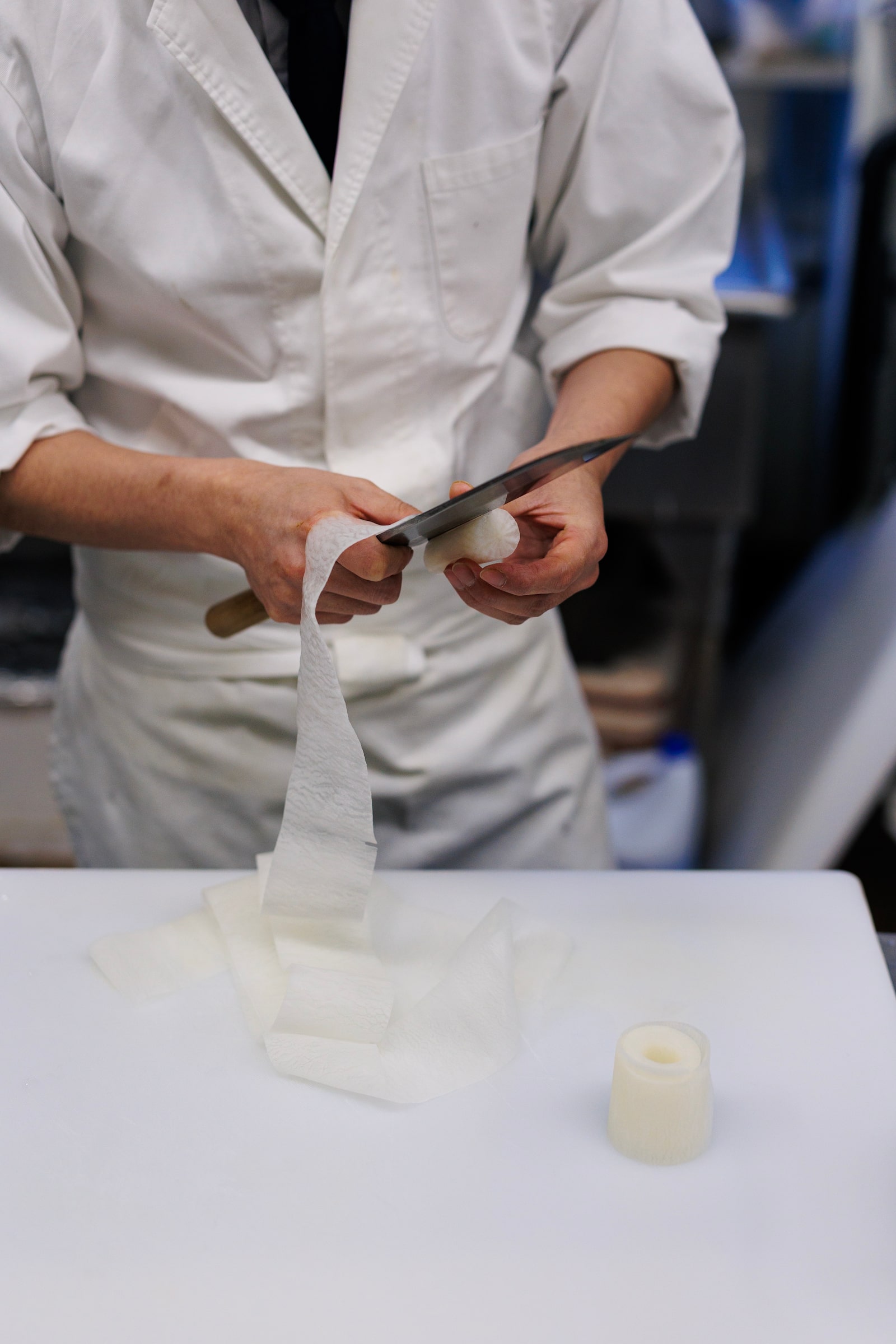

“I’m kind of embarrassed,” Mr. Cameron says with a grin. Like most North American chefs, he uses a machine. One that is not as efficient or precise as Mr. Shima, he adds.
Mr. Cameron speaks with admiration of the dedication that goes into Japanese cooking. He spent eight months in Osaka serving as the head chef of the Canadian pavilion at Expo 2025. “I never had a meal I didn’t like,” he says. He’s currently learning the art of ice carving from a Japanese chef in Ottawa.
Compared with countries where food is fixed within centuries of tradition, “we often have a hard time defining Canadian food,” Mr. Cameron says. He suggests that’s because in such a multicultural country, cooks improvise dishes and blend spices from around the world.
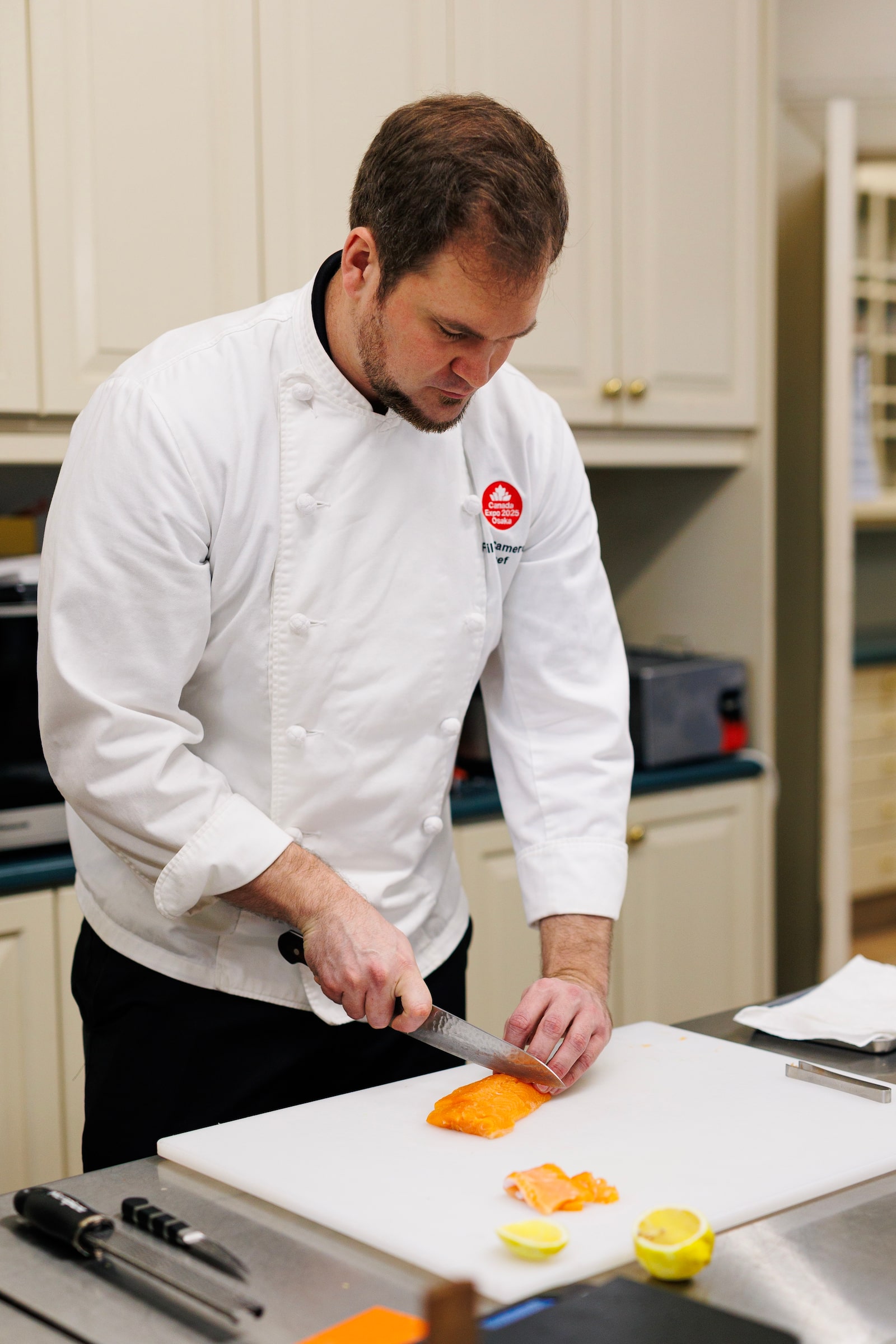

In 2024, Mr. Cameron was part of Culinary Team Canada, which won a gold and silver and placed sixth overall at the international Culinary Olympics. His teammates had backgrounds from China and India – a diversity rarely seen in another competitors. “Chefs here are more of a fusion culture,” he says.
“Fusion” perfectly describes the dish the two chefs are preparing. None of this could happen, Mr. Cameron says, unless chefs are able to set ego aside and compromise.
The best recipe can also instill a spirit of openness in those who enjoy it, both chefs say. “Food has a mysterious power to open people’s hearts and bring them together, beyond any logic or words,” Mr. Shima said in written responses to The Globe’s questions.
As lunchtime approaches, the pair carefully plate the dish on paper boats, then hand them out to those present.
“Itadakimasu,” the chefs say, which means “I humbly receive.”
They are already discussing small tweaks as everyone digs in, offering compliments.
“No matter where you’re from,” Mr. Cameron says, “there’s always a way to collaborate together and make something amazing.”
A week later, at the Japanese reception, guests at the Fairmont Château Laurier lined up for a serving. Ever the diplomat, Mr. Yamanouchi declared, “It tastes like friendship.”