Mozambique first caught my attention years ago, during a quick weekend vacation from Johannesburg. Friends and I joined a number of vacationing South Africans escaping their western wild coast for calmer, dolphin-filled seas in Mozambique’s Ponta d’Ouro. Moments after crossing South Africa’s most northwestern border, tar roads propelled us into deep sand – a sign of a vastly different nation. Sunny skies and sandy dunes were complemented by local specialties such as fiery peri peri roasted chicken, crisp 2M beers and ever-adored and especially sweet R&R cocktails. At its core, the town is a South African playground, and the rand will take you farther than the local currency, the metical.
Sensing I’d but scratched the surface of Mozambique, I returned years later with my partner to seek out opportunity and adventure in what we’d heard was one of Africa’s few wild places: northern Mozambique.
The long drive north along the country’s central highway from the capital of Maputo down south to the northernmost town of Pemba gave us clues that we were moving into a land untouched. In a rush, you can complete this 2,450-kilometre journey in two intense days. However, we opted to take nearly two months in hopes of understanding the country’s intricacies a little better – and because our travelling companion/puppy required frequent stops.
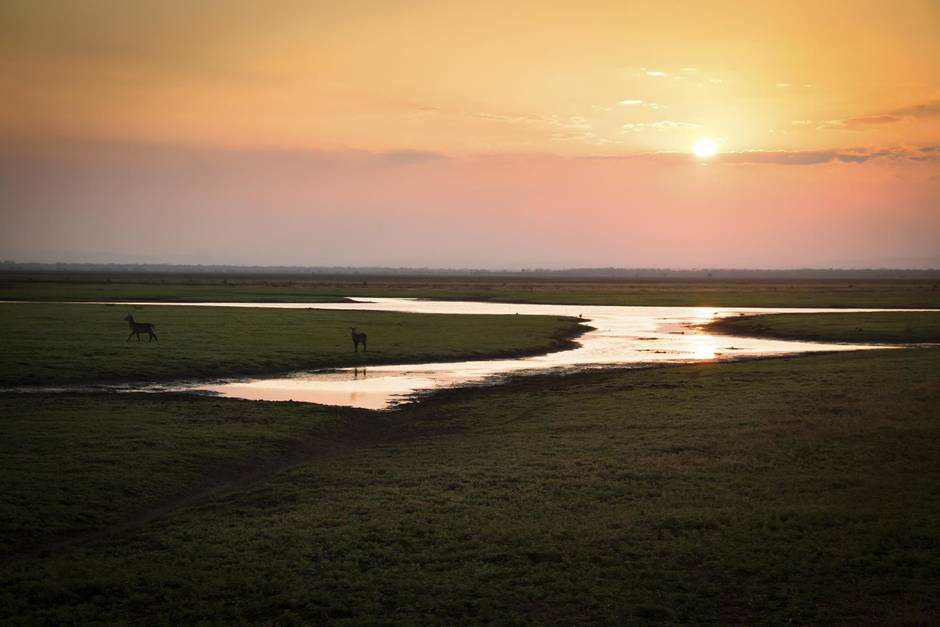
As we left behind the oft-travelled route connecting Maputo with the seaside towns of Tofo and Vilankulo, the pulse of the country slowed as life grew more rural. At the country’s midpoint, we took our place in a mandatory military-escorted convoy to travel through Muxungue to the Rio Save in the Sofala province. This section of highway has been under sporadic attack by the country’s rebel movement, known as Renamo, since 2014.
With a safe crossing behind us, we detoured up Monta Gorongosa to look out over Gorongosa National Park. Before the country’s 1977 descent into civil war, this area was celebrated by the intrepid global elite as a cosmopolitan wilderness retreat. Today, conservationists covet it, and watch rehabilitation efforts amid rebel territory with trepidation.
For us, it was an opportunity to swim alone under a waterfall following a spectacular hike to the peak of the mountain. With limited trail markings and only the most minimal camping facilities, we climbed through village-speckled foothills into a dense rain forest and up onto a grassy plateau. Alone and unguided, a mythically raw Mozambique began to feel real.
With the northernmost reaches of the country in sight, we quickened our pace in order to reach Pemba in time to dive with a particularly eccentric South African expat. Sinking down to The Gap, we swam alongside a drop plunging to depths of 120 metres. Turtles and gorgonian fans surrounded us, while humpback whales breached out to sea, welcoming us to a paradise of gentle teal waves.
That said, our time spent on shore quickly revealed a different picture characterized by intense and contentious change. In 2010, 180-trillion cubic metres of natural gas was discovered just north of Pemba in the Ruvuma River Basin and the area has since exploded with prospectors and developers. Moreover, years ago, this sleepy beachside village had but a sprinkling of recreational divers coming to visit annually. Now, commercial divers hover around the expanding port as a landscape once fringed by baobab and palm trees morphs dramatically.
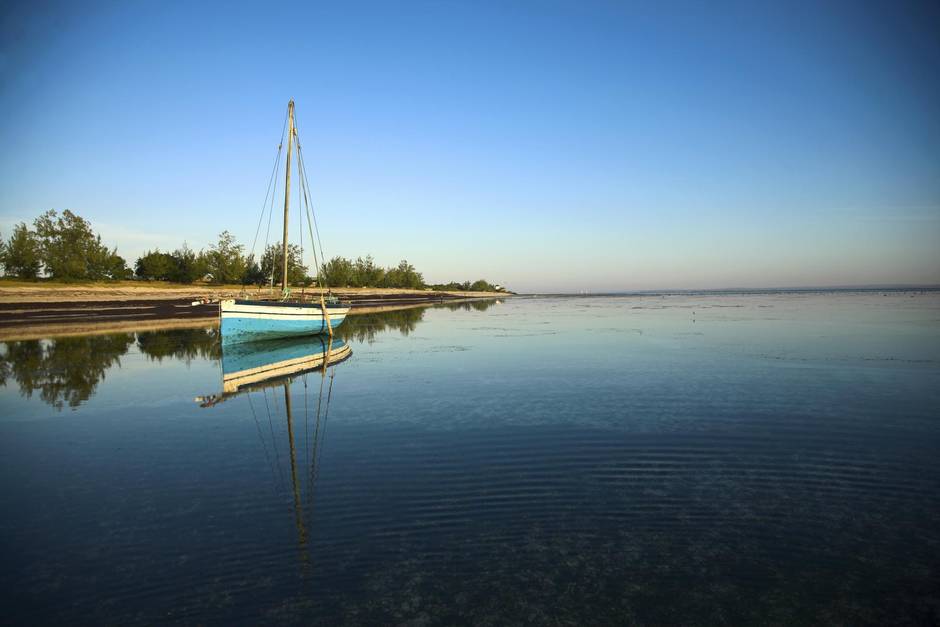
As the pulse of Pemba quickened with each passing day, we set out for the bush. The dhow-filled coastline most often attracts visitor attention, but our hearts were set on Niassa National Reserve – a territory larger than Switzerland and double the size of South Africa’s Kruger National Park. With but one lodge, a handful of roads, a few hunting camps, one conservation organization and 40 villages, Niassa is often touted as Africa’s final wilderness. True or not, we had crowded lions in safari vehicles on the Serengeti and in Kruger one too many times: The allure of solitude in a wild place drew us inland toward the Reserve’s unassuming front gate.
Our first peek into Niassa was bittersweet. An electric fence and a well-used main road heading north to Tanzania squashed hopes of a wilderness truly untouched. But one turn off onto a narrow, dusty track took us into the woods and behind the mountains, where we found something akin to the anticipated.
The Niassa Reserve is home to one of the planet’s largest lion populations, and boasts an impressive number of endangered and elusive African wild dogs. Leopards, elephants, buffalo, sable antelopes and three native ungulate species (Niassa wildebeest, Boehm’s zebra and Johnston’s impala) walk the forest and plains. However, be warned that a visit here is not about completing your “Big Five” checklist, as you will likely leave disappointed.
Instead, Niassa is about hiking dramatic granite inselbergs, navigating golden miombo woodlands and listening to buffalo move toward your evening campfire, seeking protection from lions roaring in the distance. It is an opportunity to explore the bush with your senses, tracking wildlife through footprints, scat, sound and smell. In doing so, you go beyond simple observation, finding an intimate experience not meant for the first-time safari goer (nor the faint of heart).
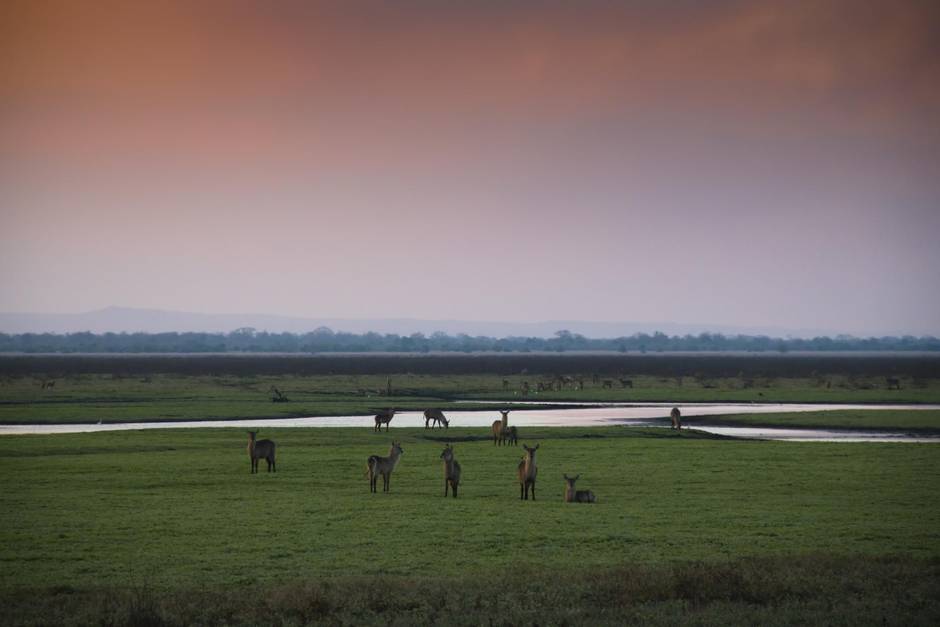
Resident species, with the exception of birdlife, are justifiably skeptical of humans, and local rangers will tell you that many have adapted to live a more nocturnal life in order to avoid us. Although Mozambique’s civil war (1977-1992) brought an increase in hunting and poaching, the past five years are of the greatest concern. During this period, the country saw a 48-per-cent decline in its elephant population, and 95 per cent of that loss occurred in the north. It is far too likely that you will encounter a hunted, tusk-less elephant before you will see a live one in Niassa or neighbouring Quirimbas National Park. Despite being illegal, the sale of elephant meat and ivory to readily available buyers in Pemba is a lucrative temptation for local villagers.
Gorongosa National Park offers a glimmer of hope in Mozambique’s conservation story, as its small elephant population has increased over the past five years. However, Niassa’s epic size greatly complicates the area’s anti-poaching efforts. The Niassa Carnivore Project plays its part, through its research and community education/engagement initiatives. Since 2003, this small and largely local team has worked to conserve local lions and other large carnivores. Central to the organization’s philosophy is relationship-building with local villagers in order to create sustainable solutions to conservation threats. The NCP has also been instrumental in working with hunting concessions, independently auditing trophies in order to prevent further damage to local populations.
These challenges and stories made Niassa all the more fascinating to visit, and we immediately fell into a happy rhythm of early morning game drives, sunset hikes and afternoons avoiding an unforgiving sun and encroaching tsetse flies. I took particular delight when a herd of elephants – a herd clearly more trusting of humans – casually appeared around the permanent watering hole adjacent to camp as we prepared lunch. There was the occasional conversation with local rangers and researchers, who were also based out of the camp, but for the vast majority of time we were left to our own devices. The tranquillity was so appealing that we stayed until our food, water, and fuel resources were completely depleted.
Mozambique is a country that is fledging fast, and its future remains particularly uncertain. For the moment, the north attracts a handful of adventurous travellers who drift between azure waters and the far-flung bush, enjoying lands of unpolished beauty. However, with development expanding and tensions rising, you must hurry in order to experience such a raw and unparalleled place.
--------------------------------------------------------------------------------
IF YOU GO
Pemba International is the nearest airport to Niassa, and has daily flights to Maputo and Johannesburg. Guests of hunting camps will have access to private charters from Pemba. All others must travel by road over a full day of driving, heading north after the town of Marrupa. Be sure to carry extra fuel for game drives, as it is not readily available outside of major towns.
Entry Requirements: Canadian citizens require visas, which must be arranged in advance via the Mozambican Embassy in Washington. Proof of a yellow fever vaccination is also mandatory.
Where to stay
The only tourism-focused lodge in Niassa Reserve, Lugenda Wilderness Camp, recently closed. Hunting camps are now the only catered accommodation in the reserve itself. Completely self-sufficient guests can camp at the Mbatamila ranger camp for approximately $10 (U.S.) a night. No advance contact is possible, and directions can be obtained at the Niassa Reserve gates. Showers and bathrooms are available. For those looking for more comfort, Nkwichi Lodge, located on the edge of Lake Niassa/Lake Malawi, is the only other regional option. Rates begin at $375 (U.S.) a night, and packages are available.
What to do
Guests staying at a hunting camp or with Nkwichi will have a range of organized activities available to them, including hiking, paddling and cultural tours. Self-guided visitors must organize their own activities as guides and resources are typically unavailable. Proper equipment and supplies (GPS system, fuel, food, water, camping supplies and a 4x4 vehicle) are essential.