This article was published more than 8 years ago. Some information may no longer be current.
Show up in Stockholm in early fall and everyone you meet will apologize for the rain. For me, this would usually be easy to brush off – I grew up on the Bay of Fundy – but when I pulled into the city's Central Station, the weather turned out to be more complicated than I thought.
At the tail end of a downpour on an oil-black night, what seemed like a simple walk to my hotel turned into a maze run. Construction was everywhere. Hesitant to pull out my phone in the rain, I wandered in the direction I guessed Google Maps would suggest, only to be blocked by torn-up roads again and again.
I got to
Scandic's Downtown Camper hotel in 25 minutes, three times what it should have taken. It turns out, though, that the exasperating construction might be the whole reason my hotel exists; it opened three weeks before I arrived. This little slice of Norrmalm, the city's core borough, is in the midst of an identity shift.
Two other design-oriented hotels have recently popped up around
Brunkebergstorg, the square just east of Central Station once better known for being a grungy home for Stockholm's skate scene. While nightlife in this commercial shopping district alternates between gaunt and gaudy – mall culture knows no borders – it's starting to pick up, largely thanks to the hotels. And once you realize the subway is much closer than the airport express train, you're 10 minutes from an island full of opportunities.
Stay
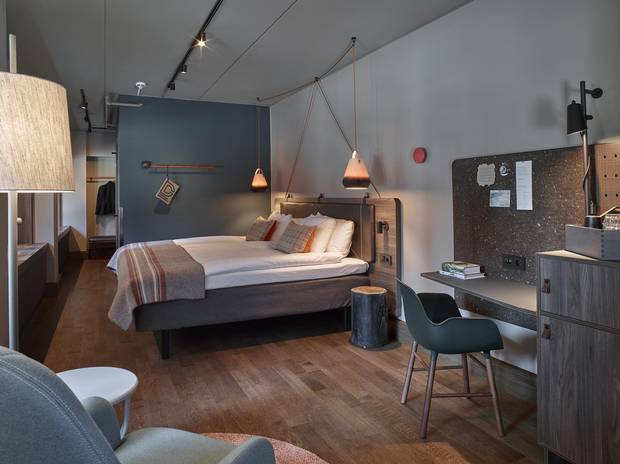
The urban-retreat theme at Scandic’s Downtown Camper hotel extends to the rooms, which are low-lit and eerily quiet.
Handout
The square's skateboarding legacy becomes apparent as soon as you walk into Downtown Camper: In homage, the front desk is designed like a skate ramp. On the left, too, are six custom-made boards for guests to take exploring. Out of context, this could look like a blatant stab at enticing cool youths to book the place – a modern-day
Poochie, if you will, to the hospitality industry's Itchy and Scratchy – but within the hotel's whole motif, it actually fits.
Scandic's hotel network is the largest in the region, and Downtown Camper is its third "signature" property in the city hewing to a specific lifestyle; still in the midst of renovations, it replaced a more standard Scandic hotel when it opened in September.
Every feature is meant to represent a little escape from urban life: wood design, regular campfires at the hotel restaurant – which is called Campfire – and sustainable transportation for guests to use, including bicycles, kayaks and, yes, skateboards. (Alas, not one board appeared to have been touched during my stay.) There's even a "lifestyle concierge" to
guide you through the city.
The urban-retreat concept – which, like water-borne Stockholm itself, suggests nature's immediacy – extends to the 494 rooms: lit like dusk, comfy and eerily quiet. (There's hardly a peep of white noise; I could hear faint construction from several floors away, while the brand-new bed easily cradled me to sleep.) The hallways even smell like fresh-cut wood, although a marketing rep told me that was unintentional. It was probably the construction.
Just across
Brunkebergstorg is Hobo, one of the other fresh hotels on the square. Designed by Berlin's WernerAisslinger, the 201-room boutique hotel also consciously has a rustic theme – although it feels a little more Scandinavian than its neighbour. Its two-storey bar and restaurant was by far the most recommended to me in the area by locals I met – with the caveat that, before Scandic's Campfire opened, it was also the only real option.
Downtown Camper by Scandic: Brunkebergstorg 9; scandichotels.com; rooms starting from 1,200 kronor ($185). The Hobo: Brunkebergstorg 4; hobo.se; rooms starting from 977 kronor.
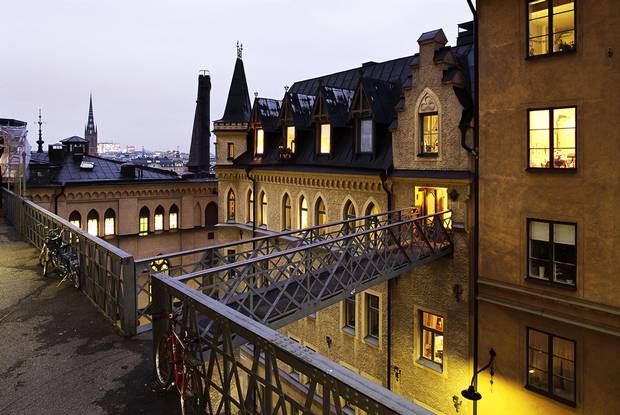
Several hotels offer concierges to help guide you over through the city's scenic spots, such as Bellmansgatan, pictured here.
erik g. svensson/mediabank.visitstockholm.com
Spend
Oh God, I spent so much money. Sweden is doing everything it can to move to a cashless society, but its currency, the krona, does not translate well into Canadian dollars. Even when you figure out the exchange rate, about 6.5 kronor per loonie, the value of everything hovers around double. It's remarkably easy to just tap away your credit card for every purchase when the number on the point-of-sale pad is presented in abstract, indecipherable magic-bucks. But have a drink handy when you look at your credit-card statement back home. At one point, I found out, I spent $40 for a coffee, water and two
premade sandwiches.
Travelling solo, I made friends with both a local and a guy from Colorado, who posited over pizza that the mindset behind the cash-free, tap-and-go country Sweden is trying to become could help create an inherently lonely society: by minimizing the steps involved in day-to-day tasks, basic human interactions are ruined.
The long-term effects of this are yet to be seen. In the short term, my experience suggested full faith in Sweden's social future. Strangers were happy to chat at length; one bartender, upon learning I was Canadian, insisted that I have some
snus – regional-favourite tobacco snuff-in-a-bag you shove under your upper lip, which I'd seen in Canada but never tried – insisting it was "the most Swedish thing you can do." If you're my parents or my dentist, ignore the next two sentences: It was great! I bought a bunch at the airport!
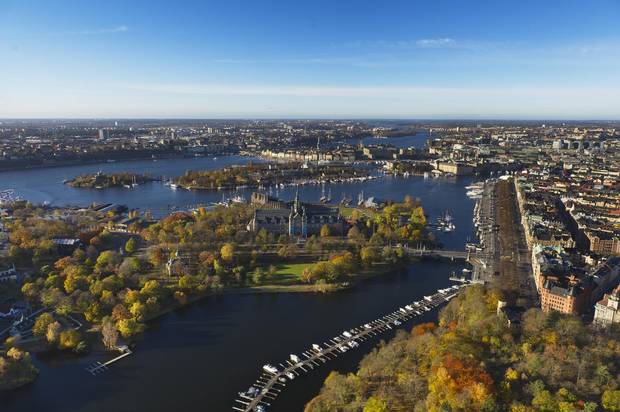
The island of Djurgarden. You'll find the locals in Stockholm friendly and happy to chat at length with tourists.
jeppe wilkstrom/mediabank.visitstockholm.com
Eat and drink
Wandering north of the core, I stopped at Restaurant
Farang in a former Stockholm Electric Company building, across the street from Spotify's unassuming world headquarters. Its menu sweeps across southeast Asian cuisine – from Indonesia, Malaysia, Thailand and Vietnam.
Dinner sounded delicious, but expensive, given the krona's value versus the dollar. Luckily, I was there for lunch. In its front bar, low-key
Farang serves a cheap noodle dish at lunchtime. I showed up on a Thursday to a chicken khaosoi special for 139 kronor, or about $21 Canadian – half the price of a dinner share plate. Add two helpings of chili pepper when you get it.
Most of my time, though, was spent in
Sodermalm, two islands and three subway stops south of the Downtown Camper. Upon arriving, I heard a walking-tour guide tell a crowd that "all the celebrities and media live here," which makes no sense if you work in media in any other city and have ever looked at home prices where celebrities live. The only thing the two groups might have in common, I guess, is a keen eye for food and drink.
A half-dozen blocks north of the walking tour, I struck gold at
OmnipollosHatt, which specializes in pizza and beer of wayward design: Depending on its rotating menu, you can get a pie topped with kimchi or vanilla-marinated apricots and wash it down with a mango-and-milk-sugar pilsner or a raspberry-meringue-ice-cream-pie fruit beer. My choices were a little more conservative than that; whatever you choose, make a friend there to help you translate the menu so you don't wind up with a surprise.
While most bars and restaurants I stopped into had hip hop or late-nineties pop pumping from the ceiling – a DJ spun
KardinalOffishall'sEveryday (Rudebwoy) as I had a little-too-warm beer in Nada Bar – I was taken aback by KatarinaOlkafe, also in Sodermalm. As much as the aforementioned music appeals directly to me (and my age cohort), it's also virtually everywhere – so I beamed with surprise when the bartender threw Christopher Cross's Ride Like the Wind into the mix.
The bar is tiny, although patrons still made room for a dog. It's dim, crowded and welcoming.
Olkafe serves up North American-style deli sandwiches, but it's also a beer bar – ol stands for beer – and I knocked back a couple of UnibarsumBryggeri'sGranatenIPAs, whose hint of pomegranate made me smile as wide as Cross did. You could almost see the snus sticking out of my grin.