I come from a long line of journal writers.
Both my grandmothers, Dorothy and Jessie, kept diaries, which eventually were passed down to me. They are fascinating reading: intimate, funny, sharp-eyed accounts of everyday life in small-town Ontario in the decades after the Second World War.
Dorothy wrote daily in tiny, padded books, with a lock and key. Jessie preferred loose leaf, lined pages that she pinned in the left-hand corner. They were records of raising children, working inside and outside the home, worrying about money, celebrating wins and enduring heartbreak.
Fountain pens are enjoying a revival among the digital generation
Witty, opinionated, occasionally petty and delightfully human, the women on the pages were nothing like the sensible, restrained grandmothers I knew. Reading their journals felt like being reintroduced to who they really were – multifaceted people just trying to make sense of things. And the women, I like to think, who inspired me to keep a diary, which I did from the age of 7 to my early 20s – until a boyfriend discovered my journal, hidden in my mattress, and read it. I have not written in a diary since.
How to find your joy in the year ahead? Six Canadians offer their tips
When I was asked to write about the power of journalling, my first response was resistance. Old hurts linger. But as I spoke with artists and creative thinkers across Canada about why they journal and how it benefits them, I realized I was missing out. Each person told me it reduces stress, helps manage anxiety and process difficult emotions, sharpens self-awareness, clarifies thinking and builds confidence.
“We live in a world that’s fast and digitized, and writing in my journal slows me down so I can make a mindful connection to my thoughts,” reflects Craig Pike, an actor, musician and founder of Craig’s Cookies. “There’s a level of bravery to putting your most personal thoughts on paper,” he says. “My journals are a measure of my personal growth and they are very good for my mental health.”
Science backs this up. Study after study shows journalling delivers real benefits – better sleep, improved mood, stronger immunity, greater optimism, even gains in memory and communication skills. Some research from the National Institutes of Health has linked expressive writing to higher cognitive functioning and overall life satisfaction. Not bad results for paper and pen.
As we head into a new year, when self-improvement is top of mind and many of us are contemplating ways to be more mindful, maybe it’s time to dust off that notebook and get started.
You don’t have to write pages and pages, a line or two will do. It’s the discipline, the doing, that matters. At the very least, you’ll have a record of the mayhem and the marvel of your life – which you might be thankful to have one day (and a family member, too).
Boy Golden (Liam Duncan)
The Juno-nominated artist has a new album, Best of Our Possible Lives, coming out in February.Why did you first start writing in a journal?
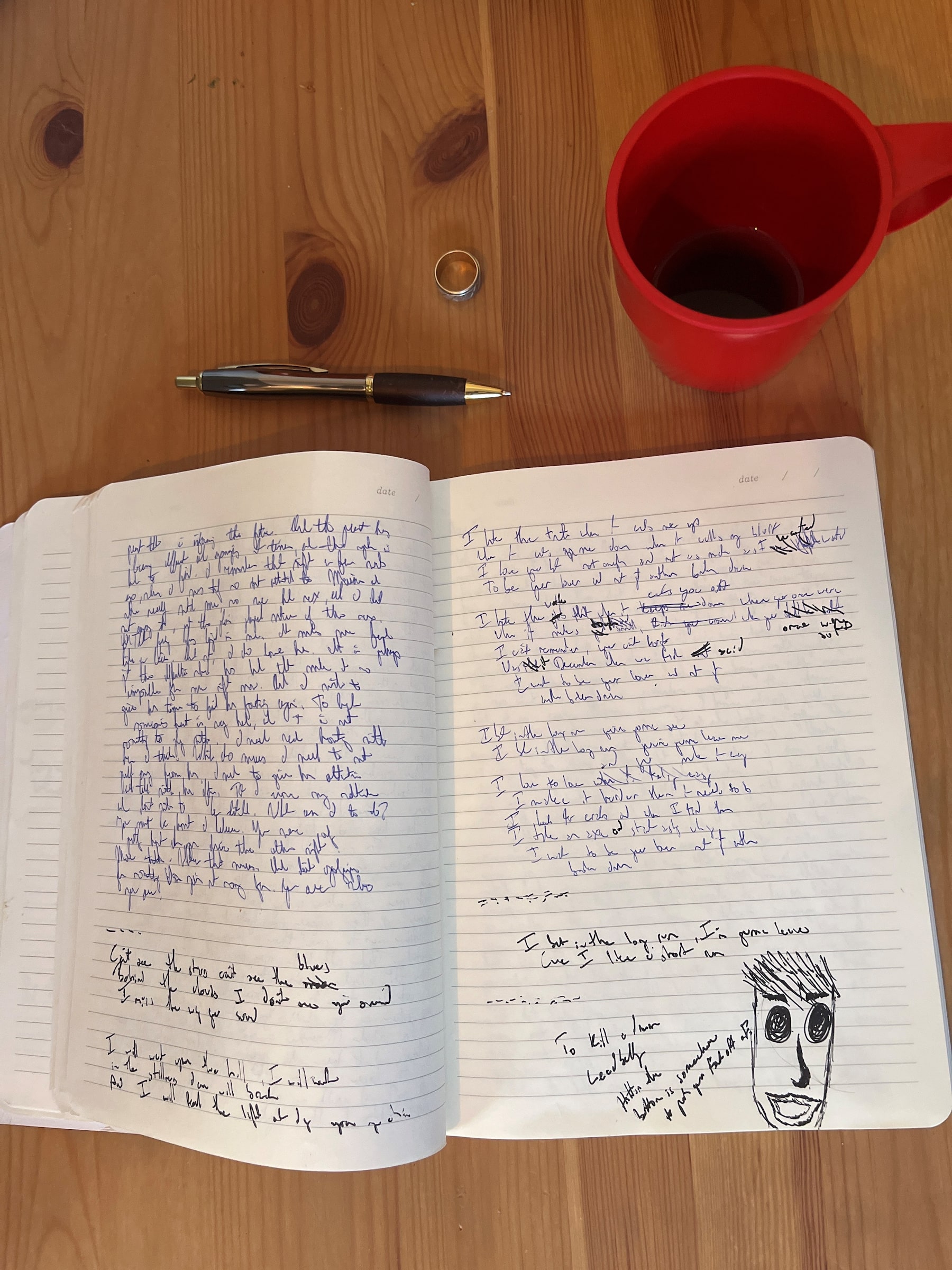
I call them “my pages” and I have written off and on since I was a kid. I write one to three pages first thing in the morning, almost every day, mostly in stream of consciousness. Sometimes I feel like a sponge that needs to be wrung out. I journal because it’s a way for me to organize the circular thoughts in my head. The practice opens me up and helps with the songwriting for the rest of the day.
Does the medium matter?
I always do pen to paper. I write cursive in a Midori MD Journal. I read that the actor Emma Thompson writes longhand, on a pad, because she believes there is a connection between the brain and the hand. That it fuels creativity. I believe that, too.
How has writing helped you through important moments in your life?
One of the main benefits is noticing when the same things come up over and over. Eventually, I get so sick of hearing myself complain about the same problem, I change my behaviour. Journalling deepens my understanding of myself, everything from my creative practice as well as my sexuality. It’s been life-changing.
What advice would you give to someone wanting to start?
Find a routine that works best for you. I usually write in the morning, but if I’m busy, I do it at night. For me, writing is thinking, so I just do it all the time.
How does it inform your creativity?
Usually, I’m just writing banal stuff, like “I feel tired and stupid” or “I’m out of groceries again.” But sometimes, I’ll finish my pages and go, hmm, there’s a couple good lines here and I use them in a song.
Marianne McKenna
Founding partner of KPMB Architects whose projects include the renovation of Toronto’s Massey Hall and the Beaverbrook Art Gallery expansion in Fredericton.Why did you first start keeping a journal?
I kept a diary as a little girl, sporadically and with little drawings to amuse myself. It had a soft blue padded cover and tiny gold padlock and key, which in retrospect, made it the object of some fascination. I reread it recently, and it seems I felt compelled to have my father jot down some notes in it. He wrote me a very touching poem, chronicling my days to the age of 10. My journalling now is in the form of "aide-mémoire" – to keep things that are of the moment top of mind in my day-to-day life, and to document travel, to record events and encounters, really simply for the pleasure of remembering.
Does the medium matter?
I try to write in my notebook but when that’s not possible, I write in my phone in Notes.
How has your journal helped you through big moments in your life?
Information comes at one so quickly these days and there is so little time for thoughtful contemplation. My journals are a running record of time passing quickly. It helps put the years and my life in perspective. As for my creative process? It’s a stimulant, loosening up my brain to absorb and process my thoughts. It’s a habit of an architect’s training: to use writing and drawing to transfer ideas to paper, moving thoughts from the brain to the hand.
What advice would you give to someone wanting to start writing in a journal?
Just do it. It doesn’t need to be precious.
Karen Kim
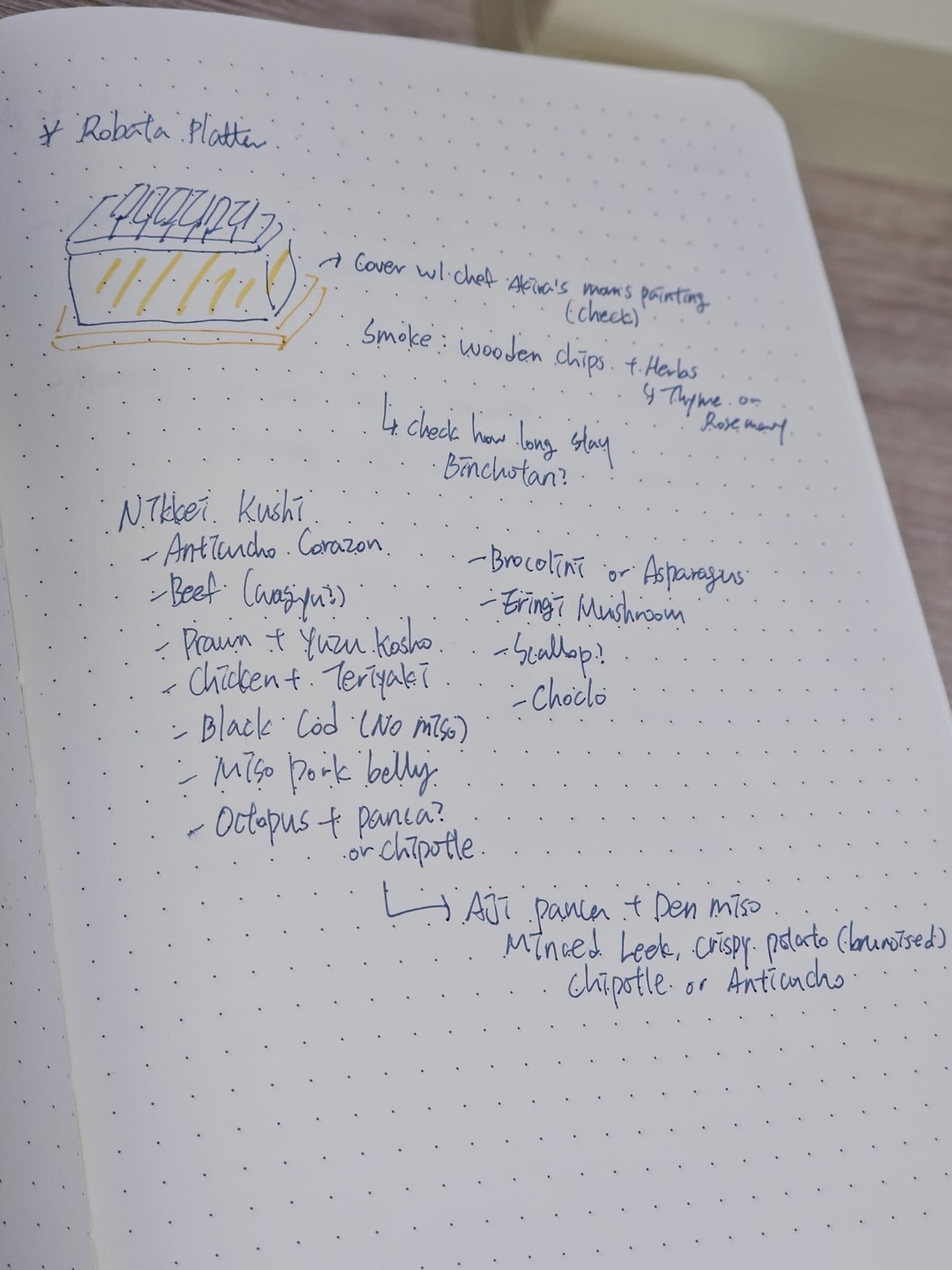
Executive chef at Tono, a Nikkei restaurant in Toronto from Michelin-starred chef Akira Back.When and why did you start?
Around the age of 12. I wanted to record my daily life, growing up in Korea, near Seoul. Once it became a habit, I started journalling not only to record what I did in my days but also for menu creation and other things too. It helps me keep my mind calm and focused.
What’s your writing routine?
I do my journal every night before bed, usually for about 15 minutes. It helps organize my thoughts from the day. I always use a Pelikan fountain pen from Germany, a gift from my sister. My notebooks are Moleskine.
How has writing helped you?
Writing by hand takes time. It forces me to think more intentionally and thoughtfully. It balances me.
Advice for the newbie?
Write constantly and diligently, even if it’s a single line a day. When I feel unsettled, I review my journal, and it usually shows me a direction or a path. When I need menu inspiration, it helps clarify the vision for a new dish.
Amanda Leduc
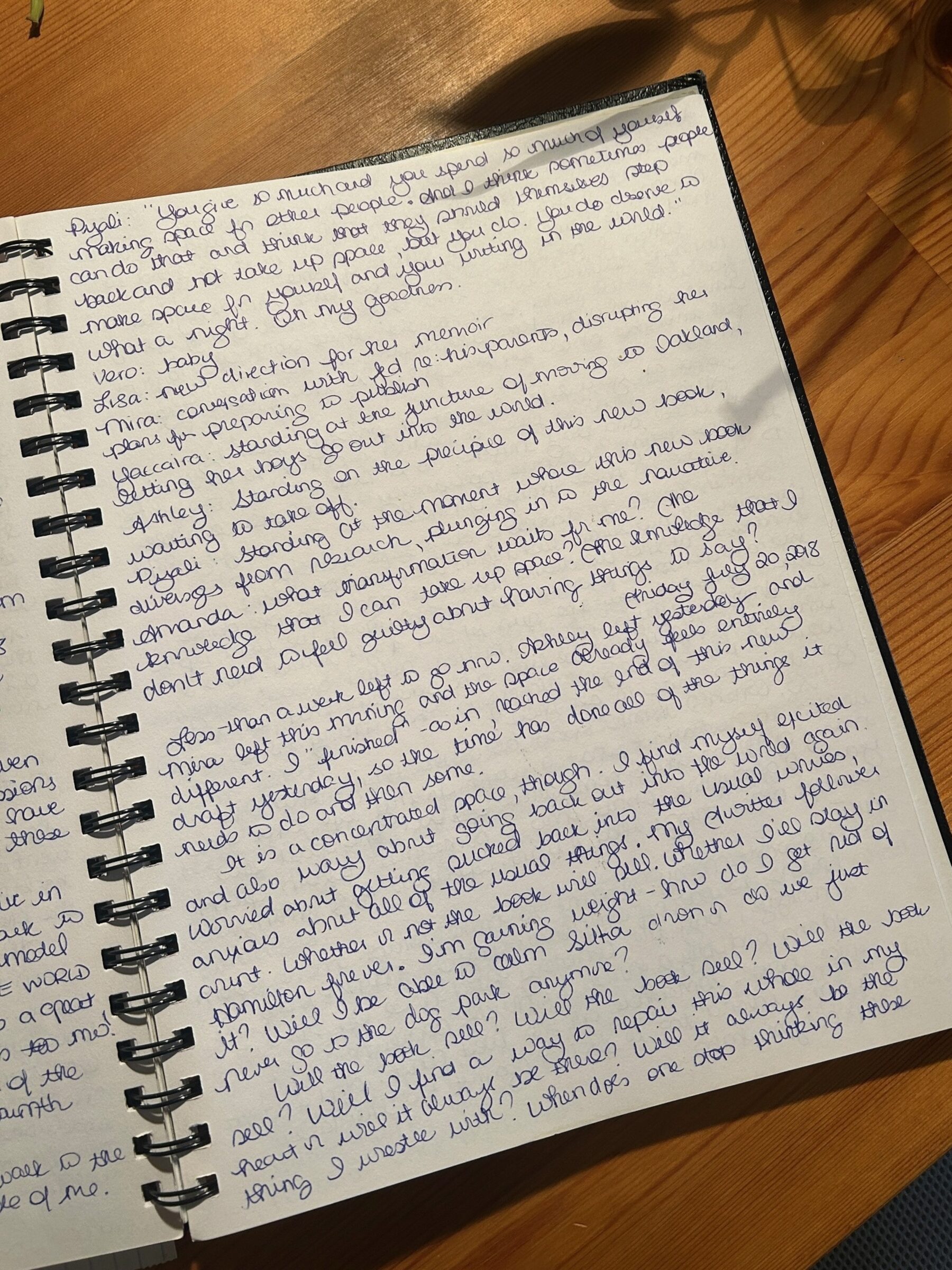
Author of non-fiction and fiction, including the novel Wild Life, which was long-listed for the 2025 Giller Prize.When and why did you start journalling?
I’ve been writing in a diary since I was about 11. I got my first one for Christmas. It had a lock and a key, and I loved it. When I was in my teens and early 20s, I’d write daily in a sketchbook. In my late 20s, I became less consistent and wrote in spurts. It’s been helpful to take the wild bundle of emotions and put them somewhere, so I don’t feel like they’re floating in me with nowhere to go. In difficult times of my life, I’ve written a lot – the dark, amorphous feeling of angst needed an outlet. When I look back on those entries, I get these huge waves of tenderness for my younger self, and all the writing she was doing to make some sense of herself, feeling her way through to okay-ness..
Today, what is your journalling routine?
Last year, I started doing the practice that author Julia Cameron popularized in her book, The Artist’s Way. It involves writing three full pages, when you wake up, in longhand. Sometimes I think about what to write, other times, I free-flow. It’s a powerful tool that allows me to engage and exist in the murk of my creative brain.
Advice for someone starting out?
Find the tools that make you feel good. For me, it’s a precise pen, the Pilot Precise V7, and a coil-bound, nine-by-12 notebook. There is something so comforting about sitting down with these constants. They’re like little bits of light. Do whatever you have to, to get excited about the process of writing. Don’t let it become a chore. Make it a delight. Think of it as a gift to yourself.
Qin Leng
Writer and illustrator of children’s books, including Clover, a 2022 Governor-General Literary Award winner for Best Picture Book (for the French-language version), written by Nadine Robert and illustrated by Qin Leng.When did you start keeping a journal?
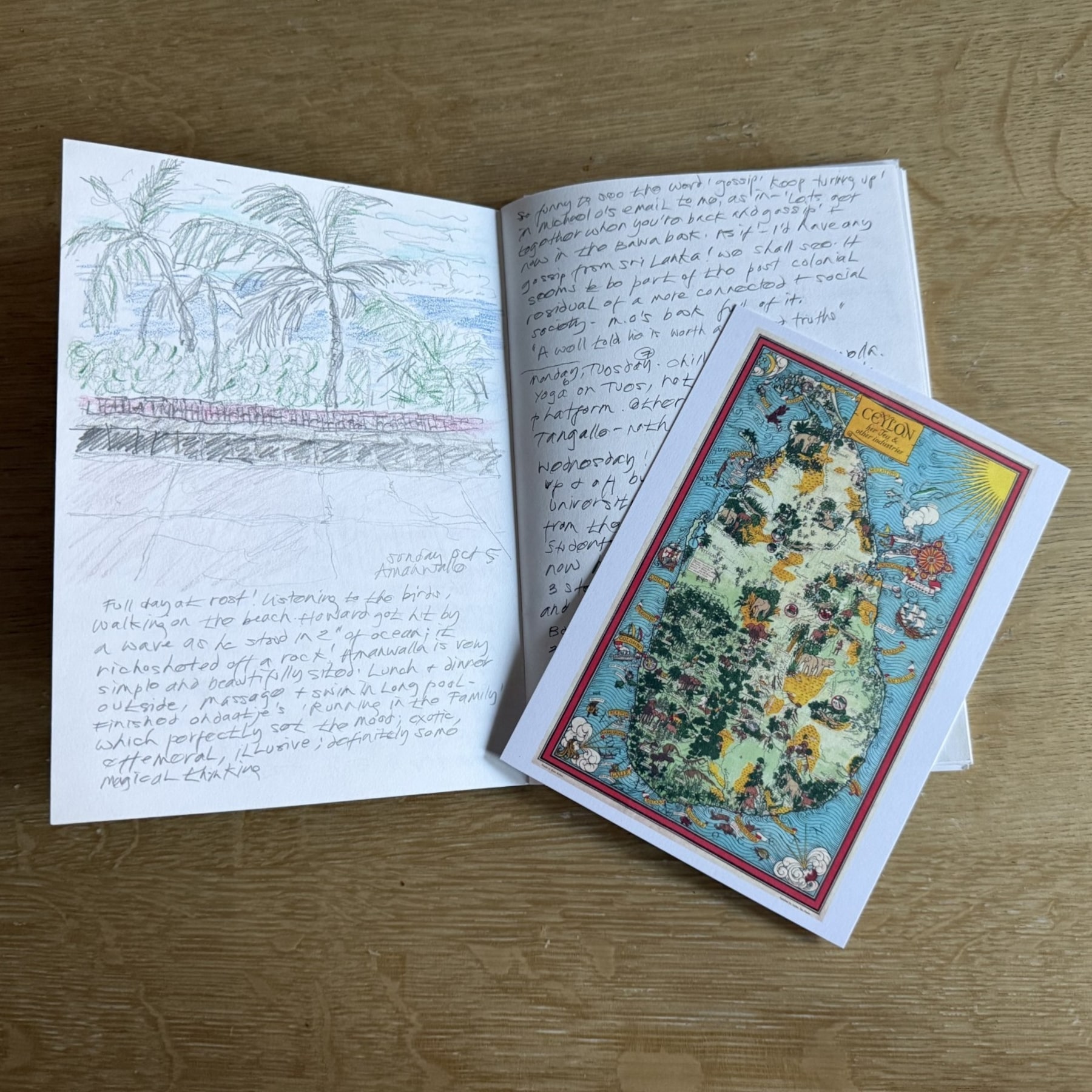
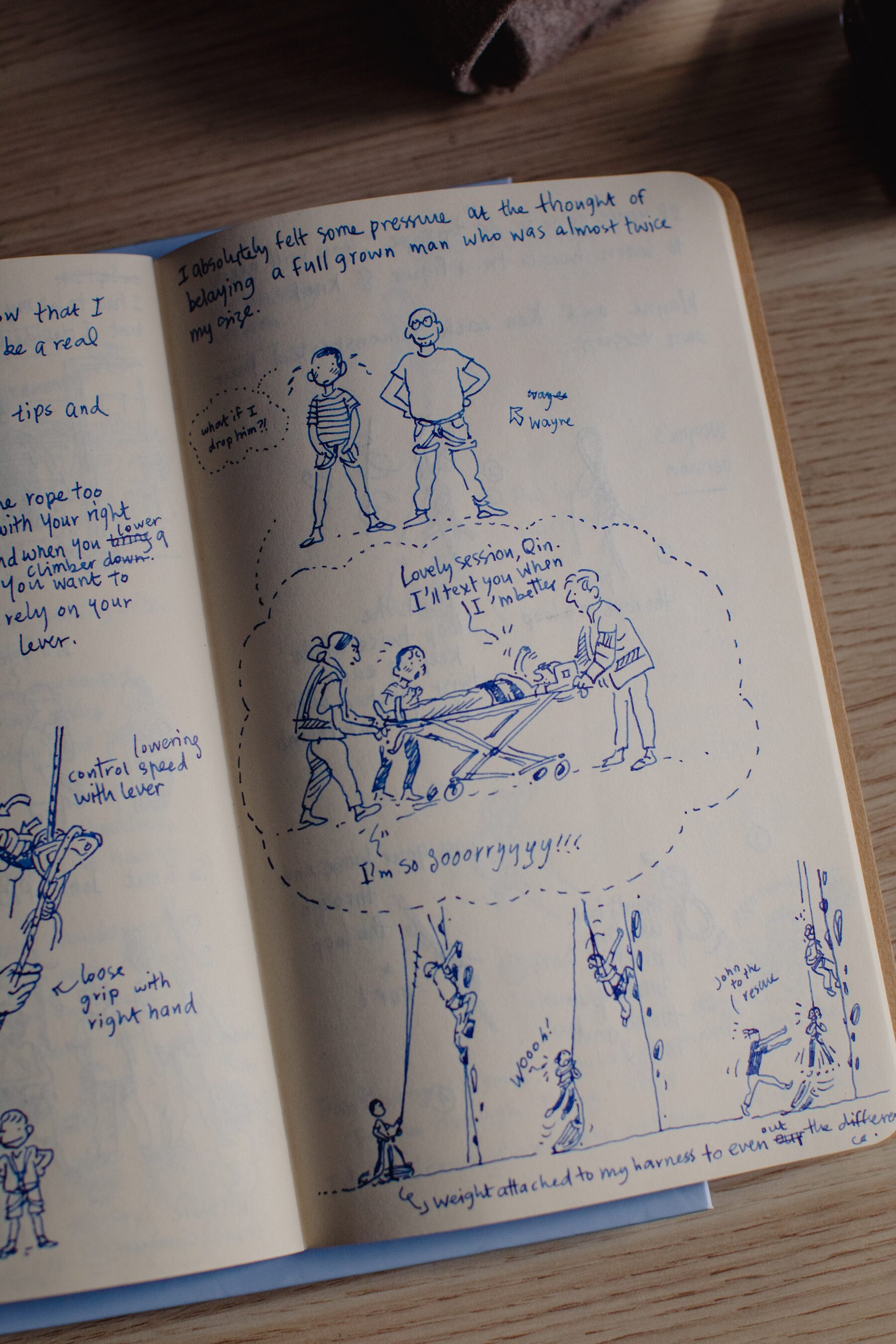
I started writing in a diary as a young teen. However, I began drawing in my journal in my 20s. I had moved from my parents’ house in Montreal, to Toronto, and I was overwhelmed. I recorded my experiences, living in a new city, by myself, through cartoons. It was like talking to a best friend who never judged.
When do you write?
It’s really any time. Four years ago, I started writing Fantastic Lou, a children’s story based on my son. Memories fade, change and morph over time, and I wanted to preserve the things he said and did. I took notes all day and then drew pictures around the words when I had a spare 15 or 20 minutes, usually in the evening. So, I’m all over the place.
How has writing helped you in your life?
I seem to journal around milestones in my life: When I moved out of my parents’ house in my 20s, and again when we had our son. When I hit 40, a year and a half ago, I decided to take up rock climbing, which was odd given I have never exercised a day in my life. It’s been such an experience. It got to the point where all I could talk about was rock climbing, what I learned about my body, the amazing people I met. I was driving my husband crazy. So now I have a journal for rock climbing.
Advice for the first-timer?
Don’t worry about the quality of what you’re writing and don’t look at the way other people write. This is your safe place to let whatever is in your head out.
How does it inform your creativity?
The comics I do in my journals are very quick and spontaneous. They help me pay attention to small details around me: people I meet, their mannerisms, their facial expressions. I use them for stories I want to write and for character development.
Craig Pike
Actor, musician and founder of Craig’s Cookies, with outlets across Canada.When and why did you start journalling?
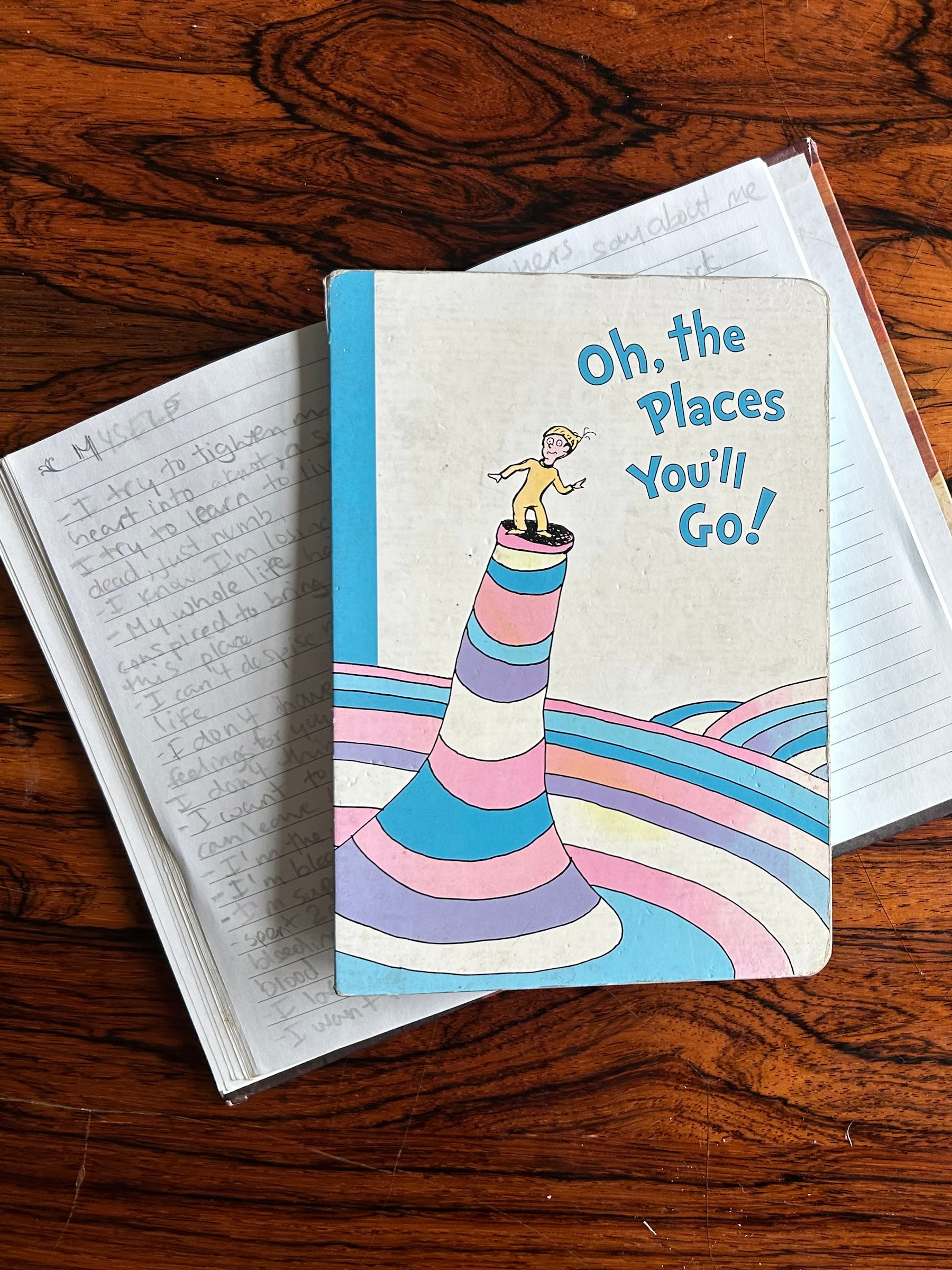
I was 23, in theatre school in Toronto at George Brown. In a movement class, our teacher asked us to keep a diary. I remember at the time being faced with a lot of thoughts I didn’t know I had, and that was scary for me. It was a level of personal reflection and honesty that I wasn’t used to. Journalling is a challenge, something that comes and goes for me – and I think for many people. Although I’ve become more diligent in recent years.
Are you pen to paper, or digital?
I’m pencil to paper. I like longhand. It slows me down and helps create a more mindful sharing on the page. I write stream of consciousness and lately I’ve been doing a lot of poetry, just sharing where my brain is at.
How has writing helped you through important moments in your life?
I don’t always feel the benefits in the moment. However, if I go for a long stint without journalling, I have noticed I feel less connected with what I’m authentically feeling or thinking. I get swallowed up by the noise of life. I’ve kept all my journals and sometimes I go through them. They’re a point of reflection. They provide me with an emotional connection that has been very helpful for my mental health.
How does journalling inform your creativity?
It brings into focus what I’m authentically experiencing, in the moment, as an artist, a musician and a business owner. It reaffirms for me that I’m enough, just as I am, with no judgment or expectation. It quiets me.
Arnaud Bloquel
Executive chef of Michelin-recommended French restaurant, Lucie, in Toronto.When and why did you first start writing in a diary?
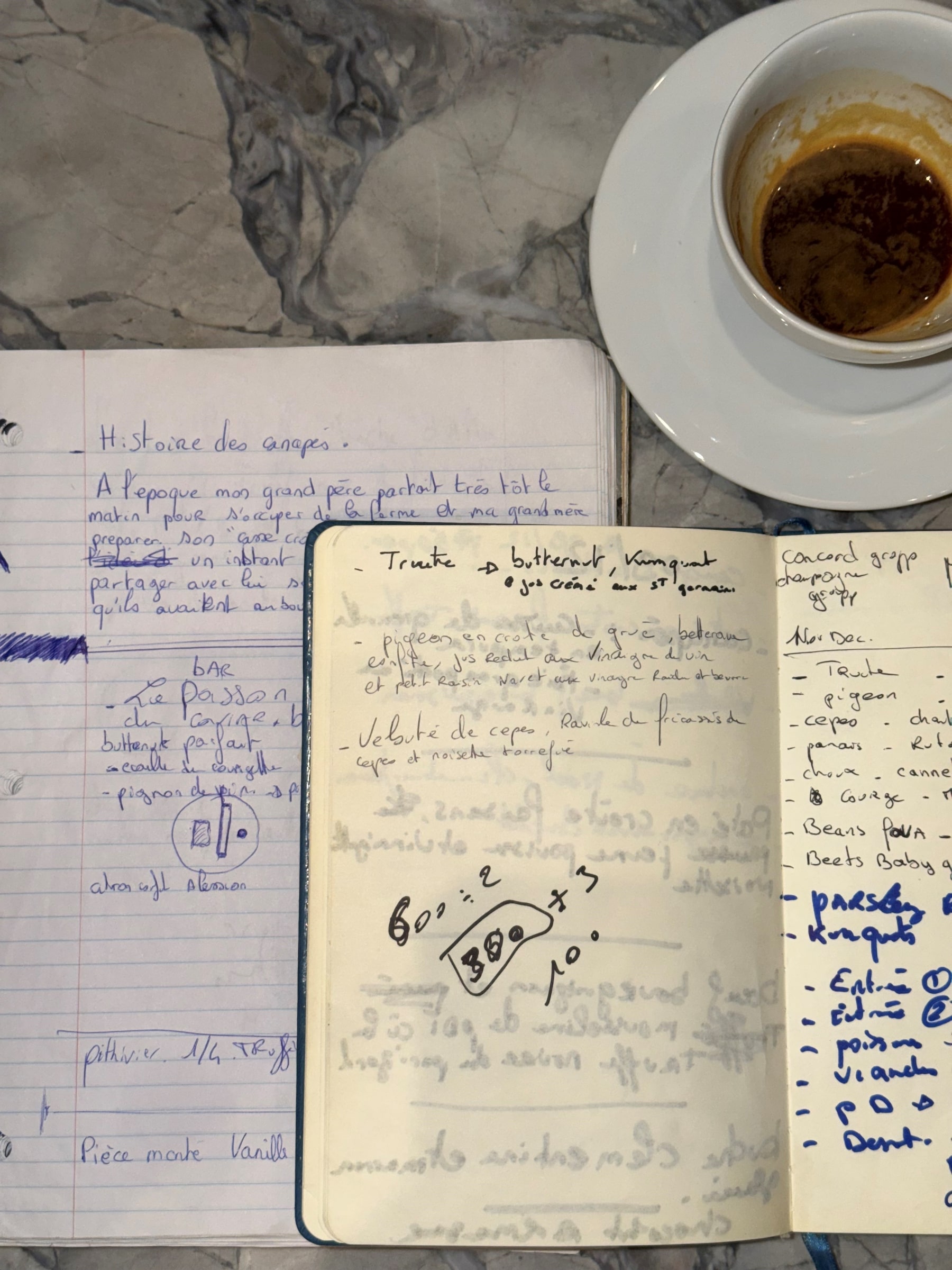
I started when I was very young, about 16 years old, because I felt that every day had a story to tell. I would take notes of what I was doing, how I was feeling, and if something made me happy or feel sad. It was very spontaneous. When I finished school, I went to work in Paris for chef Christian Constant at his restaurant, Le Violon d’Ingres. Every day I saw him writing. He told me, “You are an artist. I am an artist. You have to write down what inspires you, the flavours, what looks beautiful on a plate. ... ” So my journal writing evolved to be about my close relationship with food, taste and emotion. It’s a very sensual practice for me.
When do you write?
When the feeling strikes me or when I have time. And I always use the same beautiful Cartier pen that was my grandfather’s.
How has writing helped you through important moments in your life?
Sometimes, I go back and reread my entries, and it always helps me to understand how I was feeling and why I reacted a certain way. It’s freeing. My diary is my confidante. I never share it with anyone. It is my safe space.
These interviews have been edited and condensed.

Editor: Aruna Dutt. Interactive editor: Lucina Lo. Visuals editor: Sarah Palmer. Headshot photographs by Paige Sara; Akira Back; Trevor Cole; David Leye; Uluana/Supplied. Photographs of Qin Leng and her journals by Chloë Ellingson/The Globe and Mail.