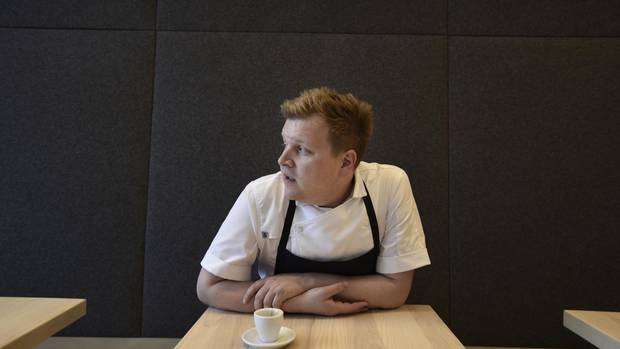
Opening a restaurant is a risky venture even when times are good. But these days, uneasy undercurrents pervade Alberta's capital city. Oil prices still hover painfully shy of $50 per barrel in a protracted economic stagnation. Housing starts, according to a recent report by the City of Edmonton's department of financial services and utilities, have decreased for four consecutive quarters. Statistics Canada reports that new vehicle sales in Alberta dropped by more than $1-billion between September, 2014, and September, 2015. A report released this April by the Conference Board of Canada found that Albertans spent $20 less per person on food in 2015 than they did the previous year.
The figures are grim. But are Edmonton's restaurateurs concerned?
Chef Daniel Costa remains unfazed. His newest restaurant, Uccellino, like a freshly pressed record, is about to be played for the first time. He admires the soaring downtown space, snuggled in on a busy stretch of Jasper Avenue, with the diligent grit of a man who has already opened two restaurants next door – minimalist Italian eatery Corso 32 and its spunky spuntini bar sister Bar Bricco – in just five years. Uccellino has more seats (80) than Corso and Bricco combined, and Mr. Costa has stocked his shelves with dried pastas from Italy for patrons to purchase and take home. A stand-up bar near the front ensures that turnover will be swift. Mr. Costa notes that the final jewel in his trifecta will have a lower price point and simpler menu than its neighbours.
"The menu is going to be very true to Italy, with dishes like spaghetti or grilled lamb." An approachable menu may well woo customers averse to parting with a significant cut of their paycheque on a single night out, but Mr. Costa adds that Uccellino's concept predates the current economic strife. "This space actually became available several years ago and I had this concept in mind, but I ended up opening Bar Bricco first."
Across the road, Chef Ben Staley's inaugural restaurants, the Alder Room and Alta Wine Bar, are a few months away from opening. Mr. Staley, 24, embraces the opportunity to pursue a risky menu, focusing on wild and preserved Canadian products. "It's exciting," he says of his venture, "but it's a scary kind of excitement."
Significant financial risk is part of the excitement. "It's scary at any age, but especially at my age, because I don't own anything. I rent. I have nothing to lean on, so banks were out of the question when it came to backing these restaurants." He was fortunate to snag a small business loan through the Alberta government, as well as private investors. "Getting started is hard enough, but once you do, you're on the hook for a lot more than you initially think. You owe your landlord a lot if you fold, and there are so many hidden costs," he says.
Chefs Matt Phillips and Andrew Cowan, both veterans of Edmonton's restaurant scene, agree with that. "Food costs are huge," notes Mr. Cowan, who is chef at Whyte Avenue mainstay Packrat Louie, "and they keep going up. Most people don't understand how expensive basic ingredients are, but it's hard to justify charging $30 per plate."
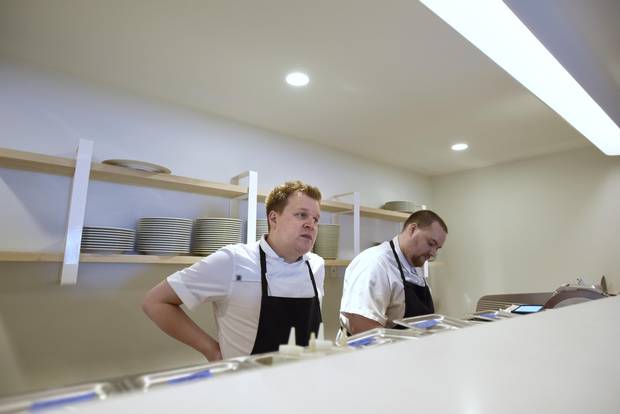
Chef Daniel Costa.
Fred Lum/The Globe and Mail
Mr. Cowan and his friend, Mr. Phillips, a line cook at French-Asian hot spot XIX Nineteen, are planning to open a chicken shack called Northern Chicken, but are coy about committing to a date. "People are still going out," Mr. Cowan observes, "but they are spending less. That's why we kept our concept, fried chicken, so simple."
They continue to test their concept through a series of pop-ups – gastronomic test flights for their crispy chicken, slaw and buttermilk pie, without the financial burden of a lease. When the time comes for Northern Chicken to have a permanent home, both chefs will incur additional risk as they leave secure jobs. "But we have to do it," insists Mr. Cowan, "because we've been joking around about it for years. What are we waiting for?"
One would think chefs Cowan and Phillips might be waiting for the economic tide to turn, but they describe a serendipitous shift in diner behaviour that transcends any confounding economic factors. "Diners are way more receptive to places up and beyond the usual chains since I moved here from Toronto almost a decade ago," Mr. Cowan says. "We've really seen a positive change."
Mr. Staley says a benefit of reduced disposable income is that Edmontonians are spending it closer to home. "From my perspective, people are choosing to spend their money in the city as opposed to travelling. So that's definitely an upside for us."
Mr. Costa says it is difficult to tease apart the complex factors that drive how and why diners spend money on dining out. "I think the economy tanked here at a time [January and February] when restaurants go quiet anyway," he states. Ultimately, human needs will prevail. "People still need to eat," says Mr. Costa.
"People are more accepting of diversity now because Edmonton had such a boom. That boom gave people options and that carried through." He isn't worried about whether people will flood Uccellino's alabaster space once the door opens. "People know if what you are doing is real. They can tell if you care. We're a loyal city. Edmontonians support things they believe in."