Busy day? Here are five stories popular with Globe readers to help you catch up.
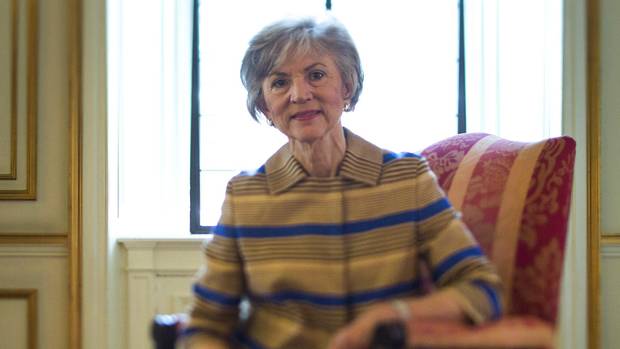
Chief Justice says Canada attempted ‘cultural genocide’ on aboriginals
Supreme Court Chief Justice Beverley McLachlin says Canada attempted to commit"cultural genocide" against aboriginal peoples, appearing to be the highest-ranking Canadian official to use the phrase, Sean Fine reports.
“The most glaring blemish on the Canadian historic record relates to our treatment of the First Nations that lived here at the time of colonization,” Chief Justice McLachlin said at the fourth annual Pluralism Lecture of the Global Centre for Pluralism.
Genocide – an attempt to destroy a people, in whole or part – is a crime under international law.
John Borrows, Canada Research Chair in Indigenous Law at the University of Victoria, called the Chief Justice's use of the term"unparalleled" in Canadian history.
And while her comments are unlikely to have legal consequences, he said, it still carries symbolic importance coming from the Chief Justice.
Chief Justice McLachlin cited early laws barring treaty Indians from leaving their reservations, rampant starvation and the denial of the right to vote.
She also referred to the outlawing of aboriginal religious and social traditions, such as the potlatch and the sun dance, and to residential schools.
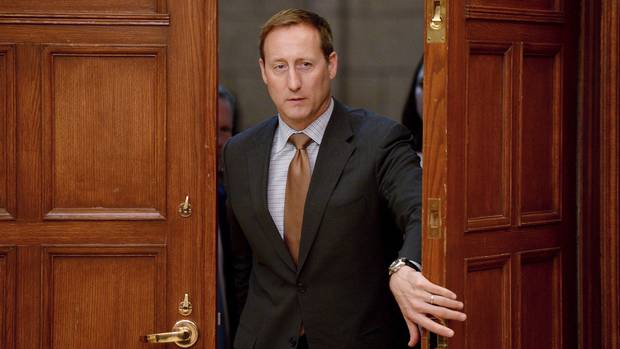
Justice Minister Peter MacKay to announce he won’t run again: sources
Justice Minister Peter MacKay, the co-founder of Stephen Harper's Conservative Party, is stepping down from federal politics after 18 years, Steven Chase and Jane Taber report.
The Nova Scotia MP, who turns 50 this year, will attribute his decision to his young family. He and his wife, Nazanin Afshin-Jam, are expecting a second child this fall.
“For purely personal reasons it is now time for me to leave public life and devote myself to my young family,” Mr. MacKay said Friday at a news conference in Stellarton, N.S. “I love what I do, and I love the opportunities it afforded me to help others, but simply put, I love my family more.”
He will remain in office until the next election, but this is a large loss for Harper as his front-bench strength erodes.
MacKay joined forces with Harper 12 years ago to reunite two right-of-centre parties and end the vote-splitting that had hurt conservative political fortunes.
The Prime Minister must now seek out another way to appeal to this section of the Canadian electorate or risk losing voters to Liberal Leader Justin Trudeau or NDP Leader Thomas Mulcair.
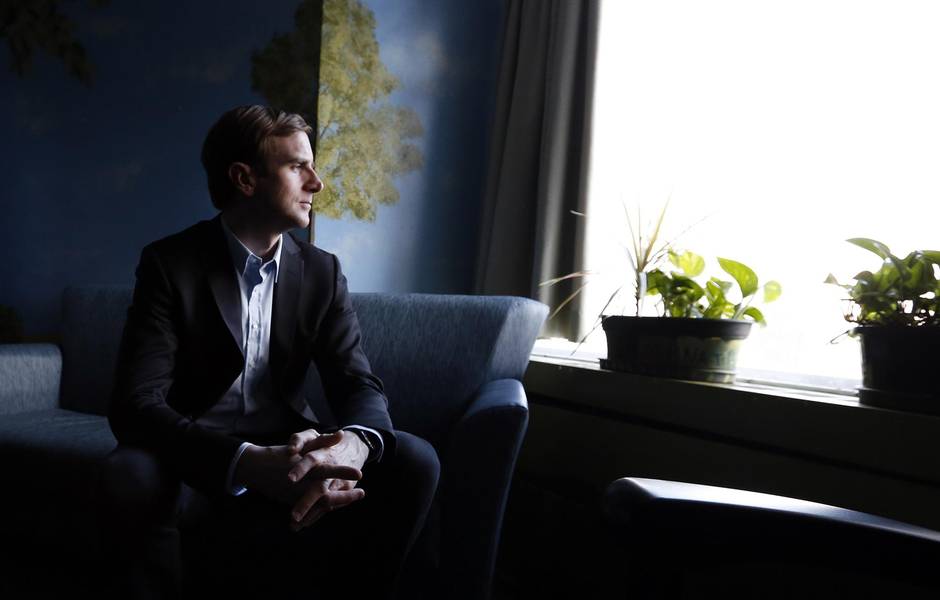
Niall McGee didn’t believe in depression – until cancer medication put him in a suicidal spiral
Niall McGee, a business reporter at The Globe, never thought depression could become a part of his life. A successful man with a bustling family and career, McGee discovered in 2011 that he had Stage III melanoma with a six-in-10 chance of being alive in five years.
Determined to stay positive through the diagnosis and treatment, McGee committed to a year-long immunotherapy treatment called interferon - a brutal regimen with punishing physical side effects, such as fatigue, chills, nausea, loss of appetite and low white blood cell count.
Nine months in, the bouts of insomnia and anxiety began. He had severe panic attacks and suicidal thoughts. He had developed severe depression as a result of the treatment. With two weeks left of the regimen, McGee had to quit, afraid the drug would kill him.
He was put on other medication to ease his depression but nothing worked. “Everything in life overwhelmed and exhausted me.” He was admitted to Toronto General's psych ward, where he spent five weeks.
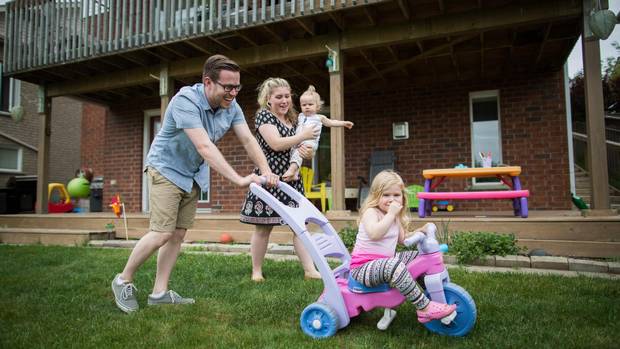
One family’s downsizing strategy to live within their means
The Bell family made a drastic decision last year: moving from a 1,400-square-foot townhouse in Guelph, Ont., to a 1,000-square-foot basement apartment in a house. They did this for one simple reason: to live within their means, Rob Carrick writes.
Daniel Bell, a youth pastor at a local church, earns about $41,000 a year and his wife, Brianna, stretches that money to cover all the family's needs without running a credit card balance or using a line of credit.
A carefully planned budget rules the family's finances and Ms. Bell plans to save for a house down payment earned through a freelance writing sideline she's just getting started.
The children share the apartment’s master bedroom, with the couple sharing the smaller second bedroom. The family eats well but rarely eat out at restaurants and Ms. Bell does most of her clothes shopping at thrift stores to find name brands for a great value.
While vacations are on the wish list for the Bells, they simply cannot afford one right now.
But the family is happy, and likes their home. “I know that I would be a wreck if I had a huge mortgage. I would be way more emotionally distraught than I am living in a basement,” Ms. Bell says.
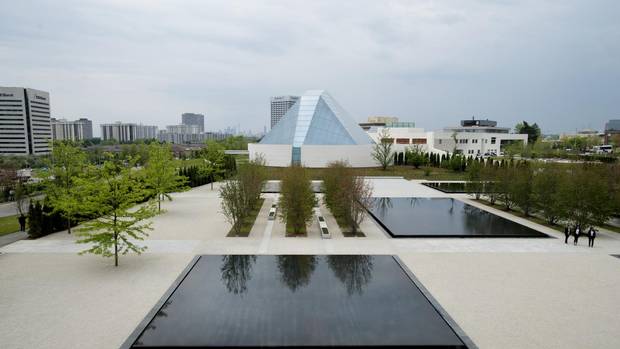
Why Toronto’s Aga Khan Park risks becoming a white elephant
Will the delights of this place eventually outweigh its disadvantages? Let’s hope so, because this rich museum and its gracious park bear many of the characteristics of a white elephant, Kate Taylor writes.
First the delights:
- The museum’s permanent collection, drawn from the family holdings of the Aga Khan, includes magnificent pieces of Persian ceramics dating back as early as the 10th century, a selection of fine Indian miniatures from the 1500s and 1600s and a few rare Asian robes that had miraculously survived for centuries
- It has good international connections
- It offers first-rate temporary exhibitions
Alas, the disadvantages:
- $20 for an adult admission, plus $3.50 an hour for parking (after you’ve made the lengthy, likely traffic-heavy trip from downtown)
- Much smaller collections than the ROM and AGO (but for the same cost of admission)
- Toronto's harsh winters will likely take their toll on the beautiful landscaping of the park (inspired by famed Islamic gardens in much warmer India and Spain
It all leaves Taylor wondering whether Canadians will ever understand what a huge compliment was paid to this country when the Aga Khan Development Network, to which the museum belongs, decided to locate the new institution here and move the collection, which had been housed in Geneva and London, to Toronto.