Busy day? Here are five stories to help you catch up
Canaccord CEO dies after incident during triathlon
Paul Reynolds, the CEO of Canaccord Genuity Group has died after complications related to an incident while competing in a triathlon in Hawaii.
Mr. Reynolds reportedly experienced an “unexpected medical emergency” during the swim part of the Lavaman Waikoloa Triathlon on Sunday, Bertrand Marotte reports.
Mr. Reynolds managed Canaccord’s European operations out of London from 1999 to 2006, when he was appointed president. He became CEO a year later.
The company’s chairman, David Kassie, is taking over as CEO immediately.
Canaccord’s board announced Mr. Reynold’s death Thursday morning. He was 52 and leaves a wife and four children.
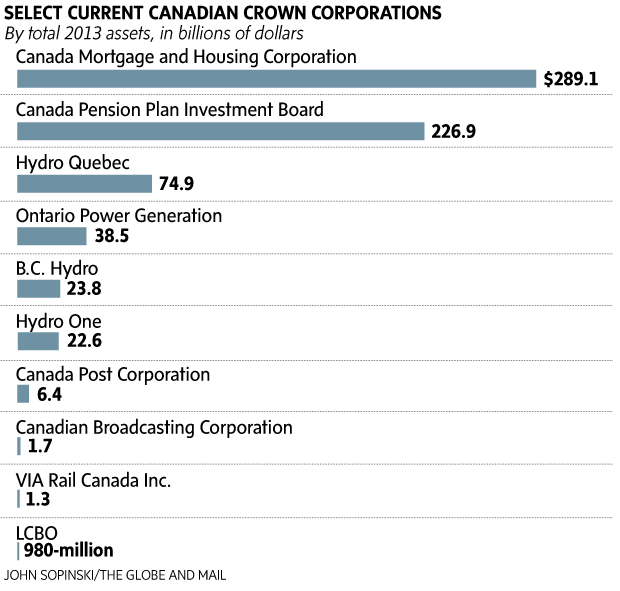
Ontario set to start Hydro One asset sales
The Ontario government is closing in on a $500-million deal to merge Hydro One Brampton with three other utilities.
Sources familiar with negotiations say that Enersource Corp., PowerStream Inc. and Horizon Utilities Corp. are in talks with the province, Sean Silcoff and Adrian Morrow report.
The combined entity would serve roughly 960,000 customers in many of the communities to the north and west of Toronto, including Mississauga, Hamilton, Brampton and Vaughan.
It’s a move that would create Canada’s largest municipally-owned electricity distributor, while kickstarting the selloff of provincial electricity assets.
As the first step in the partial sale of Hydro One, the province is banking on the merger to deliver billions of dollars needed to fund Premier Kathleen Wynne’s plan to build new transit lines.
The Ontario government is also considering removing barriers that have prevented widespread consolidation and private investment in the province’s electricity distribution business.
Let them eat cold Camembert. Not at the Senate
Senator Nancy Ruth has no problem with senators expensing a separate breakfast when they could have eaten on that morning’s flight, Campbell Clark reports.
“Well, those breakfasts are pretty awful,” she told reporters. “If you want ice cold Camembert with broken crackers, have it.”
Broken crackers! Imagine!
Somehow, the senator’s complaint of cold Camembert accidentally summed up the Senate expenses scandal quite neatly: rigid rules don’t allow for senators to live in the style to which they’ve become entitled.
At a time when Stephen Harper’s government is hunkering down for a potential drip-drip-drip of revelations from Mike Duffy’s trial, her comments are undeniably off-message for Conservative senators.
And it is Harper who will probably pay for the damage.
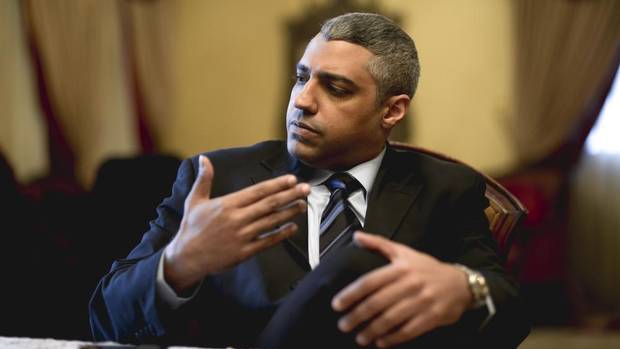
Fahmy shocked at Ottawa’s refusal to issue passport
Mohamed Fahmy is in shock and angry over Ottawa’s refusal to issue him a passport while he awaits the outcome of his case.
Fahmy, a Canadian journalist who spent more than a year in a Cairo prison, has been trying to acquire a new passport ever since being released on bail in February.
Born in Egypt, Fahmy immigrated to Canada with his family as a teenager. His original Canadian passport was seized by Egyptian authorities when he was first arrested in Cairo in December of 2013, and has never been returned.
At his last court hearing, the judge gave the Canadian Embassy a “green light” to issue Fahmy a new passport, but Canada’s passport program rejected his paperwork.
Without a passport, Fahmy has issues accessing his bank, can’t get married to his fiancee, and has trouble moving around Cairo.
“I am crippled and it’s becoming a security threat that I’m walking around with no Canadian passport,” he said in an interview from Cairo.
Which channels will survive in the pick-and-pay world?
It’s about to be a dog-eat-dog world on the dial.
The new rules from the CRTC - that will shrink some basic cable and satellite packages and let subscribers choose the individual channels they want to pay for - will substantially shake up the way channels are bought and sold, James Bradshaw writes.
TV channels will have to fight to attract viewers’ attention. Of Canada’s nearly 300 specialty channels, some will enjoy stability in growth. But others will disappear altogether - especially those that have masked low ratings by riding the coattails of their more popular neighbours.
So what’s the value of a television channel in a pick and pay world?
Let’s take a look at some examples:
TSN
- Subscribers: 9, 069, 491
- Total revenue: $400, 393, 480
- Percentage of total revenue from subscribers: 69.7
- Pre-tax profit: $102, 341, 536
CBC News Network
- Subscribers: 11, 336, 559
- Total revenue: $86, 799, 231
- Percentage of total revenue from subscribers: 78.7
- Pre-tax profit: $20, 370, 619
MuchMusic
- Subscribers: 9, 248, 193
- Total revenue: $37, 673, 999
- Percentage of total revenue from subscribers: 37.3
- Pre-tax profit: $3, 837, 727
Broadcasters have about a year and a half before the CRTC’s new rules come into effect.
This feature is a work in progress. What do you think of it? Tell us by tweeting with the hashtag #GlobeCatchUp
Follow Kat Sieniuc on Twitter: @katsieniuc