Busy day? Here are five stories popular with Globe readers to help you catch up.
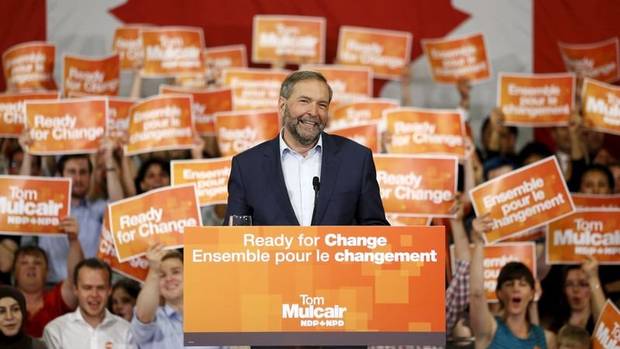
NDP narrowly favoured to win election, Globe model predicts
If an election were to be held today, the NDP would likely take the cake.
That’s according to our new election forecast tool that analyzes polling and historical data and helps make sense of it all.
This week’s projections:
- The probability of an NDP win is currently 52 per cent
- The Conservatives were favoured to win the most seats 47 per cent of the time
- The Liberals won in 2 per cent of the simulations
Two other notable outcomes:
1. Probability of a majority government: 0.9 per cent
- Majority governments were found in just 9 simulations out of 1,000
- However, the likelihood of a minority government this time is a three-way race, which has historically been rare
- This three-way split could mean that small shifts of 2 or 3 percentage points from one party to another can result in every government/opposition combination you can imagine
2. Probability of Bloc winning at least 12 seats: 28.5 per cent
- With both NDP and Liberal polling numbers elevated compared to the 2011 election, it will be difficult for the party to recreate the 40-plus seats of the past
- A key worry for the NDP is that any BQ re-emergence will come primarily at the expense of New Democrats, who performed especially well in traditional Bloc territory
See how our election forecasting model works.
Dog didn't cause death in attack on Hamilton man: police
Hamilton police say the cause of death in an incident involving a dog attack Wednesday night was not a result of the dog, Michael Fraiman and Madeline Smith report.
The coroner is now involved to determine the cause of death of a man in his 30s, who was walking with another man before the dog he was walking with attacked him around 11:15 p.m.
A bat-wielding passerby attacked the dog but failed to save the man’s life.
The dog has been identified as a sharpei-fila mix and it took five hours to be apprehended, said Ann Lamanes, a communications officer with the City of Hamilton.
Earl Secord, 43, lives on Burton street just outside the cordoned-off area. He said he believes the man who was attacked may have been the dog’s owner, as has seen him walking the dog around the neighbourhood before.
“[The dog] was on him ripping and tearing. ... He grabbed him right up here,” he said, motioning to his chest, “and he wouldn’t let go.”
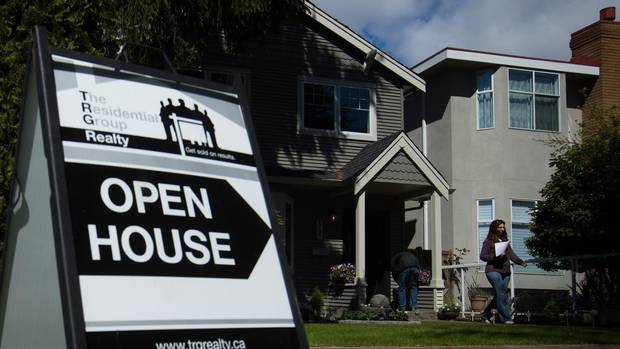
Canada's hot housing markets clearly detached from reality
Thinking of buying a house in Vancouver or Toronto, where the average price of a detached home has exceeded $1-million? First ask yourself this:
Do soaring house prices make sense in an economy so weak that it can’t gain traction even with rates that are already the lowest many people have ever seen?
It's a dangerous move to purchase a house in a hot market, and if the Bank of Canada lowers interest rates next Wednesday, more people will surely be tempted, Rob Carrick writes.
In a normal housing market, the time to buy is when you can truly afford it. Buying into a hot market in a cold economy demands careful consideration of your job security and prospects for pay increases.
Our economy is taking a hit due to the impact of depressed oil prices, occurring in part thanks to the economic uncertainty caused by events in Greece and China.
The fall of Canada's stock market and dollar can be explained by looking to Greece, which may default on its debt, and China, which is facing a huge stock market plunge.
Taking all of this into account, a buying frenzy right now seems detached from reality.
AFN asks Ottawa to declare all aboriginal languages official
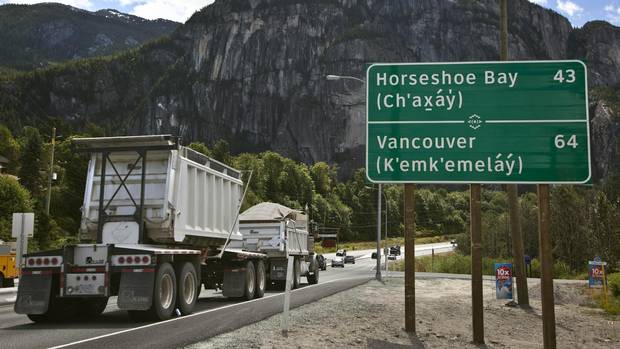
Perry Bellegarde, the head of the Assembly of First Nations, is requesting that the nearly 60 indigenous languages spoken in Canada are made official alongside English in French, Gloria Galloway reports.
Though he acknowledges the move would be expensive and difficult, he says it’s one that is becoming more urgent as the mother tongues of aboriginal peoples disappear.
During a session on aboriginal language preservation at the AFN meeting, chiefs and other delegates debated a resolution calling on the federal government to provide money that would begin the work of revitalization.
The federal funds should be used for things such as an indigenous language institute, language programs and immersion at aboriginal schools, Bellegarde said.
The Truth and Reconciliation Commission recommended the creation of an aboriginal languages act to make the federal government financially responsible for preservation.
Out of the over 60 indigenous languages, Bellegarde said studies have shown that just three languages have a chance of survival with the current levels of funding.
EU’s Tusk urges debt relief as part of Greek deal
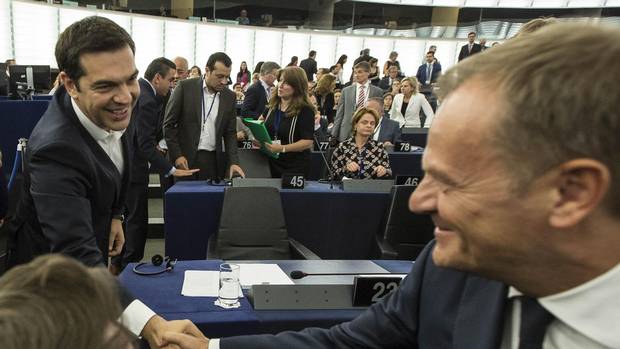
European Council President Donald Tusk joined growing international calls for Greece to be granted debt restructuring as part of any new loan deal if it delivers convincing reforms to avert imminent bankruptcy.
The call acted as a challenge to Germany, which has ruled out any write-offs as illegal and taken a restrictive view of reprofiling the debt to help Greece over a major repayment hump this year.
“The realistic proposal from Greece will have to be matched by an equally realistic proposal on debt sustainability from the creditors. Only then will we have a win-win situation,” he said. “Otherwise, we will continue the lethargic dance we have been dancing for the past five months.”
Failure to reach a deal Sunday could result in a collapse of Greek banks next week.
Meanwhile, European Central Bank President Marco Draghi voiced doubts about Greece's chance of rescue, quoted in an Italian daily as saying he was not sure a solution would be found for Greece and he did not believe Russia would come to Athens’ rescue.
Draghi’s support for Greek banks came under attack from German Bundesbank chief Jens Weidmann, who said it was up to governments, not the central bank, to provide any aid to Athens.