Busy day? Here are five stories popular with Globe readers to help you catch up.
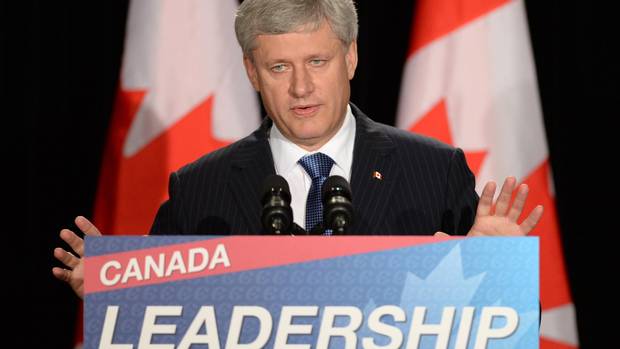
Harper vows to ban travel to terror havens if re-elected
Canadians who travel to regions of the world that are hotbeds of Islamic terrorism could be prosecuted if the federal Conservatives get re-elected, Gloria Galloway reports.
“There is absolutely no right in this country to travel to an area under the governance of terrorists,” Conservative Leader Stephen Harper said at a campaign event in Ottawa on Sunday.
“That is not a human right.”
The Conservative government has already made it illegal to leave Canada to engage in terrorist activities. This new measure would go further, criminalizing visits to specific countries—likely Iraq and Syria.
Critics say the new legislation could threaten civil liberties and mobility rights.

Low crude prices not flowing to consumers at the pump
North American drivers have been paying full value for fuel this summer, but refiners across the continent have been reaping a windfall from lower crude costs, Shawn McCarthy reports.
In the United States, independent refiners earned huge second-quarter profits, while Canadian energy companies also saw hefty earnings from their downstream operations.
But with the summer driving season winding down, that trend may soon change. The difference between crude and wholesale gasoline prices is expected to shrink back to a more typical size after Labour Day.
Consumers are understandably frustrated. Crude prices have tanked since early May, but gasoline prices have remained stubbornly high.
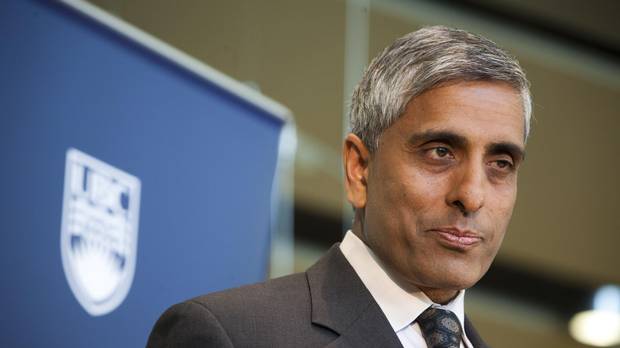
UBC faculty to ask why president quit after one year into five-year term
The University of British Columbia will face increased scrutiny Monday, when the faculty association asks the school’s board of governors to explain the sudden resignation of university president Arvind Gupta on Friday.
As Simona Chiose reports, Dr. Gupta began a five-year term in July, 2014, but the university announced late last week that he is stepping down.
A resignation so soon into a presidential term represents “a failure point in the governance of the university,” says a statement to the board by Mark MacLean, the president of the faculty association.
The news broke at a time when the school’s international rankings are sinking and the province is cutting the education budget.

Telus CEO abruptly exits after refusing to move to Western Canada
Darren Entwistle is once again chief executive and president of Telus Corp., replacing outgoing CEO Joe Natale immediately.
The sudden change in leadership is being attributed to Natale’s reluctance to move his family to Western Canada, where Telus has its headquarters and the core of its business.
Telus says Natale – who has been based in the Toronto area – has agreed to serve in an executive capacity until the end of 2015 to ensure a smooth leadership transition.
The leadership change comes little more than a year after Entwistle officially handed off the CEO’s job to Natale in May, 2014.

How ticks became a major public health issue
Ticks, one of nature’s most efficient transmitters of infectious bacteria and Lyme disease, are quickly spreading throughout Canada – partly courtesy of climate change, scientists believe.
As Erin Anderssen writes, Canada’s tick numbers have grown 10 times over in the past two decades. Lyme disease has been found or declared endemic in southern parts of British Columbia, Manitoba, Ontario, Quebec, New Brunswick and Nova Scotia.
The only way to combat the tick rise is to begin carefully tracking Lyme disease hot spots.
“There is nothing good inside a tick,” says Vett Lloyd, a biologist at New Brunswick’s Mount Allison University who studies ticks. “Personally, if every tick vanished on the planet, I wouldn’t be sorry.”