Busy day? Here are five stories popular with Globe readers to help you catch up.

Ontario unveils new legislation to protect condo owners
Ontario has introduced new consumer-protecting legislation, giving the province's 1.3 million condo owners new rights to battle boards and property managers, Tasmin McMahon reports.
The new laws promise to create an authority that will license and regulate the province's property managers to crack down on fraud, as well as a tribunal that will resolve board-owner disputes.
The government plans to charge condo owners $1 per month to help fund the new agency, and fees to resolve complaints will run up to $1,000.
While it is not currently known who will run the new condo authority, it will operate as an arms-length organization with its own board of directors.
The government expects regulation governing the new tribunal to be in place by late next year with the tribunal operating by early 2017.
Canada to see a 40 per cent increase in cancer patients by 2030: report
The number of new cases of cancer diagnosed every year in Canada is expected to increase by 40 per cent over the next 15 years, largely as a result of a rising number of seniors, Kelly Grant reports.
By 2030, an average of 277,000 new cancer cases are expected to be logged every year according to Canadian Cancer Statistics 2015 - the first year that Canada's most prominent national cancer report has featured predictions for the burden of cancer.
“What jumps off the page most significantly about this report is actually the sheer number in the predictions – the 40-per-cent rise in the next 15 years,” said Sean Cleary, a surgical oncologist at Toronto General Hospital. “We need to be prepared in so many ways to face this.”
The report calls for more oncologists, specially trained nurses, diagnostic services, cancer centres, cancer therapies and palliative care in order to prepare for the incoming wave of cancer patients.
While the report assumes these trends will continue, it offers information suggesting that the increase in total new cases could slow down if more Canadians quit smoking, lost weight, stayed out of the sun and embraced regular cancer screening.
Shomi soon to be available for all
In an attempt to rival Netflix, Rogers and Shaw plan to offer their television streaming service Shomi to all Canadians, regardless of whether they have cable or Internet subscriptions, Christine Dobby reports.
While the move will put Shomi into more direct competition with Netflix, it will also place pressure on Bell Media’s Crave TV, which still requires a television subscription.
Shomi is planned to be offered to all Canadians this summer for a price of $8.99 a month, which is the same price charged by Netflix.
"It's difficult for me to describe how happy I am with Shomi," said Rogers chief executive officer Guy Laurence.
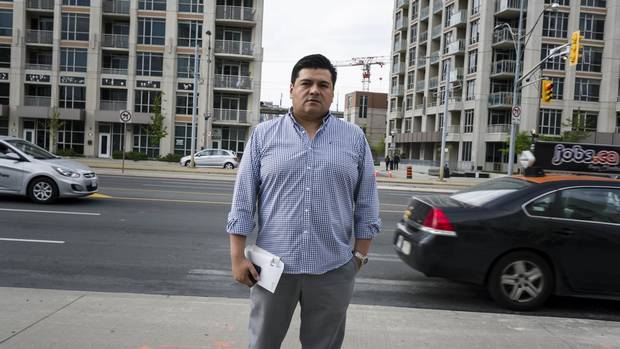
Toronto man says he was forced to jump out of moving Uber car
Juan Carlos Bobadilla, a Toronto man and frequent Uber user, said he was forced to jump out of a moving vehicle when his driver began acting erratically and refused to stop the vehicle when asked, Ann Hui reports.
The same week that Mr. Bobadilla spoke with The Globe and Mail, a Mississauga Uber driver was charged with sex assault on a passenger.
His report also comes as City Hall tackles the question of regulating UberX, a service that enables regular drivers to operate their own private vehicles as taxis.
Mr, Bobadilla's main concern is that there was no emergency number he call to speak with someone at Uber following the incident.
FIFA officials arrested in Switzerland as U.S. probes alleged bribery scheme
Nine FIFA officials and five corporate executives have been indicted by U.S. federal prosecutors on criminal charges that revolve around an alleged bribery scheme that occurred over more than 20 years, Joanna Slater reports.
The FIFA officials have been accused by prosecutors of soliciting over $150-million in bribes and kickbacks from sports-marketing officials in exchange for the awarding of lucrative media and marketing rights for soccer tournaments. None of the allegations have been proven in court.
Jeffrey Webb and Jack Warner, the current and former heads of the FIFA regional association for North America, Central America and the Caribbean (CONCACAF) are among those charged.
Accusations of corruption have followed FIFA for years, but recently intensified after the bidding process for the 2018 and 2022 World Cups.