Busy day? Here are five stories popular with Globe readers to help you catch up.
The one word some say is missing from Ontario’s sex-ed curriculum
The word “love” is never mentioned in Ontario’s new sex-ed curriculum. And for some parents and long-time sex educators, the additional word would make a huge difference in filling in the blanks of how feelings, romance and sex can fit together, Selena Ross reports.
“It feels incomplete if we don’t talk about that,” says a former nurse who teaches evening sex-ed classes in Seattle.
But education experts who designed Ontario’s new health lessons, including sex ed, say they’re avoiding using the word for a reason: “The language relating to healthy relationships is intentionally inclusive, so that what students learn in this area can be applied to all of their relationships – with friends and peers, family members, and as they get older with potential romantic interests or a partner/husband/wife in the future,” said the Ministry of Education in a written statement.
And they aren’t alone in steering clear of the word love. The lessons are meant to provide information from an “unbiased perspective,” said the CEO of Ophea, a sex education non-profit.

Russia could be sanctioned for leaving ice before O Canada at hockey worlds
Russia’s hockey team may end up paying for its Canadian anthem snub.
After losing 6-1 to Canada in Sunday’s gold-medal game, most of the Russian team quickly departed for the dressing room before O Canada - a breach of the sport’s etiquette.
Now, Russian news agency TASS is reporting that the Russian team is facing sanctions.
“The IIHF has its own protocol and some sort of punishment will be handed down,” René Fasel, president of the International Ice Hockey Federation, said in a statement.
According to TASS, a few players remained on the ice for the anthem, including Alexander Ovechkin, Evgeni Malkin, Viktor Tikhonov and Dmitry Kulikov.
Russia’s general manager, Andrey Safronov, called the incident “a shame.”
“We are feeling very ashamed and uncomfortable now and on the behalf of the national team I bow to the Canadians,” Safronov told TASS.
An Alberta doctor’s harrowing front-line view of a growing crisis
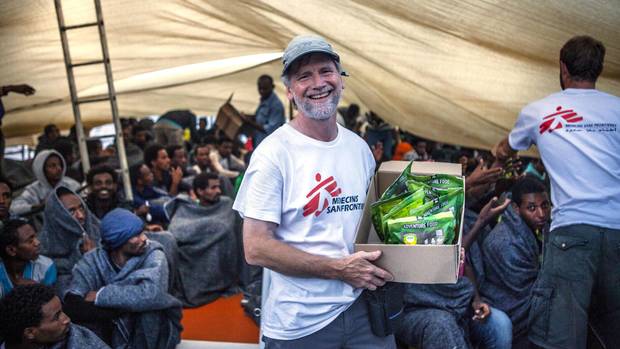
Canadian doctor Simon Bryant is no stranger to being a ship physician - he’s worked on tourist expeditions in the Antarctic and Arctic . But as Affan Chowdhry reports, the reality of the migrant crisis has hit Bryant hard on board the search-and-rescue boat operated by Médecins Sans Frontières (MSF) and the European charity Migrant Offshore Aid Station (MOAS).
“These [migrant] ships can be so crowded that people literally aren’t able to stand. They sort of crouch in each other’s laps, and when we help them off they are often staggering from seasickness, from cramping of the muscles and just general disorientation,” he said.
The six-month mission is MSF’s first large-scale foray into running a rescue and medical clinic at sea, and comes at a time when the European Union is grappling with how to stem the flow of migrant boats and sea deaths.
The M.Y. Phoenix search-and-rescue vessel helped 692 migrants in the first 10 days since leaving Malta on May 2. That number is expected to rise to 10,000 by the time the mission ends in October.
That is a small fraction of the total migrants expected to cross the Mediterranean. Last year, more than 200,000 attempted the crossing, according to the United Nations refugee agency.
“What we want to do is give people a chance,” said MOAS spokesperson Chris Peregin. “They might not be eligible for a certain kind of refugee status and might even be returned to their countries, but they don’t deserve to drown.”
Nine diet mistakes that are making you tired
Feeling tired all the time even after eight hours of sleep? It might be your diet, Leslie Beck writes.
Here are nine dieting blunders that can rob you of energy:
- You eat too many refined carbs: Highly processed, refined carbs (e.g., white bread and crackers, refined breakfast cereals, sweets and sugary drinks) cause large spikes in blood glucose followed by sharp drops, which can bring on fatigue.
- You skimp on protein: Protein-rich meals help you feel more alert by counteracting drowsiness that can be brought on by consuming excessive sugar or carbohydrates
- You skip breakfast: Studies have found that adults and kids who skip the morning meal report lower energy, poorer moods and reduced memory.
- You don’t snack: To prevent your energy level from fading, include healthy snacks between meals.
- You drink too little water: Water is also an essential ingredient in the production of energy molecules.
- You rely on caffeine to stay alert: One or two cups of coffee can boost mental alertness, but drinking more can overstimulate your central nervous system and cause insomnia.
- You sip on wine after dinner: A nightcap or two before bed may help you fall asleep, but it disrupts sleep by causing you to wake up in the second half of the night.
- You don’t get enough iron: An iron deficiency, even without anemia, can cause fatigue and lethargy.
- You’re running low on B12: The vitamin is used to make red blood cells, which carry oxygen through your body.
Divorced 39-year-old moves back in with parents to tackle her debt load
By the time Michelle Summerfield’s divorce was final, she owed more than $33,000 on her line of credit and credit card. That was after paying off lawyer fees with the profit she and her ex received from selling their house, Aleksandra Sagan reports.
Unable to afford to live on her own, Summerfield, 39, moved back in with her parents.
More than 40 per cent of young adults between 20 and 29 live with their parents, according to Statistic Canada’s 2011 census. Some have never left home and others come and go as so-called boomerang kids.
Two per cent of these young adults are either divorced, separated, widowed or still married but living without their spouse.
While it’s admirable when parents want to provide monetary assistance, this help can prevent the adult child from understanding the consequences of their financial mistakes, says one debt consultant.
If parents are determined to step in, then they need to agree on a repayment strategy or a financial plan that includes future savings.
Unfortunately, Summerfield continued racking up debt after moving back home. But she’s now committed to turning things around, saying she was in the wrong emotional state (complete with an alter ego she has dubbed Spenderella). “I get myself into the debt,” she said. “I should get myself out of it.”
Follow Kat Sieniuc on Twitter: @katsieniuc