Busy day? Here are five stories to help you catch up.

This Vancouver bungalow sold for $2.48-million
Canada’s most expensive housing market has become a city of real estate millionaires.
The average price of new and existing detached houses sold within the city of Vancouver has topped $1.9-million, Brent Jang reports.
That’s up 173 per cent from a decade ago, when the price averaged $701,094 in 2005.
Indeed, a recent study found that 66 per cent of the nearly 68,600 detached properties within the city were conservatively assessed at $1-million or higher last July.
And last month, a Vancity report found the average price for all housing types within Vancouver could theoretically exceed $2.1-million in 2030, based on recent pricing growth.
That means first-time buyers are going to have to accept smaller spaces. But even resale condos averaged a price of $465,225 last month.
Ontarians: brace for shocks from electricity market
Something to ponder as Ontario embarks on a controversial overhaul of its electricity market: More than three-quarters of employees at the province’s two main utilities made at least $100,000 in 2014, according to the government’s “Sunshine List”.
At the same time, rates in Ontario continue to climb higher, even as they fall nearly everywhere else in North America, Barrie McKenna reports.
And Ontarians are poised to get hit with another big hike. Last week, Ontario Energy Minister Bob Chiarelli warned residential customers to brace for paying as much as $120 more a year for their electricity in 2016 and beyond.
As the Wynne government embarks on the revamp and partial privatization of Hydro One, lower rates may not even be the primary objective - the main driver is raising cash to help fund Wynne’s plan for new transit lines.
Where the wealthy dine
The list of the top restaurants among the world’s jet-setters is out - and there’s only one in Canada.
If you really want to impress your date, go to Montreal’s Toqué!, where the striped bass ceviche goes for $26 a piece - and that’s just an appetizer.
Founded more than 20 years ago, the Montreal restaurant is ranked No. 70 among 100, Michael Babad reports.
It’s a new entry on the 2015 list, which is the result of a poll among Elite Traveler readers on their favourite restaurants and chefs.
The top 10 restaurants are:
- Alinea, Chicago
- El Celler de Can Roca, Spain
- Azsurmendi, Spain
- Eleven Madison Park, New York
- The Fat Duck, Britain
- Robuchon au Dome, China
- Per Se, Rome’s La Pergola, New York
- Le Bernardin, New York
- Osteria Francescana of Modena, Italy

Canada’s MBA problem
The number of students signing up for MBAs in North America has been in steady decline for years.
And as business schools fight to stay relevant, universities across the country are trying new approaches to MBA courses, Janet McFarland found out.
The result is the MBA field today has a decidedly non-academic air of marketing and product experimentation.
Some competitive “must-haves”:
- Specialized programs: Many are now offering students the ability to do a portion of their courses in an industry-specific area to earn a specialized designation. The shift could mean an end to the traditional “cookie cutter” MBA, where all students learn all the same basic business skills.
- Shorter degrees: The Sauder School of Business at the University of British Columbia, for instance, has a new program that allows students in undergraduate programs to work simultaneously on a Masters of Management degree.
- Foreign travel: Most MBA schools now have dozens, even hundreds, of affiliations with other MBA programs around the globe, promising students opportunities to do exchanges to study abroad.
- New buildings with high-tech classrooms: Some universities go so far as to hire renowned architects, such as Frank Gehry or Norman Foster, to design their buildings and give their programs more cachet.
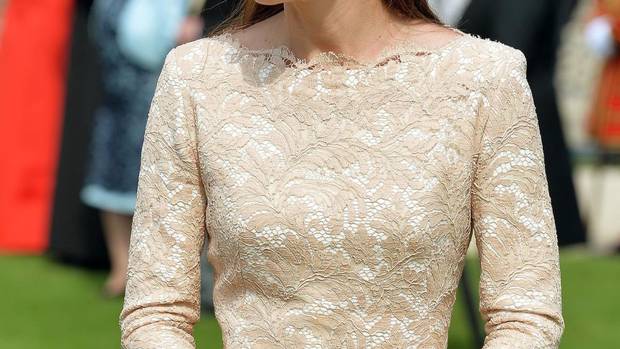
Margaret Atwood has no problem with Kate Middleton’s fashion sense
Margaret Atwood says the stir that’s erupted from an offhand comment she recently made about Kate Middleton’s fashion sense is “so idiotic it’s funny.”
During an event at the Victoria and Albert Museum on the subject of clothing and literature, Atwood said the Duchess of Cambridge “dresses quite uneventfully” and that she “[hasn’t] become the fashion plate that Diana was.”
Royal biographer (and editor-in-chief of Majesty Magazine) Ingrid Seward, leapt to Kate’s defense, telling the Daily Express that the Duchess has less flexibility in her wardrobe than people would think.
In an effort to douse the growing scandal, Atwood said in a response to The Globe and Mail: “Let’s hope people soon find something more earth-shattering to think about. Though it proves my point: people ARE jumpy about clothes.”
Read Atwood’s full response here.
This feature is a work in progress. What do you think of it? Tell us by tweeting with the hashtag #GlobeCatchUp
Follow Kat Sieniuc on Twitter: @katsieniuc