Busy day? Here are five stories to help you catch up.
What an $11,000 TFSA limit means for your retirement
The annual contribution limit for tax-free savings accounts, currently sitting at $5,500, will soon be doubled. At least that’s what Finance Minister Joe Oliver is hinting will come in the April 21 federal budget.
But how can we expect higher TFSA limits to affect our savings?
Rob Carrick has three situations:
Retirement saving: A higher TFSA limit would mean young adults in their 20s and early 30s don’t need to look to RRSPs to save for retirement. It also gives young savers more flexibility - they can use their accounts for retirement, to pay for further education or for a down payment on a house.
For people aged 50 and older, TFSA withdrawals don’t push them into a higher tax bracket, like big RRSPs do. This is particularly attractive to teachers, police and public servants.
Living in retirement: With RRSPs, people age 71 and older must make mandatory minimum RRIF withdrawals each year. The higher TFSA limit gives a tax shelter not only for RRIF withdrawals, but also for non-registered savings accumulated by seniors.
Saving for a house: With a higher annual limit, TFSAs would likely be able to contain all an aspiring home buyer’s savings - meaning you can leave your RRSP alone and reserve your retirement savings for their intended purpose: retirement.
Shell-BG megamerger could impact fate of major B.C. LNG projects
Two major liquefied natural gas export projects on British Columbia’s coast are facing an uncertain future, Bertrand Marotte reports.
If Shell’s proposed $70-billion (U.S.) acquisition of BG Group goes ahead, the big question is whether the merged company will proceed with its own B.C. LNG project as well as BG’s, or cancel one - or cancel both.
Shell estimates the cost of its proposed LNG export terminal in Kitimat at up to $40-billion (Canadian). It owns 50 per cent of LNG Canada through its subsidiary Shell Canada Energy.
BG said late last year it was slowing work on its Prince Rupert LNG project, with an investment decision not in the cards until 2017 at the earliest.
But the energy sector has been under pressure to rein in spending, and companies have been delaying or abandoning explorations and development projects. And many observers say it’s unlikely most of the 19 LNG projects on the West Coast will get built.
Outside of LNG, the deal appears to have “minimal impact” on operations in Canada.
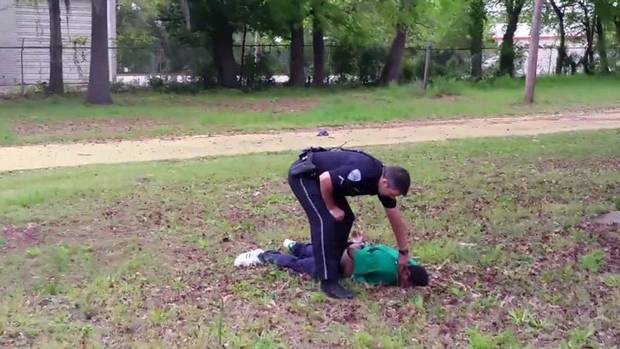
U.S. police officer charged after dramatic video emerges
A white South Carolina police officer who claimed he killed a black man in self-defence was quickly charged with murder after a bystander’s dramatic video suggested otherwise.
The video, recorded by an unidentified person, shows North Charleston Patrolman Michael Thomas Slager dropping his stun gun, pulling out his handgun and firing eight shots at Walter Lamer Scott’s back as he ran away.
The 50-year-old man falls after the eighth shot, fired after a brief pause.
North Charleston Mayor Keith Summey announced the murder charge at a news conference Tuesday: “When you’re wrong, you’re wrong,” he said. “When you make a bad decision, don’t care if you’re behind the shield or a citizen on the street, you have to live with that decision.”
Slager’s lawyer dropped him as a client after the video surfaced. The five-year police veteran was denied bond at his court appearance and could face 30 years to life in prison if convicted.
He has also been fired from the force.
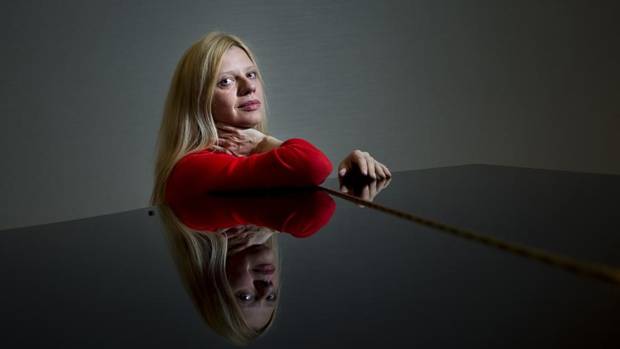
Pianist says TSO donor threatened to cut funds if she performed
Valentina Lisitsa says her appearances with the Toronto Symphony Orchestra were cancelled this week because of donor pressure.
The pianist, who came under fire for tweets she posted about the Ukrainian crisis, said the TSO told her agent a donor threatened to withhold funds if she performed as scheduled, Robert Everett-Green reports.
Lisitsa’s account of her dismissal conflicts at several points with orchestra CEO Jeff Melanson’s account.
Here’s a summary:
- Melanson said in a phone interview there was “absolutely no donor pressure.”
- Lisitsa showed The Globe and Mail an e-mail from her agent, Tanya Dorn at IMG Artists, in which Ms. Dorn said she had spoken with the TSO vice-president of artistic planning, who told her (in Ms. Dorn’s words) a “Ukrainian donor wants to pull his sponsorship.”
- Melanson said the TSO received complaints from hundreds of Torontonians about Lisitsa’s engagement because of her social media posts.
- Lisitsa said her tweets were translated wrong and taken out of context.
- Melanson said he was disappointed with the outcome, hoping they could have agreed to disagree without drawing this level of attention.
- In a text linked to her Facebook and Twitter accounts Monday, Lisitsa said: “I was hoping that under pressure, the TSO would relent.”
The TSO, meanwhile, decided late Tuesday to drop the Rachmaninoff concerto from its program.

What the California drought means for Canadians
California just announced its lowest Sierra Nevada snowpack in history for this time of year. And Canadians are not immune from the impacts of these droughts, Dustin Garrick writes.
Here’s why:
Like a financial crisis, drought is a ‘systemic risk’: We are all part of the economic and geopolitical system affected by current shortages in California and Sao Paulo, Brazil.
These ripple effects are delivered through global trade, potential for price shocks in agricultural commodity markets, and energy security issues due to the double crunch of lost hydropower supplies and rising energy demand for groundwater pumping. (In 2013 alone, Canada imported $2.7-billion in food products from California according to Statistics Canada.)
The myth of abundance is a myth: The majority of Canadians do not believe they live in areas vulnerable to floods (72 per cent) or droughts (81 per cent), according to a Royal Bank survey.
But water crises have been among the top five risks in the global survey by the World Economic Forum for the past five years. In 2015, water crises reached the highest impact risk for the first time.
The floods in Toronto and Calgary in 2013 illustrate this vividly, with the Calgary flooding alone causing almost $6-billion in damages.
So what do we do? No single solution will work; a package of institutions, infrastructure and information will be needed, Garrick argues. It’s time for all of us to get informed about water risk, and roll up our sleeves as water citizens.
This feature is a work in progress. What do you think of it? Tell us by tweeting with the hashtag #GlobeCatchUp
Follow Kat Sieniuc on Twitter: @katsieniuc