On Wednesday, California Governor Jerry Brown ordered mandatory water conservation in the state’s cities and towns after a severe four-year drought. It’s a dramatic step as the state grapples with a water shortage that could dry up the state’s agricultural industry, and might herald worse water crises to come. Here’s what you need to know about it.
What’s causing the drought?
About a third of California’s water supply comes from snow. Californians had hoped that rain and snow this winter would rescue the state after its driest three-year period on record. Instead, the winter brought by far the least snow on record in the Sierra Nevada mountains.
Here, for instance, is a composite-image map of the Tuolumne River Basin snowpack, comparing the total volume of water (or “snow water equivalent”) from April 7, 2014, to March 25, 2015. The snowpack has only about 40 per cent as much water as it did around this time last year, according to NASA data. The red areas are where water levels have dropped the most.
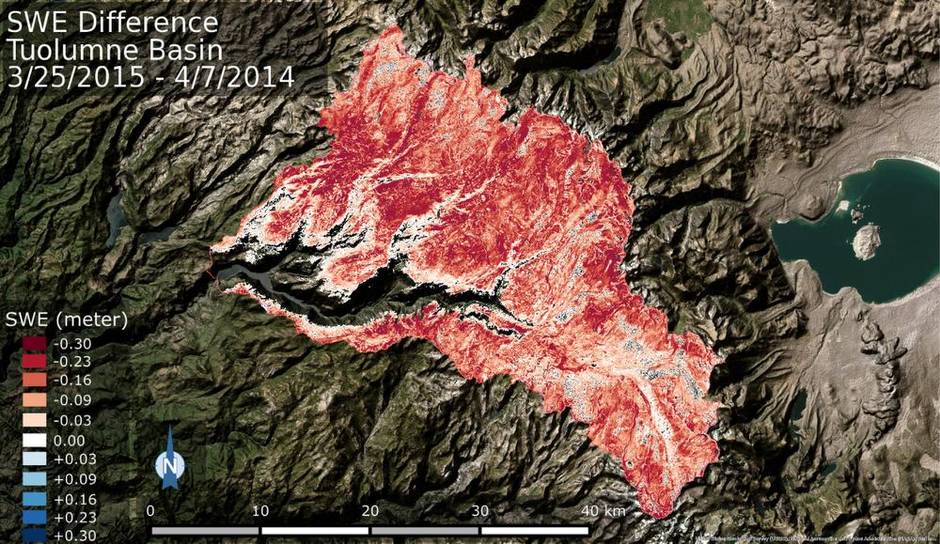
The snowpack that normally provides water for the state throughout the year now stands at just 6 per cent of normal. That means the state’s nearly 40 million people must rely on water already stored in reservoirs and on groundwater that farmers and communities are pumping at dangerously fast rates.
What do the new measures do?

Prices and fines
-calls on local water agencies to implement tiered water pricing that charges higher rates as more water is used
Conservation
-requires campuses, golf courses, cemeteries and other large landscapes to significantly cut water use
-requires agricultural users to report more water use information to state regulators
Infrastructure
-directs local governments to replace 50 million square feet of lawns with drought-tolerant landscaping
-prohibits new homes and developments from using drinkable water for irrigation if the structures lack water-efficient drip systems
-creates a temporary rebate program for consumers who replace old water-sucking appliances with more efficient ones
Why we should worry
1. Produce will get more expensive
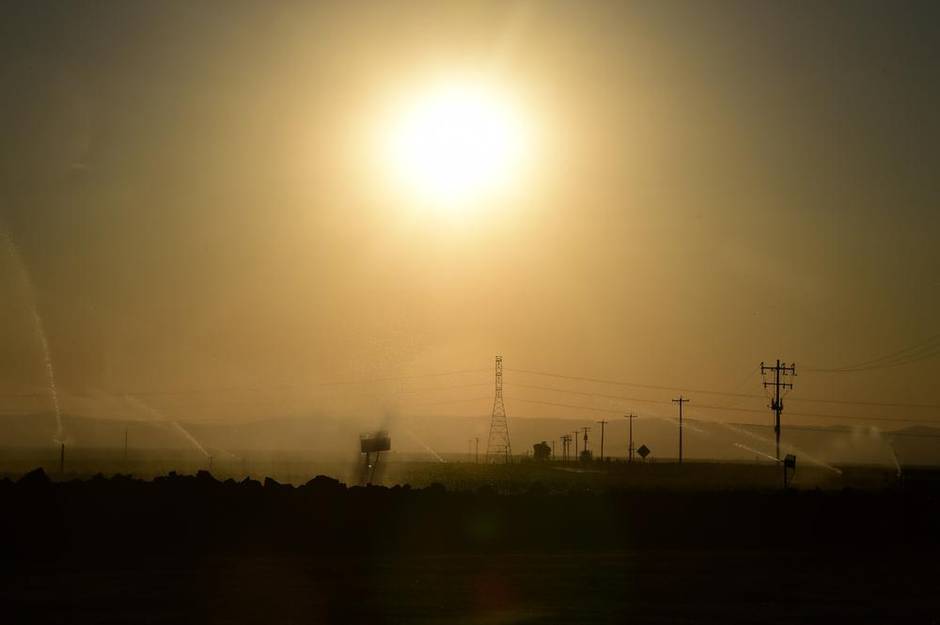
Shrinking water reserves forced California growers to let fallow 400,000 acres last year and likely hundreds of thousands more acres this year. Farmers say that could eventually mean more expensive fruits and vegetables.
(More: Why California droughts could leave B.C. high and dry on food)
2. Climate change means worse is yet to come
Recent research has blamed natural variability, rather than climate change caused by greenhouse-gas emissions, for California’s recent drought. Climate change is, however, making the problem worse.
“The rain deficit isn’t clearly connected to climate change, but the planetary warming has made it more likely that the weather would be hotter in California,” Princeton climate scientist Michael Oppenheimer told The New York Times.
Warmer temperatures worsen drought by causing more evaporation from reservoirs, rivers and soil. Scientists say that the warming trend makes it highly likely that California and other parts of the western United States will see more severe droughts in the future.
3. The rest of the world is getting thirstier too
If climate change and consumption leaves California short of water in the future, it won’t be alone. A United Nations report predicted last month that, if current water-usage trends stay as they are, the world will have only 60 per cent of the water it needs in 15 years. With a growing global population – estimated at nine billion by 2050 – the planet’s already dwindling reserves of underground water will be further strained.
Can California make a difference?

California’s history of curbing water use through voluntary conservation is not very good. In January, 2014, Brown asked Californians to voluntarily reduce water use by 20 per cent. Instead, they averaged about half of that; some affluent desert communities in Southern California – with big lawns, pools and golf courses – used more than 300 gallons of water per person per day. Now, the Governor is hoping mandatory conservation will make the difference.
But his critics have said his order does not go far enough to address agriculture, the biggest water user in California.
The order contains no water reduction target for farmers, who have let thousands of acres go fallow as the state and federal government slashed water deliveries from reservoirs. Instead, it requires many agricultural water suppliers to submit detailed drought management plans that include how much water they have and what they’re doing to scale back.
With reports from The New York Times and Reuters