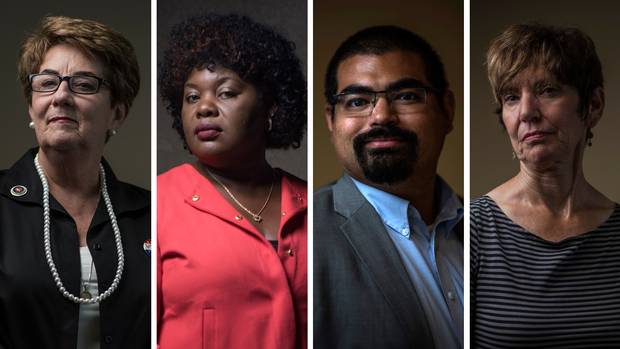
Terry Castro, Victoria Rowe, Tim Heberlein and Debbie Hines embody many facets of the changing U.S. voter base in Hillsborough County, Fla. One is working 10 hours a day to put Donald Trump in the White House; another has seen business thrive during the Obama presidency; another spends his days trying to persuade the disillusioned to cast their ballots; and another defected to the Democrats.
Florida's Hillsborough County is a microcosm of diversity and a near-perfect bellwether of presidential elections. As Doug Saunders and Elizabeth Renzetti discover, it's also emblematic of an America in which politics is now anything but usual
Photographs by Josh Ritchie
A few days ago, Debbie Hines stepped out the front door of her white stucco condominium building, made her way down the palm-lined street of her comfortable south Tampa neighbourhood, and did something she had never done before: She cast a ballot, at an advance poll, for a Democratic presidential candidate.
"My entire life, the only candidates I have even considered voting for have been Republican," she said afterward. "But the party has lost me."
The break was surprisingly easy for the 62-year-old retired small-business owner: She had felt strongly from the beginning that Donald Trump's seamy business record, which she had seen up close when she lived in New Jersey, made him too untrustworthy to run for office. Then, over the past few months, she came to be inspired by Hillary Clinton's leadership style.
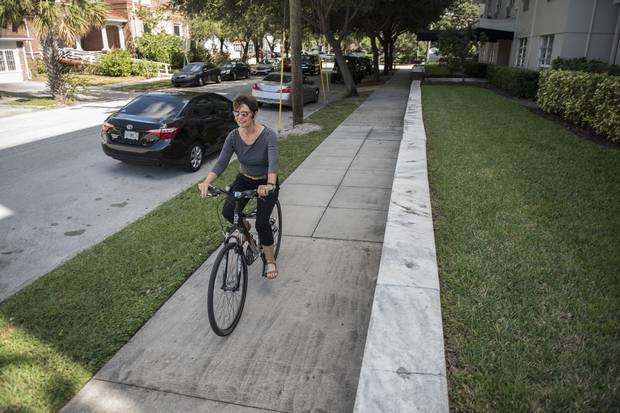
In rejecting Donald Trump, Debbie Hines personifies an election trend – voter defection.
Her change of political allegiances was a very big deal for both the Democratic and Republican parties, whose campaigns have invested sizable sums into trying to hold her loyalty. In fact, Ms. Hines and her neighbours may be the most doted-upon voters in the United States, and their decisions will be among the most anxiously watched on Tuesday night.
That's because the 840,000 voters of Hillsborough County, Fla. – and especially those, like Ms. Hines, who live in vote-rich, politically fickle neighbourhoods – are often considered the most coveted, most potent voters in America.
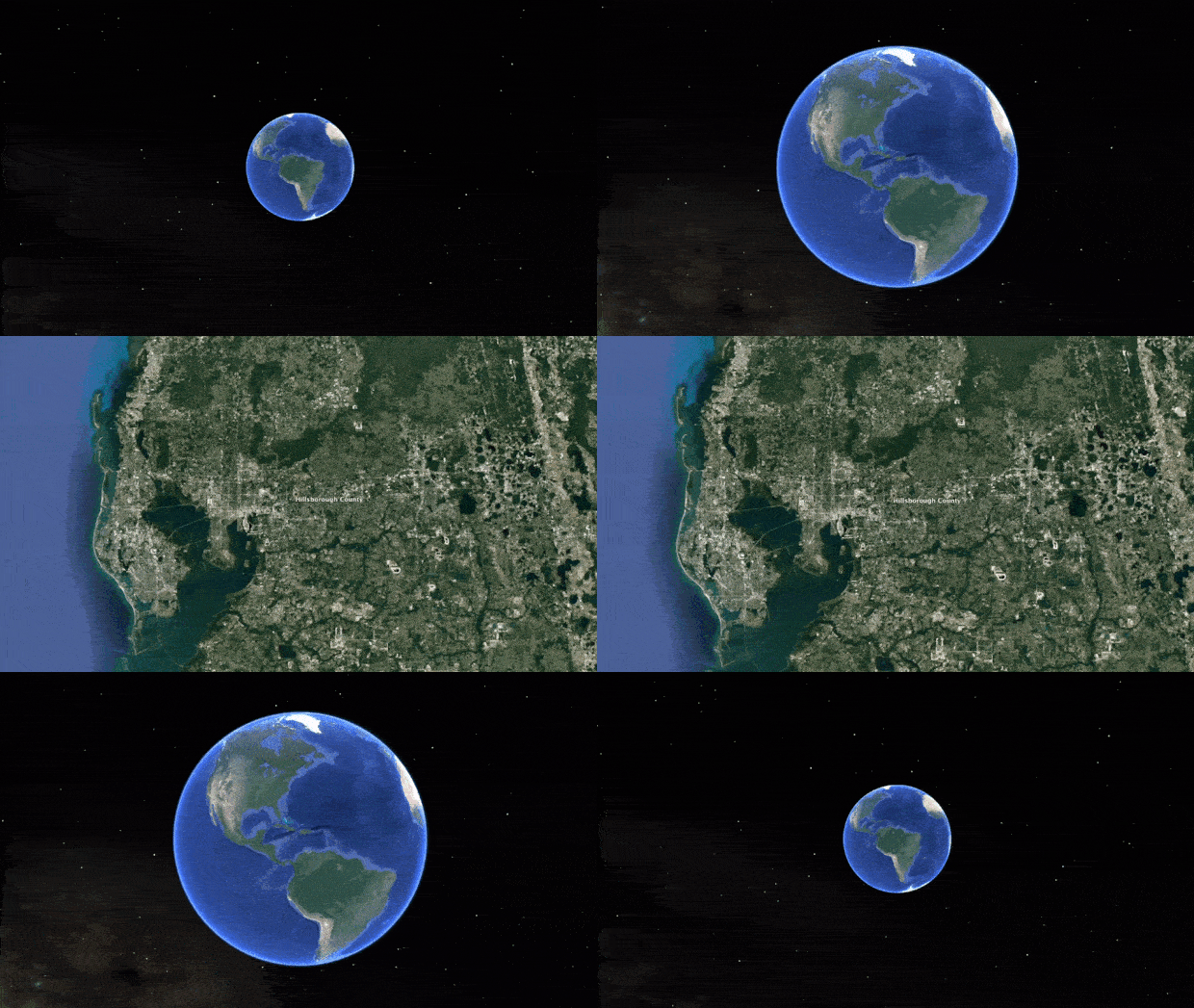
"Hillsborough county has long been characterized as the bellwether of Florida, and Florida the bellwether of the nation. The old saying goes, as Hillsborough County goes, so does the United States. It's been that way for a number of elections," says Susan MacManus, a professor of government at the University of South Florida in Tampa, who oversees the annual Sunshine State Survey of political trends.
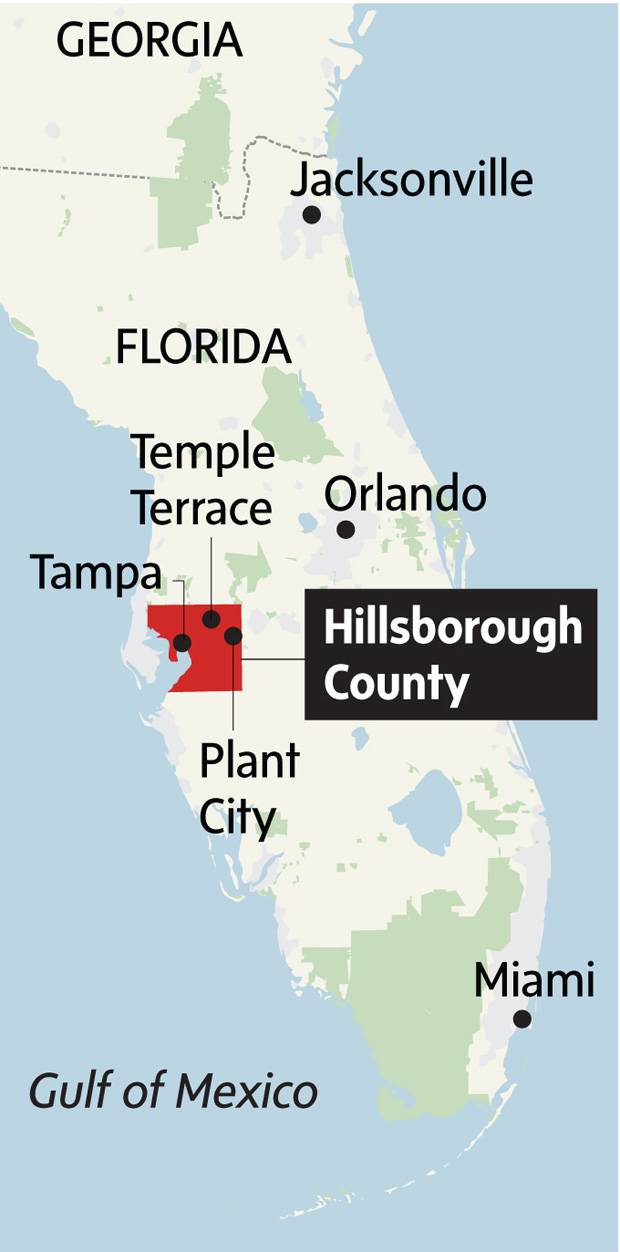
The county, which has voted for the winner in 19 of the last 20 presidential elections, is also a microcosm of a changing America, echoing the country as a whole in race and ethnicity, income, age and especially in politics. It stretches from the edge of Tampa Bay, where well-off white voters live in fear of hurricanes and taxes, to the inland strawberry-farming towns such as Plant City, whose voters fear house-devouring sinkholes and gun laws. In between are some of America's most politically volatile and economically mixed suburbs, liberal university towns and conservative military bases, racially segregated black towns with their own sharp class divisions, and Puerto Rican and Cuban enclaves whose political loyalties are split across parties and generations.
On Tuesday night, if things are close, Hillsborough could play an outsized role in determining the presidency. Florida's 29 electoral-college votes (of the 270 needed to win) are crucial to any chance of victory for Mr. Trump; as the most tightly contested county in a too-close-to-call state, it has become ground zero for both parties. Ms. Clinton and her backers have spent a staggering $94-million (U.S.) on advertising in Florida, more than in any other state; and Mr. Trump's backers, $35-million, according to an analysis by the ad-industry publication Advertising Age. Hillsborough is so important that one analyst, political scientist David Schultz of Minnesota's Hamline University, describes it as one of only three counties whose results will indicate the winner of the election (the other two are Hamilton County, Ohio, and Wake County, N.C.).
During the week we spent immersed in Hillsborough's diverse neighbourhoods and heated election campaigns, we could feel the seismic plates of U.S. politics shifting beneath us. There, we saw that a most unusual and disturbing presidential election has unleashed – and, in some cases, concealed – dramatic changes in the way Americans approach politics.
'I really can't vote for that man, but I don't know about Hillary, either'
The most immediately noticeable change, apparent all over the county, is the breakdown in established party loyalties. Beyond the rupture in Republicanism unleashed by Donald Trump's candidacy, and visible in voters like Debbie Hines, there is a major tearing at the seams of the Democratic Party, too.
That was apparent a couple hours' drive inland from Ms. Hines's home, in the sparse agrarian countryside. There, James McKnight, a burly guy in a vest jacket and a baseball cap, was preparing to load his three kids into the back seat and cast his own pattern-breaking vote.
An army veteran in his late 30s, Mr. McKnight works for a trucking company, hauling loads up to Mobile, Ala., and back three times a week. As a single father, he has a hard time making ends meet, which is a big reason that he voted for Barack Obama in both 2008 and 2012: He saw hope for economic improvements. A white guy, he felt that a black president was a good idea. "A part of me did it because I wanted to end oppression – the election of the first African-American president was a big thing."
But as a veteran, he now feels betrayed by Mr. Obama's administration, which he thinks has been ungenerous to people who have served. And he doesn't trust the Affordable Care Act, known as Obamacare. Although it offers him and his kids health insurance they couldn't have had before, its organization is confusing and its rates keep rising. He says he has become more economically secure these past eight years, but doesn't believe that will hold.
And then he went to one of Mr. Trump's three Hillsborough rallies, and became fixated on the Hillary Clinton e-mail leaks, the complex allegation of Libyan impropriety known as "Benghazi," and what Trump supporters see as the whole litany of Democratic deceit. "Obama wasn't good for much, and she's done too much stuff to be trusted – WikiLeaks, Benghazi – so I'm sticking with Trump," he says.
He doesn't consider himself a Republican, though – like many former Democratic voters who have switched sides, he has had it with the entire party system.
You hear this sort of thing all over Hillsborough County. A lot of people here are abandoning their traditional party loyalties, or any party loyalties at all; a lot more are voting to prevent an alternative they fear, but point out, as well, that they have lost faith in their party. It appears to be part of a national trend.
"In this election, you do see softness in the opinions of each party's traditional base," says Prof. MacManus.
"You find it in millennials, who showed enthusiasm for Barack Obama but not so much for Hillary Clinton. You also find it in the traditionally conservative Democrats – particularly low-income, who have not really recovered financially from the great recession, and are thinking about voting Trump, or not at all."
On the Republican side, the party appears to be losing, perhaps for good, some of its older, more established members, who don't like Mr. Trump's racial-intolerance pitch; its suburban women, who don't like his sexism; and the lion's share of its African-American and Latino voters, who are repelled by what they see as a campaign aimed directly against them.
We could see that in the small-scale family feud between Federico Benitez-Valiente, 61, and his daughter Lisa, 30, who live in a bungalow that Mr. Benitez-Valiente owns in an upwardly mobile Latino corner of west Tampa.
"Daddy," his daughter implores, as she tries to talk him into attending a Clinton rally, "you've got to admit that you're a Democrat now. It's not the seventies any more."
Her father laughs and shakes his head: Like many other Cubans who'd fled to Florida in the 1970s and eighties, and became U.S. citizens, he had been a solidly Republican voter all along, admiring the party's staunch anti-communism. President Obama's economic and trade opening with still-authoritarian Cuba displeased him – but not as much as Donald Trump's harangues against Latinos.
"I really can't vote for that man," he says, "but I don't know about Hillary, either. There's nobody for our people now."
Ms. Benitez-Valiente launches into what sounds like an oft-rehearsed argument about the benefits that Democratic policies have bestowed on Hispanic-immigrant neighbourhoods. She ends with a sentiment that millennials of several cultures seem to be expressing: "It's so hard to make him see that everything has changed this time."
No miracle on 34th Street
It is Sunday morning, and Rev. Thomas Scott of the 34th Street Church of God is on a holy roll. The subject is a perennial favourite with Christians – the Lord walks with you even in the toughest times – but it takes on a particular significance two weeks before the election. Rev. Scott may be speaking in parables, but there's no doubt what's on people's minds.
"You're going to get through this," Rev. Scott says, wiping his face with a white handkerchief. "Neighbour, you're going to get through this. It won't be painless, it won't be quick, but God will get you through this mess."
The congregation, about 200 people, all African-American, nod their heads. They are old and young, teenagers in hoodies and elderly ladies wearing church hats, their walkers by their sides.
Rev. Scott continues: "We pass through most of our lives at mid-altitude. The occasional peak, and then occasionally the world bottoms out. The housing market crashes and leaves us upside-down on our mortgage. Let me ask you a question: Have you ever been to the bottom?"
"Yes," the members of his congregation call back to him. "Yes, I have."
Ten years ago, things were good at 34th Street, one of the larger churches in Jackson Heights, a primarily African-American neighbourhood in west Tampa that is profoundly racially segregated, pocked with deep poverty but rich in Baptist missions. The church could afford two services each Sunday, a youth pastor, a private school where congregants sent their children. At the end of each Sunday's multiple church services, the donation baskets contained upward of $30,000.
Then came the recession and real-estate crash of 2008. People lost their jobs, and their houses. The school lost two-thirds of its pupils, and when the donations were counted on Sunday, the congregation's tithings had fallen to one-third their previous level.
The day after the service, sitting in his office inside the church, Rev. Scott talks about what it was like at the bottom, eight years ago. "We were hit significantly hard. We had 50 employees and had to drop down to 20. We started seeing people coming in needing help to pay rent, that kind of thing. Before that, everybody was doing good, the economy was good. We were happy."
The economy has stabilized since then, he says, and the congregation is doing better: not fully recovered, and not for everybody, but the future is definitely brighter. Which is why he becomes irate when he hears Donald Trump say that African-Americans are living in inner-city neighbourhoods that are "hell," and describes their lives as blighted and hopeless.
"It's offensive to African-Americans when he makes that kind of statement. Every time he says you can't walk down the street without getting killed, you don't have any jobs – that's not true. And I resent it."
On Nov. 6, after he has finished preaching, Rev. Scott will lead his flock to C. Blythe Andrews Jr. Public Library on Dr. Martin Luther King Jr. Boulevard, where they will sing, eat lunch together, and cast their votes. It's part of a nationwide get-out-the-vote movement called Souls to the Polls, aimed at churchgoing African-Americans in those states that allow early voting on Sundays.
Getting out the black vote in Florida, especially in the highly urbanized area that stretches along the interstate I-4 between Orlando and Tampa, is crucial for a Clinton victory in the state. The enthusiasm that fuelled Mr. Obama's historic campaign in 2008 is burning more dimly this time around, Rev. Scott acknowledges, although he still believes Ms. Clinton will win. "Only way she doesn't win is if people don't turn out. She needs a strong turnout from African-Americans and Hispanics."
The results of early voting show that the enthusiasm gap may well be trouble for the Clinton campaign. African-Americans have made up only 15 per cent of early voters so far, down from 22 per cent at this time in 2012. (Latinos, however, are turning out in much greater numbers in early voting than they were in previous elections.) In the last week before the election, both Clintons made campaign stops in African-American neighbourhoods across Florida.
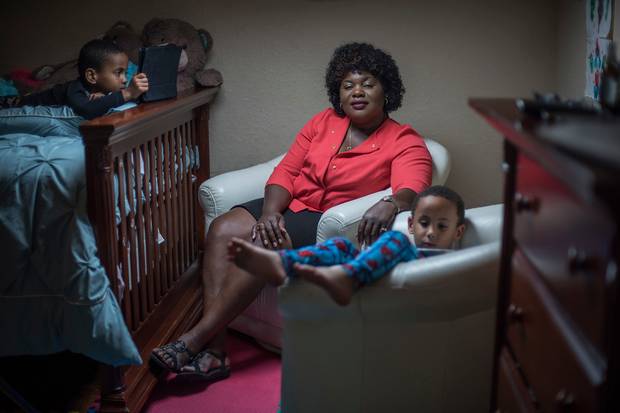
Unlike some, Victoria Rowe has seen her business thrive under the Obama presidency.
One African-American voter who has no problem enthusiastically supporting the Democratic candidate is Victoria Rowe, who is looking forward to "having a woman in the White House." Ms. Rowe's support is based on ideology, and perhaps also circumstance – contrary to the rhetoric of ruin and inner-city "hell," the past eight years have been a good time for many members of the black middle class, including her.
The real-estate crash was a disaster for some homeowners, and the streets of Tampa are still dotted with signs advertising foreclosure sales. But Ms. Rowe, whose family emigrated from Jamaica to Florida in 1980, was able to take advantage of the downturn: She bought four houses cheaply for her business, running eldercare facilities and a group home for the disabled. Now she employs 50 people, and recently hired two from Jackson Heights.
Not everyone has shared her good fortune, she acknowledges: "Some people have endured hardship. My sister, who owns a daycare business, she hasn't flourished as I have. I don't think everybody has done well."
Ms. Rowe lives in the Tampa suburb of Riverview with her twin five-year-olds, Josiah and Jonathan. One boy wants to be a doctor; the other, a lawyer. She's doing everything she can to get them there, and believes Ms. Clinton's leadership will help.
But other families in her congregation are struggling. April Ash, for example, began the Obama years as a secure member of the expanding black middle class, a position that her parents, themselves children of poor sharecroppers, had worked and studied to attain. Ms. Ash had a good job with the cellphone company Verizon, a literary-minded husband, and two young children whom she enrolled in a private church school; they rented a nice house near the 34th Street Church.
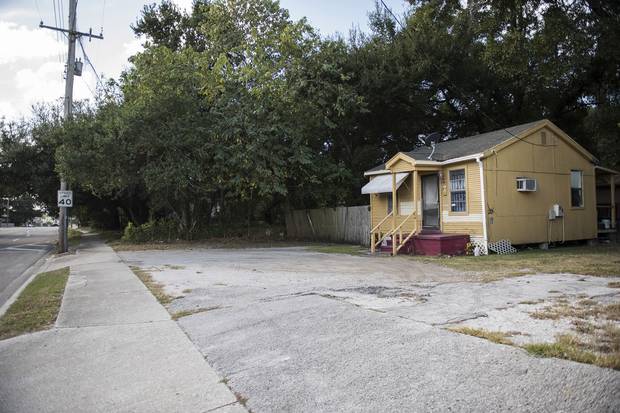
Unlike the city’s north end, the area around King’s Kids Christian Academy, the East Tampa school where April Ash now works, is predominantly low-income and African-American.
Then things began to fall apart. The real-estate crisis caused her landlord to lose the house, and they were forced to move into a less pleasant neighbourhood. Then her husband began to change: He lost his job, grew resentful of her employment. "He really became a different person – he'd been my best friend, but then something happened to him, something men seem vulnerable to." He got into drugs, and petty crime. They separated. In 2013, he wound up in prison. Scrambling to take care of her kids, now age 6 and 8, she took an administrative job at their school, lower-paying but easier to manage.
"I became that thing I never thought I'd be: a single mother with a husband in prison. It was humiliating, and it meant I'm living paycheque to paycheque."
Obamacare helped a bit, but in the end proved not universal enough as its rates kept rising, and ended up costing more than she could afford. So she quit it.
"I've seen the bottom, and I've experienced falling off the edge," she says. "I understand how vulnerable we really are." For her, a vote for Hillary Clinton still sounds like the best option, but she has lost a lot of faith in the party, she says. "It's hard to get excited about anyone running for president, but it is exciting to see a woman president," she says.
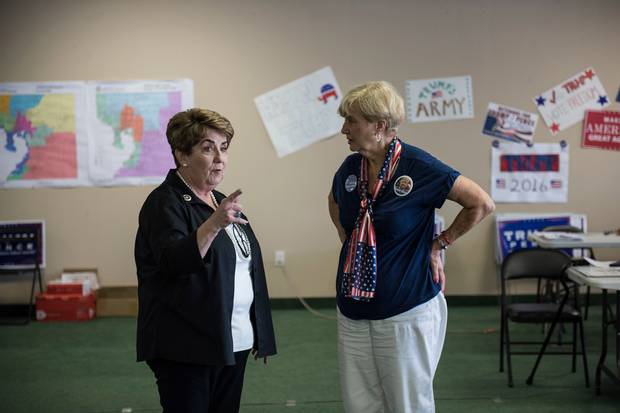
Trump backer Terry Castro, left, concedes life has been getting better but ‘we don’t have the sense of security we used to have. We don’t have that sense that things are going to stay as good as they are.’
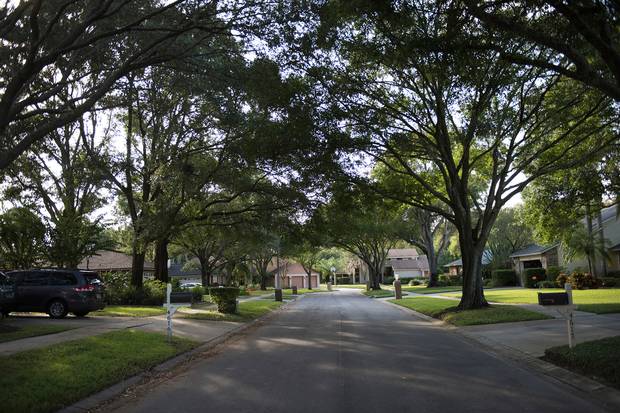
Terry Castro’s leafy neighbourhood in North Tampa, a bastion of gated communities, golf courses, fine restaurants and people like Ms. Castro, a well-off retiree and Donald Trump loyalist who has been working hard to have him elected.
Living well, feeling bad
These have been good years for Terry Castro. She and her husband, a veteran of the Marine Corps, sold their computer-services business for a sizable fortune a few years ago, and now live the good life in a leafy corner of north Tampa speckled with gated communities, golf courses and fine restaurants. They're big activists in their community. And they've become deeply committed to Donald Trump, because they believe that their country is falling apart economically and socially, and needs a strong leadership figure to stop the spiral into violence and ruin.
"It's the economy, it's the jobs," she says, explaining the devotion to Mr. Trump that has led her to volunteer for his campaign and attend all his local rallies. "It's crime – and border security is really big here."
If you ask her about her experiences in Hillsborough County these past eight years, though, she admits that things have been looking pretty good. "The economy has definitely improved here, though we've had a strong [Republican] governor … and I don't think crime is a problem here so much – it's more a national issue."
People are saying this all across the county, especially in the suburbs: that the United States is going through bad times, even though you rarely meet anyone who has experienced anything but improvement themselves. Things must be bad everywhere else, American voters say, but they're actually okay right here.
In fact, for most of the United States, things have been improving pretty dramatically since at least 2010. Unemployment has fallen; wages have risen. Last month, the U.S. Census Bureau reported that the poverty rate had fallen farther than at any time since the 1960s, and that middle-class incomes had risen at their fastest rate ever recorded. Incomes for the poor rose faster than those of the rich for the first time in ages. And blue-collar jobs are flooding back: There are a million more full-time manufacturing jobs in the U.S. than there were in 2010.
Underlying social indicators are looking even better. Crime, and especially violent crime, is at its lowest level since the 1960s, and possibly ever. (A tiny rise between 2014 and 2015 was the basis for Donald Trump's campaign claim of "record increases" in crime; the 2014 rate was the lowest in five decades.) Violent crime among black Americans has fallen even more sharply. And teen pregnancy and drug abuse are a fraction of their previous levels, putting the United States on par with European countries. It is as if the social horrors of the 1980s and nineties have been wiped out by a tsunami of good news.
But voters aren't feeling it. And candidates, for that reason, aren't mentioning it: Even Ms. Clinton avoids saying that these are good times; she speaks of fixing troubled economic regions. As a result, voters and campaign activists say that things must be badly wrong, even if they're not feeling it on their street.
And they feel, perhaps rightly, that their gains of recent years may be fragile, vulnerable to the slightest shift. That, in turn, is pushing many of them into Donald Trump's hands.
"Hillsborough has been very fortunate," Ms. Castro acknowledges. "But we don't have the sense of security we used to have. We don't have that sense that things are going to stay as good as they are now."
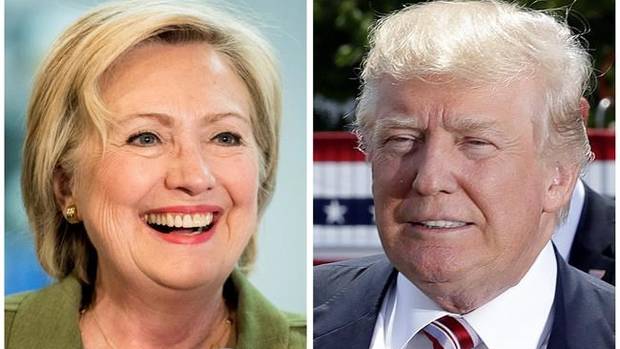
This gap between perceived reality and experienced reality is one of the underacknowledged drivers of the 2016 presidential campaign. There are two ways voters respond. Some – especially those backing Mr. Trump – react with fear that their recent gains may be threatened by some unseen force: illegal immigrants, competition from China, an incompetent White House, or "globalization."
Other voters, however, react to this incongruity by raising an eyebrow at Mr. Trump. "It's kind of messed up when you listen to it – he goes on like this is the Depression or something," says Antoine Gonzales, a 22-year-old information-technology student who attended one of the Republican candidate's giant Tampa rallies, and found himself unimpressed. "I just don't think I'm sold on that – he talks like the world's going to end, but it looks to me like we're in recovery."
Every voter is responding to this incongruity somewhat differently, experts say. "Clearly the economy and jobs are the No. 1 issue across nearly every group," says USF's Prof. MacManus. "And that's because, even though Florida's economy has recovered, comparatively to other states, from the great recession, there are many, many in Florida, particularly those employed in the large service sector, who have not recovered. So you do have an economic anxiety and, on top of that, a worry about the future of the economy – there's a volatility there."
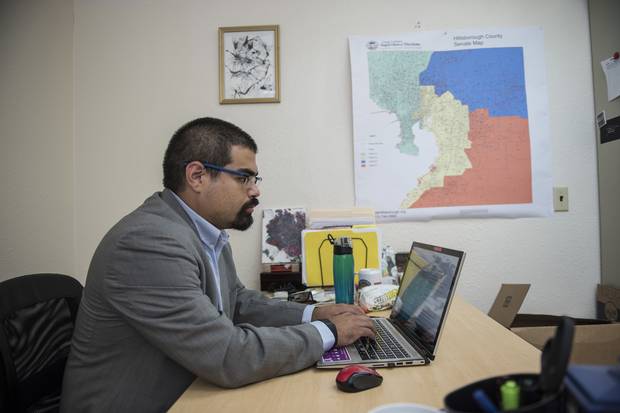
Organize Florida’s Tim Heberlein on getting out the vote: ‘Real democracy is more than just going to a voting booth every four years and pulling a lever.’
Falling off the ledger
In 2008, when he was in high school and not yet old enough to vote, Mike Reed knocked on doors for Mr. Obama alongside his grandmother. He did it for himself, but also to honour her history: He was campaigning to elect the first black president, alongside a woman who had grown up in a state that often treated her with hostility. They went door-to-door, made phone calls. Both of them were "tremendously excited."
That excitement, he acknowledges, is not quite in evidence this time, especially for the African-American community. This is a problem in Hillsborough County, where, even more than most parts of the country, every single vote is crucial: "It's the swingiest county in the swingiest state in the nation," says Mr. Reed, now 25.
"When Obama was running, black people showed up in force. Everyone came out and volunteered – homeless people, everyone. This time, it's a bit more difficult to get those people to turn out. That's something that the opposition will count on – people being passive, people being apathetic, not showing up."
As a community-outreach worker with the nonpartisan group Organize Now, Mr. Reed's job is to get on the streets, encourage people in marginalized communities to vote, and get them to the polls on election day if necessary. This means going to the housing projects and parks of inner-city Tampa and talking to people about what matters to them, whether the issue is hyperlocal (broken street lights) or common to many communities across the country (police violence toward African-Americans). He talks to them about how issues that may seen esoteric and far-off, such as climate change, can actually have a huge impact on their lives: It is the people living in the impoverished Port of Tampa, with its failing infrastructure, who are the first to be hit by flooding, and the last to recover.
A potential voter is 7 per cent more likely to turn out if someone knocks on their door, Mr. Reed says. "Every single per cent counts, because this is such an important election. We are living in a time when madmen can say whatever they want and become leaders of whole movements."
For Tim Heberlein, who works with Mr. Reed to get out the vote, the real issue is providing marginalized citizens with a sense of control over their lives, not just when there's a president to elect: "Real democracy is more than just going to a voting booth every four years and pulling a lever. The cost of it is our engagement all the time, even when there's no election going on."
One group of Floridians – some of whom work alongside Mr. Reed – won't be allowed to vote, and its absence could hurt the Democratic ticket: ex-cons. Florida is one of three states that permanently denies the vote to felons who have served their time in prison, a political decision that affects 1.5 million voters in the state, according to the criminal-justice reform organization, The Sentencing Project. Republican governor Rick Scott has made it harder for ex-felons to appeal for clemency (and thus the right to vote), and has granted it to only 2,200 people since 2011, compared with the 155,000 pardons granted by his predecessor, Charlie Crist.
The fact that 10 per cent of the state's voting population is ineligible to cast a ballot suppresses the turnout in a meaningful way, according to people fighting to restore rights to ex-felons. "Hillsborough County has one of the biggest problems in Florida with the school-to-prison pipeline," Mr. Reed says. "So these neighbourhoods that are disproportionately policed are left even more out of the conversation."
Over in the Tampa suburb of Temple Terrace, people trying to get out the vote share many of Mr. Reed's concerns. Sure, the neighbourhood is a little nicer, the shops a little more upscale, but the electorate is feeling all the rancour, divisiveness and election fatigue of their downtown neighbours.
There are far fewer lawn signs and bumper stickers than in previous years, residents agree: It's an imperfect measuring tool, but it indicates that people are ashamed of their candidates, or worried about alienating their neighbours.
"There's much less enthusiasm, if you go by signs," says Brenda Tipps, who has just returned from canvassing for Hillary Clinton. Twice a week, Ms. Tipps, a retired English teacher, goes knocking on doors with her friend Anne Strozier, a retired sociology professor. They did it for Mr. Obama, too; in fact, Ms. Tipps, who moved from Britain in 1969, became an American citizen so she could vote for Mr. Obama.
In the eight years since that election, they've noticed changes in the neighbourhood. It's more ethnically mixed; the barber shop that Ms. Tipps and Ms. Strozier pass on their way to canvassing has signs in its window in Arabic and Spanish. The neighbourhood, home to the campus of the University of South Florida, has rebounded since the crash of 2008.
What the friends find perplexing is that the mood doesn't reflect this reality: "There seems to be more fear," says Ms. Strozier. "People don't want to come out and say who they're voting for." Between them, they have four children in their 30s who were Bernie Sanders supporters and have now switched their allegiance to Ms. Clinton.
For each of the women, the outcome of this election is crucial, because they find Donald Trump's rhetoric frightening: "The stakes are much higher this time," says Ms. Strozier. Both are pulling out all the stops to get out the vote: Ms. Tipps' sister-in-law, who lives in the safe Democratic state of Washington, is staying with her to help knock on doors and make calls. Ms. Strozier is providing a room to a Clinton volunteer who has come from Australia to help out on the campaign.
Says Ms. Tipps, "I think we share the feeling that at least we did what we could, whatever the result. If the Democrats win, we'll have that extra bit of satisfaction. And if the unmentionable wins, we did at least try."
As they speak, the campaigns are descending on their state once again. Barack Obama, campaigning for Ms. Clinton, and Donald Trump both landed in Florida on Thursday, and made their way down the I-4. The Democrats also have added singers Jon Bon Jovi and Cher to host Florida rallies over the weekend.
Every day this week, about 25,000 of Hillsborough's residents have voted, by mail or advance ballot. On Tuesday night, we will find out if their months of struggle and indecision have once again picked a president.
Elizabeth Renzetti is a Globe and Mail columnist and feature writer. Doug Saunders is The Globe's international affairs columnist.
Follow them on Twitter: @DougSaunders and @lizrenzetti
MORE FROM THE GLOBE AND MAIL