|
|
|
|
|
HO/The Canadian Press
|
|
|
|
|
|
|
|
|
|
|
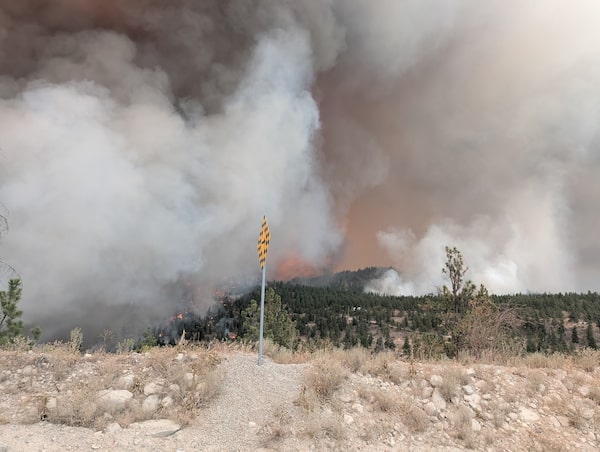
The RCMP said they were investigating a possible fatality in a massive fire near Summerland that has destroyed homes, left rural homeowners stranded, and forced tens of thousands to flee Okanagan beachside communities. |
|
|
The possible death was reported by a resident of Meadow Valley, west of Summerland, Southeast District RCMP said in a statement, adding that officers were “working closely with the impacted family.” |
|
|
The news came hours after B.C. Premier David Eby declared a provincial state of emergency Saturday, saying protecting lives was the government’s top priority. |
|
|
The fires were like a bomb going off in the Summerland region, Mr. Eby said during a news conference, calling it an “unimaginable day.” |
|
|
“What we have seen in the last 24 hours is a steep change and a significant departure in terms of fire behaviour in the province,” he said. |
|
|
|
|