Ira Wells is an associate professor at Victoria College in the University of Toronto and the President of PEN Canada.
Around this time of year, Grade 12 students across the country are starting to hear back about their university applications. For many, an acceptance letter represents the pinnacle of a long and arduous process – not only the countless hours of studying and prepping for exams, but also the gauntlet of sports practices, music lessons and volunteer hours that fill out the applicant’s extracurricular profile.
University admissions are but one milestone in a larger social script – one that reflects our assumptions about what it means to “make it” in contemporary society. It’s a familiar script, whose story beats are the stuff of a thousand bank advertisements: convocations, starter jobs and starter homes, painting a baby’s room, a luxury car, a long stretch of golden years, laughter on a beach.
That script does not include military service or going to war. Indeed, Canadians seem disinclined to imagine themselves in uniform. According to a 2025 Angus Reid poll, about half of Canadians claim to be willing to fight in an armed conflict. Of that half, however, most said that they would enlist only if they “agreed with the reasons for fighting.” Only 19 per cent would fight for Canada unconditionally.
Zoom in on 18-34-year-old men, a crucial demographic for replenishing the ranks. Only 21 per cent said that they would volunteer if called upon by their country, while 36 per cent said they would not volunteer at all, and 34 per cent said that they would volunteer if they agreed with the reasons.
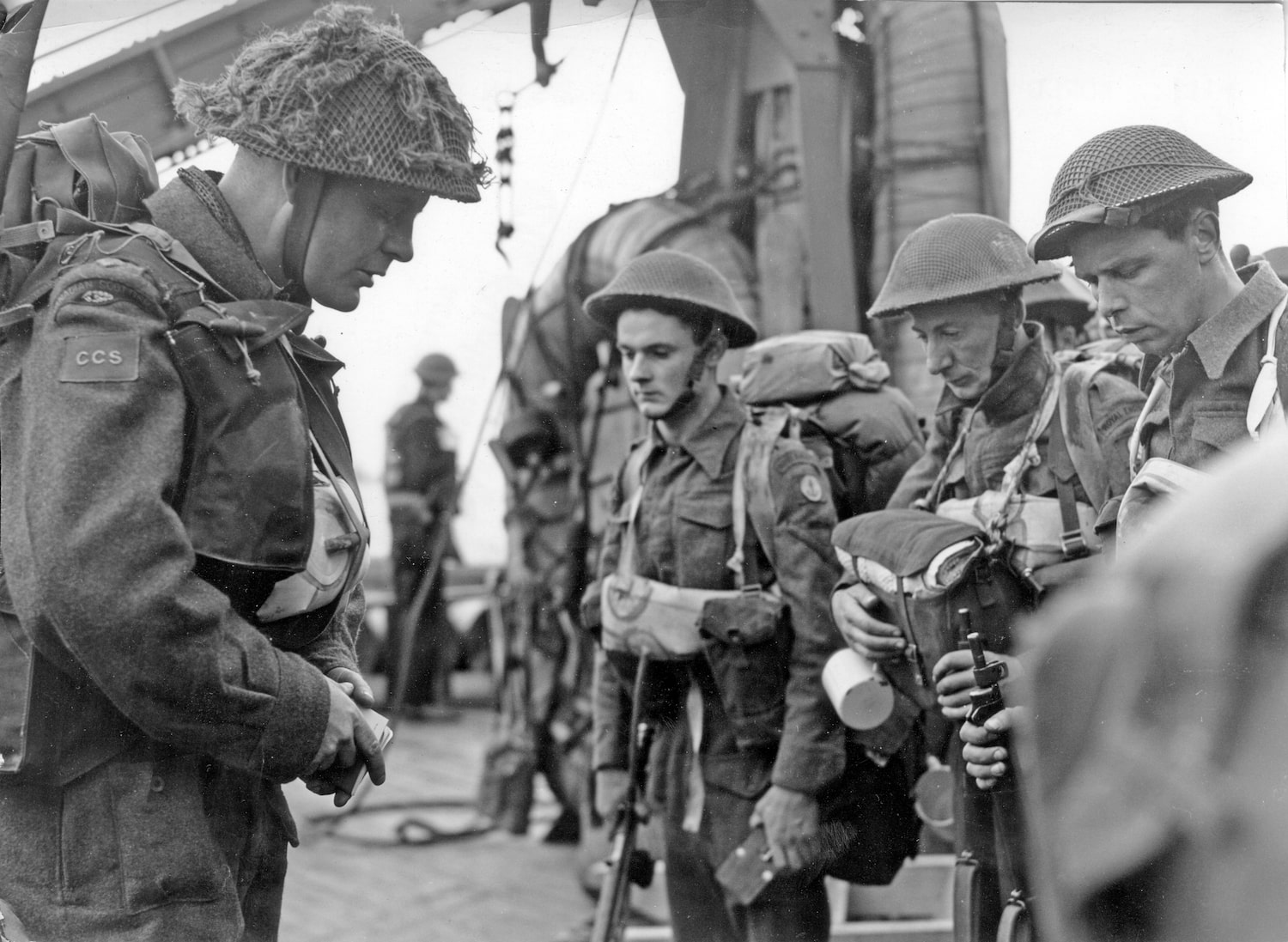
These numbers are not encouraging for a country facing a crisis of military recruitment. According to the federal government, our current force strength is 63,000 Regular Force service members – 0.15 per cent of our population of 41.5 million Canadians. Canada may be more comfortable in the role of peacekeeper than warrior, but it was not always thus: Approximately 1.1 million Canadians and Newfoundlanders, or 10 per cent of the population, served in the Armed Forces during the Second World War. Of course, we might believe our current modest numbers, like our emaciated military expenditures over the past few decades, befit the comparatively peaceful world over that period, and Canada’s privileged place in it.
But that world is changing, and changing fast. Canada’s territorial integrity, which no one has thought much about for decades, suddenly feels precarious. Our military has begun modelling a Canadian response to a hypothetical American invasion, as The Globe reported last month. Abroad, the largest land war in Europe since the Second World War grinds on, while the prospects of an even larger global conflagration continue to grow.
“Conflict is at our door,” Mark Rutte, the NATO Secretary-General, warned in December. “We must be prepared for the scale of war our grandparents and great-grandparents endured.”

After the attacks of Sept. 11, 2001, and the ensuing “war on terror,” the era of state-on-state conflict appeared to have ended. The first two decades of the 21st century were dominated by conflicts not between nation states, but between states and terrorist organizations, insurgents, and other nonstate actors.
According to Mara Karlin, a scholar of International Relations at Johns Hopkins and former U.S. assistant secretary of defence for strategy, plans, and capabilities, that era of limited war has come to an end, and a new age of “comprehensive conflict” has begun: “[W]hat the world is witnessing today is akin to what theorists in the past have called ‘total war,’ ” Dr. Karlin argued in Foreign Affairs, “in which combatants draw on vast resources, mobilize their societies, prioritize warfare over all other state activities, and reshape their economies.”
Warfare of the future, Dr. Karlin suggests, may look less like the limited anti-terrorist operations of the past 20 years, and more like the whole-of-society efforts that defined the previous century’s world wars.
If this is accurate, Canada’s long respite from military history may be coming to an end. And if a “whole of society” response is required, we will need to rethink the time-worn social script that we’re handing down to young Canadians.
We have been preparing young people for one kind of life, but their destinies could take a very different path. We should think harder about equipping them with the spiritual and psychological resources to deal with what may be coming.

What would it mean for a generation of young, fighting-age Canadians to take up arms, whether in Europe or in defence of our own borders? What kinds of changes would be required to allow for widespread social mobilization? What kinds of individual adjustments would be necessary – adaptations of our own self-understanding and world view, our deep-seated beliefs about what it means to live a life of purpose?
If push came to shove, would enough Canadians be willing to take up arms and fight for our continued survival, or would the country collapse under foreign military pressure?
I have been troubled by these questions since I visited Ukraine last fall on a trip co-sponsored by PEN Ukraine and PEN Canada. During a week in Kyiv, I spoke with human rights advocates, journalists, broadcasters, government officials and former prisoners of war. These individuals had their own perspectives on what transpired since Russia’s full-scale invasion on Feb. 24, 2022, but I was struck by the way in which an entire society had seemingly leaned into the war.
In Ukraine, too, youth had been preparing for their professional futures, only to find those plans radically interrupted. When I asked the young man known as call sign Stan if he had, as a kid, imagined a future in the military, he said, “not in the slightest. I never imagined myself as a military guy or soldier.”

Call sign Stan, UGV technician with the 3rd Assault Brigade in the 3rd Army Corps of the Ukrainian Ground Forces.COURTESY 3RD ARMY CORPSUKRAINIAN GROUND FORCES
Stan was born in Kyiv in 1987. He was an artistic kid who loved video games and eventually got into game development. He worked as a concept designer in studios in Shanghai, Beijing, and Singapore, before co-founding his own studio.
He said he felt the urge to enlist as soon as Russia launched its full-scale invasion, but wasn’t sure if he could contribute. “I didn’t have specific skills,” he recalled. “I had never held a rifle, I didn’t know how to drive, I wasn’t a medic. I was like an IT guy – I was an artist.”
But after his son was born, something changed. “That’s when I realized, you know, after the war, he will ask me: ‘Dad, what did you do?’ ”
He volunteered and signed a contract in January, 2025, with the 3rd Assault Brigade in the Third Army Corps, taking a position as a technician.
Stan told me how, in the face of war, the old versions of our imagined futures can melt away: all of your personal and professional dreams for the future become secondary to securing the freedom in which those dreams can become possible.
“There will be a moment,” he said, “a specific moment, when you will decide. Either you will run, or you will stay and fight. And that will define you as a person.”
“If you’re not that guy,” he continued, “you’re gonna run. And if you have it in you, you’ll stay and fight. Nobody wants to die, but you just have to cross the line.”
He didn’t tell me what line he meant, but I think I know: a mental line when you accept that what you are fighting for is worth more than your own life.

Call sign Darwin is 27 years old and when I spoke to him was Commander of the 2nd Mechanized Battalion of the 125th Separate Heavy Mechanized Brigade of the 3rd Army Corps. He grew up in Pokrovsk, in Eastern Ukraine, where he witnessed early incursions of Russian soldiers in 2014. Like Stan, he did not imagine a future in the military. Darwin remembers a high school teacher who taught him about history and the current political situation. It was only later, in university, that he decided to enlist.
This was 2017 – years before the full-scale invasion – but Russian forces were carrying out operations in Donbas. “I wanted justice,” Darwin told me. “It felt like a shame not to be a part of it, because I’ve always felt that the big actions in history, in your country – you must be in the avant-garde of it, or it’s just a useless life.”
In 2022, Darwin fought in the Battle of Kyiv, taking part in many assault and physical intelligence operations, which involved crawling into enemy positions. Since then, he has fought in Zaporizhia, in Kherson, and in Bakhmut where, as an infantryman, he took part in defensive and assault operations in surrounding villages and tree lines. In his mid-20s, Darwin commanded a company in the Battle of Avdiivka, one of the most intense clashes of the war: Russians reportedly lost more soldiers in Avdiivka than in the entire Soviet-Afghan War, though precise numbers are unknown.
So Darwin has seen his share of action. Yet he can remember a time when war itself felt like a fantasy, something from another life.
“We used to think war wasn’t for us – it’s for the movies, it’s for our grandfathers,” Darwin told me. Now, he thinks the capacity for war is “inside all of us.”

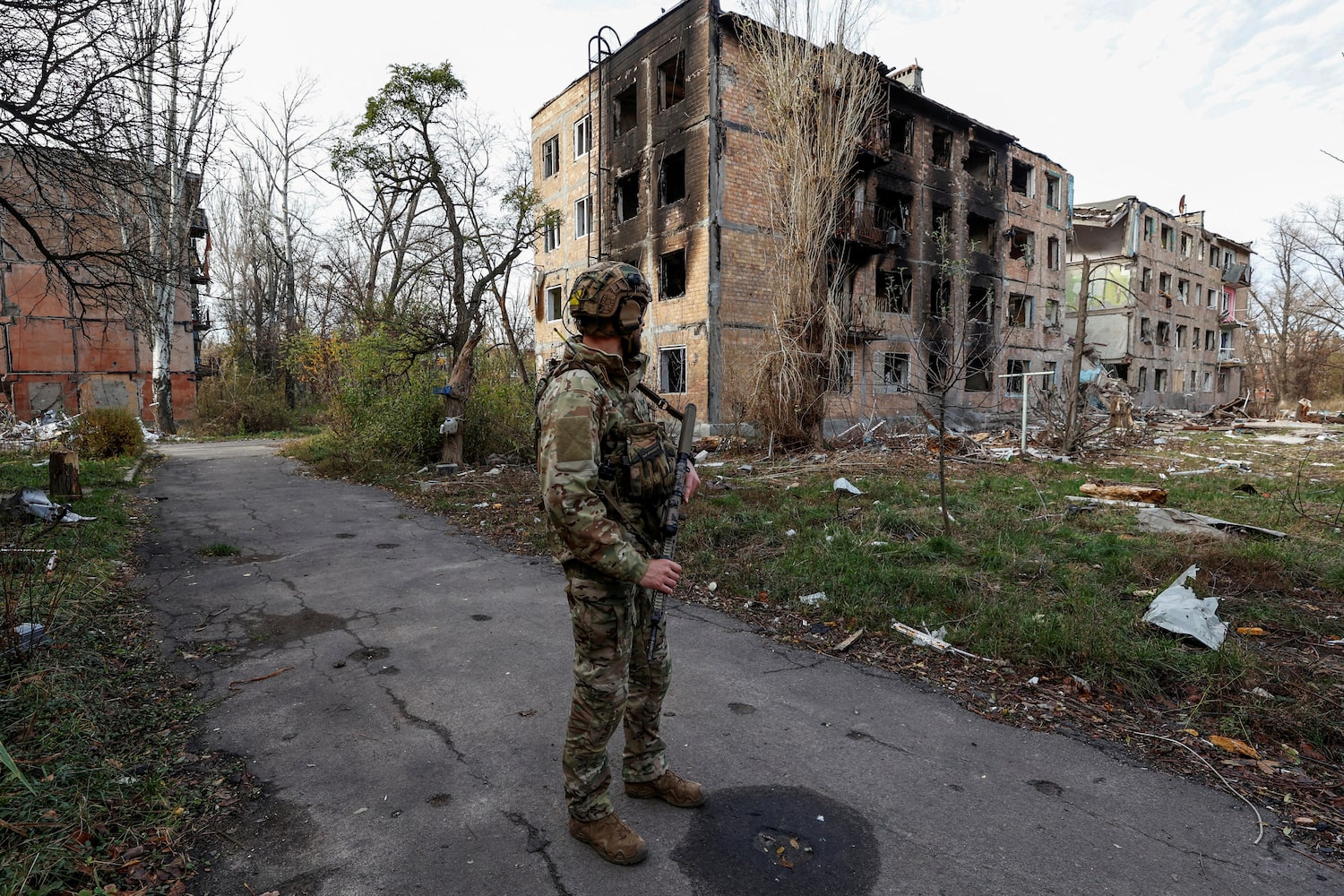
“It’s the things that we think are normal that are not normal. Going to an office every day, every week for your whole life – that isn’t normal. After you take part in war – you can understand it only after you try. After you try to do something brave, the bravery itself appears.”
When I confessed to Darwin that I was unsure of whether Canadian youth were prepared to take up arms to defend their homeland, he said that he used to feel the same way about Ukrainians. “We used to be the same,” he told me. “Before, we used to think, this isn’t a war, it isn’t a real occupation, it’s just a small conflict. It won’t be that bad.”
While many people cannot bring themselves to face reality “until bombs are falling outside their own windows,” Darwin said, he thinks the world should learn from what is currently happening in Ukraine. “They should look at us. Hear our words and what we say. And we say that it can happen in any country, any city, if the world will not stop Russia now.”

Of course, Russia is not knocking on our doorstep. But if the conflagration in Europe spills out of control, Canada may well consider playing a strategic role, as previous generations of Canadians felt compelled to do. In the meantime, we are faced with the imperial fantasies and threats of annexation emanating from the White House.
Would a drastic change in world events, or a direct threat to our own security, incite a sudden shift in thinking among the 51 per cent of Canadians who claim to be unwilling to fight in an armed conflict? To be sure, our most recent federal election provided an object lesson in how threats to Canadian sovereignty can radically shift public opinion. Still, the decision to hit pause on major life goals – to set aside professional aspirations, to put on a uniform and be prepared to kill or be killed in service of your country – is fundamentally different than casting a ballot. (It might also be noted that the Angus Reid numbers cited above come from after the election and Trump’s 51st State rhetoric.)
For their part, the Ukrainian soldiers I interviewed believe that we have entered a new epoch of warfare, and that the horizons of this conflict will extend far beyond their borders. “There is no future in which the war simply finishes in Ukraine, and it’s all over, and the world is peaceful again,” Darwin said, adding that he believes that we have entered a “century of war.”
Canadians should “be ready,” Stan told me, “because this is not going to end in Ukraine … I don’t know in what format, or who’s going to war with who, but the West is definitely under threat. And you will have to fight, sooner or later.” He brought up Trump’s 51st State taunts, suggesting that Canadians have now been given a slight taste, a “demo version” (in his phrase) of this possible future.
These conversations led me to three conclusions about our current predicament. The first is that, as both young men emphasized, we will not know what we are capable of until the decisive hour arrives. “Every [one] who will read this article should understand that [they] can do things like this,” Darwin said of his work as a soldier.
The second is that soldiers like Stan and Darwin are drawing power from a core of beliefs – about the self-evident value of their homeland, about the virtues of courage and valour, and about their own capabilities as men – which are largely absent from mainstream Canadian discourse. We have, perhaps, become a little too attached to the version of life presented to us in the bank ads, a cushy future that takes our continuing physical security as a given. If the abysmal statistics about mental health outcomes for young Canadians are to be believed, this script isn’t working very well for anyone these days. More urgently, the survival of our national experiment will depend upon some critical mass of citizens being willing to defend it.
Which brings me to my third conclusion: the best way to avoid an apocalyptic conflict may be to prepare for one. Replenishing our ranks and regenerating our capacity to make war may offer us the best hope of deterring would-be rivals. This was scholar Mara Karlin’s argument about what is necessary for survival in the age of “comprehensive war.” We must convince all hostile forces, including the United States, that they might lose a war with Canada – that the upsides aren’t worth the risk.
But to give that deterrence the bite of plausibility, we need to reorganize our society now. That reorganization will require the kinds of government investment that we are already seeing – the acquisition of new military platforms, infrastructure upgrades, and the promise of further increases to defence spending. This week, Mr. Carney announced an intention to bolster “sovereign capabilities” by doubling the share of Ottawa’s military spending earmarked for domestic suppliers.
But it will also require a cultural shift. Military service needs to be seen not as a last resort for your delinquent nephew who needs more structure in his life, but as a viable, even enviable path for the most courageous and ambitious Canadians. Over the past few decades, universities have positioned themselves as the exclusive talent pipeline, promising to identify the most meritorious students for leadership positions in our society. The Armed Forces could perform a similar function, helping to identify those extraordinarily gifted in leadership and courage under fire.
However we go about it, we need to prompt young people to imagine a rewarding chapter of life in service of our country, to reawaken our instincts for self-defence, and remind ourselves that we have – and that we are – something worth fighting for.