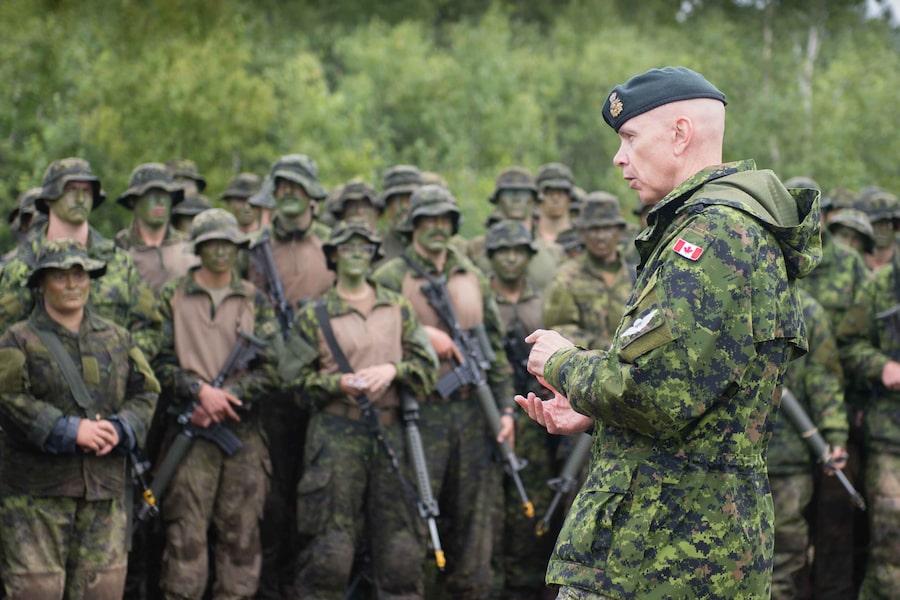
Gen. Wayne Eyre retired in 2024 as Canada’s chief of the defence staff. He is the author of the new book Into the Breach: A Soldier’s Journey, discussing his 40-year military career, from which the following essay has been adapted.
During my time as the chief of the defence staff, the global security situation changed profoundly, and not for the better. The confluence of security stressors – geopolitical order, climate change, acceleration of technological change and societal dynamics – presented challenges perhaps unique in the long arc of human history. The international order established at the end of the Second World War was eroding. Climate change was spurring conflict, human migration and natural disasters. Rapid technological advance was not only changing the character of war, but also how countries pursue national objectives. Social order was becoming fraught with division. By 2022, especially after Russia’s large-scale invasion of Ukraine, I came to believe that we were undergoing a turning point in global security affairs.
The implications for Canada were extreme. It was ever more probable that our vital national security interests – prosperity, sovereignty and protecting our population – would all be threatened in the years ahead. Great power war, the likes of which the world had not seen since 1945, was no longer a distant possibility.
As a trading nation, our prosperity was predicated on stability and certainty in the international order, created in large part through collective deterrence of adventurism, expansionism and aggression by rogue powers. The decisive instrument of international relations was increasingly hard power, and as such, our international influence was plummeting. If we wanted a seat at the table, or even the ear of those at the table, to shape the emerging world order to our benefit, we needed to do and be seen to be doing our part – which we weren’t. Indeed, many in Canada had an unfounded, inflated view of our international standing. Our competitive advantage was belonging to a group of like-minded (or like-enough-minded) friends, partners and allies, and our underinvestment in defence was squandering our reputation and our place in the world.
Russia’s invasion of Ukraine showed that national borders were no longer inviolate. Taking the long view of history, borders are temporary. Our own were relatively new, and especially for the Arctic, could not be considered eternal. In the playground of international affairs, weakness invites bullies, and thus the ability to exercise credible military sovereignty over our own territory would change the decision calculus of would-be adversaries – in essence, deterrence.

Smoke rises behind an Orthodox church while a shopping mall burns after a Russian drone strike in Zaporizhzhia, Ukraine, on Sept. 17.Stringer/Reuters
With relentless natural disasters raging at home, and Canadians trapped in an ever-increasing number of conflict zones around the world, the need to protect our population from harm would only become more frequent. Furthermore, threats to them were multiplying, in multiple arenas.
These menaces did not demand a military response alone. Many required a synchronized application of all instruments of national power. Unfortunately, too many of our institutions worked in isolation. I, amongst many, advocated for a strategy that would prioritize our national security objectives, direct the integrated wielding of national power and provide guidance for crisis response when decision makers’ bandwidth was limited.
The indispensable instrument of national power to face these threats was our military. When all else failed, the Canadian Armed Forces (CAF) could not. However, the country’s ultimate insurance policy and its hedge against uncertainty was far from ready for the dark future augured by current trends.
The hollowing of Canada’s military, generations in the making, was in the spotlight after Russia’s invasion of Ukraine in February, 2022. Suddenly, there was much government interest in the CAF’s state, especially as feelings of insecurity rose and our ability to militarily support Ukraine fell. Our commitment to meet the NATO 2 per cent of GDP defence investment pledge, for which we were nowhere close, garnered much public commentary. Perhaps this was the compelling impetus needed to take the defence of the country seriously.
In March of that year, the government directed the department to quickly come back with a plan to reach 2 per cent. We knew what was needed in terms of investments in capabilities, operations and maintenance, and personnel, and our policy and force development staffs quickly drafted options.
These gained no traction after going to PMO. Instead, on April 7, in a continued theme of deferring hard decisions, Budget 2022 directed a rapid update to the 2017 defence policy to reassess the CAF’s size, capabilities, roles and resourcing in the changing global landscape. The department was to return early that fall with proposals.
That began an exasperating two-year odyssey of strategic indecision and procrastination. As global security continued to precipitously decline, Canada dithered, readiness suffered and respect from allies evaporated further.
Throughout the summer, our teams fleshed out the basis of the policy update, building the logic trail from military threats to Canada to the concepts, capabilities and resource requirements to address them.

Gen. Eyre speaks to a Ukrainian soldier at Camp Sapper during Operation UNIFIER in southwestern Poland, on March 5, 2023.Corporal Marco Tijam/Supplied
One was regional prioritization. For too long, the CAF had lacked geostrategic focus, deployed on missions worldwide absent a disciplined approach to committing our limited forces. The continent had to be the priority, with the Arctic as the centrepiece. Given their importance both traditional and emerging, the Euro-Atlantic and Indo-Pacific regions would be the next tier. The rest of the world would become “economy of effort” regions – that is, not “no effort,” but there would be unambiguous priority for the higher tiers.
The Arctic focus demanded more than the minimalist approach to NORAD modernization and entailed understanding what was happening in all domains, from space to the seabed, and infrastructure to project capabilities to and from to ensure we could act. These operational support hubs would encompass airfields, ports, accommodations, roads, energy and communications to allow a persistent and flexible regional military presence.
We needed capabilities relevant for the changing character of war and both domestic and expeditionary operations, from submarines to long-range strike to autonomous systems in the air, on land and at sea. Digital transformation, for command-and-control systems and as a platform for artificial intelligence use, was essential. Likewise, greater research and development efforts were essential to adapt to technological advances.
Of greatest importance was fixing the CAF’s foundation. With rising costs due to aging equipment, maintenance budgets had atrophied. Similarly, our infrastructure across the country was in pitiful condition from decades of neglect. Oft-ignored ammunition stockpiles, now in focus given consumption rates in Ukraine, were critically low.
Spend to defend: Decoding Canada’s military spending
All would be for naught if there was not real reform of the procurement system. Multiple defence policies had promised it, but time and again, resolve to make meaningful change dissipated in the wake of announcements. Too many departments were involved, all with competing agendas. Narrowly focused on internal mandates and processes, some were oblivious to the strategic risk that inaction and delay posed to the country, let alone the tactical risk to CAF members who were not properly equipped. We also needed to look in the mirror, as we had too much process within our own walls that defied eradication. In all, there was no single point of accountability – it was too diffused.
As oversight and process increased, personnel decreased. In the cuts to the public service in the early 2010s, we lost much procurement expertise. As a first step in an updated policy, we needed to build implementation capacity – people – while at the same time cutting process. That would entail embracing risk – not easy to do.
The hard work throughout summer was not done in isolation as our team continued widespread engagement with other relevant departments. Feedback was very positive, especially on our team’s problem framing. As directed, by early fall, a well-considered review was ready.
Then more delay. Even as presentations to various committees met with consensus that the country had to act, the Finance department pushed back on numbers, maintaining the outdated view that defence spending was discretionary.
Some tried to deflect: “Why should we spend more on defence when you can’t spend what’s already been allocated?”
I suggested they reframe the question to this: “For the good of the country, what can we do to ensure this national treasure is converted to military capabilities and readiness with alacrity?”
I grew increasingly concerned with this complacency, and I wrestled with how to do my part to convey the urgency to act. Our minister, Anita Anand, was fully on board, but lethargy dominated elsewhere. Meanwhile, crises continued to consume us, even as our readiness trended downwards. I considered writing a letter to Prime Minister Justin Trudeau, officially documenting my concerns. With his usual insightful advice, Bill Matthews, then the deputy minister (DM) of National Defence, suggested using a placemat – a large paper graphic depicting complicated information in an understandable manner. I scrawled out some thoughts on how to depict our readiness through describing the state of its components – personnel, equipment serviceability, training and sustainment – and gave it to Strategic Joint Staff. They in turn produced a “State of CAF” placemat which became a briefing mainstay for the next several years.
I had the opportunity to sit down with the PM on Oct. 17 to brief him in detail on our state. It was alarming. Equipment serviceability – ships, aircraft, armoured vehicles – hovered around 50 per cent. If consumed at the same rate as in Ukraine, in war we would exhaust much of our ammunition within days, and industry did not have the capacity to replace them for years. Infrastructure was crumbling. All diminished the quality of service for our personnel, negatively impacting recruiting and retention. We needed urgent action. He acknowledged all.

Prime Minister Justin Trudeau introduces General Wayne Eyre to Ukrainian President Volodymyr Zelensky during his August, 2023, visit to Canada.PMO
To be clear, defence policy advice is the DM’s responsibility, but is informed by military considerations, much like military advice is informed by departmental considerations. It is truly a team effort, and as such, Mr. Matthews and I continued a “roadshow” to other departments to brief their DMs on the policy update and what was needed, generally to good reception. Regardless, in December, word was that PMO wanted to “dig into the details” and was in no rush. Any memorandum to cabinet, a decision tool, would be pushed to the spring at the earliest. So much for a rapid review as directed by Budget 2022.
Cynicism was on the rise as indecision triumphed, and pressure from our allies increased. Sending senior officers to NATO headquarters for capability commitment discussions, I told them to broker no scolding from NATO staff. They were to discuss what we had and what we were acquiring, and it was not their place to defend our lagging investment – one cannot defend the indefensible. Our international standing and relevance were in freefall, and our members around the world reported being excluded from more meetings, including with Five Eyes partners. I shared these observations with a very senior public servant, who was quite candid in stating the government didn’t care. In various DM meetings, I detected a level of frustration in getting parts of government to deal with long-term threats, with some lamenting the lack of security literacy. For our part, we kept our ministers updated very frequently with operations and intelligence briefings, and for the others we offered threat and technical briefings, which were invariably poorly attended. I upset some in government at the end of January, 2023, for being too candid about the needs of the CAF during an interview; questioned if, in the context of policy delays, we were entering another decade of darkness for the CAF, I truthfully responded, “History will tell.”
Economic returns from defence spending push will require removing barriers for industry: report
During the next two weeks we had signals that a decision was imminent, which made sense as the NATO leaders’ summit was rapidly approaching, and Canada was one of the very few countries without a plan to ramp up defence investment. Again, the team worked long hours to produce a public document. By the end of June, to much disappointment, it was apparent that once again it would be put on the back burner. Despite the sense of progress two weeks prior, something was amiss behind closed doors.
Other forces were at play during the slowdown in the summer of 2023. A month later we experienced a change of ministers during a sweeping cabinet shuffle. We were surprised and disappointed to lose Ms. Anand as minister, as she had garnered rapport within the CAF and DND and become a staunch supporter. Many searched for meaning in what message this change was sending, but for us it was immaterial. We don’t pick our bosses. Fortunately, her successor Bill Blair proved to be a strong advocate, especially for increased defence investment.
What happened next, though, defied reason. As part of its refocusing spending initiative – a euphemism for budget cuts – the government slashed almost a billion dollars from the annual defence budget, but with the impossible caveat that these cuts not negatively affect the CAF. We were dumbfounded, as there was no way the military could be unaffected. While ostensibly aimed at external consultants and professional services, these cuts would mostly hit operations and maintenance, areas where we were desperately short. The shock was widespread as we were expecting the defence budget to go up, not down. Meanwhile, our allies looked on with incredulity.

Gen. Eyre waits to appear before the Standing Committee on National Defence in Ottawa on Sept. 28, 2023.Spencer Colby/The Canadian Press
The harm was wide, affecting base services, travel, education, modernization efforts and, unfortunately, equipment and base maintenance. We gathered our commanders to determine what capabilities – ships, aircraft and vehicle fleets – could be retired as there was no money to maintain everything.
When I appeared at the National Defence parliamentary committee at the end of September, the opposition asked me point-blank about these cuts. Generally, when an official attends a committee, it is to explain policy and matters of fact – not create headlines. However, I could not conceal the awkward truth: “There is no way you can take almost a billion dollars out of the defence budget and not have an impact.” Along with giving details on readiness shortfalls, I conceded, “Our people see the degraded, declining security situation in the world and so trying to explain this to them is very difficult.”
The opposition had a field day. It wasn’t long before I was invited to meet with the PM’s chief of staff and the Clerk of the Privy Council to explain myself. Despite the circumstances, it was opportune to clarify that the blow was significant. Again, I left with a sense of their genuine concern in getting a decision on the policy update and increased funding. I was later, however, further counselled to tone down my advocacy.
A watershed moment came in early December in the recently inaugurated national security council. Its formation, with the PM chairing, was itself progress in the national security realm, and the first several sessions garnered cautious optimism from the community. The topic for this one was the Arctic. During it, I presented a strategic military approach for the region and highlighted the wide utility of the proposed support hubs, providing dual-use infrastructure, jobs and a sense of national connection for Arctic communities. I reminded that much of the existing Arctic infrastructure was built during the Cold War for defence purposes. All was predicated on a positive decision on the defence policy, and then its rapid implementation. The feedback was very positive, even from the finance minister, who thanked me afterward.
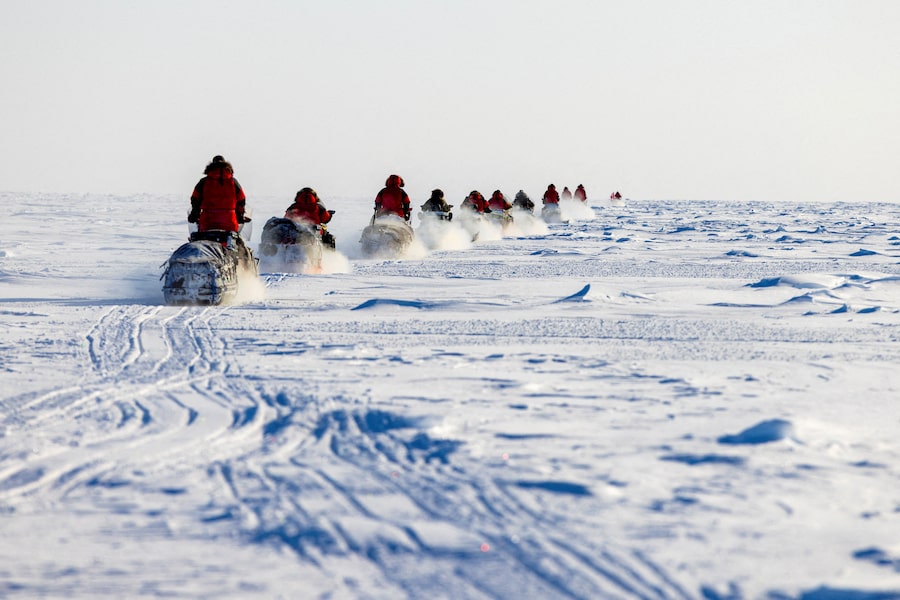
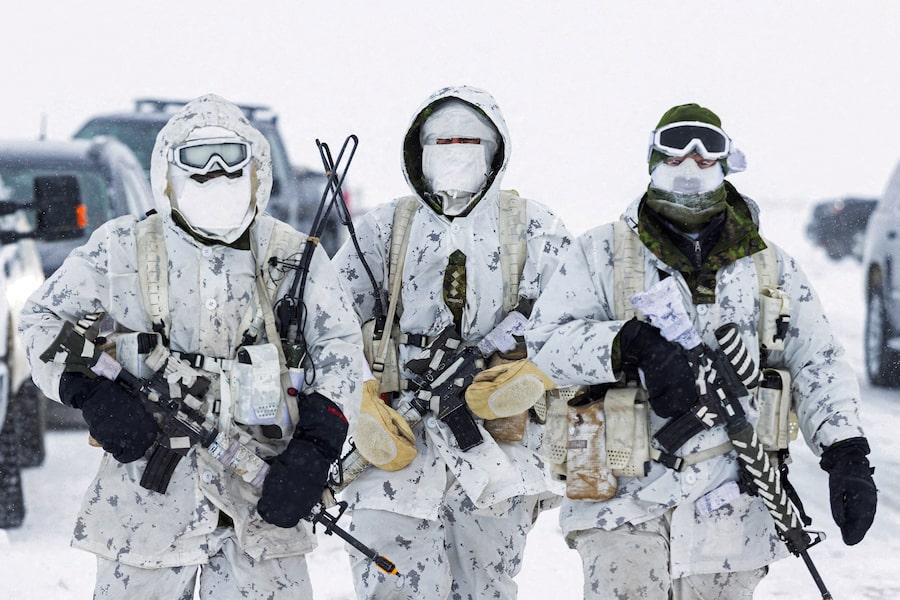
Over the course of the next three months, our team worked to repackage our proposal under Finance’s direction to profile funding to later years, taking as much as possible out of the first five years, and only commit to capabilities with a clear Arctic and domestic nexus. Commitment to other requirements was less certain. This was all far from ideal, but better than the morass in which we were stuck. Throughout March, 2024, we started receiving signs of an imminent decision, confirmed to me during a PM call on March 18.
The next three weeks were a flurry of rewrites of a public policy document. The government landed firmly on the Arctic being the centrepiece, and now many pens were interested in adding their ink. In the end, the policy retained the strategic concepts that were so important, such as regional orientation, readiness and deterrence and, surprisingly yet welcome, a national security strategy.
Funding was more than expected, but expectations were low. Much of it was pushed far into the future, and many capabilities were categorized as “to be explored.” Furthermore, it removed mention of the 14,500 additional regulars required to realize the policy, with the claim we could return in the future once reaching our current targets.
It’s been said that a defence policy without resources is hallucination. This wasn’t quite that case, but most of it was far enough in the future to present mirages on the horizon.
The announcement of Our North Strong and Free ensued at Trenton on April 9. Now was the time to implement with urgency. Notwithstanding funding concerns, it was more than we expected and provided for more shorter-term maintenance resources that we so desperately needed. I told our senior commanders that for the good of the next generation we had to attract and recruit more members, and to support that we needed to change the narrative from one of declining readiness to one of steely-eyed determination to deliver. I was alive to the dissonance many were experiencing as they continued wrestling with the fallout of the previous year’s cuts, while at the same time planning for increases.
In this era of interrelated threats and protracted crisis demanding much more from the CAF, it had been a frustrating, uphill battle for the policy and resources that the times demanded. In my estimation, we wasted two years. Anchored in the historically aberrant and “unipolar” moment of 1990 to 2020 during which most formed their worldview, many forgot that the first role of any country is to defend itself. As we lived through this turning point, history had returned.