A year-long series looking back on the most significant moments of the past 25 years, how they changed our world, and how they will continue to shape the next 25.
Matt Ridley’s books include The Red Queen, Genome, The Rational Optimist, How Innovation Works and, most recently, Birds, Sex and Beauty. He sat in the House of Lords between 2013 and 2021 and served on the science and technology select committee and the artificial intelligence select committee. He is a fellow of the Royal Society of Literature and of the Academy of Medical Sciences, and a foreign honorary member of the American Academy of Arts and Sciences.
“We are as gods and might as well get good at it,” Stewart Brand, the free-thinking philosopher of technology, wrote in 1968. It’s a remark that could apply to nuclear weapons, artificial intelligence, space travel or climate change mitigation. But perhaps it is what happened in 2012 that fits it best: the invention of the Crispr technology for editing the genes of any animal, plant, fungus or microbe.
For the first time human beings held in their hands a tool to remake themselves and other life forms in precise ways. Would they choose wisely?
The most significant and surprising discovery of the 20th century came in 1953 with the sudden realization that the distinguishing feature of all life, the thing that made rabbits different from rocks, was simply linear digital information. This is spelled out on immensely long DNA molecules in a four-letter alphabet of infinite possibility. And it can automatically copy itself with near perfect fidelity. Arguably the most significant scientific breakthrough of the first quarter of the 21st century was the invention of a precise way to edit this code.
Crispr stands for “clustered regularly interspaced short palindromic repeats,” which is a fancy name for a piece of molecular machinery that can be programmed to home in on a specific genetic sequence, cut it and alter it. Before Crispr, plant breeding meant exposing plants to gamma rays in the hope of mutating genes in a good way as well as bad, while genetic engineering meant throwing whole new genes into genomes in random locations and hoping they did not disrupt existing genes: far too blunt an instrument to use on human beings.
The first step in the development of precision gene editing came in 2002 when a team at the University of Utah used an enzyme called a zinc-finger nuclease to break the DNA of a fruit fly at a specific spot, causing yellow bristles instead of black on the abdomen of the fly and its descendants. Then in 2010 a more efficient and adaptable set of enzymes called TALEN was developed from a system used by bacteria to hijack genomes in plant cells. But both these technologies required laborious protein engineering to be redone for every use.
Crispr, announced on June 28, 2012, quickly eclipsed both. It is simpler to program using DNA’s close cousin, RNA; capable of multiple edits at once; and able to target not just genes themselves but non-coding control switches in the genome.
The implications of gene editing are huge. Almost any inherited disease could in theory be corrected and therefore not passed on. Many other illnesses – chronic, acute or infectious – might one day be combatted with precisely targeted therapies. Immune cells to fight cancer may be precisely programmed.
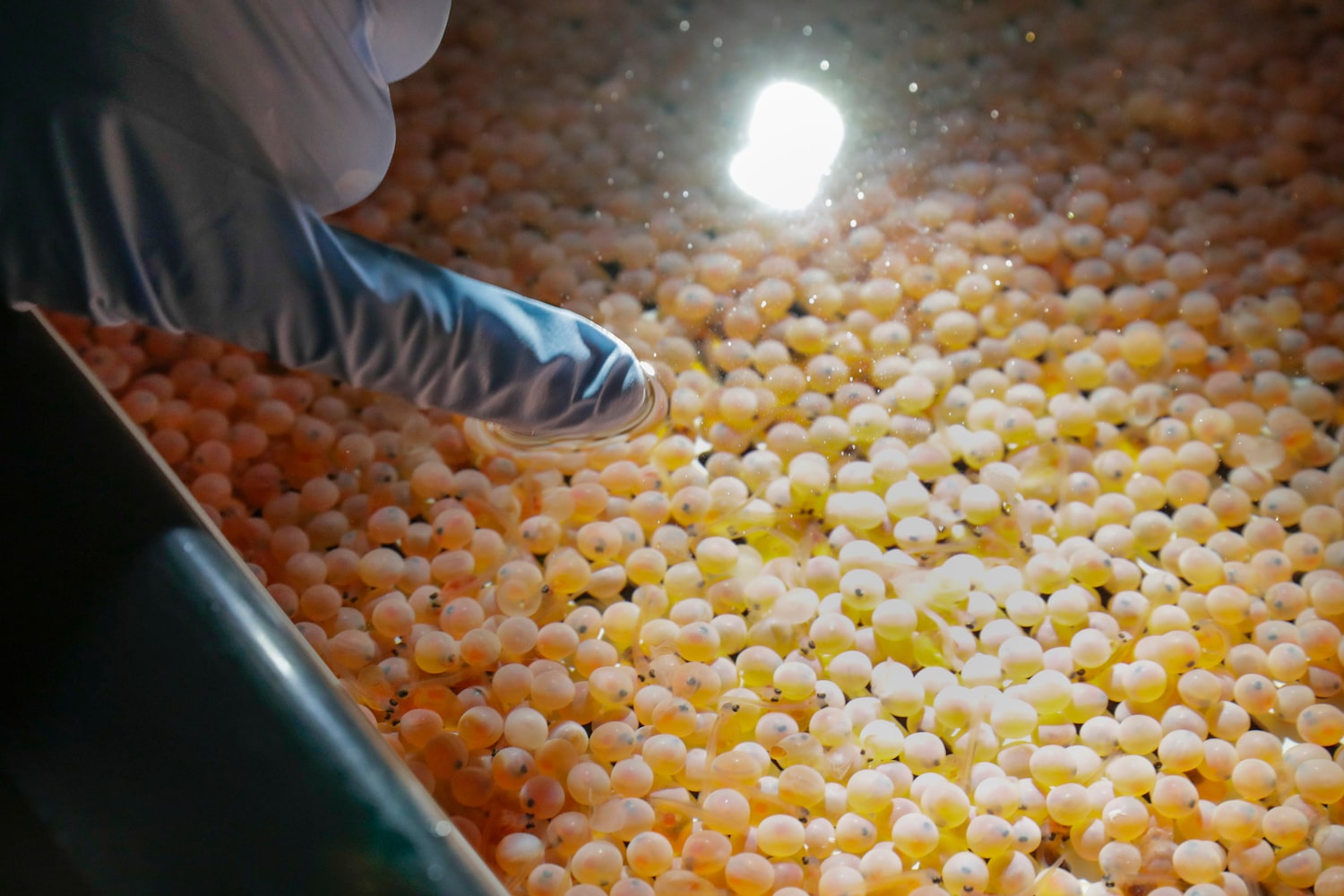

Outside human medicine, crops and farm animals are already being protected from diseases, given nutritional improvements or endowed with higher yields. Eventually, the technology will allow the genomes of some extinct species to be reconstructed.
“Genome editing may be one of the most consequential technologies humans have invented, not because of its elegance or sophistication, but because it places our hands on our own evolutionary tiller,” (Canadian) biologist and patent-law professor Andrew W. Torrance, Paul E. Wilson Distinguished Professor at Kansas University School of Law, wrote in an e-mail. “For better or worse, we may be able to plot the course of our physical, physiological, and cognitive futures through deliberate choices about whether to add, remove, or modify parts of our genomes.”
As with most great scientific breakthroughs, there is disagreement about who deserves most credit for inventing Crispr.
Jennifer Doudna of the University of California Berkeley and Emmanuelle Charpentier of Umea University in Sweden deservedly won a Nobel Prize in 2020 for their 2012 study published in Science revealing that Crispr could be programmed to seek out and cut specific genetic sequences. But many feel Virginijus Siksnys of Vilnius University in Lithuania should have shared the prize, having submitted a very similar result at about the same time.

Virginijus Siksnys, left, from Lithuania, Jennifer A Doudna from the United States, and Emmanuelle Charpentier from France receive the Kavli Prize in nanoscience from King Harald of Norway in 2018.BERIT ROALD/Getty Images
And shortly afterwards, Feng Zhang of the Broad Institute, a collaboration of the Massachusetts Institute of Technology and Harvard, first applied the technology to editing genes in the cells of animals rather than microbes. The Broad then won a long battle with Berkeley to patent key parts of the technology.
Yet the individual who deserves most credit for inventing Crispr is Mother Nature herself. The machinery is derived from the adaptive immune system of bacterial and archaea microbes, which use it to fight off infection with viruses. In the 1990s Francisco Mojica of the University of Alicante in Spain described strange genetic sequences in archaea organisms that live in salt pans. They were palindromes: strings of about 30 letters repeated backward, but with other sequences between the repeats.
By 2003 Dr. Mojica had worked out what he thought he was looking at: the “spacers” between the repeats were samples of the genes of viruses, being hoarded by the cells in a sort of molecular filing cabinet. The palindromes were the files and the spacers their contents, used to program molecular drones, which could be sent on seek and destroy missions.
Most people think of academia as upstream of industry, but sometimes it works the other way around. In this case, it was the academics like Drs. Doudna, Charpentier, Siksnys and Zhang who turned Crispr into a practical tool. And they did so by adapting a discovery made in an industrial laboratory. Five years before, in March, 2007, Philippe Horvath of the yogurt-making firm Danisco in France had done the crucial scientific experiments that proved Dr. Mojica’s hunch right and revealed how Crispr worked.
Yogurt-making is effectively a form of farming, with bacteria acting as livestock in the fermentation process. And just as livestock need to be protected from disease, so must Streptococcus thermophilus, the main bacterial livestock used by the yogurt industry, be protected from infection by viruses called phages.

A magnified scan of bacteria among the milk solids from yogurt. There are rod-shaped bacteria (bacilli, brown) and chains of spherical bacteria (cocci, round).Science Photo Library/Reuters
Dr. Horvath’s job was to investigate how to help bacteria stay healthy. He showed that the bacteria incorporate parts of virus genomes into their Crispr sequences and use them to program an enzyme called Cas9 to go out and cut up any viruses with those sequences that entered the cell.
Although promising, Crispr was not ready for medical prime time in 2012. It was still too inaccurate, producing off-target effects elsewhere in the genomes it was sent to edit. Not good enough for human medicine, but good enough for breeding new varieties of plants, where deformities could be discarded.
Within a few years scientists had used Crispr to generate new strains of rice with higher yield; to increase the mono-unsaturated fatty acid content of Camelina plants; and to enhance the vitamin C content of lettuces. All of these could have been achieved by traditional plant breeding but would have taken many years if not decades.
Tomatoes provide a striking example of the reach of Crispr. First used on tomatoes in 2014, the technology has in its first decade achieved: greater disease resistance; higher yield; sweeter juice; fruits richer in beneficial nutrients; and even the rapid new domestication of a wild tomato. In 2021, a Sicilian Rouge tomato, edited to contain a high dose of γ-aminobutyric acid (GABA), went on sale in Japan as the first Crispr-edited crop to be approved for sale to the public.
Crispr-edited animals are also already here. At the Roslin Institute in Edinburgh, pigs were rendered immune to a viral disease by the editing of a single gene. At Harvard, pigs have been gene-edited with human genes to replace pig ones and their kidneys transplanted into people.
Perhaps the most outlandish use of Crispr may be the revival of extinct species. It will not be possible to produce a live dinosaur by this means because after 65 million years DNA has long ago disintegrated. But species that died out within the past few centuries and millennia, such as the dire wolf, the woolly mammoth, the thylacine of Australia, the passenger pigeon of North America, or the great auk that once thrived on Funk Island off Newfoundland have already had their genomes comprehensively sequenced.
The next step is to edit the genome of a close relative, such as the razorbill in the case of the great auk, back step by step to resemble that of the extinct species and then rear viable individuals that could occupy the same ecological niche. That will require many changes, each of which would have to be done with perfect precision and no welfare issues. It will not be easy, even before we tackle where the animals could be released. The so-called dire wolves reared by Ben Lamm’s Colossal Biosciences in 2025 shows what can be done. They are common wolves with a handful of genes edited to produce the main features of a dire wolf such as large size and white fur.
As for medical opportunities, in 2019 David Liu’s team at the Broad Institute made a significant breakthrough in streamlining Crispr by developing a version of the technique they called “prime editing.” This tool, rather than breaking both strands of the DNA, nicks one, inserts an edited sequence, then nicks the other strand, tricking the cell into repairing it by reference to the edited sequence on the other strand. Now you have both strands with the edited sequence. Off-target effects are much fewer.
However, the prime-editing tool is a huge piece of machinery by cellular standards, disruptive to insert into the delicate interior of a cell. Dr. Liu’s team has used combinatorial chemistry and artificial selection to shrink the system so it can be delivered by viral infection. Earlier this year they announced an improvement they call PASSIGE, which “couples the programmability of prime editing with the ability … to precisely integrate large DNA cargoes exceeding 10 kilobases.” Thus they can insert a genetic sequence almost as long as the article you are reading to a precise location within a genome. That is close to the holy grail of gene editing: it has the power of genetic engineering to insert whole genes into genomes but with the greater precision of gene editing.
So why has this technology not already been used to cure people of lethal diseases? There is understandable reluctance among scientists to risk a mistake that would set back the entire field. Dr. Alina Chan, formerly of the Broad Institute, is a Canadian molecular biologist who argues for better biosafety (and my co-author on the book Viral: The Search for the Origin of COVID-19). She says that current gene editing therapies are exorbitantly expensive and can lead to adverse side effects in patients. “This is why the technology hasn’t progressed as quickly into therapies as people initially anticipated,” she recently wrote to me. “There is a fear of moving too fast and potentially setting the field back should patient deaths occur.”
This happened with a previous, more primitive form of gene therapy in 1999. A subject in a clinical trial, 18-year-old Jesse Gelsinger, died following injection with a virus carrying a corrected gene for his debilitating genetic disease. The virus was tasked with inserting the corrected gene into his own genome in as many of his cells as possible, but Mr. Gelsinger suffered a massive immune reaction triggered by the virus.
In addition, fearful of eugenic echoes, scientists are committed to never using gene editing on the germ line of human beings: any medical application of the technology will be used on the cells of human bodies but not sperm or egg cells, or early embryos. Hence the shock when in 2018 He Jiankui, of the Southern University of Science and Technology in Shenzhen in China, announced that he had created two gene-edited human babies.
Dr. He had recruited eight couples with HIV-positive fathers and, despite “washing” sperm to remove virus, had used Crispr to disable a gene in the resulting embryos, rendering the embryos immune to HIV. Twin girls, known by the pseudonyms Lulu and Nana, were born to one mother. People’s Daily Online at first greeted the news warmly, calling it “a historical breakthrough in the application of gene editing technology for disease prevention.”

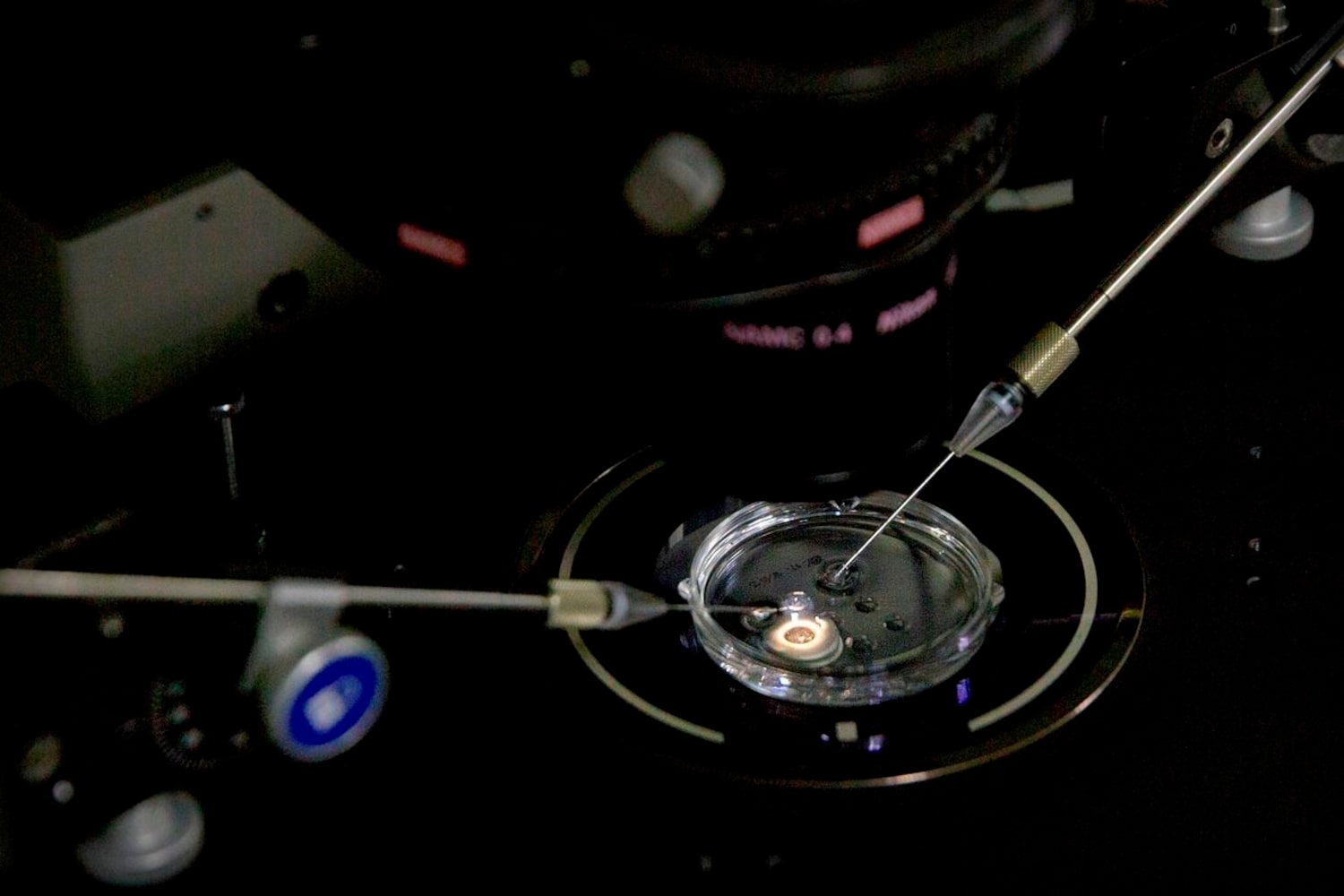
The next day 122 Chinese scientists issued a statement condemning the experiment as “crazy” and “a huge blow to the global reputation and development of Chinese science.” An investigation revealed that Dr He had funded the work privately to evade government restrictions. He was convicted of illegal medical practice, fined and imprisoned for three years. After his release, in September, 2023, Dr He joined the Wuchang University of Technology, in Wuhan (of all places), as director of its new Genetic Medicine Institute. A year ago, he moved to Beijing and soon announced a new company, Cathy Medicine, vowing to “eradicate diseases in future generations through germline gene editing.”
The main current restriction on the use of Crispr is not regulation but the patent system. As Kansas University’s Prof. Torrance puts it, “Because we have yet to grapple with the meanings and consequences of human genome editing in any serious way or in any responsible democratic forum, a private monopoly right to exclude others from making or using a defined invention – otherwise known as a patent – has become our default governance mechanism. It beggars belief that the important task of wisely governing genome editing for humanity’s benefit should fall, by default, to patent law and the monopoly rights it protects.”
The speed at which gene editing has progressed in just 13 years since Crispr was invented is only the start. As the tools of gene editing grow smaller, more precise and capable of carrying larger cargoes, so the god-like power human beings will hold in their hands to direct evolution toward beneficial ends will be immense.
But with that power comes responsibility. Thanks to the COVID pandemic, we now know what the Wuhan Institute of Virology was doing to the genomes of bat viruses in 2015-2019 (though not using Crispr). It was hair-raising in six separate risky ways. They were: one, collecting bat viruses related to SARS in remote caves sometimes with inadequate protective equipment; two, bringing them thousands of miles to a city-centre laboratory; three, sequencing them and culturing them at low biosafety levels; four, swapping their spike genes between strains to make unnatural chimeras; five, growing these chimeras in human airway epithelial cells; six, infecting the chimeras into mice with human genes, with in some cases 10,000-fold increases in infectivity. Their aim was to better predict natural pandemics, yet they were creating unnatural chimeras with human-infecting ability.
They were doing these experiments on the very types of virus that then did cause a pandemic, and in the very year when, and the very city where, the pandemic started: too much of a coincidence for almost all observers to believe it was chance. Yet since the pandemic, virologists, universities and the World Health Organization have mostly argued that there is no lesson to be learned here: about the siting of labs, the precautions that should be taken and the regulations that should be enforced.
One thing we may never gain the ability to edit out: human folly.